The 1969 Plymouth GTX arrived at the height of Detroit’s horsepower war, built around a simple idea: a big engine in a mid-size body, with just enough refinement to feel special without softening the punch. It was not the cheapest Plymouth, nor the wildest on paper, but it captured the bare essentials of American muscle in a way that still feels remarkably focused. For many enthusiasts, the car stands as a snapshot of the moment when brute force, clean styling, and straightforward engineering all lined up.
Viewed today, the GTX’s appeal is not rooted in nostalgia alone. The 1969 model distilled the muscle-car formula into a package that was quick, loud, and unapologetically mechanical, yet still usable as a daily driver. That balance, more than any single number on a spec sheet, underpins its claim to “pure” muscle status.
The Big-Block Heart
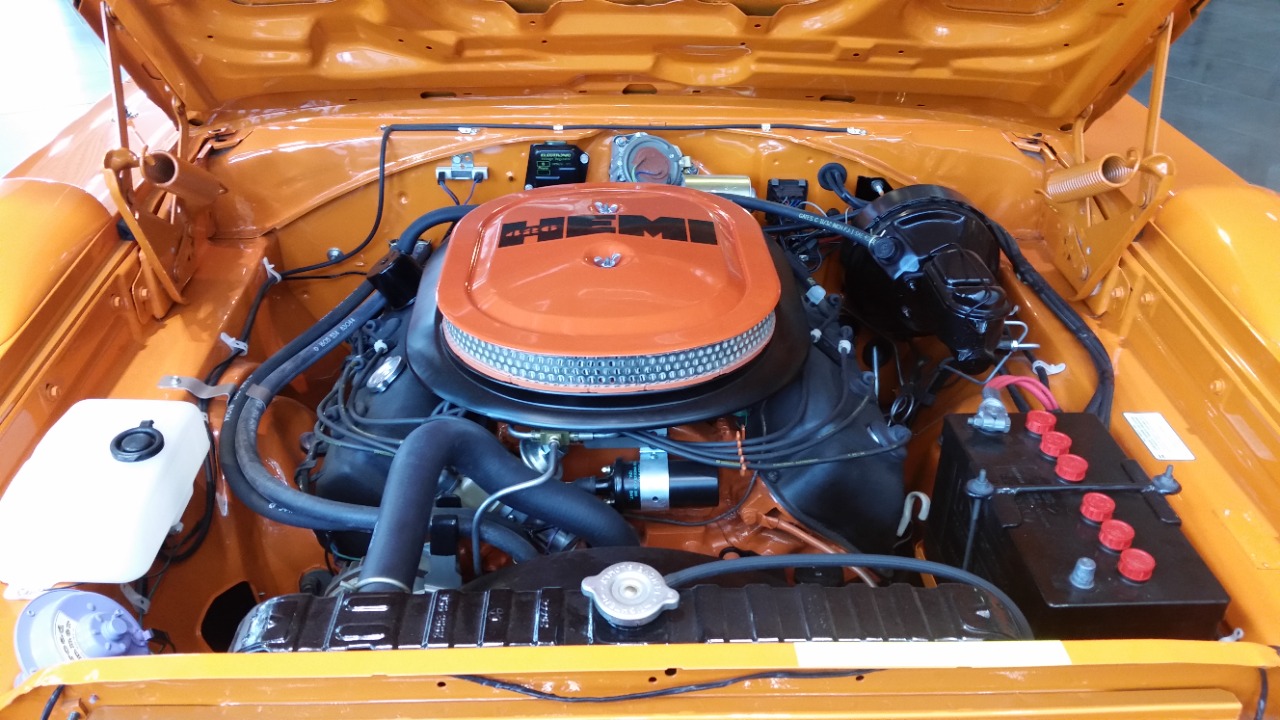
Any argument about the purity of the 1969 GTX starts under the hood. Plymouth billed the car as a “gentleman’s hot rod,” but the standard engine was anything but gentle. Buyers received Chrysler’s 440 cubic inch Super Commando V8, one of the big-block engines that defined late‑sixties performance. In an era when Detroit pushed displacement as the quickest path to speed, the GTX lined up directly with other big‑block legends that enthusiasts still regard as the core of classic muscle.
The 440 was conservatively rated at 375 horsepower and delivered a thick band of torque that made the car feel fast even at part throttle. Its character was central to the experience: an instant, heavy shove when the throttle opened, a deep exhaust note, and a willingness to spin the rear tires long before modern traction control would have intervened. For buyers who wanted more, Plymouth offered the 426 Hemi as an option, but the GTX’s identity did not depend on that rarer upgrade. The standard big‑block already placed it among the era’s most serious street machines, in the same conversation as other big‑block muscle icons.
Drivetrain choices also reflected a straightforward performance focus. Shoppers could pair the 440 with a heavy‑duty TorqueFlite automatic or a four‑speed manual with a Hurst shifter, both designed to take repeated hard launches without complaint. No turbochargers, no complex electronics, just a large‑displacement V8 feeding a stout rear axle. That simplicity is a big part of why the GTX still feels like an unfiltered expression of muscle power.
Body, Stance, and the “Gentleman’s” Edge
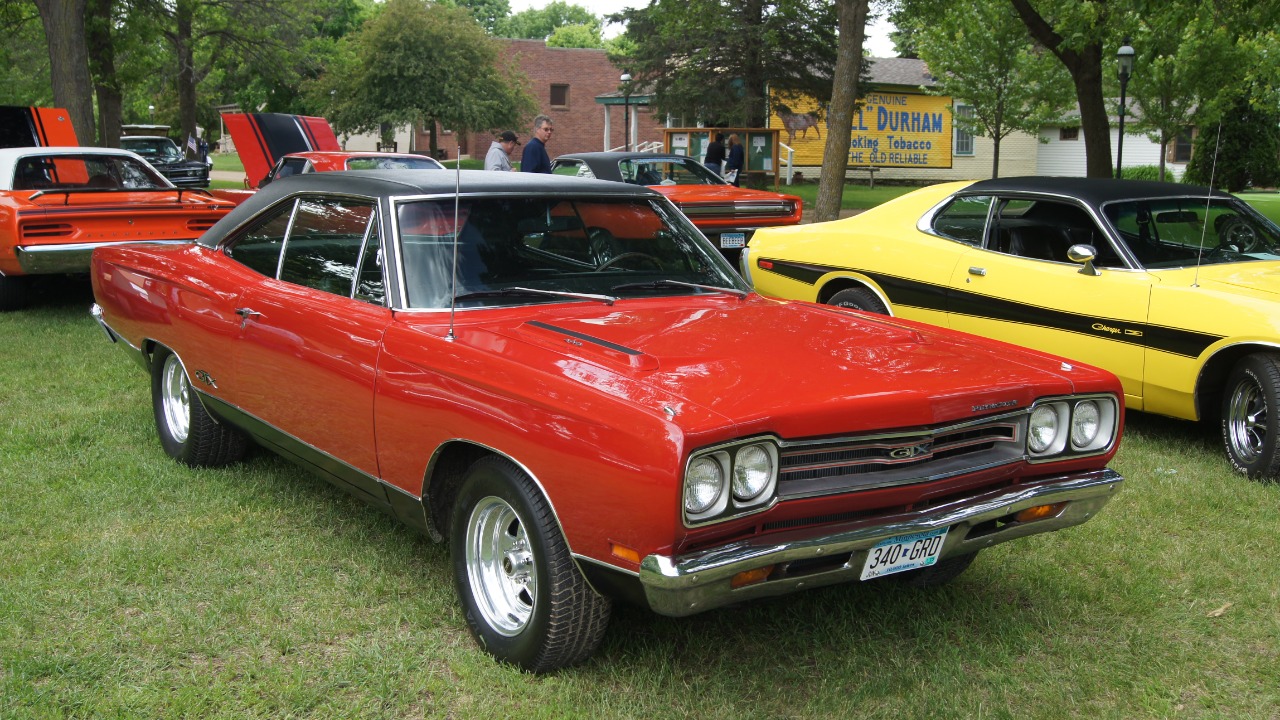
Visually, the 1969 GTX walked a line between aggression and restraint. Based on the mid‑size Belvedere and Satellite platform, it carried crisp, squared‑off lines and a long hood that made its mechanical priorities clear. The front end featured a divided grille and quad headlamps, while the rear used simple horizontal taillights and minimal chrome. Unlike some rivals that leaned on stripes and spoilers to shout for attention, the GTX relied more on proportion and stance.
The car sat low over wide tires, with subtle badging that told informed observers what they were looking at without turning the car into a rolling billboard. Hood scoops, brightwork, and optional vinyl roofs added character, but the overall effect was cohesive rather than gaudy. Plymouth wanted the GTX to feel more upscale than the Road Runner, and the exterior reflected that intent. It looked serious, not cartoonish, which helped the car age better than some of its louder contemporaries.
Inside, the GTX offered bucket seats, a center console on many builds, and higher‑grade trim than Plymouth’s entry‑level muscle models. Gauges were straightforward and legible, with the tachometer and speedometer dominating the driver’s view. The cabin did not chase luxury in the modern sense, yet it provided enough comfort to make long drives realistic. That blend of performance hardware and modest refinement fit the “gentleman’s” label without diluting the core mission.
Positioned Between Budget Bruiser and Luxury Coupe
To understand why the 1969 GTX feels so pure, it helps to place it within Plymouth’s own lineup. Below it sat the Road Runner, a stripped‑down, budget‑minded muscle car that sacrificed comfort for price and attitude. Above it in the broader Chrysler world were models that leaned more into luxury or size than raw acceleration. The GTX occupied the middle ground: more expensive and better equipped than the Road Runner, but still focused on straight‑line performance rather than plush features.
This positioning created a clear identity. The GTX was not trying to be all things to all buyers. It did not chase family practicality beyond the basic two‑door coupe format, and it did not pretend to be a European‑style grand tourer. Instead, it targeted drivers who wanted serious power, a cleaner look, and a bit more comfort than the bare‑bones muscle offerings, all wrapped in a mid‑size footprint that remained manageable in traffic and parking lots.
That clarity of purpose separated the GTX from some rivals that blurred into personal‑luxury territory. By keeping the feature set relatively simple and centering the car’s appeal on its big‑block engine, Plymouth delivered a package that felt honest. The buyer knew exactly what they were paying for: displacement, torque, and a body that could handle the abuse.
Performance Without Electronic Filters
Another reason the 1969 GTX stands out today is the way it delivers speed. Modern performance cars rely on layers of software to manage traction, stability, and even exhaust sound. The GTX came from a time when performance was almost entirely mechanical. The driver controlled the carburetor with a cable, shifted gears through a physical linkage, and modulated braking without anti‑lock assistance.
On the road, that meant the car demanded attention. Too much throttle on a wet surface could send the rear wheels spinning. Braking hard into a corner required judgment, because the front drums or discs could lock if the driver misjudged grip. Steering used a relatively slow ratio and a recirculating ball setup, so quick corrections were more a matter of planning than twitch reflexes.
Far from being flaws, those traits are central to the GTX’s appeal as a pure muscle machine. The car did not hide its weight or its power; it asked the driver to respect both. When everything lined up, the reward was a feeling of direct control that many modern cars, for all their speed, struggle to match. The GTX’s performance numbers may be eclipsed by contemporary sedans, but the way it reached those numbers was visceral and unmediated.
Styling That Let the Engine Do the Talking
While some late‑sixties muscle cars leaned heavily on graphics and flamboyant colors, the 1969 GTX projected confidence through more restrained styling. Plymouth offered bold paint options, but the core design did not rely on excessive striping or exaggerated spoilers to convey speed. Modest hood scoops, simple side stripes on some versions, and discreet GTX badging signaled performance to those who knew what to look for.
This approach reinforced the car’s focus on substance over spectacle. The GTX did not need to scream for attention because the 440 under the hood and the way the car launched from a stoplight spoke loudly enough. That restraint is one reason the design has aged gracefully. Enthusiasts today often seek out cars that look purposeful rather than gimmicky, and the GTX fits that preference with ease.
The interior followed the same philosophy. Chrome accents, wood‑grain appliqués, and well‑padded seats gave the cabin a touch of class, but the layout remained simple. Large, round gauges and a straightforward dashboard kept the driver’s focus on the essentials. There were no digital gimmicks or complex controls, just a clear view of speed, engine revs, and vital temperatures. In a car built around a big‑block V8, that was exactly the information that mattered.
Rarity, Reputation, and the Collector Market
Production numbers for the 1969 GTX were modest compared with some mass‑market muscle cars, which has helped the model gain a reputation among collectors. While the exact figure varies by body style and option mix, the car never flooded the market. That relative scarcity, combined with its strong mechanical package, has kept values solid and interest high.
Collectors often single out big‑block Mopars for their combination of straightforward engineering and aggressive performance. The GTX fits that mold perfectly, especially when equipped with the 440 and a four‑speed manual. Cars with the 426 Hemi command even higher attention, but the standard‑engine models are more representative of what buyers actually drove off the lot in 1969. Those are the cars that built the GTX’s street reputation.
At shows and auctions, the GTX tends to attract enthusiasts who appreciate both its performance credentials and its relative subtlety. It lacks the mainstream name recognition of some rivals, which can make it feel like a more insider choice. That status only strengthens the car’s image as a connoisseur’s muscle machine, one that rewards close attention rather than casual brand familiarity.
How It Stacks Up Against Other Muscle Icons
Comparing the 1969 GTX to other muscle cars of its time highlights what made it distinctive. Chevrolet’s Chevelle SS 396, Ford’s Torino Cobra, and Pontiac’s GTO all offered similar formulas: big engines in mid‑size bodies. Many of them also delivered strong straight‑line performance and memorable styling. Yet the GTX carved out its own space through the combination of a standard 440, a slightly more upscale interior, and a design that avoided the most extreme visual gimmicks.
Where some competitors relied heavily on marketing names and option packages to create performance halos, the GTX kept its message simple. Buyers who chose this Plymouth received serious power without needing to navigate a maze of trim levels and special editions. That straightforward approach contributed to the sense that the car represented muscle in a distilled form. There were no small‑block base engines to dilute the badge. The GTX name meant big‑block performance, period.
In hindsight, that clarity looks almost radical. As insurance costs rose and emissions rules tightened in the early seventies, many muscle nameplates shifted toward appearance packages and softer tuning. The 1969 GTX sits just before that transition, at a point when the muscle‑car idea had matured but not yet been compromised by external pressures.
Why Enthusiasts Still Chase the 1969 GTX
For modern enthusiasts, the appeal of the 1969 Plymouth GTX goes beyond nostalgia for a past era of cheap gas and open roads. The car offers a driving experience that is hard to replicate with contemporary machinery. The heavy clutch, the long throw of the shifter, the immediate surge of torque from a big, naturally aspirated V8, and the lack of electronic filters all contribute to a sense of connection that many drivers find addictive.
The GTX also serves as a reference point for what a muscle car can be when it is not trying to chase lap times or luxury features. It is quick, loud, and relatively simple to maintain, with a parts ecosystem that remains strong thanks to the enduring popularity of Mopar big‑blocks. Restorers and modifiers alike value the car’s straightforward construction and the availability of performance upgrades that respect the original character.
More from Fast Lane Only
- Unboxing the WWII Jeep in a Crate
- 15 rare Chevys collectors are quietly buying
- 10 underrated V8s still worth hunting down
- Police notice this before you even roll window down
*Research for this article included AI assistance, with all final content reviewed by human editors.