Oldsmobile kept its performance badges alive longer than most people remember. The 442 name ran from the muscle car years into 1991, when the Quad 442 W41 arrived with a four-cylinder engine and only 204 cars built. Along the way, Oldsmobile sold tri-carb V8s, glass-roofed wagons and a shifter with three levers.
Plenty of those cars live in the shadow of Chevelles and GTOs. As a result, a good Oldsmobile can cost less than a similar car with a bowtie or an arrowhead on the grille. We do not expect that gap to last forever.
These nine are our picks, and the verdicts are our opinion: the Oldsmobiles we think will not stay cheap much longer. We have left out prices on purpose. The engines, production counts and options come from period records, auction write-ups and model histories.
1. 1957 Oldsmobile Super 88 J-2
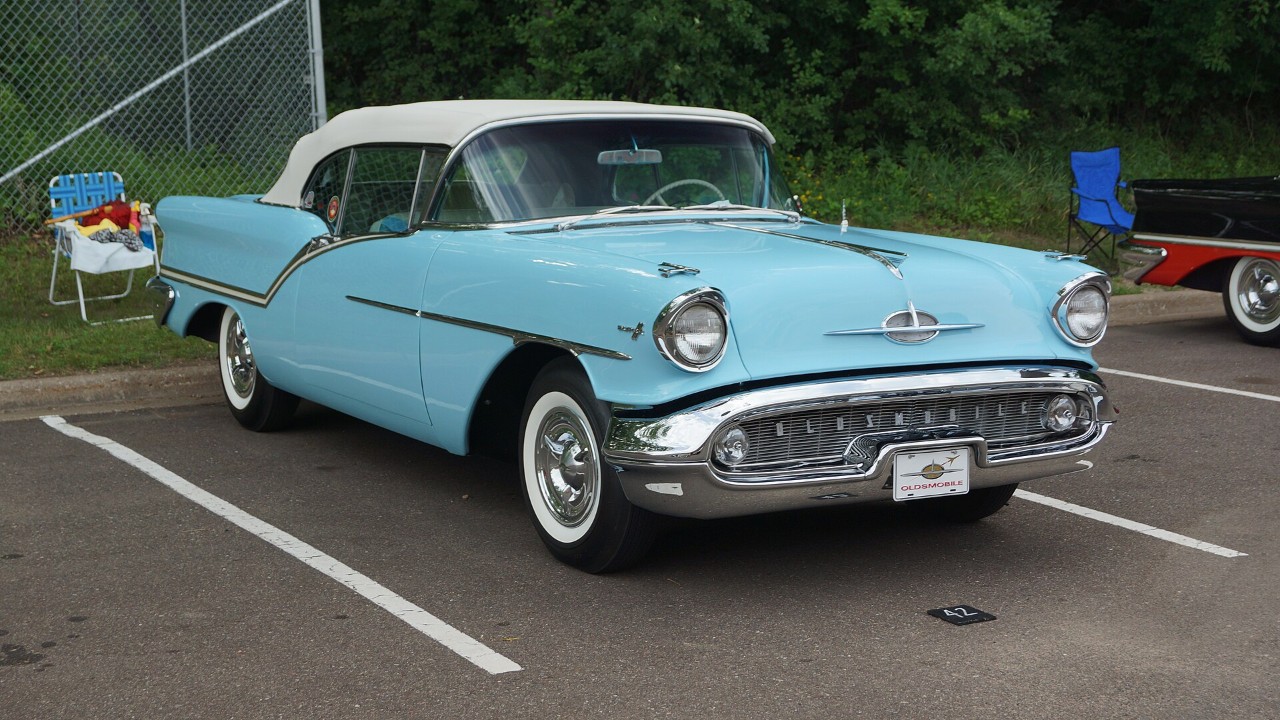
For 1957, every Oldsmobile got a 371-cubic-inch Rocket V8 with a four-barrel carburetor and 277 horsepower. However, the J-2 option changed that. It added three Rochester two-barrel carburetors, raised compression to 10:1 and lifted output to 300 horsepower at 4,600 rpm, with 415 lb-ft of torque.
The setup was also clever. Only the center carburetor had a choke and idle circuit, while the end carbs opened by vacuum once the pedal passed 75 percent of its travel. According to Mac’s Motor City Garage, the option cost just $83 and was available on every model. Oldsmobile also sold a $395 competition kit over the counter. Lee Petty and others raced it until NASCAR banned multiple carburetors partway through the 1957 season.
Our take: a J-2 in a Super 88 body is the sweet spot. It is the hot rod version of a family car, and it carries real NASCAR history. We think the market has not caught up with how rare a genuine J-2 car is. If you shop for one, insist on proof that the triple carbs are original to the car.
2. 1961 Oldsmobile Starfire convertible
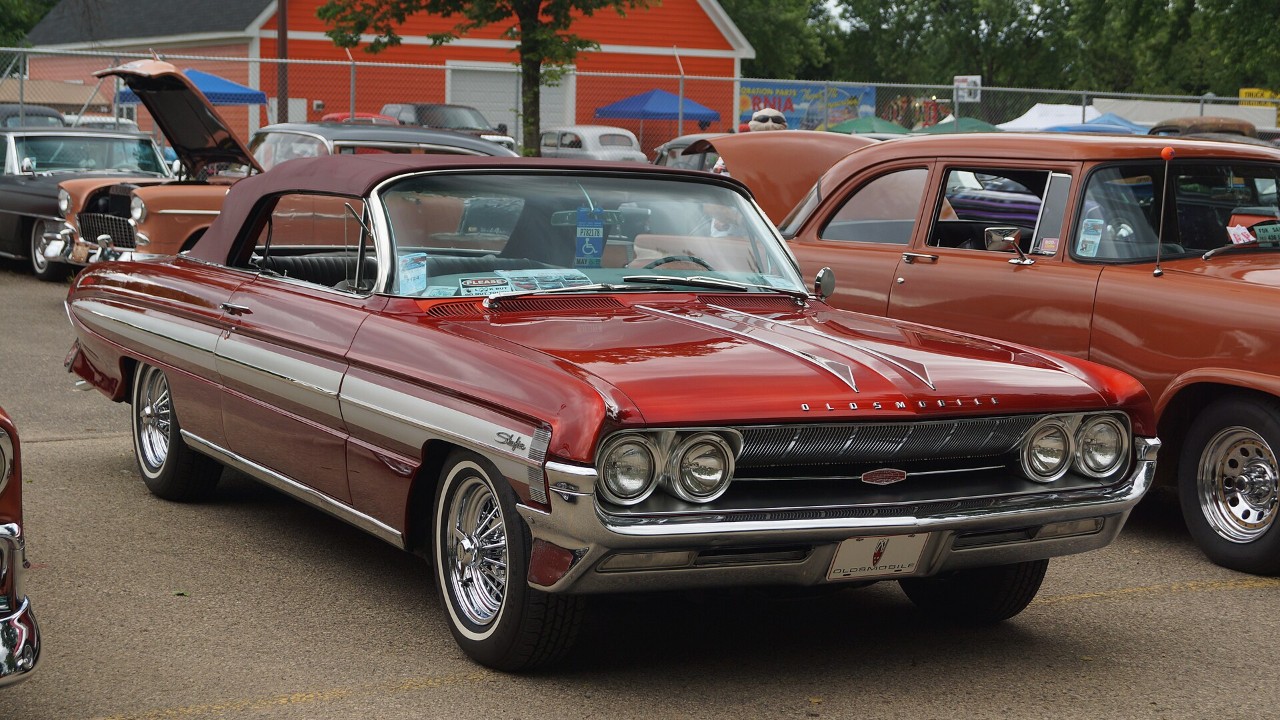
The Starfire arrived in January 1961 as its own model line, a sporty grand touring convertible. It also cost more than any other Oldsmobile, including the big Ninety-Eight. The base price was $4,647.
In return, that money bought a lot. The standard engine was the 394-cubic-inch Skyrocket V8, Oldsmobile’s strongest engine that year, rated at 330 horsepower. Leather bucket seats, a center console with a tachometer and a floor shifter for the Hydra-Matic all came standard. Similarly, so did power steering, brakes, windows and a power driver’s seat, plus brushed aluminum side panels.
Oldsmobile sold only about 1,500 Starfires for 1961. Our take: that first-year car is the one to want. It offers bucket-seat luxury from a year when most buyers had never heard the term. We think first-year convertibles with their original brushed trim are worth chasing now. Check those aluminum side panels closely, since dents and scratches there are hard to hide.
3. 1966 Oldsmobile 442 L69
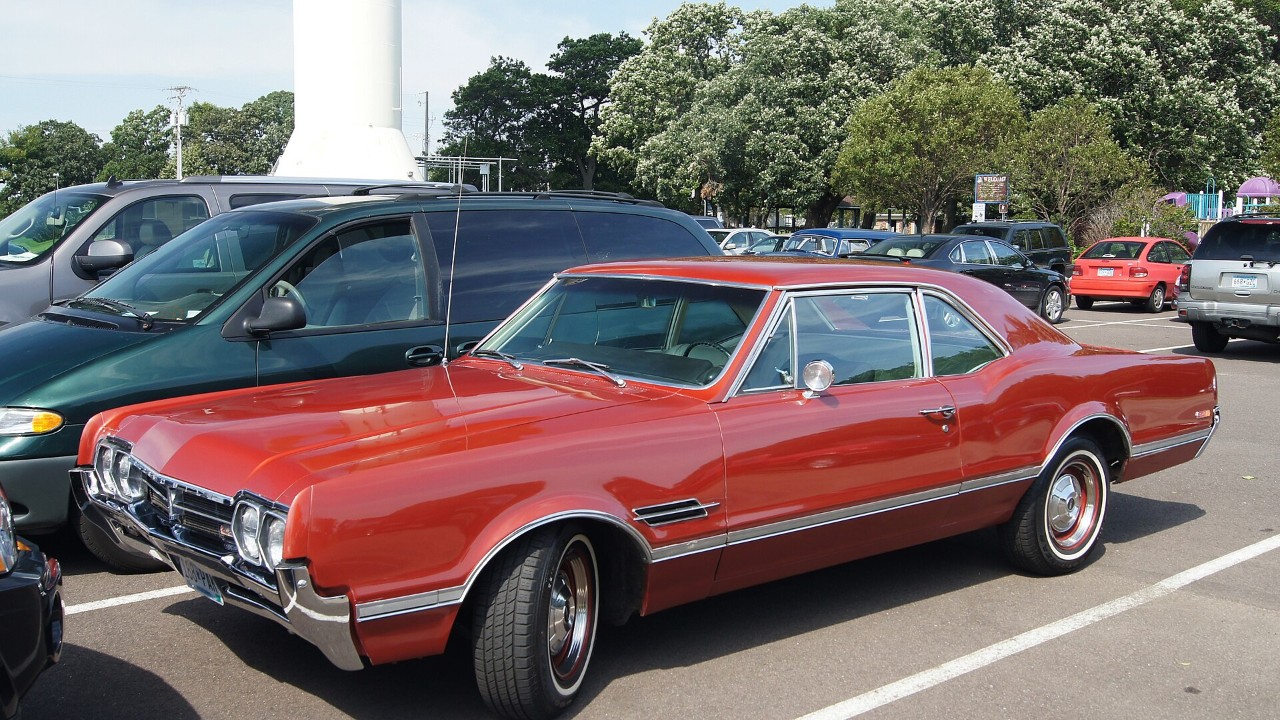
Most buyers know the 442 W-30. Fewer know that Oldsmobile sold a tri-carb 442 first, before the W-30 era. For 1966, the L69 option put three Rochester 2GC two-barrel carburetors on the 400-cubic-inch V8.
Oldsmobile rated the L69 at 360 horsepower. Three carburetors on one V8 gave the Cutlass-based car a look under the hood that few rivals matched. It also revived an old Oldsmobile trick. Back in 1957 and 1958, the J-2 option had put three two-barrels on the Rocket V8. We dug into the build history in our L69 feature.
Our take: the tri-carb setup is the reason to buy this car, so originality matters. Parts can wander off a car over 60 years. Therefore, a documented 1966 L69 with its factory induction is the kind of Oldsmobile we would buy before more people notice. If a seller cannot prove the option, assume it was added later. Also, price an L69 on its own merits rather than against a W-30, because the two are very different cars.
4. 1969 Hurst/Olds 455
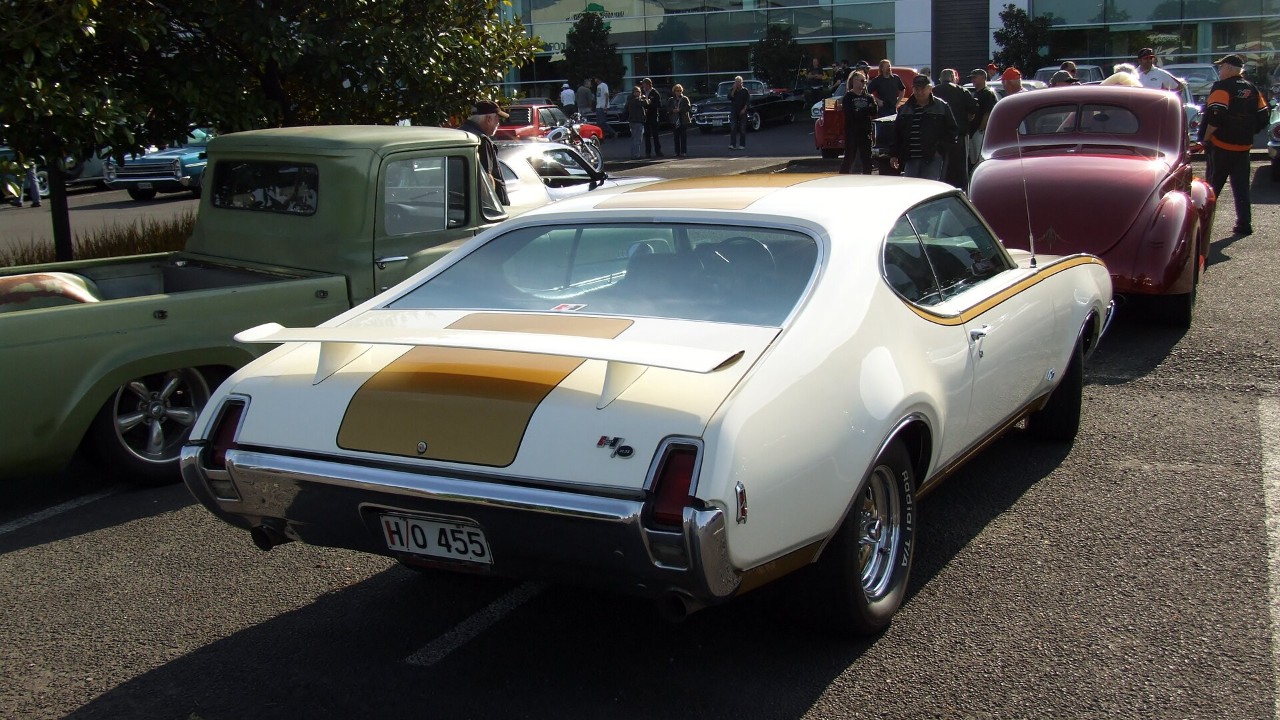
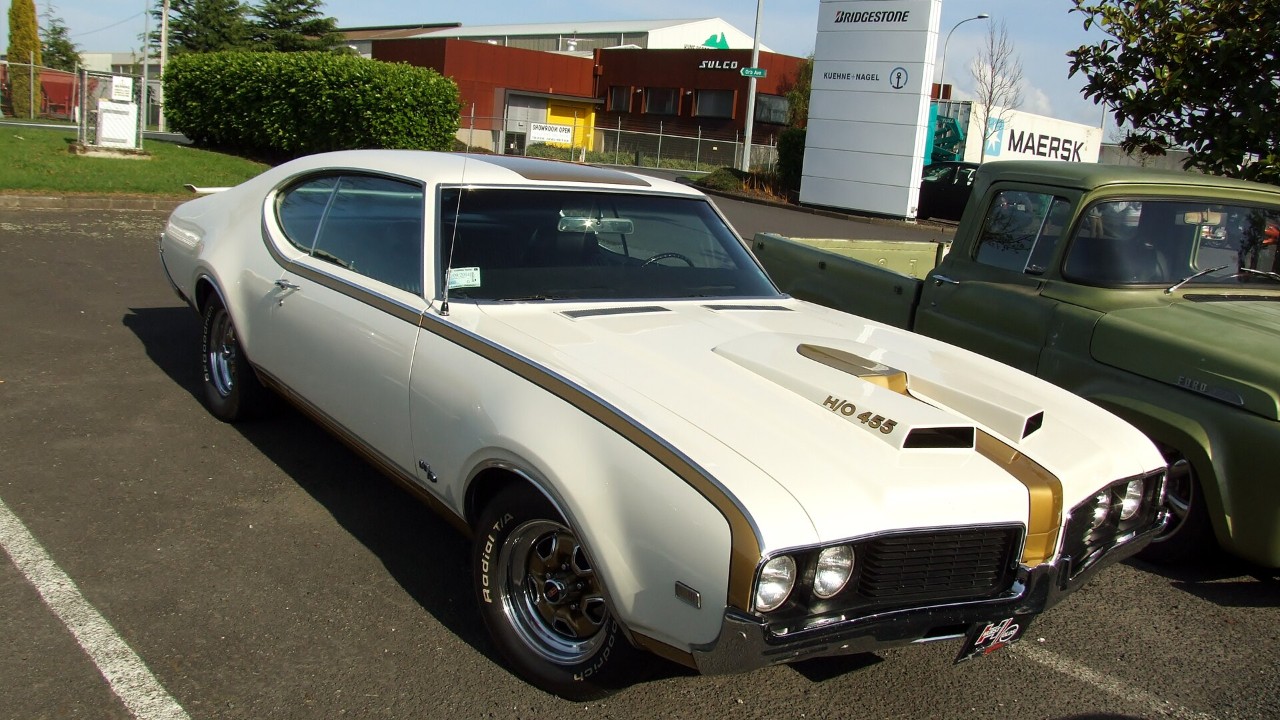
Hurst and Oldsmobile teamed up again for 1969, and the result was hard to miss. Every car wore Cameo White paint with Firefrost Gold stripes. Under the hood sat a 455-cubic-inch V8 rated at 380 horsepower, slightly detuned from 1968.
Still, production stayed small. Oldsmobile built 906 production Hurst/Olds Holiday coupes for 1969, plus six prototypes and two convertibles. That made the car a low-volume halo, rather than a showroom regular. Our earlier piece on why the Hurst/Olds became more than an option package covers how the partnership worked.
Our take: with only 906 production coupes, the 1969 car is the purest Hurst/Olds to own. The white-and-gold scheme is part of the appeal, so repaints in other colors lose much of the magic. We think the gap between this car and better-known GM muscle will narrow. Buy the best documented example you can afford. The two convertibles alone show how deep the Hurst/Olds rabbit hole can go.
5. 1970 Oldsmobile Cutlass Rallye 350

By 1970, high insurance rates were hurting muscle car sales. Oldsmobile answered with the Rallye 350, a loud-looking car with a smaller engine. The 350-cubic-inch V8 used a single Rochester four-barrel and made 310 horsepower.
At the same time, every Rallye 350 wore Sebring Yellow paint, along with urethane-coated bumpers in the same color. In fact, the whole car looked like a highlighter on wheels. According to Barn Finds, Oldsmobile built 3,547 of them, split between Cutlass Holiday coupes and F-85 coupes. That means you can pick the roofline you like and get the full yellow treatment.
Our take: the Rallye 350 is the bargain way into 1970 Oldsmobile muscle. It shares the look of the era without the 455’s insurance bill, which was the whole idea in the first place. We think the bright yellow cars will draw more buyers as the 442 climbs out of reach. Check those coated bumpers closely, since cracked or peeling ones cost real money to redo.
6. 1972 Oldsmobile Vista Cruiser
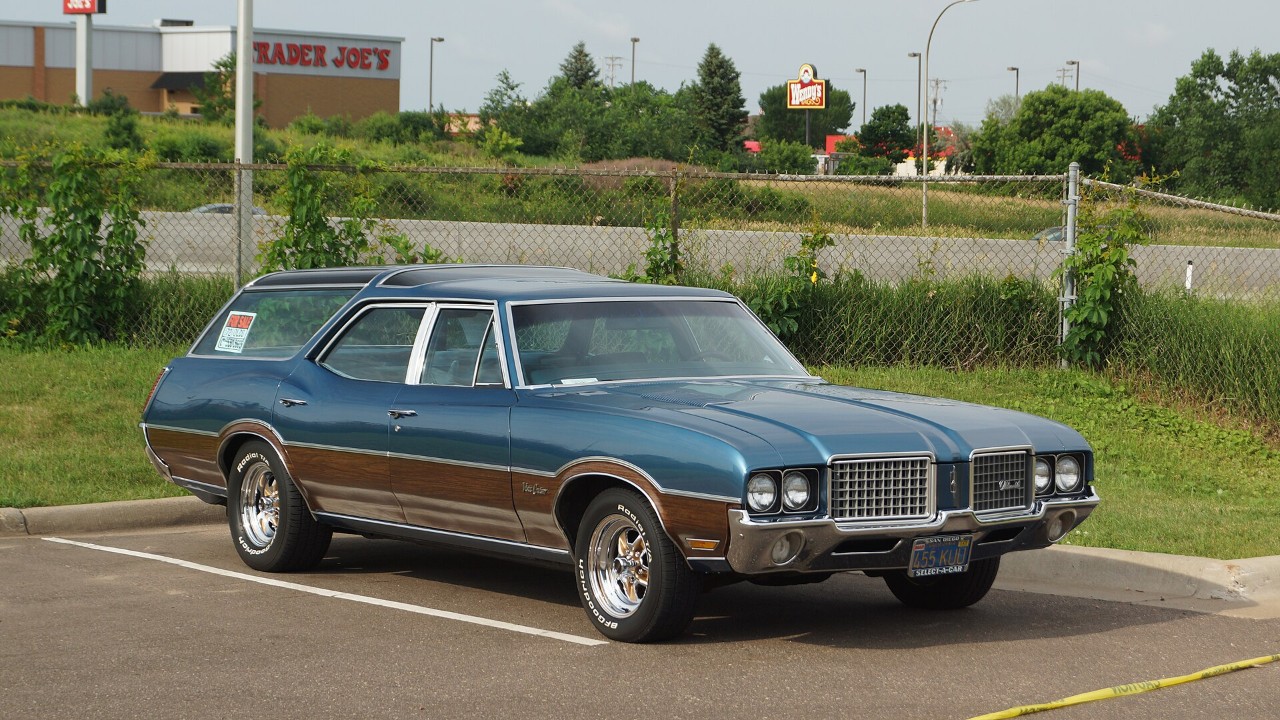
The Vista Cruiser made its debut on February 4, 1964, and its raised glass roof gave it a name. By 1968, Oldsmobile had swapped the split skylight for a one-piece glass panel. It also stretched the wheelbase to 121 inches.
The 1972 car matters because it was the last of the glass-roof wagons. After that, the redesigned 1973 version dropped the roof glass. Buyers in 1972 could choose a 350 V8 or the big 455, and they bought 10,573 six-passenger and 21,340 eight-passenger cars. Hurst even modified a few 1972 Vista Cruisers with 455 Rocket engines as support cars for that year’s Indianapolis 500. Two of those modified wagons were known to survive as of 2012.
Our take: a final-year 455 wagon with the third-row seat is the one we would chase. It combines family hauling with the best engine of the era. In our view, the glass-roof Oldsmobile will not stay a bargain for long. Look hard at the roof seals, since leaks there can rot the wood trim and headliner.
7. 1983 Hurst/Olds Cutlass Calais
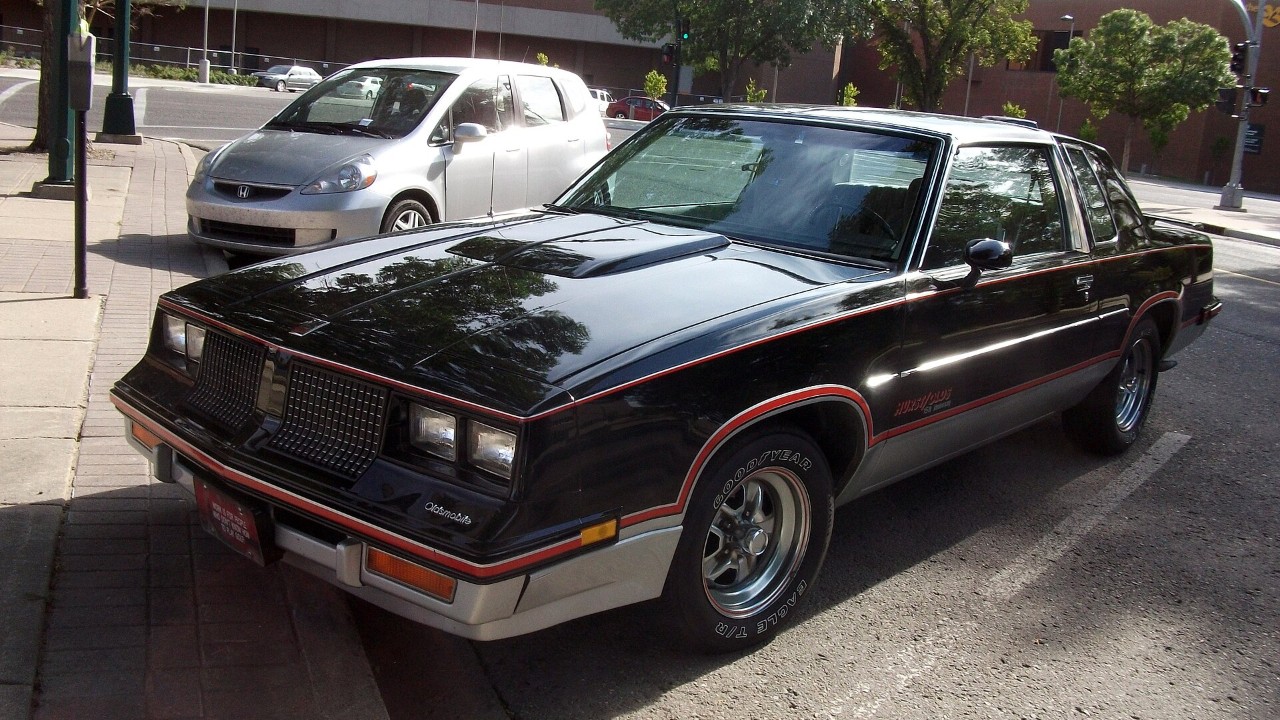
For the 15th anniversary of the first Hurst/Olds, Oldsmobile built a new one on the Cutlass Calais. The 1983 car wore black paint over a silver lower body, split by a red stripe. Its engine was a 307-cubic-inch V8 with 180 horsepower and 245 lb-ft of torque.
Even so, the real star was the Lightning Rod shifter. Instead of one lever, it gave the driver separate controls for each upshift on the automatic. According to Autotrader Classics, Oldsmobile built 3,001 of the 1983 cars, including 201 sold in Canada. A Canadian-market 1983 car is an even rarer find. For 1984, it built 3,500 more with the colors reversed.
Our take: 180 horsepower will not scare anyone today. Yet the 1983 car marks the brand’s return to fun after years of slow cars, and its shifter is unlike anything else. We think clean, low-mile examples will keep getting harder to find. Before you buy, make sure the Lightning Rods work, because replacement parts are very hard to source.
8. 1985 Oldsmobile Cutlass Salon 442
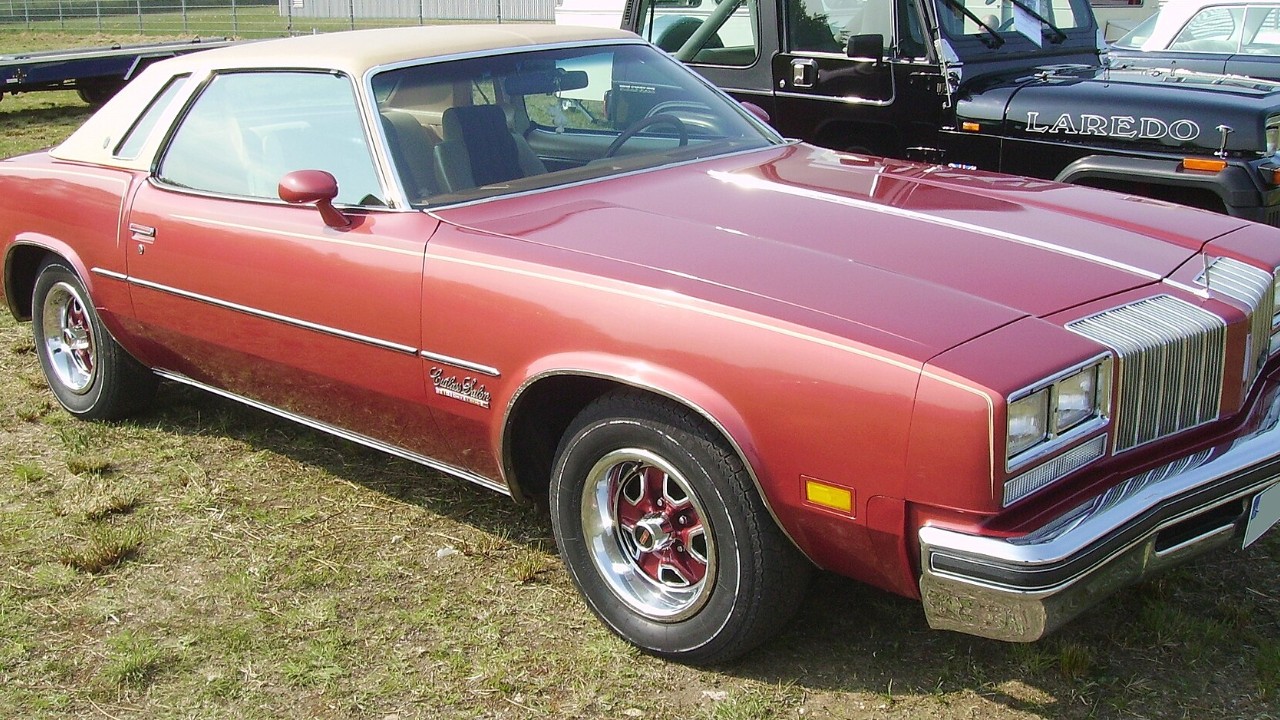
Oldsmobile brought the 442 badge back for 1985, and it built the car on the already sporty Cutlass Salon. Power came from the 307-cubic-inch V8, rated at 180 horsepower that first year. The 1985 and 1986 cars both used the Salon as their base.
Meanwhile, the car’s numbers stayed modest. For 1986, output dropped to 170 horsepower, but torque rose to 255 lb-ft. Oldsmobile built 3,000 cars in 1985 and 4,273 in 1986. Later, it moved the 442 to the Cutlass Supreme for 1987 and built 4,208 more. Spotters can check for a “9” engine code, which marks these 307 cars and the Hurst/Olds. In our view, the 1986 car’s extra torque made up for its lost horsepower in everyday driving.
Our take: the G-body Cutlass has a big fan base, and the 442 is the version we would want. Its first year of 3,000 cars makes the 1985 Salon-based car the one we would want. We think these will not stay cheap for long. Check for a genuine 442 car before you pay a premium for the badges.
9. 1992 Oldsmobile Achieva SCX W41
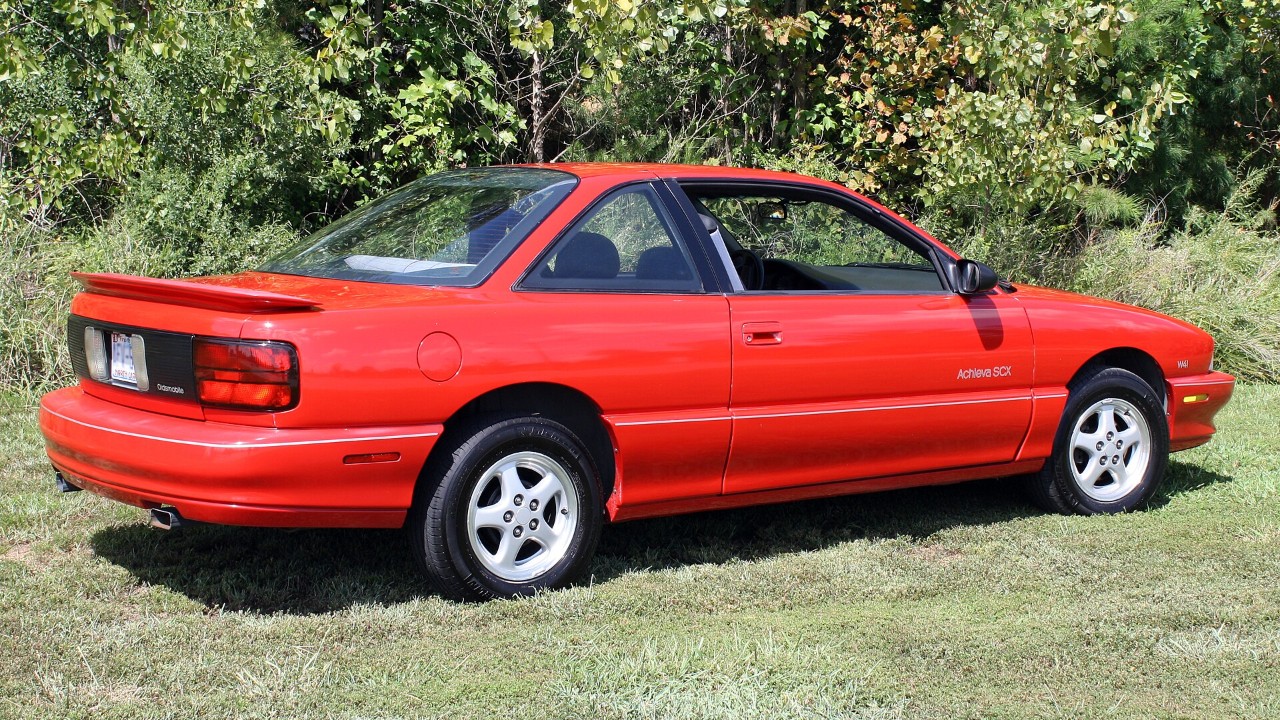
The Achieva SCX sounds like an unlikely hero, and that is part of the fun. For 1992 and 1993 only, Oldsmobile fitted it with the W41 version of the 2.3-liter Quad 4 engine. As a result, it made 190 horsepower, and it came with a five-speed manual.
In fact, the car used the same drivetrain as the very limited 1991 Quad 442 W41. In addition, an FX3 package brought stiffer suspension and a shorter final drive. It also fitted 14-inch tires. According to Grassroots Motorsports, Oldsmobile built just 1,146 SCX cars. It also made fewer than 16 C41 cars for race teams, with no air conditioning and a factory Torsen differential.
Our take: few people outside Oldsmobile circles know this car exists. However, 1,146 cars is a tiny number, and we think early 1990s front-drive performance cars are finding a new audience. We would buy the cleanest unmodified one we could find. For the record, the stripped C41 race cars numbered fewer than 16.
More from Fast Lane Only