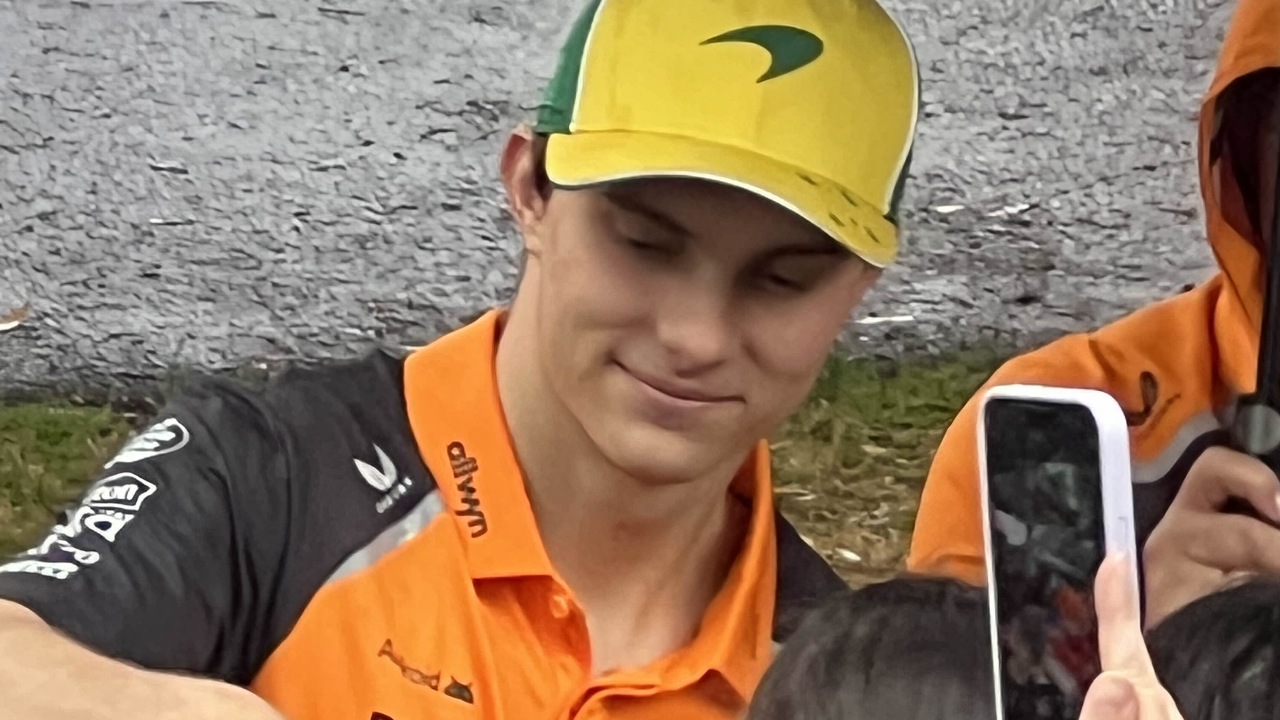
Oscar Piastri is already bracing for the opening phase of Formula 1’s 2026 season to be messy, and not because of the usual early year rust. With the sport preparing for a radical technical reset, he expects the first races to be shaped less by refined strategy and more by trial and error as drivers relearn how to race. The Australian’s warning is simple: when the cars change this much, the learning curve itself becomes the main source of chaos.
The one factor Piastri believes will drive early chaos
I see Piastri’s caution as rooted in a single, clear idea: the drivers themselves will be the biggest variable when the new regulations arrive. He has argued that the 2026 cars will demand a fundamentally different driving approach, to the point that established instincts may become unreliable. In recent comments, he suggested that when the lights go out for the first time under the new rules, the grid will be full of highly skilled drivers who are, in effect, rookies again in terms of how they must manage the machinery.
That is why he has framed the early races as potentially unpredictable for one key reason, namely that the field will be collectively experimenting in real time with how hard they can push, how to manage energy deployment, and where the grip truly lies. Piastri has spoken about drivers needing to “rethink everything they know about racing” in modern Formula 1, stressing that the biggest unknown will not be the regulations on paper but how quickly each driver can adapt to them. In his view, the first phase of 2026 will be defined by that adaptation process, with mistakes, misjudged battles, and strategic gambles all flowing from the same source: human adjustment to a new technical reality.
How the 2026 rulebook rewrites the driving challenge
To understand why Piastri is sounding this note of caution, I start with the scale of the technical overhaul. The 2026 power units will still be built around a 1.6-litre V6 turbo hybrid, but the balance between combustion and electric power is set to change significantly. That shift will alter how drivers think about throttle application, energy harvesting, and deployment across a lap, especially in wheel-to-wheel situations. Instead of simply managing fuel and tyres, they will be juggling a far more prominent electrical component that can transform the car’s behaviour out of corners and on straights.
On top of the power unit changes, the chassis and aerodynamic package are expected to evolve in ways that reduce overall grip and downforce compared with the current generation. Reporting on the 2026 concept has highlighted concerns about narrower chassis and wheels, with Drivers worried that the cars will not be significantly lighter despite the visual slim-down. Less mechanical grip and altered aero loads will make the cars more nervous at the limit, particularly in fast corners and under braking. For a driver like Piastri, who has built his reputation on precision and confidence on turn-in, that means a new kind of risk calculus every time he commits to a move.
Why drivers expect to “drive like never before”
Piastri has not tried to hide the scale of the adjustment he anticipates. Speaking at The Ashes to FOX Sports, he described the upcoming regulations as a test that will force drivers to “drive like never before” and learn “a lot of things” from scratch. I interpret that as more than a throwaway line. It reflects a belief that the familiar reference points, from braking markers to how the rear of the car reacts under power, will all shift enough to invalidate years of muscle memory. Even the way drivers build tyre temperature or manage lift-and-coast phases could be transformed by the new energy balance.
He has also acknowledged that teams will be under intense pressure to interpret the rules quickly, but he keeps returning to the idea that the decisive learning will come from the cockpit. In his view, engineers can model scenarios and simulate runs, yet the true limits will only emerge when drivers start pushing in real race conditions. That is where his warning about early chaos gains weight. If the grid collectively has to discover how to race these cars on the fly, then the opening rounds are likely to feature misjudged overtakes, unexpected pace swings, and drivers overshooting the edge of adhesion as they probe what is possible.
From “strange” cars to fan-friendly unpredictability
There is another layer to Piastri’s message that I find revealing: he is not alone in thinking the 2026 cars will feel unusual. Earlier concerns from Drivers have focused on the prospect of “strange” handling characteristics, with narrower chassis and wheels but no major weight reduction raising fears of sluggish responses and reduced grip. That combination could make the cars trickier to place in close combat, particularly in medium-speed corners where drivers currently rely on a stable platform to commit to side-by-side racing. If the rear steps out more readily or the front washes wide without warning, the margin for error in battles will shrink.
Yet Piastri has also been keen to stress that this very unpredictability could be a positive for spectators. He has promised that the 2026 season will bring excitement for fans, pointing to the way a reset can shake up the competitive order and create new storylines. From my perspective, his argument is that while the drivers may feel unsettled by the “strange” behaviour of the new cars, the resulting variability in performance and race outcomes could make the championship more compelling. Unexpected winners, bold strategies that suddenly work, and late-race swings in pace are all more likely when no one has fully mastered the machinery.
Why Piastri’s warning matters for the competitive order
When I weigh Piastri’s comments, I see a broader implication for how the 2026 grid might be reshuffled. If the primary source of early-season volatility is driver adaptation, then teams that pair strong engineering with quick-learning drivers could leap forward. Piastri’s own McLaren outfit has already shown an ability to respond rapidly to regulation tweaks, and his emphasis on learning “from the drivers ourselves” hints at how much influence the person behind the wheel will have in guiding development. Feedback loops between cockpit and factory will be critical, especially in the first races when data is limited and every lap teaches something new.
At the same time, his warning suggests that established hierarchies based on current car concepts may not carry over neatly. A team that thrives under today’s high-downforce, high-grip formula might struggle if it cannot give its drivers a predictable platform under the new rules. Conversely, outfits that excel at building efficient, adaptable cars could find themselves better suited to the 2026 landscape. Piastri’s expectation of chaotic early races is therefore not just a note of caution about on-track incidents. It is a reminder that the sport is about to enter a phase where adaptability, both human and technical, will decide who emerges from the turbulence with a genuine title shot.
More from Fast Lane Only