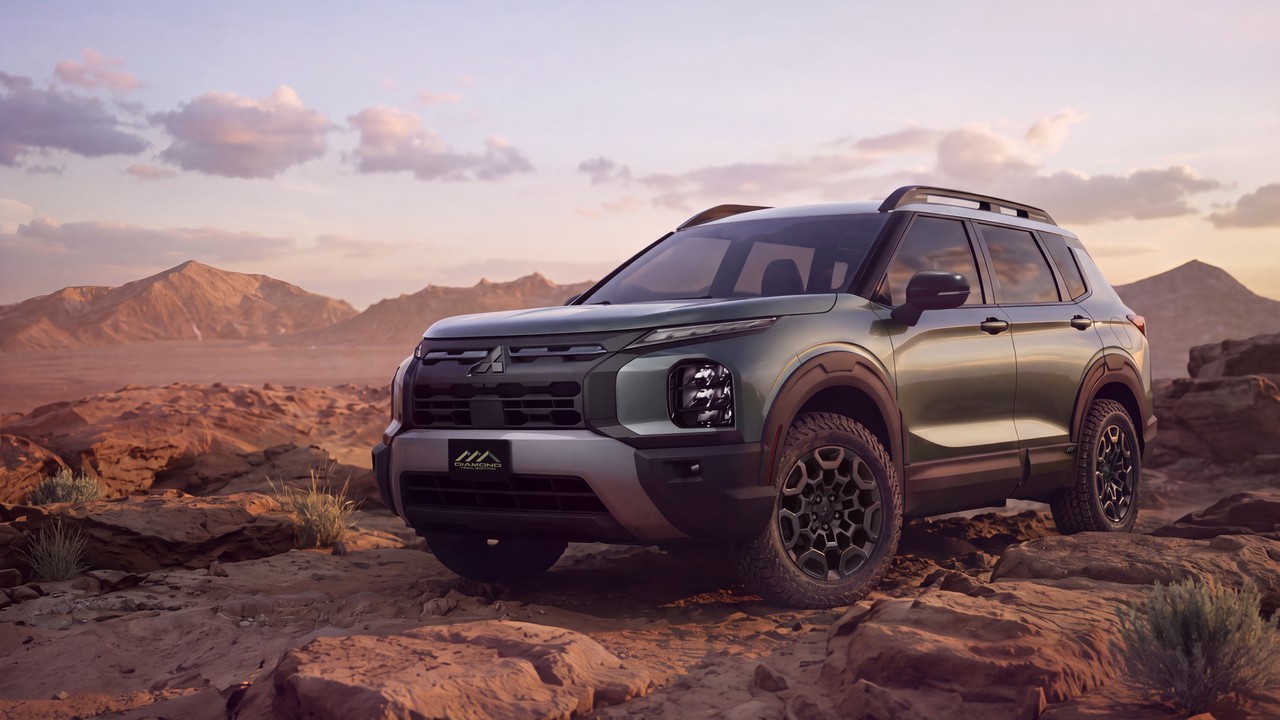
Mitsubishi is back at the SEMA Show for the first time since 2012, and it brought a production SUV rather than a one-off. The 2028 Outlander Diamond Trail Edition made its world debut at the Las Vegas show, which runs November 3 to 6. It is a factory-built Outlander aimed at dirt roads and trailheads, with a new Rock mode for the all-wheel-drive system.
The timing matters for the brand. Mitsubishi’s U.S. lineup is small right now, and the company has a plan to grow it. The Outlander is the nameplate it leans on most, so turning it into a trail model is a clear signal of where Mitsubishi wants to go.
Here is what the new edition adds, what the three show trucks carry and what Mitsubishi hasn’t said yet.
Why the Outlander Diamond Trail Edition is a big step for Mitsubishi at SEMA
Mitsubishi Motors North America announced the debut on October 26 in a release from its Franklin, Tennessee, headquarters. The stand sits at Booth 52249 in the West Hall, and it holds six vehicles. Mitsubishi calls the Diamond Trail Edition “the most capable Outlander ever offered.”
The release ties the truck to Momentum 2030, Mitsubishi’s business plan. Under that plan, the brand wants one new or fully refreshed U.S. model every year through 2030. It also says that would nearly double today’s four-vehicle lineup. In fact, the Outlander is described as North America’s best-selling Mitsubishi nameplate, so it is the logical place to start.
Mark Chaffin, president and CEO of Mitsubishi Motors North America, said the vehicle “represents the next step in our Momentum 2030 vision.”
Rock mode and the off-road hardware
The biggest change is in the software. Mitsubishi’s Super All-Wheel Control system, known as S-AWC, gains a new Rock mode. According to the release, it adds stronger brake control to stop wheels from spinning, and it reacts faster than the other S-AWC modes. Hill Descent Control also switches on automatically in Rock mode, and the driver can adjust the speed it holds.
The hardware changes are smaller but useful. New front and rear bumpers raise the approach angle from 18.3 to 20.5 degrees. Meanwhile, the departure angle climbs from 22.2 to 23.1 degrees. Those are modest gains, but they help on steep ramps and washed-out trails.
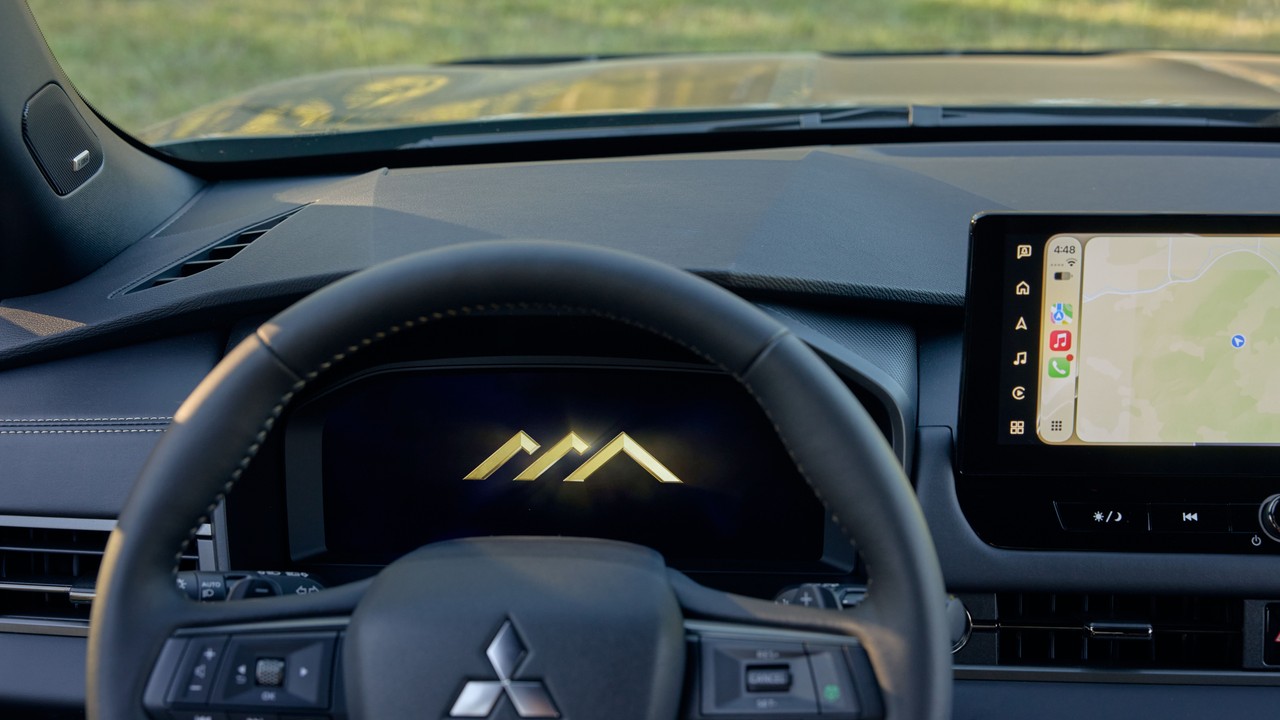
The instrument cluster also gets a new screen. It shows the front-wheel steering angle, slip at each wheel and when traction control steps in. Better still, the Multi-View Camera System now stays on up to 18.6 mph. On the standard model it shuts off at 6.2 mph, so you can watch the trail ahead for longer.
What the Outlander Diamond Trail Edition looks like
Mitsubishi gave the edition its own look. It wears a matte black grille, black Dynamic Shield trim, darkened headlights and new over-fenders. It also rides on 18×7.5-inch black alloy wheels with Nexen Roadian ATX all-terrain tires. Raised roof rails handle racks and cargo boxes.
There is a new paint color, too. Trail Green Metallic can be paired with a white roof. Inside, dark grey seats with khaki stitching use a new material that Mitsubishi says repels water and cleans up more easily. As a result, muddy boots and wet dogs should be less of a worry.
The trim changes are part of that idea. Matte black, dark chrome and dark satin accents replace the usual finishes. Diamond Trail logos also appear on the seat backs, floor mats and door trim.
Same engine, according to early reports
Mitsubishi’s release doesn’t list powertrain figures. However, Carscoops reported on October 27 that the engine carries over unchanged. That means a turbocharged 1.5-liter four-cylinder with a 48-volt mild-hybrid system, rated at 174 hp and 206 lb-ft of torque.
So the Diamond Trail Edition is about grip, angles and control, not more power. For a family SUV that will spend most of its life on pavement, that is a sensible trade.
Three show trucks, three levels of build
At SEMA, the stand carries three Diamond Trail Editions, all in Trail Green Metallic with a white roof. The first is close to stock, with Mitsubishi Genuine Accessories and a color-matched Thule roof box.
The second goes further. It runs BFGoodrich Trail Terrain T/A tires in 265/65-18, a 1.5-inch lift from Anderson Design & Fabrication and Rough Country lighting. A Thule Caprock rack carries two mountain bikes, and it tows a custom-painted GulfStream trailer.
The third is the wildest build. It sits on 18×8.5-inch Method Race Wheels 707 with BFGoodrich All Terrain T/A K03 tires and a 2.5-inch Flatout Suspension lift kit. A Thule rooftop tent, Rough Country traction boards, a light bar and light pods complete it. Keep in mind that those lifts belong to the show trucks only. Mitsubishi doesn’t list a lift for the production model.
Beyond the Outlanders, the stand also holds Ralliart’s AXCR Triton race truck and the Outlander Sport Trail Edition. It also shows a modified Delica D:5 van that Mitsubishi says is the first current-generation Delica D:5 officially shown in the U.S.
Price and the Mitsubishi off-road record
Mitsubishi hasn’t announced a price or an on-sale date. MotorWeek noted on October 29 that pricing is still to be set. The outlet expects the Outlander Diamond Trail Edition to cost more than today’s Trail Edition, which it says starts around $42,000.
The brand also used the launch to point back at its off-road record. Its release cites the 1934 PX-33 as Japan’s first four-wheel-drive vehicle. It also lists 12 overall Dakar wins, seven of them in a row, plus World Rally Championship drivers’ titles from 1996 to 1999.
More from Fast Lane Only