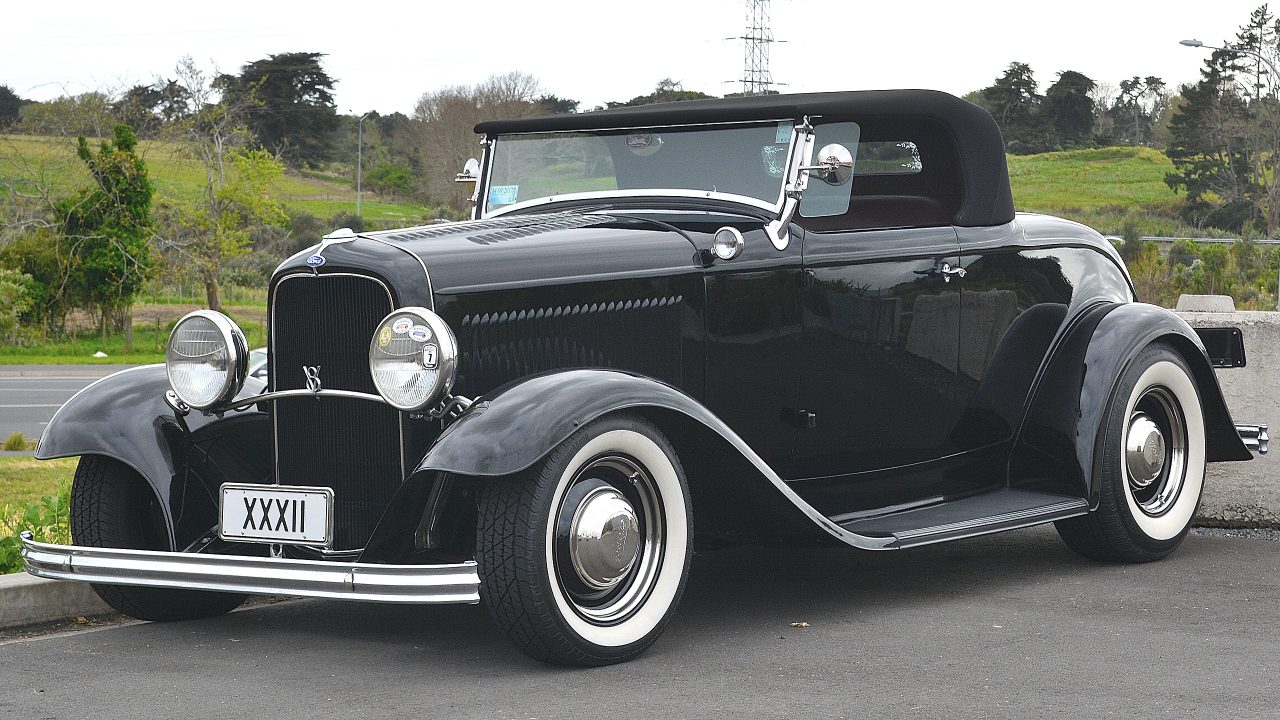
Owning a 1932 Ford hot rod means living in two eras at once. The car’s bones come from the earliest days of Ford’s flathead V8, but most Deuces on the road today are the result of decades of hot-rodding practice, parts evolution, and personal taste. The trick is keeping the car’s unmistakable look and feel while making it reliable enough to actually drive.
Why the 1932 Ford became the hot-rod yardstick
The 1932 Ford landed at a pivotal moment: it introduced Ford’s first mass-produced flathead V8, and it offered a light chassis that responded well to speed parts and weight reduction. Hot rodders quickly learned that the Deuce’s proportions worked—especially the grille shell, frame profile, and overall stance that still read “right” even when heavily modified. By the late 1940s and into the 1950s, it had become a common starting point for dry lakes and street-driven builds alike.
That popularity created its own ecosystem. Original steel bodies became scarce and valuable, while knowledge about what “belongs” on a traditional build became almost as important as the parts themselves. Today’s owners inherit that tradition, along with the practical question of how much history they want to preserve.
Keeping the soul: body, frame, and the details people notice
For many owners, the body is the non-negotiable centerpiece. A genuine steel 1932 Ford body—whether a roadster, five-window coupe, three-window coupe, or sedan—carries stamping details and character that enthusiasts can spot immediately. Even when a car has been modified over the years, builders often try to retain recognizable cues like the Deuce grille shell and the clean, simple beltline.
The frame matters too, both visually and mechanically. The original 1932 frame has a distinct profile, and traditional builds often emphasize that silhouette with a low but believable ride height. Period-style touches—like correct-looking headlamps, a simple interior, and wheels that fit the era—can go a long way toward making drivability upgrades feel “invisible” rather than out of place.
Engines: flathead romance versus modern practicality
The flathead V8 is a big part of why the 1932 Ford is iconic, and a well-built flathead can be a dependable driver when it’s properly cooled, tuned, and not pushed beyond its comfort zone. Traditional speed equipment—like dual carburetors, high-compression heads, and free-flowing exhaust—has a long documented history in postwar hot rodding. That said, flatheads can ask more of an owner in terms of heat management, parts sourcing, and the patience needed for old-school tuning.
Many Deuce owners choose later Ford V8s or other widely used swaps because they want easy starts, readily available replacement parts, and less temperature anxiety in traffic. The balancing act is often about appearance and fit: keeping the engine bay tidy, choosing components that don’t visually overwhelm the car, and avoiding modifications that can’t be undone. It’s common to see builders favor choices that could plausibly have been made in earlier decades, even if the underlying hardware is newer.
Transmissions, gearing, and the reality of highway miles
Early hot rods often ran simple manual gearboxes and rear axle ratios that were fine for around-town blasts but tiring at modern highway speeds. If you’ve ever driven an early-style car geared short, you know the feeling: the engine sounds busy, and long trips become a test of endurance. Owners who actually rack up miles tend to think about cruising RPM as much as horsepower.
That’s where transmission choice and rear gearing become a practical conversation. An overdrive transmission, a thoughtfully chosen rear axle ratio, or both can transform a Deuce from a Saturday-night car into something you’d take to a distant show without a support vehicle. The best upgrades are the ones that don’t change the car’s personality—just reduce noise, heat, and fatigue.
Steering, brakes, and suspension: the safety upgrades nobody argues with
Even the most tradition-minded builders usually agree on one point: a car that looks right but doesn’t stop or steer confidently isn’t much fun. Early Ford suspension layouts and steering can work well when rebuilt correctly, but modern traffic speeds and road conditions put higher demands on braking consistency and straight-line stability. A Deuce that feels darty or requires constant correction can take the joy out of driving it.
Common drivability improvements focus on predictability—firmer bushings where appropriate, quality shocks, and careful attention to alignment and tire choice. Brake upgrades are often approached with the same “period-correct if possible, modern if necessary” mindset. The goal is a pedal that feels consistent and a chassis that doesn’t punish you for choosing a back road with rough pavement.
Authenticity today: parts, provenance, and the restomod tightrope
One reason the 1932 Ford conversation gets nuanced is that “original” can mean several different things. Some cars are survivors with long histories, others were built decades ago and updated over time, and many are assembled from a mix of reproduction and vintage parts. Because Deuces have been hot-rodded for so long, a car can be historically meaningful even if it isn’t stock—sometimes the modifications themselves reflect a specific era of rodding.
Owners often document what they can, keep old parts when they upgrade, and make changes that can be reversed later. That approach respects the car’s place in hot-rodding history without turning it into a museum piece. Done thoughtfully, a 1932 Ford hot rod can feel like a time capsule from the driver’s seat while behaving like a car you’d trust beyond the edge of town.
The best Deuce builds aren’t defined by a single formula; they’re defined by choices that fit the car and the way it’s used. Some owners lean into flathead tradition and accept the rituals that come with it, while others prioritize effortless miles and hide the updates in plain sight. Either way, the balancing act is part of what keeps the 1932 Ford at the center of hot-rod culture.