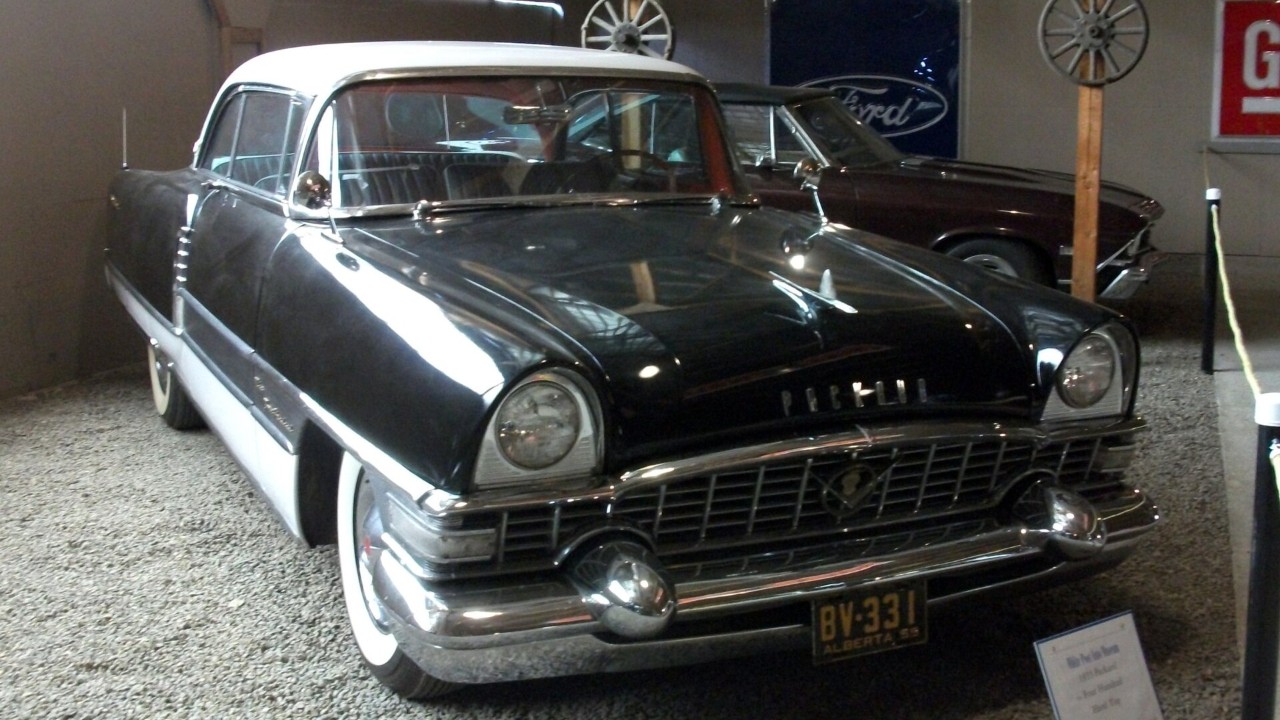
For 1955, Packard gave its big cars a suspension built on torsion bars instead of coil springs. Packard Torsion-Level ride used long torsion bars that linked each front wheel to the rear wheel behind it. An electric motor then trimmed the car level whenever passengers climbed in or luggage went into the trunk.
It sounds like a modern active suspension, and in a basic way it was one. However, it arrived at a company that was running out of money and time. Packard offered it for only two model years.
Here is how the system worked, why engineers wanted it, and why it disappeared along with the Detroit-built Packard.
The problem Packard wanted to solve
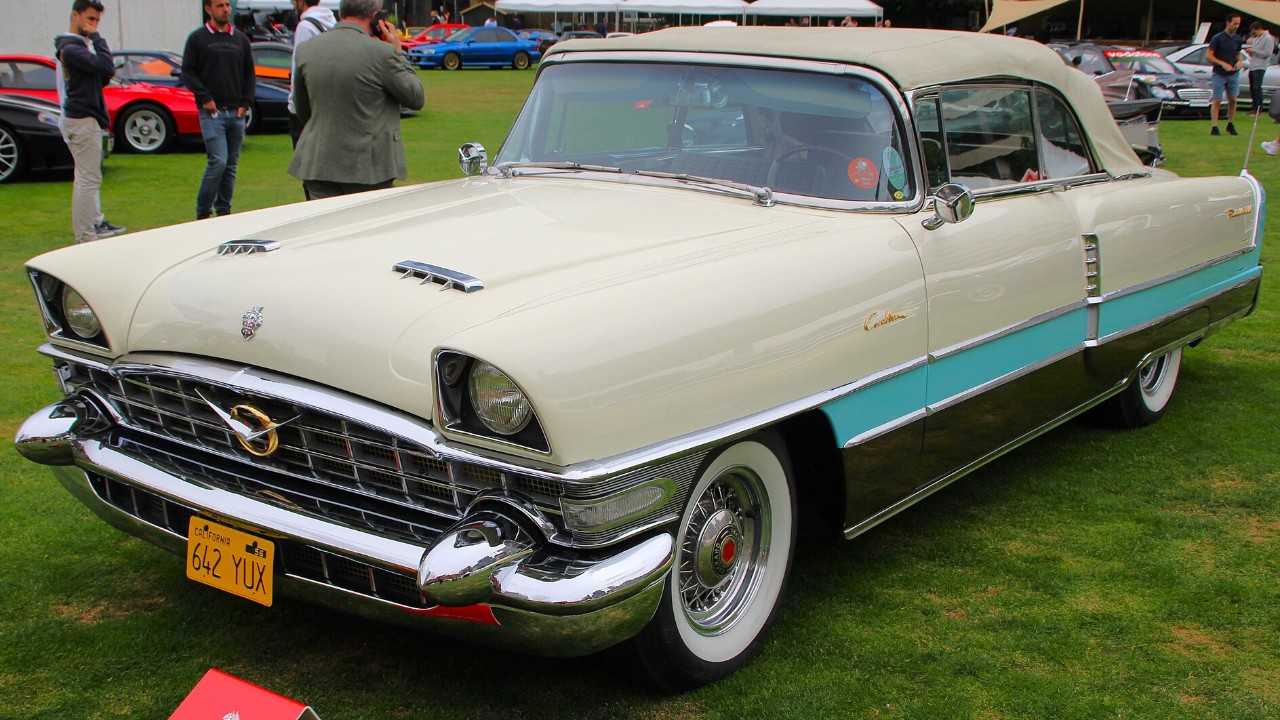
Big American cars of the early 1950s rode on soft springs, and that softness had a price. According to Mac’s Motor City Garage, the target was pitch: body roll, porpoising over dips, nose-diving under braking and squatting under acceleration. A soft car rode well on smooth roads but bobbed like a boat on rough ones.
Stiffer springs would control the motion, but they would also ruin the ride. So the goal was to keep soft springing and still hold the body steady. That’s why the answer involved tying the two ends of the car together.
The idea did not start at Packard. Mac’s Motor City Garage says Hudson engineer William D. Allison came up with it, and the concept moved to Packard in 1947 because Hudson had no use for it. Forest R. McFarland, Packard’s Advanced Engineering chief, directed the development work, the same source says.
How Packard Torsion-Level linked the wheels
The heart of the system was a pair of long torsion bars, one on each side of the car. A torsion bar is a steel rod that acts as a spring by twisting. On the 1955 Packard, The Truth About Cars explains, one end of each bar attached to a front lower control arm. Meanwhile, the other end attached to a rear trailing arm.
Crucially, the main bars did not anchor to the frame. As a result, a bump at a front wheel twisted the bar and fed some of that load to the rear wheel on the same side. The reverse happened, too. In effect, the front and rear wheels shared one spring, so the body stayed flatter as the car rolled over uneven pavement.
The Drive describes the main bars as about nine feet long. Packard’s own claim, as The Drive reports it, was that the setup “beat riding on air.” Mac’s Motor City Garage notes that interconnected front-to-rear suspension is rare, citing the Citroën 2CV as one of the few other examples.
The electric motor that leveled the car
Linking the wheels created a new problem. Because the main bars floated free of the frame, the body could settle at any height where the spring forces balanced. A heavy load in the trunk would therefore leave the car sitting tail-down.
Packard’s fix was a second, shorter set of compensator torsion bars. According to The Truth About Cars, these ran parallel to the main bars. One end connected to the rear suspension arms, while the other end connected to an electric motor on the frame’s central X-member. The motor wound the compensator bars tighter or looser until the car sat level again.
Timing mattered. The system waited about seven seconds before it reacted, both sources say. The Truth About Cars explains that the delay kept the motor from chasing every bump in the road. In other words, Torsion-Level corrected for load, not for each pothole.
Packard also fitted a cutoff switch under the dash. That way, the compensator could not run the battery down with the engine off. Owners loved to show the trick, The Truth About Cars recalls: people sat on the rear bumper and watched the car slowly lift itself level.
Where you could get it
For 1955, Packard Torsion-Level came standard on all senior Packards and some Clipper models, according to Mac’s Motor City Garage. It was optional on the rest of the line. The system arrived alongside Packard’s first modern V8. The Truth About Cars lists that 352-cubic-inch engine at 260 hp in senior cars and 275 hp in the twin-carburetor Caribbean.
For 1956, the Patrician got a 374-cubic-inch V8 rated at 290 hp, and the Caribbean made 310 hp, the same source says. Yet better engines and a clever suspension could not fix Packard’s finances. Studebaker and Packard had merged in October 1954, and the combined company was losing ground fast.
Why the system died with Packard
Sales tell the story. By 1956, The Truth About Cars reports, sales fell to 7,568 Packards and about 21,000 Clippers. In the summer of 1956, the Studebaker board ended Packard production in Detroit. Torsion-Level never returned after 1956, and The Drive notes that Packard stopped production completely by 1958.
The system also needed care. Its switches and solenoids required regular service, and many independent shops lacked the experience to keep them working, The Truth About Cars notes. Still, collectors and period reports generally praised the ride and body control.
Today, the last Torsion-Level cars trade among collectors. For example, RM Sotheby’s sold a 1956 Packard Caribbean at its Auburn Spring 2015 sale for $60,500. According to the auction house’s lot notes, Packard built 276 Caribbean convertibles and 263 Caribbean hardtops that year before Detroit production ended on June 25, 1956.
More from Fast Lane Only
- Unboxing the WWII Jeep in a Crate
- 15 rare Chevys collectors are quietly buying
- 10 underrated V8s still worth hunting down
- Police notice this before you even roll window down
This article was created with the help of AI and was reviewed and edited by Fast Lane Only editors before publication.