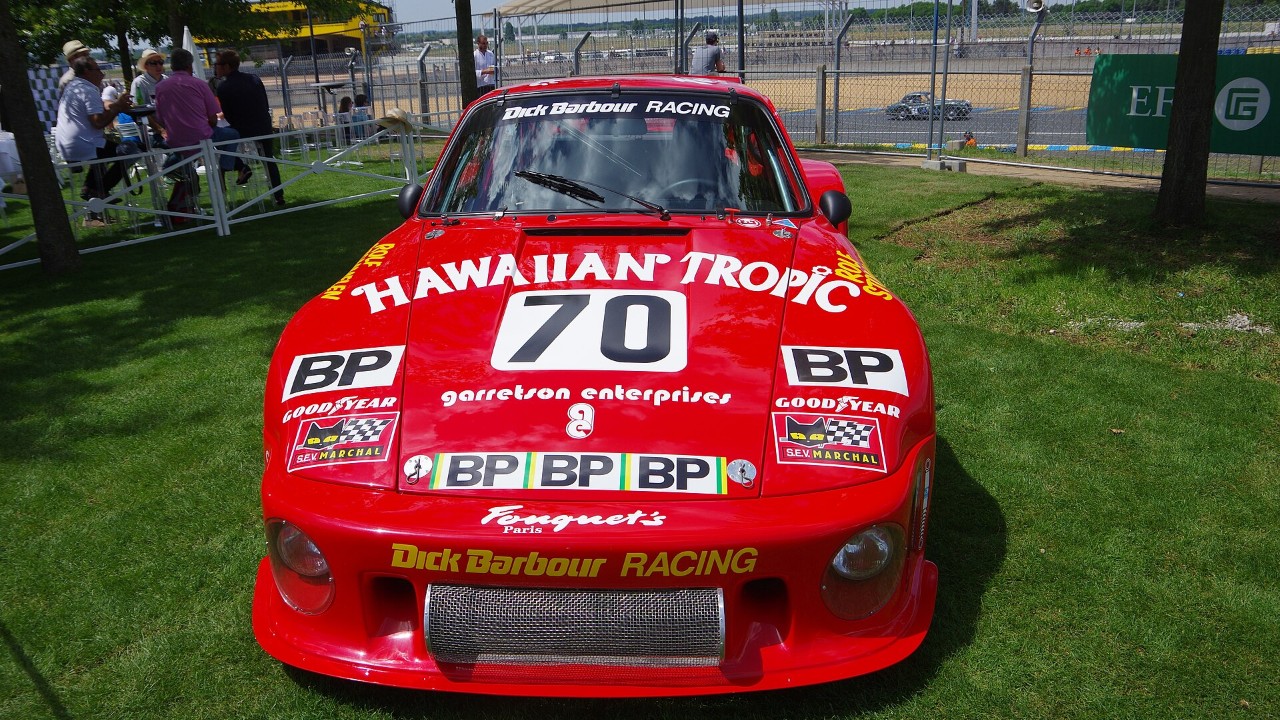
Paul Newman was 54 when he drove at Le Mans, and he nearly won it. In June 1979, the Paul Newman Porsche 935 finished second overall in the 24-hour race. He shared the car with team owner Dick Barbour and German driver Rolf Stommelen.
For a movie star, that was no novelty drive. The Barbour car also won its class, and it lost far more time to one stubborn wheel than it did to any rival. Without that delay, the result might have read very differently.
The car itself went on to a long racing life, then a multimillion-dollar sale. Here is how an actor ended up on the Le Mans podium, and what happened to the Porsche afterward.
How Paul Newman got to Le Mans

Newman came to racing through film. Jalopnik’s history of the car says his interest began at 43, while he was making the 1969 racing movie Winning. He then started racing in earnest a few years later.
He was not just dabbling, either. According to History.com’s account of the race, Newman began racing in 1972 and won his first SCCA race in a Lotus Elan. He went on to win four SCCA national championships between 1979 and 1986, mostly in Datsuns.
The Le Mans entry came out of that momentum. Motor Sport magazine reports that Barbour credited Newman himself with the idea. It followed Dick Barbour Racing’s first attempt at the race in 1978.
The Paul Newman Porsche 935
The car was a Porsche 935, the racing machine Porsche derived from the road-going 911. According to the official 24 Hours of Le Mans website, this one was built in 1976. Barbour’s team bought it in 1979 to replace another 935 that had been damaged in a crash.
It was not a stock example. The same Le Mans report says it had a twin-turbo engine, large brake discs and an “upside-down” gearbox. Meanwhile, Jalopnik lists a 3.2-liter twin-turbocharged flat-six making around 650 horsepower.
The car ran as #70 and wore Hawaiian Tropic colors, after the American suntan brand. That bright livery is the one most fans remember today.
The wheel that cost them the race
The 1979 race was a wet one. In his Autosport archive story, Gary Watkins writes that heavy rain arrived in the small hours of Sunday. It lasted almost to the finish, and the race became the slowest 24 Hours since 1958.
The Barbour team’s trouble came in the pits. During a tire change, the left-front wheel jammed on the car. Watkins writes that the crew had to take the suspension apart to free the rim. As a result, the car lost more than 20 minutes.
Motor Sport puts it bluntly: Newman “probably would have won but for a jammed wheel nut.” That is a big claim. Still, the winning car had troubles of its own late in the race.
Who beat Newman, Barbour and Stommelen
The winner was Kremer Racing’s Porsche 935 K3. Klaus Ludwig shared it with brothers Bill and Don Whittington. According to Autosport, the Kremer car led by around 15 laps before its drive belt failed with about three and a half hours to go.
Then the spare belt broke too, leaving the car stopped on the Mulsanne Straight. Manfred Kremer came up with the fix: the spare alternator belt, held in place with tape. Don Whittington taped the pulley, restarted the car and idled it back to the pits.
Kremer’s team manager, Achim Stroth, later gave Manfred Kremer the credit. “He was the real mastermind behind the ’79 Le Mans victory,” Stroth told Autosport. Meanwhile, the Barbour 935 came home second overall and first in the IMSA class, according to the Le Mans organizers.
After Le Mans: Daytona, Sebring and a sale
Newman reportedly told The New York Times afterward that he was “getting a bit long in the tooth for this,” as History.com recounts. He kept racing anyway. History.com says his last start came at the 2006 Rolex 24 at Daytona, and he also co-founded the Newman/Haas IndyCar team with Carl Haas.
The 935 kept racing too. Later in 1979, the same trio finished second at Watkins Glen. In 1980, it returned to Le Mans in rainbow Apple livery but retired. Then, in 1981, it won the Daytona 24 Hours with Bob Garretson, Bobby Rahal and Brian Redman.
By 1983 it had been rebuilt as a single-turbo Porsche 934. In that form it won at Sebring with Wayne Baker, Jim Mullen and Kees Nierop. The car’s last race came in 1987, according to the Le Mans organizers.
Where the car is now
The Porsche was restored in 2006 in its 1979 Hawaiian Tropic livery. A year later, it won the Concours d’Elegance at Amelia Island. In 2015, Brian Redman drove it at the Goodwood Festival of Speed.
Motor Sport photographed the car in 2019 as part of Adam Carolla’s collection. Before that, in August 2016, Gooding & Company sold it during Monterey Car Week. The official Le Mans site reports that the Paul Newman Porsche 935 brought $4,840,000 against an estimate of $4.5 million to $5.5 million.
More from Fast Lane Only