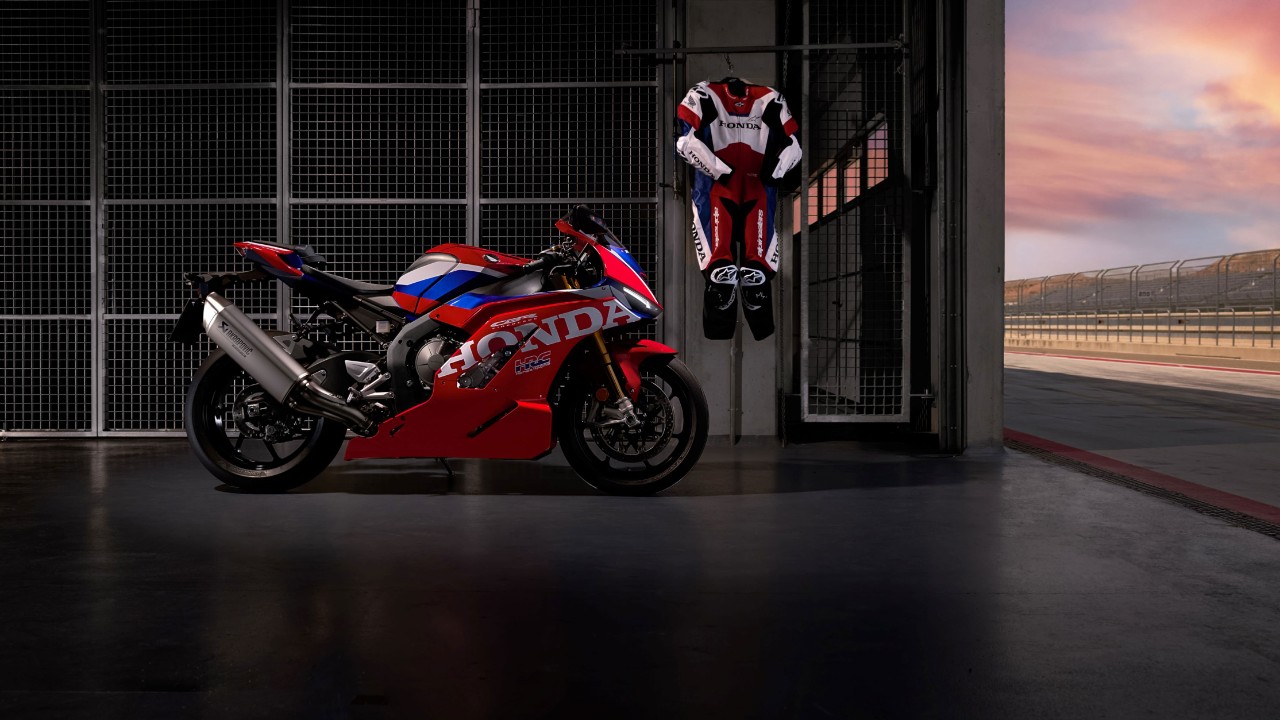
Honda has redesigned about 75% of the parts on its 2027 CBR1000RR-R Fireblade, and the most visible change is a bare titanium fuel tank. The new superbike made its debut at EICMA in Milan on November 3. It arrives in three versions, including a new homologation special for World Superbike racing.
The outgoing bike’s last major update came for 2024, the Italian site Insella notes. This time, though, the company calls the update a redesign built around a “Total Control for the Track” concept. The frame, swingarm, intake and engine top end all changed.
There are still gaps in what Honda has shared. The release gives no horsepower figure, no weight and no price. Here is what the company did confirm, piece by piece.
A titanium tank for the 2027 CBR1000RR-R Fireblade
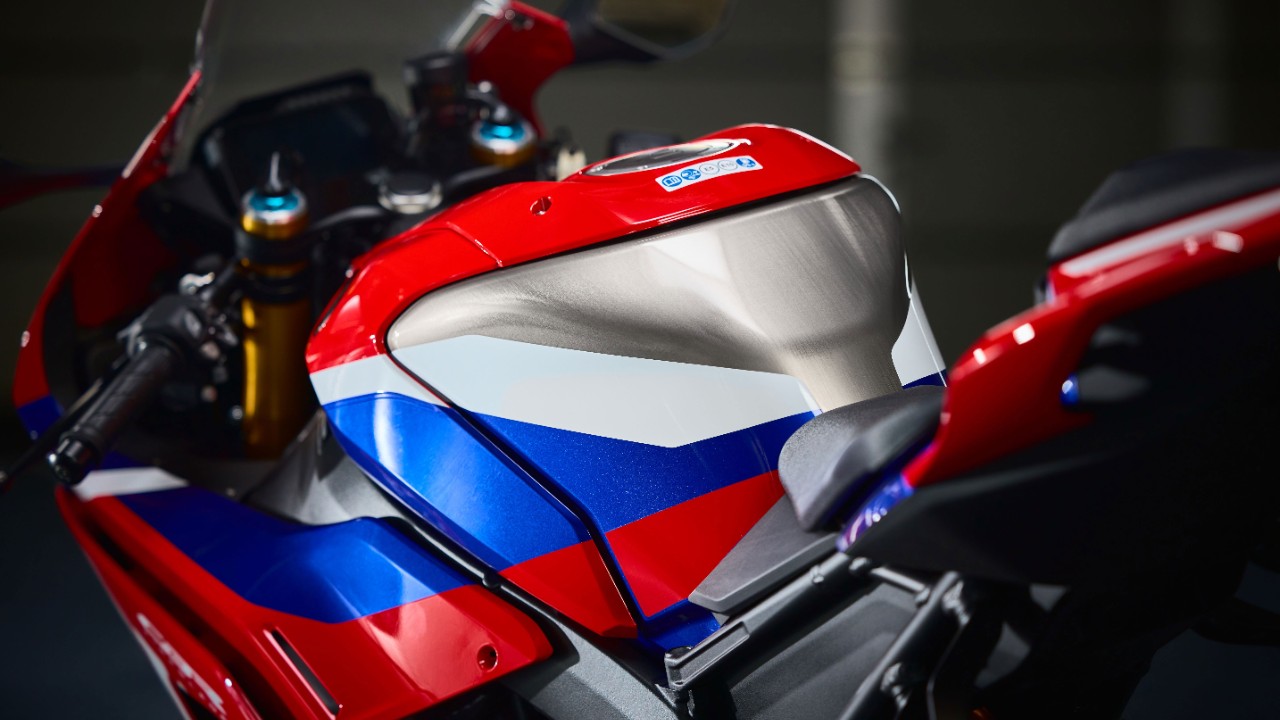
The tank is the headline item. According to Honda’s EICMA release, “a titanium fuel tank has been adopted” to cut weight. It goes without the plastic cover that earlier titanium tanks needed.
That comparison is Honda’s own. The release notes that the 2017 CBR1000RR SP and SP2 also had titanium fuel tanks, but they “required an outer plastic cover.” On the new bike, the metal is part of the look. In fact, the Fireblade SP gets a hand-finished hairline treatment that leaves parts of the titanium exposed, plus a new Honda Flagship WING emblem on each side.
A lighter, more flexible frame
Next comes the chassis. Honda built a new aluminum twin-tube frame and enlarged the opening at the head pipe to feed more air to the air cleaner. It also swapped the one-piece cast cylinder hangers for bolt-on brackets.
The goal was controlled flex, not just stiffness. Honda says lateral rigidity drops about 20% compared with the previous model, while torsional rigidity stays the same. Thin-wall gravity die casting allows walls as thin as 2 mm. As a result, the frame on the Fireblade and Fireblade SP is about 440 g lighter.
The swingarm follows the same idea. Its pivot shaft shrinks from 20 mm to 17 mm, and lateral rigidity falls about 12%, again with torsional rigidity kept.
An intake that changes length
The engine is still a 999 cc liquid-cooled inline-four with double overhead cams and four valves per cylinder. However, it breathes in a new way. Honda fitted a two-stage variable-length intake funnel, which the release calls a first for a mass-produced Honda motorcycle.
Here is how it works. At 11,750 rpm and above, the upper part of the funnel slides up and separates. Below that point, the longer funnel boosts low-to-mid-range output. In other words, the bike gets a fatter midrange without giving up the top end.
Honda also refined its two-motor throttle-by-wire for finer control, sharper response and smoother engine braking. Meanwhile, the cylinder head cover switches from aluminum to magnesium, which saves more than 200 g on the Fireblade SP.
Three Fireblades, three suspension setups
The base Fireblade uses a SHOWA Big Piston Fork and a SHOWA BFRC-lite rear shock. By contrast, the Fireblade SP steps up to electronically controlled Öhlins Smart-EC3.0 suspension front and rear, with a TTX36 unit at the back.
Then there is a brand-new third model. Honda calls it the Fireblade HRC Works Edition, a homologation model for the FIM Superbike World Championship. It uses mechanically adjustable Öhlins suspension and Brembo Hypure Sports brakes. It also gets carbon-fiber front winglets, a carbon front fender and a carbon rear duct fairing. Honda says it is designed to be road-legal under each market’s rules.
For racers, Honda offers an optional HRC Racing Kit. It includes a PGM-FI and ignition unit, a bottom-neutral shift system and other track parts. Installing it voids the warranty.
Why the timing matters
World Superbike is changing for 2027. Insella reported that tires move from Pirelli to Michelin, Brembo becomes the only brake supplier, and a per-manufacturer rev limit returns. Insella also noted that Ducati won all 36 races of the 2026 season.
Honda had already started testing. Insella says HRC ran a camouflaged CBR1000RR-R at Jerez on October 22–23, with Jonathan Rea riding it first, then Jake Dixon and Somkiat Chantra. For context, Insella puts the outgoing bike’s output at 217 hp from 999 cc. It sells from €23,490 in Italy, or €27,490 for the SP, according to the same report.
Honda also made some small green choices. The windscreen uses DURABIO, a plant-derived plastic, and the seat bases use pre-consumer recycled material. The 2027 CBR1000RR-R Fireblade is on show at EICMA, which opens to the public from November 5 to 8.
More from Fast Lane Only