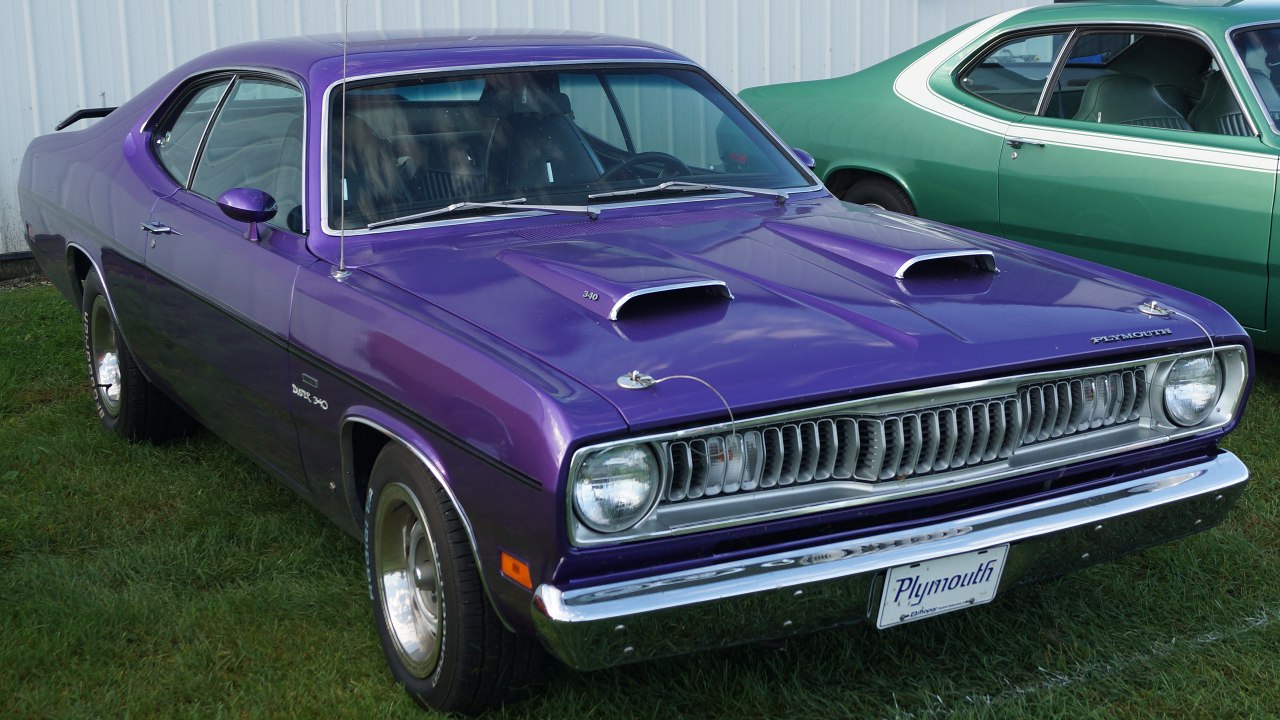
The Plymouth Duster 340 packed big-block attitude into a compact body, and that mix of performance and value has turned it into one of the most closely watched Mopar collectibles. Understanding exactly which years Plymouth built the 340 version, and how those model-year differences affect prices today, is essential for anyone trying to buy, sell, or simply judge what these cars are really worth.
I will walk through the production timeline for the Duster 340, highlight the key mechanical and cosmetic changes by year, and then connect those details to current valuation data so readers can see why some examples command a premium while others remain relative bargains.
When Plymouth built the Duster 340
The Duster nameplate itself ran through the first half of the 1970s, but the high-performance 340 variant occupied a narrower window. Reporting on the model’s history notes that the Duster line covered a six-year production run from 70-76, with the 340 engine defining the most desirable performance versions in the early part of that span. Additional historical context on the compact muscle formula confirms that The Plymouth Duster 340 was introduced in 1970, positioned as a major success for Mopar by combining a relatively light body with the strong small-block 340 V8. That launch year set the template for the performance image that still drives collector interest.
By the early 1970s, tightening emissions rules and insurance pressures began to reshape the Duster 340’s character. A detailed market profile of The Duster notes that, In 1972, the Duster 340‘s horsepower dropped to 240, even as sales rose to 15,681. That combination of lower rated output and higher volume helps explain why 1972 cars are often more plentiful and, in many cases, slightly more affordable than the earliest, more potent versions, even though they still carry the same basic 340 identity.
How the Duster 340 evolved from 1970 through 1972
Within the short run of the 340-powered Duster, the early years show meaningful differences that collectors track closely. The 1970 Plymouth Valiant Duster 340 arrived as a compact fastback offshoot of the Valiant, pairing the small-block 340 with a choice of manual or automatic transmissions and a range of performance-oriented options. A detailed buyer’s guide to the 1970 model notes that a floor-mounted three-speed stick was standard, with a floor-mounted four-speed and the widely regarded TorqueFlite automatic available as upgrades, and that guidance, published on Jan 6, 2022, underscores how the first-year package blended everyday usability with genuine muscle capability for shoppers in Jan of that year looking back at the car’s original spec.
By 1971, Plymouth refined the formula rather than reinventing it, and that continuity is reflected in how valuation experts treat the 1971 Plymouth Duster 340. The dedicated pricing page for the 1971 Plymouth Duster 340 emphasizes that the value of a 1971 Plymouth Duster 340 can vary greatly depending on condition, originality, and options, a reminder that small year-to-year styling and mechanical tweaks matter less than how complete and correct a given car is. When the 1972 model arrived, the rated horsepower drop to 240 and the jump to 15,681 units, as documented in the Apr 12, 2020 analysis of The Duster, shifted the car slightly away from hardcore performance and toward broader market appeal, a tradeoff that still shapes how collectors rank these three key years.
Key features that separate the 340 cars from standard Dusters
Beyond the engine itself, the 340 versions carried visual and hardware cues that set them apart from ordinary Dusters and from the Valiant sedans that shared much of their structure. A detailed heritage piece on a survivor car highlights how the SPECIAL GRILLE treatment distinguished the “340 Duster” from the standard Duster grille, which was shared with regular Valiant-based models. That Nov 13, 2024 report underlines how Plymouth used relatively simple trim changes to telegraph performance, a strategy that now helps collectors authenticate real 340 cars and distinguish them from clones.
Under the skin, the 340 package also meant a more serious chassis and drivetrain setup than the base six-cylinder or small V8 Dusters. Period-focused coverage of a 1972 Plymouth Duster 340 notes that, while most Dusters built during the model’s run were more modestly equipped, the 340 cars benefited from the short wheelbase and full-length 340 body stripes that signaled their intent. When combined with the drivetrain choices outlined in the Jan 6, 2022 buyer’s guide, including the floor-mounted four-speed and the TorqueFlite automatic, these details explain why the 340 models feel more like purpose-built performance cars than simple trim upgrades, and why collectors scrutinize items like suspension components, rear axle ratios, and factory documentation to confirm a car’s authenticity.
Current collector values by model year
On the valuation side, the market now treats early Duster 340s as serious collectible muscle, even if they still lag behind the most famous big-block Mopar nameplates. The pricing tool for the 1970 Plymouth Valiant Duster 340, under the section labeled Common Questions, frames the discussion around “How much is a 1970 Plymouth Valiant Duster 340 worth,” and emphasizes that condition, originality, and documentation drive the spread between driver-quality cars and top-tier restorations. A similar structure appears in the valuation entry for the 1971 Plymouth Duster 340, where the Common Questions section again centers on “How much is a 1971 Plymouth Duster 340 worth,” reinforcing that buyers should think in terms of specific year and specification rather than treating all 340s as interchangeable.
The 1972 Plymouth Duster 340 has its own dedicated pricing breakdown, which again uses a Common Questions section to address “How much is a 1972 Plymouth Duster 340 worth,” and notes that sale prices depend heavily on options and overall presentation. When I compare these three valuation snapshots, a pattern emerges: the earliest 1970 cars, with their launch-year status and strong performance image, tend to sit at the top of the price range, 1971 examples follow closely, and 1972 cars, despite their higher production of 15,681, still command solid money when well preserved.
Why Duster 340 prices are rising and which cars lead the pack
Recent market analysis shows that Duster values are not just holding steady, they are climbing, even as some other segments soften. A broad look at vehicles that are “staying strong in a soft market” singles out certain models that continue to attract buyers despite broader cooling, and the Duster appears in that context as a compact muscle car that still looks relatively attainable compared with headline-grabbing Mopar icons. A more focused valuation story on Duster pricing trends, published on Jul 8, 2025, notes that the most desirable and most valuable versions are the early performance models, particularly the 340 cars, and links their appreciation to renewed attention from pop culture and a broader rediscovery of 1970s Mopar muscle.
Within that rising tide, certain configurations stand out. A feature on a 1970 Plymouth Duster 340 that received a meticulous rotisserie restoration, highlighted on Oct 8, 2024, describes the car as a numbers-matching example finished in bright Vitamin C paint and notes that it was One of a small group of High Im performance builds. That kind of specification, with original drivetrain, rare color, and high-quality restoration, represents the top of the Duster 340 market and helps set benchmarks for auction and private-sale prices. At the same time, the broader Duster valuation overview points out that even more modest 340 cars, including those featured in shows like Poker Face, are benefiting from renewed visibility, which keeps demand strong across driver-quality and mid-tier examples as well.
How to shop smart for a Duster 340 today
For buyers entering the market now, the key is to balance model-year desirability with condition and documentation rather than chasing a specific badge at any cost. The valuation tools for the 1970, 1971, and 1972 Duster 340s all stress that prices “can vary greatly” depending on originality, which means a well-documented 1972 car with its 240 horsepower rating may be a smarter buy than a rough 1970 example with missing parts. The historical overview of the Plymouth Duster and its 340 variants, combined with the detailed buyer’s guide published on Jan 6, 2022, gives shoppers a checklist that includes drivetrain codes, body tags, and period-correct options, all of which can materially affect value.
At the same time, enthusiasts should recognize that the Duster 340’s appeal lies in its blend of performance and usability, not just in static investment potential. The Savoy museum’s Aug 3, 2025 commentary on The Plymouth Duster 340 frames the car as a brilliant example of Mopar muscle done right, combining affordability with real performance, and that perspective still resonates with today’s buyers. When I look across the valuation data, the market-trend reports, and the detailed feature stories, the throughline is clear: the Duster 340 built from 1970 through the early 1970s has moved from overlooked compact to established collectible, and shoppers who understand the production years and model-year nuances are best positioned to find a car that delivers both enjoyment and long-term value.