The Dodge Li’l Red Express Truck arrived at a strange moment in American performance history, when emissions rules had choked most muscle cars and carmakers were scrambling for loopholes. Dodge responded with a bright red pickup that behaved like a hot rod, and it has been warping expectations of what a truck can be ever since. Today, that short production run and outsized personality are driving strong prices on the collector market.
I want to trace when Dodge actually released the Li’l Red Express, how it fit into the brand’s so‑called “Adult Toys” strategy, and what buyers are paying for surviving examples now. Along the way, the reporting shows how a truck that once slipped around emissions rules has become a benchmark for vintage performance pickups.
How the Li’l Red Express Truck came to market
Dodge did not stumble into the Li’l Red Express Truck by accident, it built the model as a deliberate attempt to inject muscle car attitude into a light‑duty pickup. The truck was conceived as part of Dodge’s “Adult Toys” lineup, a range of vehicles that leaned into fun and performance rather than pure work duty, and it was explicitly designed as a muscle car with a cargo box rather than a traditional hauler. Contemporary coverage notes that it was Part of Dodge Adult Toys, a positioning that framed the truck as a toy for grown‑up enthusiasts rather than a fleet workhorse.
The timing was strategic. In the late 1970s, new emissions and fuel‑economy rules had gutted the horsepower ratings of most American performance cars, but light trucks were regulated differently. Dodge engineers used that gap to build the Li’l Red Express with a strong V8 and relatively free‑flowing exhaust, creating a pickup that could outrun many contemporary cars while still fitting within the truck category. Reporting on the model’s origins describes how the Li’l Red Express was engineered as a way around the new rules, a performance‑minded truck that took advantage of the regulatory environment rather than surrendering to it, a point underscored in later analysis of the Red Express concept.
Model years and performance reputation
The Li’l Red Express Truck’s production window was short, which is a key reason collectors obsess over exact years. The truck was built for the 1978 and 1979 model years, a span that later market guides group together as the third generation of Dodge’s D‑series pickups. One valuation source explicitly categorizes the “Dodge Li Red Express Truck Gen” as a 1978 to 1979 run, treating those two years as a distinct slice of the broader D‑series market and reinforcing that the performance package was limited to that brief period. That same market snapshot, which tracks the “Dodge Li Red Express Truck Gen,” helps explain why buyers today focus so heavily on those two model years when they talk about authenticity and originality.
Within that narrow window, the truck quickly earned a reputation that far exceeded its production numbers. Multiple accounts point out that in 1978 the Li’l Red Express was regarded as one of the quickest American production vehicles, a claim echoed in enthusiast retrospectives that describe the “Dodge Lil Red Express Truck” as the fastest American produced vehicle in 1978. A separate community history notes that in 1978 the baddest factory hot rod in the USA was not a car at all but a pickup, the “Dodge Red Truck,” a reference to the same Li’l Red Express package. Later commentary, including a Dec 1, 2016 feature that recalls how readers remembered seeing the truck around Aiken in the mid‑1980s, reinforces that this performance image stuck long after the model left showrooms, with one reader identifying it through the Dodge Adult Toys catalog and another recalling the truck’s status as the quickest American vehicle of its day.
Design details that made the truck unforgettable
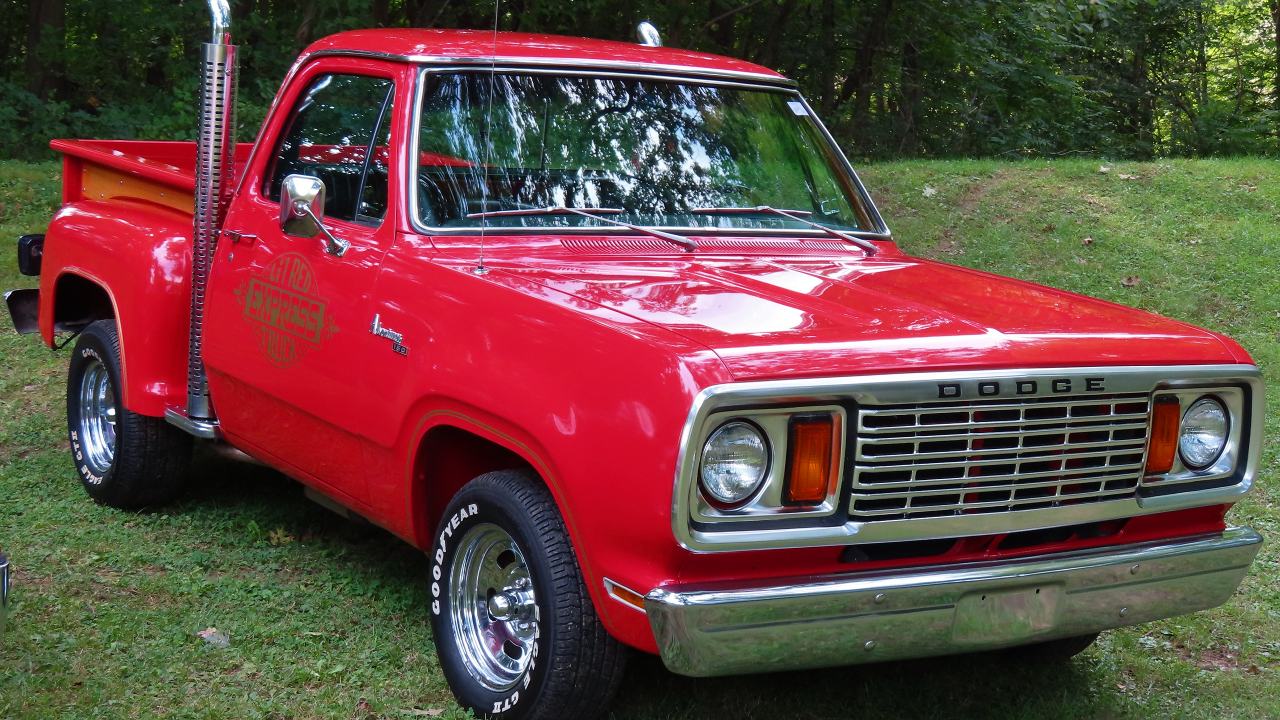
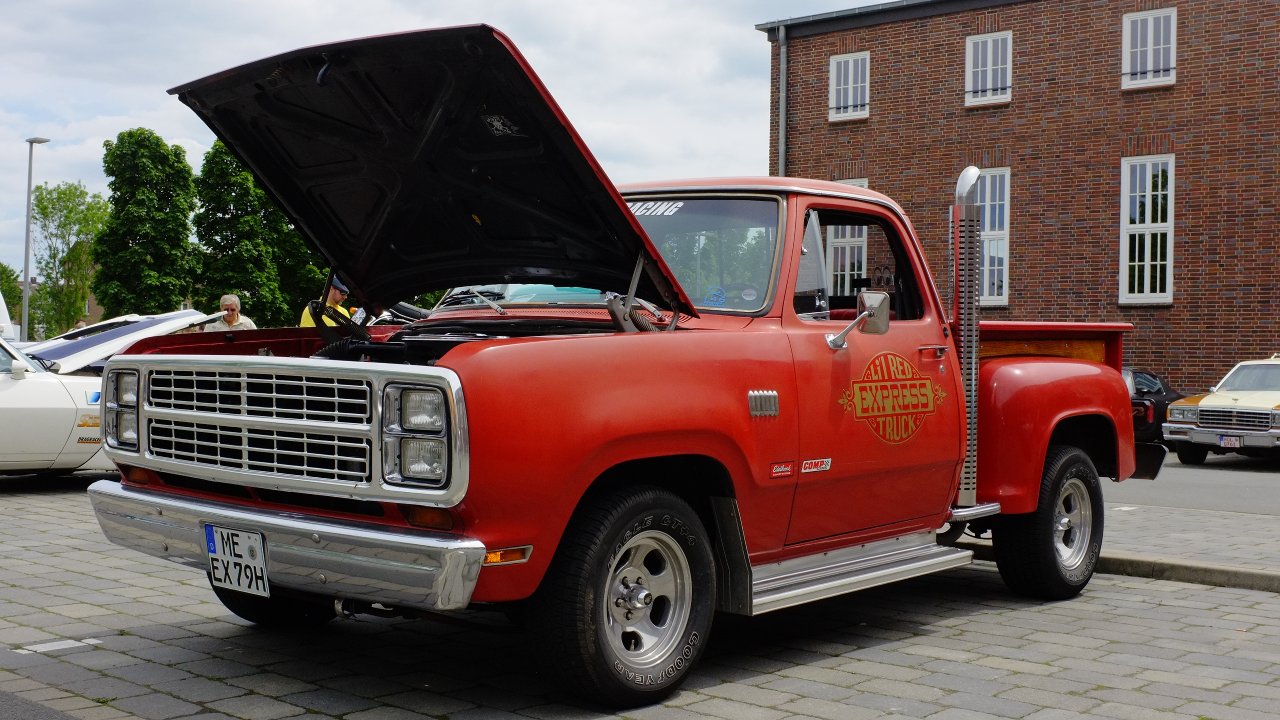
Performance alone did not make the Li’l Red Express memorable, its styling was calculated to stand out in traffic and in dealership lots. The truck wore bright red paint, wood‑trimmed bed sides, and a pair of tall vertical exhaust stacks that evoked big‑rig 18‑wheelers, a combination that turned an ordinary D‑series pickup into a rolling billboard for Dodge’s performance ambitions. A museum post that introduces a 1979 Dodge D‑150 “Lil Red Express” describes how the 1978 to 1979 trucks used wild 18‑wheeler exhaust stacks and a vivid finish, referring to the “Dodge Lil Red Express Truck Back” as a visual statement as much as a mechanical one. That same description ties the look directly to the period, noting that the red pickup with its stacks was one of the most eye‑catching factory vehicles of its era.
Later analysis of the truck’s place in performance‑truck history emphasizes that the Li’l Red Express combined this head‑turning exterior with genuine speed. A modern overview of performance pickups describes the Li’l Red Express as a muscle car with a cargo box and highlights its “head‑turning exterior design,” again linking the visual drama to the truck’s Adult Toys positioning. Another retrospective from Mar 25, 2024, which looks back at the 1978 to 1979 “Red” trucks, notes that despite Dodge’s efforts to think outside the conventional pickup box, timing was not on the Li’l Red’s side, a nod to the way its flamboyant styling and performance focus collided with rising fuel prices and changing buyer priorities. In that sense, the design that made the truck unforgettable also helped limit its mainstream appeal, which now feeds into its rarity and collectability.
How much a Li’l Red Express is worth today
Four and a half decades after Dodge built the Li’l Red Express, the market has settled into a clear pattern: these trucks are no longer cheap curiosities, they are established collectibles with pricing that reflects both nostalgia and scarcity. A detailed valuation for the 1979 Dodge Lil’ Red Express notes that values can vary greatly depending on condition, originality, and documentation, and it frames the question under “Common Questions” such as “How much is a 1979 Dodge Lil’ Red Express worth?” That same valuation tool tracks individual “Dodge Lil Red Express” sales and shows that well‑kept examples command a premium over driver‑quality trucks, a spread that mirrors what collectors see with period muscle cars.
Broader market snapshots back up that picture with concrete numbers. A May 13, 2019 feature that examined 1978 to 1979 Li’l Red Express trucks reported that value guides suggested they were worth the same money on the open market, regardless of whether they were 1978 or 1979 models, and cited a “Current Price” of $39,000 for a comparable vintage Dodge Swept pickup. While that $39,000 figure is tied to a different Dodge truck, it provides a useful benchmark for how serious collectors are about period‑correct, well‑restored Mopar pickups. More targeted listings for the Li’l Red Express itself show that asking prices for these trucks often fall in a similar band, with some examples trading above that level when they combine low mileage, strong documentation, and high‑quality restorations.
Current asking prices and market range
Active listings give the clearest sense of what buyers are being asked to pay right now. A marketplace that tracks “Dodge Li Red Express Truck Gen” sales and offerings shows individual trucks listed for tens of thousands of dollars, with one highlighted example at $35,995 and other featured trucks in a similar range. That same market overview, which groups the Li’l Red Express as a 3rd Gen model from 1978 to 1979, underscores that these are not entry‑level classics, they sit in a price bracket that reflects both their performance reputation and their limited production window.
Another snapshot of current offerings, focused specifically on “Dodge Li Red Express” classic cars for sale, answers the question “How much is a Dodge Li’l Red Express?” by looking at live listings. According to that analysis, based on the current Dodge Li’l Red Express listings for sale on Classics on Autotrader, asking prices start in the lower tens of thousands and “max out around $67,995,” a range that captures everything from driver‑quality trucks to high‑end restorations. The same overview notes that these figures are “Based” on real‑world listings rather than theoretical guide numbers, which helps explain why some sellers aim higher than older value‑guide estimates. In practical terms, that means a buyer today should expect to see Li’l Red Express trucks advertised anywhere from the mid‑$30,000s for solid examples up to roughly $67,995 for the best‑presented trucks, with actual transaction prices depending heavily on condition and originality.
Why values have staying power
Prices alone do not explain why the Li’l Red Express continues to command attention, the truck’s story and image are doing as much work as the market data. Enthusiast communities still trade memories of seeing these trucks new, as in the Dec 1, 2016 feature where Ann Willbrand recalled spotting them around Aiken in the mid‑1980s and identifying them from the Dodge Adult Toys catalog. Social posts from Jul 13, 2023 and Sep 13, 2024 revisit the idea that in 1978 the baddest factory hot rod in the USA was a pickup, with one calling out the “Dodge Lil Red Express Truck” as the fastest American produced vehicle in 1978. That kind of cultural memory keeps demand alive among buyers who grew up with the truck on posters or in local cruise‑ins.
At the same time, modern performance‑truck coverage continues to position the Li’l Red Express as a template for later hot pickups, describing it as part of Dodge’s Adult Toys strategy and highlighting its mix of muscle‑car performance and a head‑turning exterior. A Mar 25, 2024 retrospective on the “Red” trucks notes that despite Dodge’s creative thinking, timing was not on the Li’l Red’s side, which helps explain why production was limited and why surviving examples are now so coveted. When I look at the current market data, from valuation tools that field “Common Questions” about “How much is a 1979 Dodge Lil’ Red Express worth?” to live listings that “max out around $67,995,” it is clear that buyers are paying for more than a vintage pickup. They are buying a very specific moment in American performance history, when a bright red truck slipped through a regulatory gap and briefly became the quickest thing on the street.