Across the country, a seemingly harmless customization choice is turning into a reliable way to attract police attention. Decorative license plate frames, tinted covers, and vinyl wraps are no longer just style statements, they are increasingly treated as potential violations that give officers a clear reason to pull a car over. As enforcement tightens, drivers who do not understand the fine print of plate visibility laws are discovering that a few millimeters of plastic can be the difference between an uneventful drive and a costly traffic stop.
The trend is especially visible in states that have moved to clarify or toughen their rules, where officers are being instructed to look closely at every plate they pass. What began as an effort to crack down on people deliberately hiding their tags from toll cameras and traffic enforcement has swept up ordinary motorists whose frames or covers came straight from a dealership. The result is a new kind of enforcement magnet, one that sits at the back of almost every vehicle on the road.
How a styling fad collided with plate visibility laws
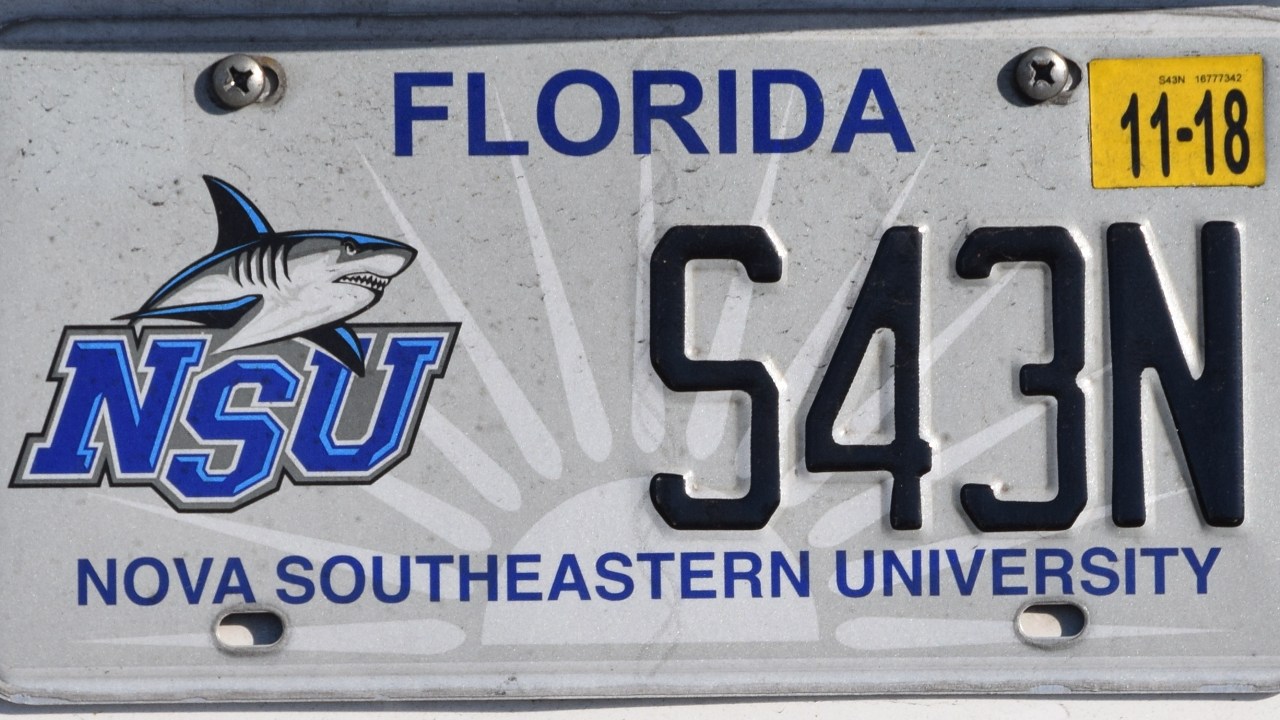
License plate frames and covers have long been marketed as low risk personalization, the sort of accessory that lets drivers show a sports team, a college, or a dealership logo without touching the car itself. The legal problem arises when those accessories intrude on the plate’s letters, numbers, or registration markings, even slightly. In Florida, for example, state law prohibits any frame or cover that intentionally obscures part of the plate, including the alphanumeric characters or the state name, and that standard is now being applied with new intensity.
What many drivers see as a harmless border is treated in statute as an obstruction that can interfere with identification, toll collection, or automated enforcement. Florida officials have warned that even a frame that clips the word “Florida” or covers a small corner of a registration sticker can qualify as an obscured plate under the law. That interpretation means a car wearing a popular chrome frame or a tinted plastic shield can be stopped on sight, turning a fashion choice into a standing invitation for a traffic stop and a potential fine.
Florida’s crackdown and the rise of the “police magnet” plate
Florida has become a case study in how quickly a plate trend can morph into a law enforcement priority. State authorities have urged drivers to inspect their plates closely, warning that frames or covers that block any part of the design could lead to penalties. Reporting from Dec in Florida has highlighted that the law is not limited to obvious attempts to hide a tag, it also applies to everyday accessories that partially cover the state name or registration decals, even when the main numbers remain legible.
The Florida Highway Patrol has reinforced that message with a specific focus on illegally wrapped plates. In guidance issued from TALLAHASSEE, Fla, the Florida Highway Patrol, also referred to as FHP, cautioned that vinyl wraps or coatings that alter the background, colors, or reflectivity of a Florida plate are prohibited and will be targeted for strict enforcement. Drivers who purchased custom wraps to match a vehicle’s paint or to create a “ghosted” look around the numbers are being told to remove them and obtain a standard replacement plate from their local tax collector, or risk repeated stops and citations every time an officer spots the modification.
Confusion, arrests, and the gray area around frames
The rapid shift from lax to strict enforcement has left many Florida drivers unsure of what is actually allowed. In PALM BEACH COUNTY, Fla, authorities were forced to clarify the rules after an arrest involving a rental car with a license plate frame drew public attention. The incident underscored how a driver who did not install the frame, and may not even have noticed it, could still be held responsible if the accessory is found to obscure part of the plate under Florida’s updated law.
Local law enforcement in PALM BEACH COUNTY, Fla responded by explaining that frames are not banned outright, but they cannot block any letters, numbers, or identifying marks on the plate. That distinction sounds simple in theory yet becomes murky in practice when frames vary in thickness and plates include small design elements near the edges. The confusion has prompted officials to advise drivers to err on the side of caution and remove any frame that comes close to the printed characters, since an officer on the roadside will have broad discretion to decide whether a particular design crosses the line into an enforceable violation.
Ghost plates, multi‑agency crackdowns, and automated enforcement
While Florida’s debate has centered on frames and wraps, other jurisdictions are confronting a related problem: plates that are intentionally altered or obscured to defeat cameras. In New York, law enforcement agencies have coordinated large scale operations targeting so called “ghost plates,” tags that are covered, defaced, or otherwise manipulated to avoid detection. During one such campaign, officials marked their 100th dedicated enforcement operation, highlighting how persistent the issue has become and how much effort is being invested in tracking these vehicles down.
Suffolk County Police Commissioner Kevin has emphasized that Collaboration between agencies is critical to making these crackdowns effective, since drivers who hide their plates often cross city and county lines to evade tolls or traffic penalties. The focus on ghost plates has a direct connection to the broader scrutiny of frames and covers. Officers trained to spot a deliberately obscured tag are also more likely to notice a decorative frame that clips a registration sticker or a tinted shield that darkens the plate, even if the driver’s intent was purely cosmetic. In practice, the same visual cues that help identify a toll evader can also flag an ordinary motorist for a stop.
Legislatures respond, but drivers still carry the risk
As enforcement ramps up, some state legislatures are trying to draw clearer lines between harmless decoration and genuine obstruction. In Oklahoma, a measure identified as OK SB1313 would allow decorative frames around license plates as long as they do not obstruct the characters or required markings. The bill specifies that a compliant frame would be treated as a secondary offense, meaning an officer could not pull a driver over solely because of the frame, but could cite it if the vehicle was already stopped for another reason. That approach reflects an attempt to balance personal expression with the need for legible plates, without turning every frame into a primary enforcement trigger.
The contrast with Florida is stark. There, drivers are being told that any accessory that interferes with full plate visibility can justify a stop on its own, and that even unintentional obscuring can lead to fines. Reports from Dec in Florida have warned that motorists may see their cars unknowingly become police magnets under the new interpretation, particularly if they rely on dealer installed frames that were once considered routine. The central concept officials are pushing is full plate visibility, with no tolerance for accessories that intrude on the printed area, regardless of how common those accessories have become in the aftermarket.
More from Fast Lane Only