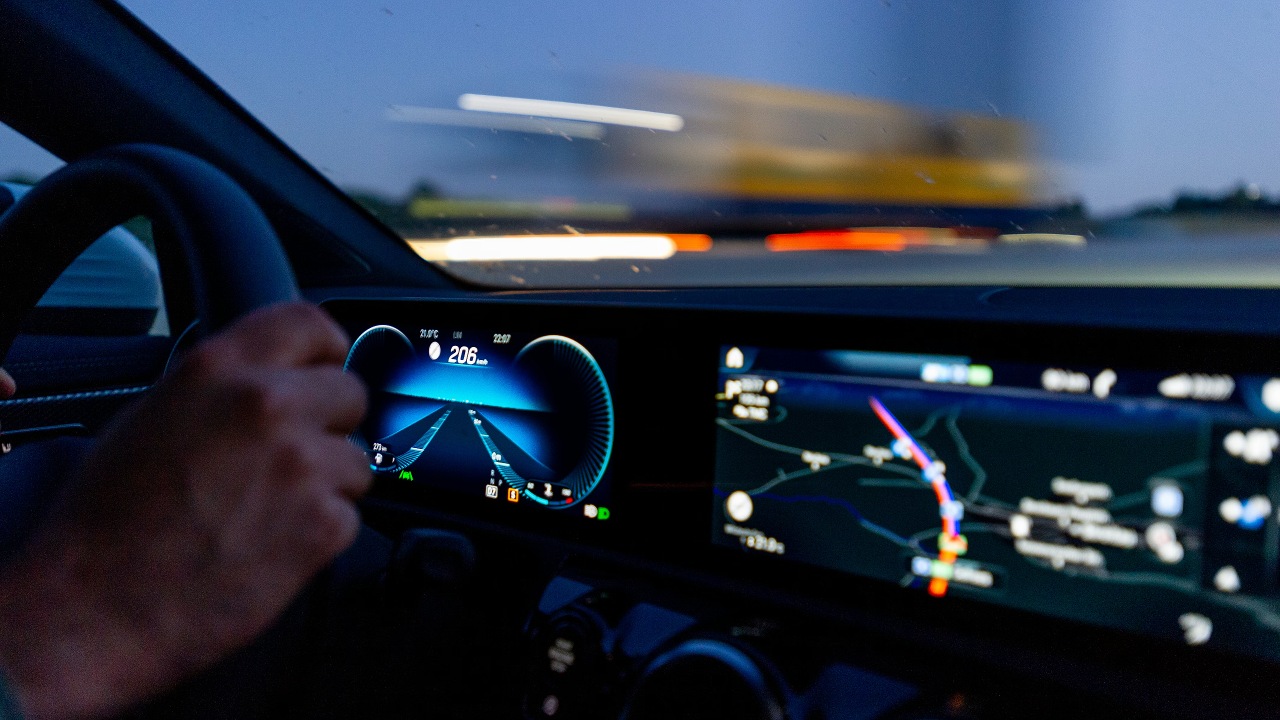
Police across the United States and the Unit Kingdom have been flagging a small, familiar habit that can quickly escalate into a traffic stop: decorating the area around the windshield and dashboard. What feels like a harmless way to personalize a car, from air fresheners to dangling charms, can give officers a clear legal basis to pull a driver over and even write a citation. The core concern is simple but serious, because anything that blocks a driver’s view of the road can be treated as both a safety risk and a violation of state traffic laws.
Behind the warnings is a growing focus on visibility and distraction inside modern vehicles. As dashboards fill with screens and drivers add their own ornaments, the space between the steering wheel and the glass has become crowded. Law enforcement agencies say that when a driver’s line of sight is compromised, even slightly, the odds of missing a pedestrian, cyclist, or sudden lane change rise sharply, and officers are increasingly using those obstructions as a reason to initiate a stop.
The “innocent” habit police say they are watching
Officers describe a common pattern: a car passes by with a tree-shaped air freshener, a graduation tassel, or a string of beads swinging from the rearview mirror, and that small object becomes the first thing they notice. Police in the United States and the Unit Kingdom have publicly warned that these hanging items, along with stickers and trinkets on the dashboard, can be enough to justify pulling a driver over because they may obstruct the view of the road ahead. What drivers see as sentimental keepsakes, officers increasingly treat as potential hazards that can mask a pedestrian in a crosswalk or a vehicle in an adjacent lane.
Once a stop is made for an obstruction, the encounter rarely ends with the decoration itself. Officers can use that initial violation to check a driver’s license, registration, and insurance, and to look for signs of impairment or other offenses. Recent guidance to motorists has stressed that even if a driver believes the item is small or positioned off to the side, an officer only needs specific, observable facts suggesting that the object blocks or distorts the driver’s view to justify the stop. That threshold is low enough that a simple charm or air freshener can become the starting point for a much more serious roadside interaction.
How state laws turn decorations into violations
Behind these warnings are state statutes that treat windshield and mirror clutter as a legal issue, not just a matter of taste. In California, for example, California Vehicle Code Section 26708 prohibits driving with any object or material on the windshield or on the side or rear windows, and it also bars drivers from placing anything in a position that obstructs or reduces the driver’s clear view. Legal analysts note that the statute is written broadly, so it can apply to a wide range of items, from suction-cup phone mounts to religious symbols, if they are large enough or placed in a way that interferes with visibility.
Other states follow a similar pattern, grouping these rules under State Laws on Rearview Mirror Obstructions that restrict what can hang from the mirror or sit on the dash. While the specific wording varies, the underlying idea is consistent: if an object blocks a driver’s line of sight, it can be treated as a violation. Some states explicitly mention hanging objects from Rearview Mirrors, while others rely on more general language about anything that interferes with the driver’s view of the highway. Drivers who assume that a small decoration is harmless often discover that the law focuses less on the item’s sentimental value and more on its potential to hide a hazard, even for a split second.
Safety risks behind a “small” obstruction
Traffic safety experts emphasize that the legal rules reflect a real-world risk, not just a technicality. The Dangers of Hanging Objects from Rearview Mirrors are rooted in how the human eye and brain process information at speed. A charm or air freshener that sits in the driver’s central field of vision can create a blind spot, especially for smaller road users like cyclists or children. When the object swings with the motion of the car, it can draw the eye away from the road, adding a subtle but persistent distraction that compounds the obstruction.
Research on The Legality of Hanging Objects from the Rearview Mirror also highlights how these items can complicate crash investigations and insurance claims. If an insurer or investigator concludes that a driver’s view was partially blocked by a decoration, that detail can influence how fault is assessed and may affect coverage. Safety educators point out that even when a driver has memorized the road ahead, unexpected events, such as a pedestrian stepping off a curb or a vehicle braking suddenly, demand a clear, unobstructed view. A small object in the wrong place can delay recognition of that danger by a fraction of a second, which is often the difference between a near miss and a collision.
Dashboard tech, screens, and modern distractions
Decorations are only part of the visibility problem inside today’s vehicles. Modern cars increasingly rely on large infotainment displays, digital instrument clusters, and windshield-mounted GPS units, all of which compete for space and attention in the driver’s forward view. Legal discussions about Do GPS and Infotainment Screens Count as Distractions point out that these systems can be just as problematic as a dangling ornament when they are positioned high on the dash or attached to the windshield. A smartphone running a navigation app, for example, can block a portion of the road scene while also tempting the driver to glance down at notifications.
Attorneys who track the most common types of Distractions while driving note that these screens demand visual, manual, and cognitive attention at the same time. When a driver looks away from the road to adjust a map, change a playlist, or respond to a prompt on a dashboard display, the car can travel the length of a football field in a matter of seconds with limited oversight. Combined with physical objects around the mirror and windshield, this creates a layered risk: the driver’s eyes are off the road more often, and when they do look up, their view is partially blocked by devices and decorations that were never part of the car’s original design.
What officers and safety experts say drivers should do
State troopers and traffic educators have been trying to simplify the message for drivers who are unsure where the line is. In segments such as Ask Trooper Steve, law enforcement in Central Florida has explained that while some dashboard and rearview mirror decorations might technically be allowed, anything that blocks a clear view of the road can still draw police attention. The advice is straightforward: if an officer sitting in another car can see an object hanging from the mirror or perched on the dash, that object is likely visible enough to be questioned during a stop, especially if it appears to sit in the driver’s direct line of sight.
Driver education programs echo that guidance and encourage motorists to treat the area around the windshield and Rearview Mirror as a no-clutter zone. In discussions of The Legality of Hanging Objects from the Rearview Mirror, instructors suggest moving sentimental items to less intrusive locations, such as attaching a charm to a key ring or placing a photo in a wallet instead of taping it to the dash. They also recommend mounting GPS units and smartphones low on the console rather than on the glass, and relying on voice directions instead of constantly checking the screen. The goal is to preserve as much of the driver’s forward view as possible, reducing both the chance of a crash and the likelihood of an avoidable traffic stop.
More from Fast Lane Only