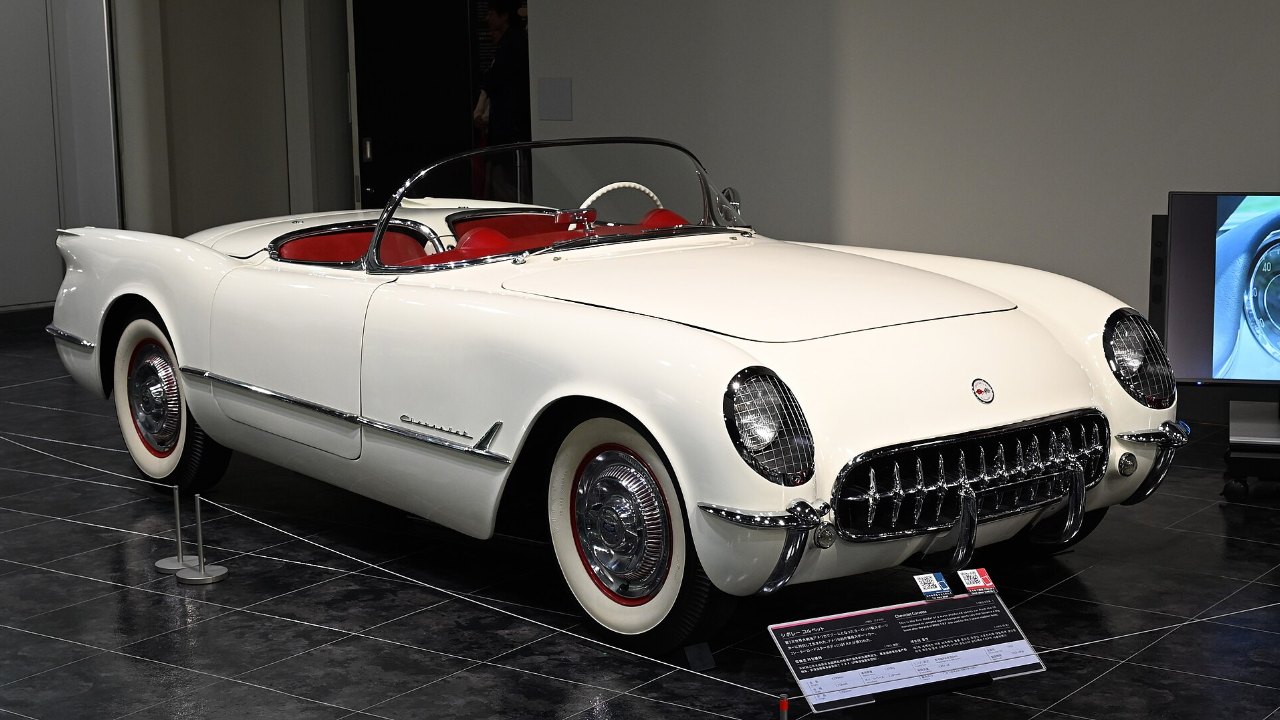
Chevrolet built 300 Corvettes in 1953, and every one of them was a Polo White Corvette with a red interior. Buyers had no choice of color, trim or options. According to GM, the first production car came together on June 30, 1953, in Flint, Michigan. Then workers built the whole run virtually by hand on a pilot line.
That makes the 1953 car an unusual starting point for a nameplate that later offered a full paint chart. It also makes the first-year cars easy to spot. So a 1953 Corvette in any other color is not wearing its factory paint.
Sources from GM, the National Corvette Museum and Corvette reference guides agree on the basic recipe. However, none of them gives a specific reason for the single color. So here is what the record does show, from the Flint pilot line to the auction block.
Built by Hand in a Flint Garage
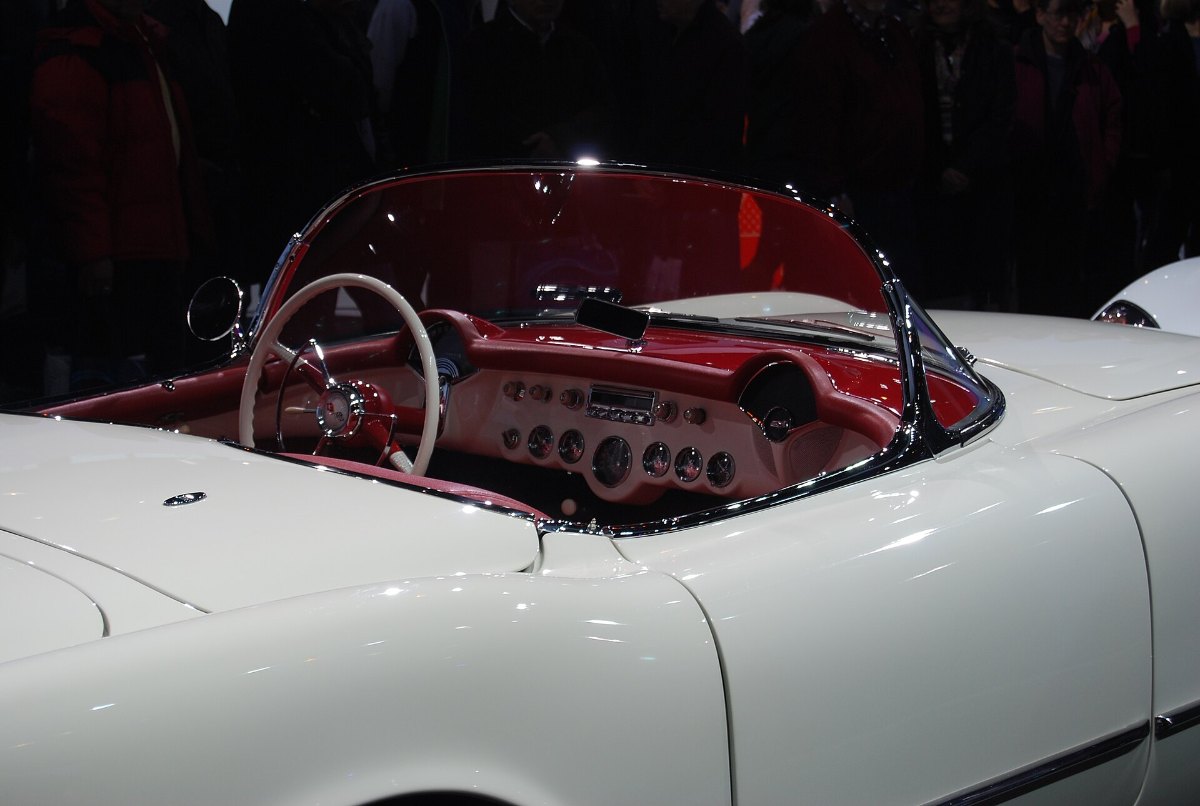
At first, the Corvette was only a show car. GM’s heritage collection page says it first appeared as a Motorama show car at the Waldorf Astoria in New York in January 1953. GM adds that it “was an instant hit.” In fact, production started less than six months later.
However, Chevrolet did not build those first cars on a regular assembly line. Instead, the National Corvette Museum says workers hand-assembled all 300 “in a delivery garage off Van Slyke Road in Flint, Michigan.” GM’s own phrasing is that the cars came together “virtually by hand and all on a pilot line.” A pilot line is a small, temporary setup for building early units before full production.
The body was new territory, too. GM’s 2025 Retro Rides feature calls the Corvette “the first mass-produced car with a plastic-laminated fiberglass body.”
One Recipe for Every Polo White Corvette
In fact, every 1953 car left Flint with the same specification. According to the National Corvette Museum, each one wore Polo White paint, a red interior and a black soft top. GM’s Retro Rides story names the interior color Sportsman Red, while the heritage page describes “Red bucket seat interior trim.”
The equipment list also matched. The Vettefacts reference site says “all 300 Corvettes that were produced in 1953 came with the same options.” It adds that whitewall tires and two-spinner hubcaps came on every car. So a correct 1953 Polo White Corvette should carry all of those pieces.
Meanwhile, the price never changed across the run either. GM lists the base price at $3,498. In its Retro Rides feature, GM estimates that figure equals about $42,000 in today’s money.
Blue Flame Six and Powerglide
Under the hood, every 1953 Corvette used the same drivetrain. GM’s heritage page lists an overhead-valve six of 235.5 cubic inches rated at 150 horsepower. Chevrolet called it the Blue Flame Six. According to Vettefacts, it breathed through three single-barrel carburetors.
Power went through a two-speed Powerglide automatic, and buyers had no manual alternative in 1953. The museum and GM both describe that same automatic.
The chassis figures are short, too. GM’s heritage collection lists a 102.0-inch wheelbase and a weight of 2,705 pounds. Since every car followed one specification, GM gives a single set of figures for the run.
A Second Color and a New Home in 1954
The single-color era lasted just one model year, though. According to GM’s Retro Rides feature on the 1953 Corvette, “in 1954, a second color choice was added – blue.” GM also says Corvette production moved to St. Louis that year.
That move closed the Flint chapter, since later cars came from St. Louis instead. Meanwhile, Vettefacts calls the 1953 model “the rarest of all Corvettes,” and the 300-car total explains why.
What a 1953 Corvette Brings Today
GM’s heritage page calls the 1953 cars “highly prized and absolute collectibles.” It adds that a concours-quality example sits “in the six-figure range.” Two sales at Barrett-Jackson show how far the best-documented cars can go.
First, in 2006, Barrett-Jackson sold VIN 003, a Polo White 1953 Corvette it describes as “the earliest surviving production Corvette.” According to the auction house’s history of its Corvette sales, that car brought $1.1 million. Then, a decade later, the last 1953 Corvette built, No. 300, crossed the block there and sold for $533,500.
More from Fast Lane Only
- Unboxing the WWII Jeep in a Crate
- 15 rare Chevys collectors are quietly buying
- 10 underrated V8s still worth hunting down
- Police notice this before you even roll window down
This article was created with the help of AI and was reviewed and edited by Fast Lane Only editors before publication.