You used to laugh at the Pontiac Aztek. Almost everyone did. Yet two decades after it stumbled through showrooms as a commercial flop, you now see it pop up in auction listings, owners’ clubs, and social feeds as a quirky, surprisingly desirable curiosity. The same crossover that once symbolized corporate miscalculation has become a car you might quietly add to a watch list, just to see where prices go next.
That shift from late-night punchline to low-key collectible did not happen by accident. It reflects how your tastes, the market around you, and even television culture have changed since the Aztek first rolled out. Look closely and you start to see how a vehicle widely mocked for its looks managed to plant seeds that only now are fully blooming.
From bold idea to showroom embarrassment
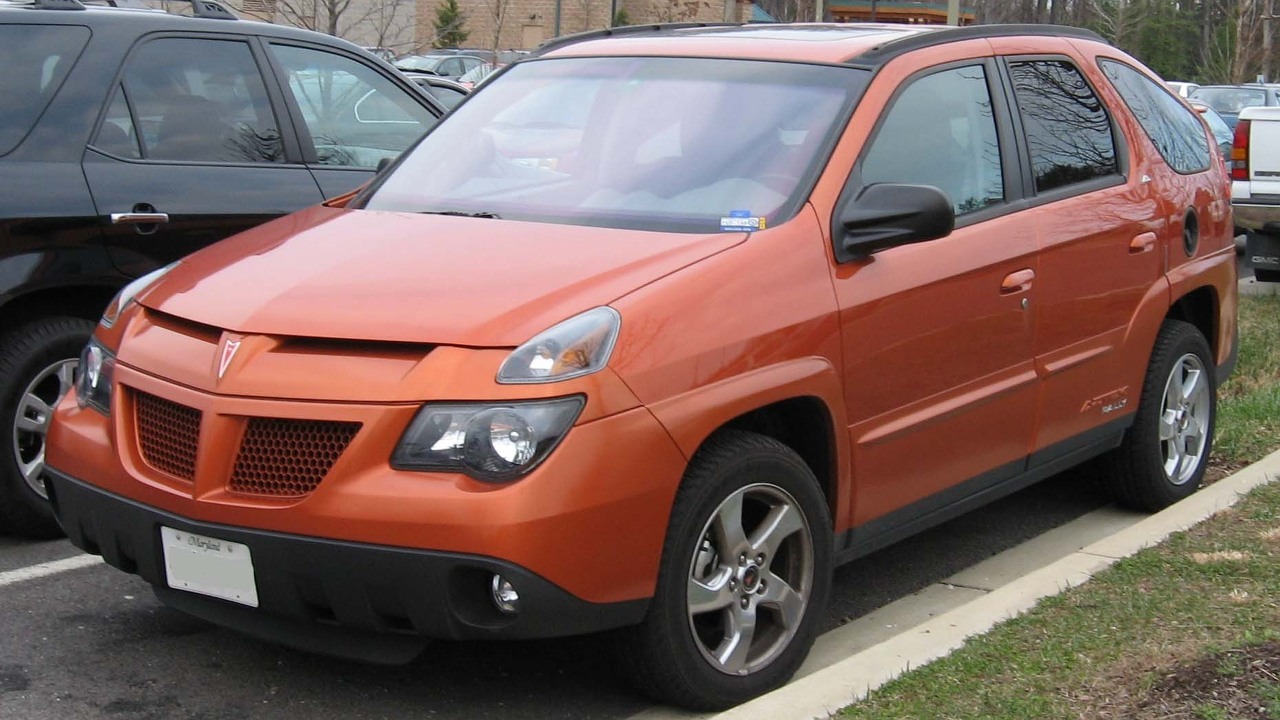
Trace the Aztek back to its origins and you see a company trying to solve problems you recognize today: how to give you SUV practicality without truck clumsiness, and how to pack in lifestyle gear for camping, bikes, and family duty. According to reporting on The Aztek, Pontiac built it on an existing platform to save money, then loaded it with features like a removable cargo tray and available camping tent that made it feel more like a Swiss Army knife than a traditional family wagon. On paper, you were supposed to get a sporty, youthful crossover that could carry your friends, your mountain bike, and your weekend gear in one oddly shaped package.
In practice, you watched the styling overwhelm everything else. Designers tried to graft a futuristic, almost concept-car face onto a tall, front-drive platform, and the proportions never quite settled. Within months of launch, according to Welch, General Motors was already piling on rebates to move the Aztek off lots and cutting its sales forecast, a sign that you and other shoppers were not buying into the experiment. As that reporting explains, the Aztek arrived just before the kind of crossover that now dominates the market, so you saw a rough draft of the segment without the polish that later models would bring.
Ugliest car or misunderstood prototype
You probably first heard about the Aztek not from a brochure, but from jokes. The Aztek’s notoriety as an ugly car is known globally, thanks largely to automotive journalists who put it on “Worst Cars of All Time” lists and late-night hosts who used it as an easy laugh. One report notes that The Aztek became a go-to example whenever you wanted to describe a design disaster, and even a car designer who tried to “fix” it on video ended up with something only marginally less offensive. When you see those before-and-after sketches, you understand how deeply the original shape burned into the culture as a symbol of what not to do.
That reputation is now literally institutional. At the Museum of Failure, The Pontiac Aztek is displayed as one of the worst cars in recent history, with curators highlighting how its ungainly body and cost-cutting compromises got a key engineer kicked off the development team. Encountered in that setting, the car looks like a cautionary tale about corporate groupthink, yet the exhibit also nudges you to reconsider whether the underlying idea was actually ahead of its time. You start to ask yourself if you were reacting to the face while ignoring the function.
How crossovers caught up to the Aztek
Park an Aztek next to the crossovers you drive now and you notice something odd. The basic template looks familiar. You see a tall seating position, a hatchback rear, and a cabin designed to swallow gear more than impress with chrome. Modern analysis points out that crossovers now take up four out of the ten top-selling vehicle spots, with the Toyota RAV4 and Highlander, the Honda CR-V, and several others each selling more than 200,000 units in a year. When you compare those sales to the Aztek’s brief run, you realize the market eventually embraced the exact format that Pontiac was trying to sell you, just with smoother styling and better timing.
That is why some writers argue that the Aztek was ahead of its time rather than simply bad. A closer look at its unusual features, such as the integrated cooler, modular cargo system, and available all-wheel drive, shows you a car aimed squarely at the outdoor lifestyle that brands now market relentlessly. When you read a detailed analysis of crossovers, you see how the segment’s later success validates many of the Aztek’s core ideas, even if you still cringe at the plastic cladding. In hindsight, the Aztek looks less like a joke and more like a rough sketch of what your driveway would eventually hold.
From Walter White to Facebook fan groups
The cultural flip for you probably started on television, not in a showroom. In the drama featuring Walter White, the white-and-green Pontiac Aztek that Walter White drives became a visual shorthand for his uncool, unremarkable life before he turns to a life of crime. According to one account, producers chose that specific Pontiac Aztek precisely because it looked dowdy and beaten down, the kind of car you might overlook in any parking lot. As you watched Walter White’s transformation, the Aztek became part of the character, an anti-hero car that quietly stuck in your memory long after he moved on to flashier wheels.
That screen time helped reframe the Aztek in your mind from mere failure to oddly iconic prop. Over time, you started to see fans sharing clips and memes, then hunting for similar white-and-green examples to recreate Walter White’s look. One enthusiast post about Walter White’s Pontiac Aztek in a dedicated group shows how deeply that connection runs, with fans dissecting why such an uncool car fit the character so perfectly. When you scroll through those discussions, you realize the Aztek has become a piece of television history, which is exactly the sort of backstory that can turn an unloved used car into a cult collectible.
Why you might start hunting for one now
As the stigma fades, you see more people openly admitting affection for the Aztek. In one enthusiast thread, a fan writes, “Okay, so… confession time. I LOVE the Pontiac Aztek. I always have and I always will,” before promising that one day, “I will own one.” When you read that kind of unabashed enthusiasm on a Pontiac Aztek group, it nudges you to reconsider your own first impressions. The same social media feeds that once amplified jokes now showcase restoration projects, camping setups, and proud driveway photos, creating a sense that you are joining a small but passionate club rather than buying a mistake.
That club is increasingly organized. Sites like the Aztek owners club gather stories from people who daily-drive these cars, race them in grassroots events, or preserve low-mileage survivors. One feature highlights how The Aztek’s design was polarizing from the start, with critics such as Pulitzer Prize winner Dan Neil tearing into its looks, yet the same piece points out how durable the drivetrain has proved and how flexible the interior remains. When you see owners swapping tips on parts, sharing repair guides, and celebrating rare color combinations, you start to view the Aztek the way you might view an oddball classic wagon, something you buy because it is different, not despite it.
More from Fast Lane Only