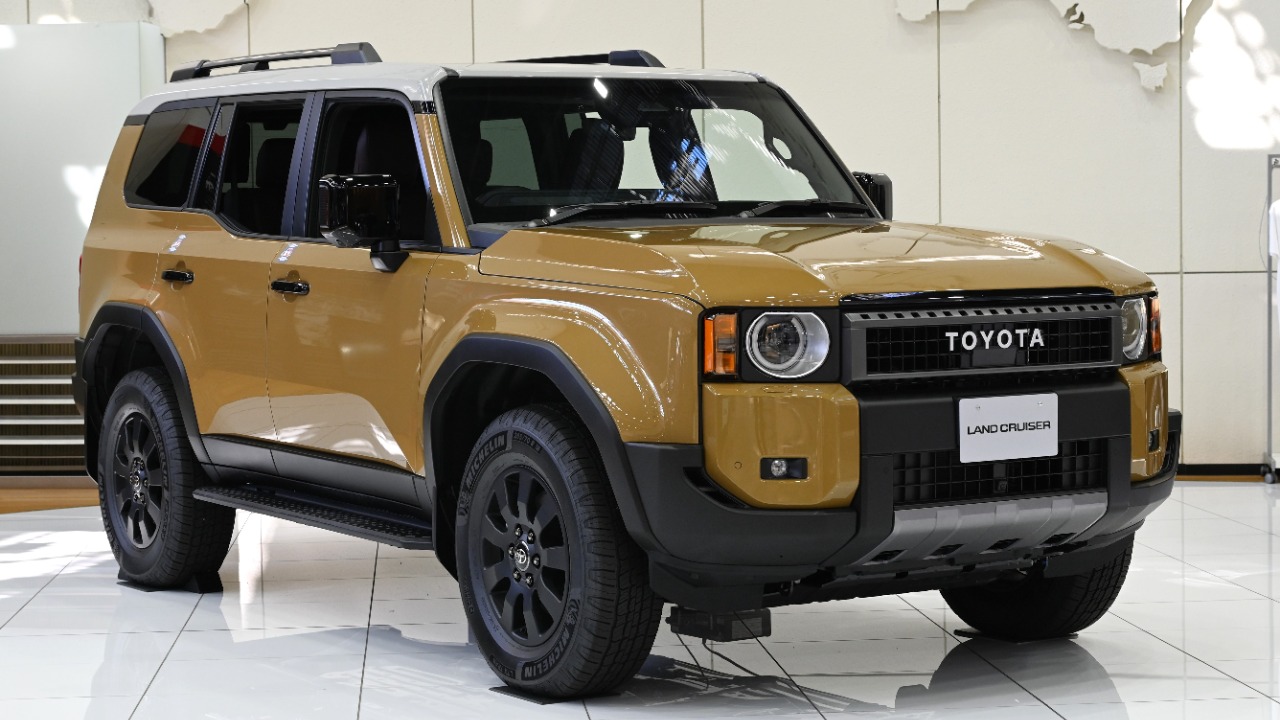
You meet plenty of SUVs that promise adventure. The Toyota Land Cruiser is one of the few that has spent more than seventy years proving it can keep going when everything around it breaks. Its legend comes from a simple pattern you can trace across continents and decades: you put it in harm’s way, and it quietly comes back for more.
If you are drawn to machines that earn their reputation the hard way, the Land Cruiser gives you a case study in persistence. From a 75 horsepower military workhorse to a modern family 4×4 that can still cross deserts, it shows what happens when a company keeps choosing durability over fashion and lets the product’s survival record do the talking.
From Toyota Jeep BJ to global lifeline
Your relationship with the Land Cruiser story really starts with necessity. When the first generation arrived as the Toyota Jeep BJ, you were looking at a response to conflict in East Asia, where military and police forces needed a light 4×4 that could handle rough terrain when When North Korea pushed into South Kor. According to the official History of the Toyota Land Cruiser, the BJ prototype climbed part of Mount Fuji, and that feat helped convince authorities that Toyota could build something tougher than a regular passenger car, which is why The Land Cruiser name soon followed on civilian versions that kept the same basic ladder frame and low range hardware.
As the decades rolled on, you could choose between Heavy and Light Duty versions that reflected how you planned to use the truck. If your life involved mines, farms or NGO work in remote regions, you gravitated toward the Heavy and Light Duty models that Toyota tuned for payload and abuse, while more urban buyers leaned into the “civilised for civilians” direction described in Toyota Land Cruiser history. That split let you treat the Land Cruiser either as a bare bones tool or as a family wagon, without losing the core promise that it would still be running when other vehicles had already rusted away.
The engineering that makes it outlast you
When you look under the skin, you see how deliberately Toyota has built the Land Cruiser to survive. The heavy duty lineage documented in the official evolution record shows a conservative approach to change, where engineers kept the basic frame and drivetrain layout and only updated parts once they were absolutely sure the new solution would last. In 1999, for example, the leaf springs of the rigid axle front suspension were replaced with coil springs to improve ride comfort, and at the same time the A pillars backward were altered to keep the body strong, as detailed in the Heavy Duty evolution page at Toyota history. You are not looking at constant reinvention, you are looking at careful refinement of a known formula.
The same mindset shapes the engines you rely on. When you hear about a 1HZ diesel that is mechanically fuel injected delivering up to 129 brake horsepower at 3, 800RPM and 285 newton meters of torque at 2, 200 RPM, you are seeing a powertrain built for simplicity and repairability rather than headline speed, as highlighted in the description of Mechanically injected 1HZ at Mechanically fuel injected. The Toyota Land Cruiser 200 Series (often called the V8) is praised for Unrivaled Durability, and that reputation comes from this kind of overbuilt hardware, not from fragile performance tricks, which is why owners of The Toyota Land Cruiser 200 Series keep pointing to its ability to shrug off harsh use in remote regions, as described in the summary of Unrivaled Durability at Series durability.
A design that chooses function over fashion
When you walk around a Land Cruiser, you notice how little it cares about short term trends. The Land Cruiser Museum notes that this conservative approach to design results in vehicles that can withstand immense stress and continue operating under adverse conditions, and that is exactly what you see in the square bodywork, big glass and straightforward controls that stay usable when dust, mud and fatigue are working against you, as described in the overview of conservative design at Land Cruiser Museum. You are dealing with a truck that treats visibility and durability as non negotiable, even when softer crossovers chase sleek rooflines.
That commitment shows up in the numbers too. Enthusiasts point out that from 1990 to current, ALL Land Cruisers sold in the United States have had a 112.2 inch wheelbase, and Even the more luxurious versions kept that same basic proportion because it worked so well off road, as highlighted in the argument about how Seriously stable the platform is at 112.2 inch wheelbase. When you combine that with a tall greenhouse and relatively narrow body, you get a vehicle that threads through tight tracks and still feels planted on long highway runs, which is why so many owners keep their trucks for decades instead of trading up to the latest styling exercise.
Real world proof that it refuses to quit
You do not have to take the marketing department’s word for any of this, because owners keep logging mileage that would send most SUVs to the scrapyard. In one Jan thread in the Comments Section on a Land Cruiser forum, a user flatly states that They are designed for a 25 year service life and that Many examples on enthusiast site IH8MUD have gone 400 to 500k miles or more, a claim that captures how normal extreme longevity feels in this community, as you can see in the discussion at Land Cruiser lifespan. When you buy into this platform, you are not just hoping for a long life, you are joining a culture where half a million miles is treated as a milestone, not a miracle.
That culture exists because the truck keeps showing up in places where failure is not an option. Real World Examples of Reliability From Australian outback cattle ranchers to humanitarian missions in Africa rely on the Land Cruiser to move people and supplies where there are no tow trucks and no parts stores, and many of those vehicles are still working today, which underlines how carefully Toyota has tuned the balance between toughness and serviceability, as described in the section on global field use at Real world reliability. When you see the same silhouette in the Australian bush, in Africa and in conflict zones, you understand why people talk about the Land Cruiser as a lifeline rather than just a car.
From 75 horsepower to modern icon
If you trace the line from the earliest models to the ones you can order now, you see how that lifeline turned into a global icon. The Beginning of the story involved a simple 4×4 with just 75 horsepower and Climbing Mt feats that were more about traction than speed, as the corporate history of the Land Cruiser explains at 75 horsepower origins. Over time, the BJ-25 and FJ-40 Series evolved into The Iconic Workhorse that many enthusiasts still consider the definitive Land Cruiser, especially the short wheelbase FJ40 that combined a compact footprint with serious off road hardware, as described in the museum’s section on The Iconic Workhorse at FJ40 workhorse. When you see those early trucks in museums and on trails, you are looking at the DNA that still shapes the modern versions.
More from Fast Lane Only