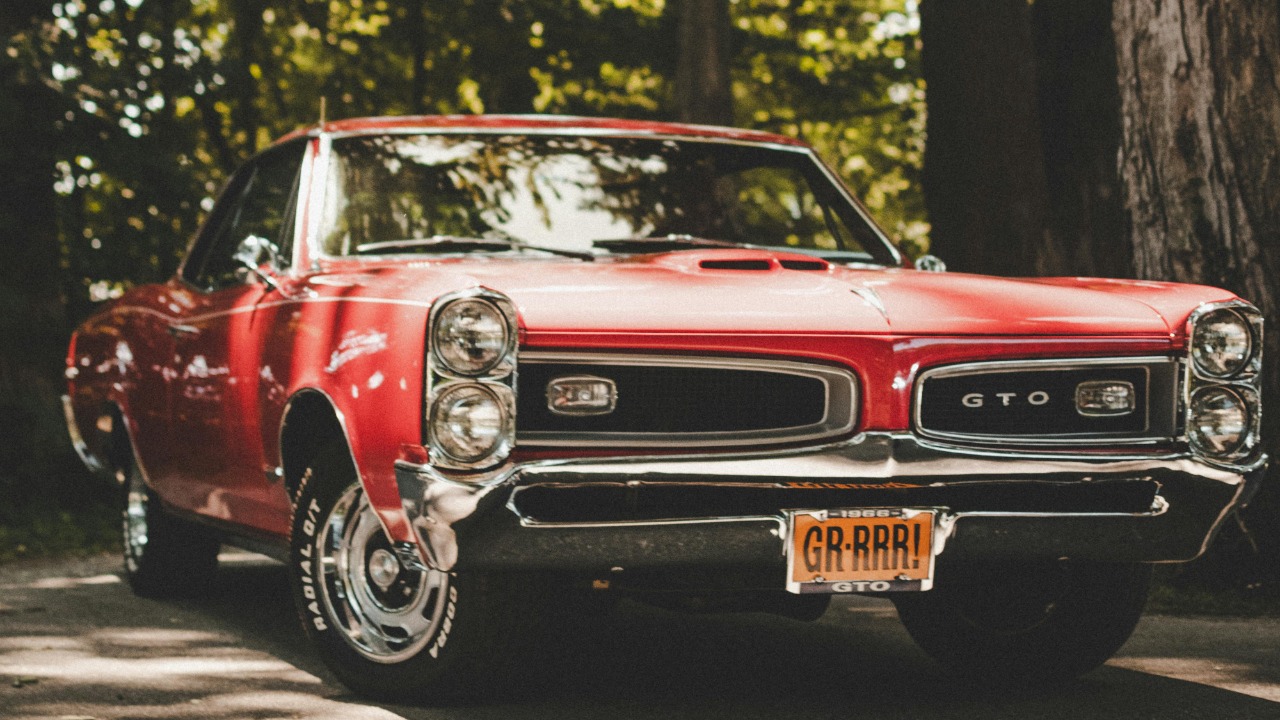
The 1967 Pontiac GTO marked a turning point for muscle car engines, with a new 400-cubic-inch V8 that came in several distinct performance flavors. For enthusiasts trying to decode the difference between the High Output package and the Ram Air setup, the stakes are more than bragging rights, because each version reflects a specific engineering philosophy and a different kind of street and strip personality.
By looking closely at how Pontiac configured the 400 in High Output trim and how it evolved into the Ram Air option, I can trace where the extra money went, what changed mechanically, and how those choices still shape collector interest today. The result is a clearer picture of how two closely related 1967 GTO engines delivered very different experiences for drivers who ordered them new and for owners who chase them now.
The 1967 GTO’s new 400 foundation
The starting point for any comparison is the fact that the 1967 GTO arrived with a brand-new 400-cubic-inch engine that replaced the earlier 389 and reset the performance baseline for Pontiac’s midsize muscle. Reporting on the model’s launch notes that the GTO was released with this upgraded 400-cubic-inch V8, and that it was offered in multiple states of tune, which created a clear hierarchy from the standard engine up through the more specialized performance variants. That common architecture matters, because both the High Output and Ram Air versions build on the same basic block, displacement, and overall package, so the differences are about refinement and intent rather than a wholesale redesign.
Contemporary profiles of the 1967 Pontiac GTO point out that behind the car’s revised grille sat a standard 400 that already delivered serious power for the era, with the Muscle Car Image Gallery framing it as a fresh heart for an already iconic nameplate. The same reporting explains that the GTO’s engine lineup stepped up from this base configuration to more aggressive options, including a High Output mill and a Ram Air upgrade, which were engineered to extract more performance from the same 400 foundation. That shared DNA is why I treat the HO and Ram Air not as separate engines, but as increasingly focused versions of a single 1967 GTO powerplant.
What made the High Output 400 special
The High Output version of the 400 was Pontiac’s way of giving serious street drivers a hotter engine without forcing them into the compromises of a full race package. Period descriptions of the 1967 Pontiac GTO emphasize that the HO mill sat above the standard 400 in the lineup, with changes aimed at breathing and combustion that lifted output while keeping the car livable in everyday traffic. In practice, that meant a more aggressive cam profile, upgraded exhaust flow, and tuning that favored stronger midrange power, which is where a heavy midsize like the GTO spends most of its time on real roads.
Coverage of the 1967 GTO’s specifications notes that the High Output engine was part of a broader strategy to keep the car competitive as rivals escalated their own horsepower wars. Within the Muscle Car Image Gallery material, the HO is described as a step up that could be further enhanced, which underscores how Pontiac treated it as a modular performance platform rather than a fixed spec. I read that as Pontiac acknowledging that many buyers wanted a car that could run hard on weekends but still idle cleanly on weekday commutes, and the HO 400 was tuned to hit that balance before any Ram Air hardware entered the picture.
How Ram Air transformed the HO package
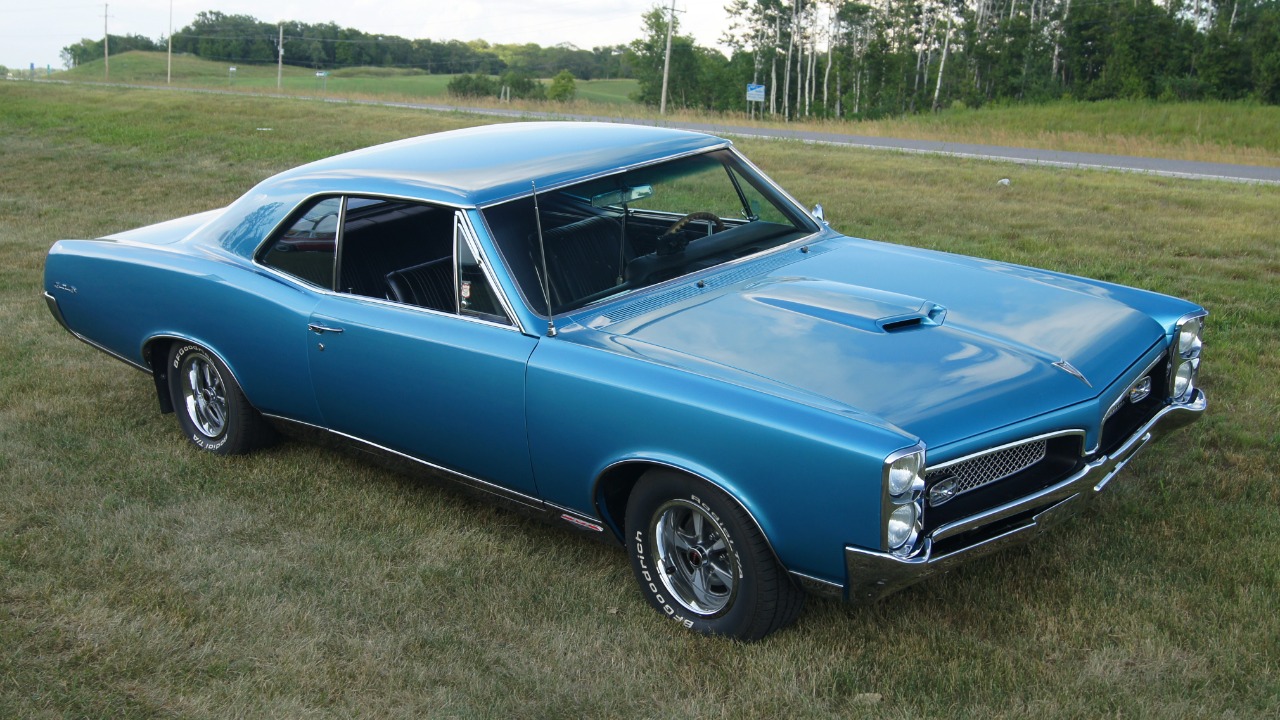
The Ram Air option in 1967 did not start from scratch; it was layered on top of the existing High Output engine, which is why the two are often discussed in the same breath. Reporting on the 1967 Pontiac GTO makes clear that for another $263, the HO mill could be fitted with Ram Air, turning an already strong engine into what contemporary enthusiasts regarded as the ultimate GTO V-8. That specific price tag of $263 is important, because it shows Pontiac positioned Ram Air as a premium but still attainable upgrade for buyers who were already committed to the HO package.
Technical descriptions of the Ram Air setup explain that the option added extra-strong valve springs and a functional cold-air induction system that sealed the underhood air cleaner to the hood scoops with a foam-rubber skirt. Those details, documented in coverage of the 1967 Pontiac GTO, show that Ram Air was not just a cosmetic scoop treatment but a mechanical package designed to let the HO engine breathe cooler, denser air at speed and survive higher rpm. In effect, the Ram Air conversion sharpened the HO’s top-end performance and durability, which is why it quickly became the halo configuration for the 1967 GTO even though its basic displacement and architecture were unchanged.
Ram Air in the broader Pontiac performance story
To understand how the 1967 Ram Air GTO fits into Pontiac history, I look at how the brand’s engineers treated Ram Air technology across multiple years. A detailed overview of the GTO’s performance evolution notes that the 1967 GTO launched with the new 400-cubic-inch engine and that this engine was available in four states of tune, with Ram Air representing the most specialized of the group. Later developments, including the 1968½ Ram Air II, built on the same idea of combining specific internal upgrades with functional cold-air induction, which shows that Pontiac viewed the 1967 Ram Air package as the starting point for a longer engineering program rather than a one-year experiment.
Broader analysis of Pontiac Ram Air engines traces how the concept extended beyond the GTO and into other displacements, including later efforts to apply Ram Air hardware to engines such as the 455. One technical history, dated Jan 8, 2018, walks through the complexities of sorting Pontiac Ram Air engine production and even includes later reader Comments from enthusiasts like Richard Meredith on June 11, 2023, who discuss trying to integrate Ram Air components with a 455. That ongoing conversation underscores how the 1967 GTO’s Ram Air option helped define a performance brand within Pontiac, one that enthusiasts still try to replicate or adapt decades after the original cars left the factory.
How HO and Ram Air affect collectability and driving character
From a collector’s perspective, the relationship between the HO and Ram Air 400s in 1967 is a study in rarity layered on top of already desirable hardware. The High Output engine, as documented in period profiles of the Pontiac GTO, was a relatively common upgrade for buyers who wanted more performance than the base 400 without going all in on race-focused equipment. Ram Air, by contrast, required that extra $263 on top of the HO, and it added specialized parts like extra-strong valve springs and the foam-rubber skirt that sealed the air cleaner to the hood scoops, which naturally limited how many buyers stepped up to that level. That combination of higher cost and more complex hardware is a key reason Ram Air cars sit at the top of the 1967 GTO value hierarchy today.
On the road, the differences between the HO and Ram Air 400s are less about raw displacement and more about how and where the engines make their power. The HO’s tuning, as described in coverage of the 1967 Pontiac GTO, favors strong midrange torque and drivability, which suits the car’s role as a fast but usable street machine. The Ram Air package, with its focus on cooler intake charge and valvetrain durability, shifts the emphasis toward sustained high-rpm performance, which pays off in quarter-mile runs and high-speed pulls more than in stop-and-go traffic. When I weigh those traits against the historical reporting on Pontiac’s broader mid-size lineup, including General Year Information on 1967 Pontiac Mid, Size Cars that situates the GTO alongside models like the Firebird introduced around Feb 19, 2023 coverage, it is clear that Pontiac was deliberately offering a spectrum: from standard 400, to HO, to Ram Air, each step trading a bit of comfort and simplicity for sharper performance and, eventually, greater collectability.
More from Fast Lane Only: