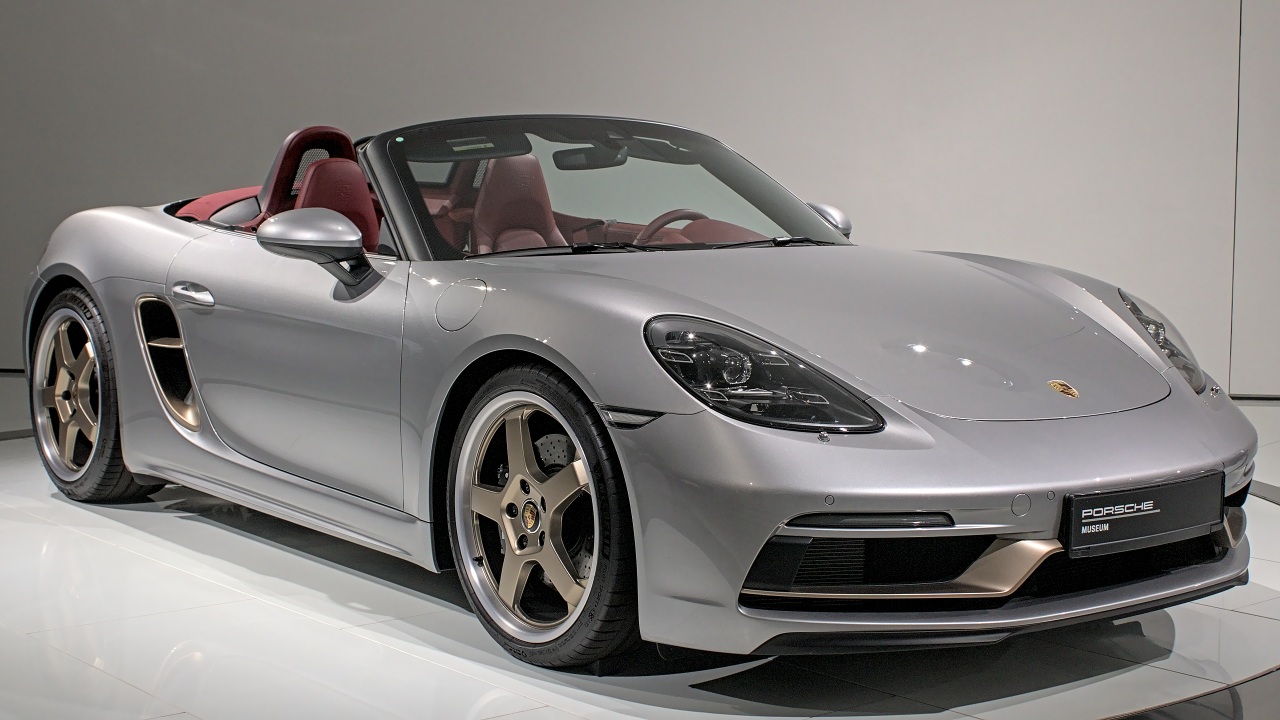
The final year of Porsche’s mid-engined 982 generation did not fade quietly. As production of the gasoline 718 Boxster and 718 Cayman wound down, the compact sports cars delivered their strongest sales performance yet, helping Porsche set records in key markets even as global deliveries softened. The 2025 tally closed the chapter on the 982 platform with a mix of nostalgia and hard numbers that underline how potent the formula remained right up to the end.
I see the 718 story as a case study in how a focused sports car can thrive in a market dominated by SUVs and electric models. While the brand grappled with weaker demand in China and shifting EV sentiment, the Boxster and Cayman used their farewell tour to pull enthusiasts back into showrooms, reinforcing Porsche’s core identity just as the company prepares to pivot this nameplate toward an electric future.
Record global context for a changing Porsche lineup
To understand the significance of the 718’s final surge, it helps to look at the broader shape of Porsche’s 2025 results. Worldwide, the company delivered 279,449 sports cars to customers, a figure that represented a 10 percent decline and the steepest drop in 16 years as demand in China cooled and electric vehicle appetite moderated. Within that total, the Macan remained the volume anchor, with deliveries of the Macan reaching 84,328 units, supported by both combustion and fully electric versions that kept the compact SUV at the center of the portfolio.
Even in this tougher environment, Porsche’s traditional sports cars still found room to grow. The 911 sports car icon recorded 51,583 deliveries in 2025 (+1 per cent), setting another delivery record and underscoring the enduring pull of a rear-engined coupe that has become shorthand for the brand. Against that backdrop, the 718 line, which had long played the role of the more accessible mid-engined sibling, was preparing to exit its current form, yet it managed to turn its impending demise into a commercial advantage.
North American surge crowns the 982-Gen farewell
The most dramatic proof of that advantage came in North America, where Porsche Sold More Cars in America Than Any Year Before. In the United States, the company set a new all-time sales record, with the 982-Gen 718s having their best year as buyers rushed to secure the last gasoline Boxster and Cayman examples. That performance helped lift North America to 86,229 deliveries, a regional high that contrasted sharply with the global decline and highlighted how strongly the brand still resonates in a market that prizes performance and heritage.
Canada mirrored that momentum. Porsche Cars Canada reported 10,010 deliveries for the year, and within that total the 718 Boxster and 718 Cayman models established new benchmarks compared with the same period in 2024. For a relatively small market, that figure is striking, and it shows how the final model year of the 982-Gen cars turned into a de facto celebration tour. Dealers benefited from a clear narrative, a finite supply, and a customer base that understood this was the last chance to buy a mid-engined Porsche roadster or coupe with a combustion engine in its current form.
Production winds down as demand spikes
The irony of the 718 story is that its commercial peak arrived just as the factory was dialing back output. Production of the current 718 model was curtailed in Europe as new cybersecurity regulations limited model availability, and by early autumn Porsche had stopped taking orders for gasoline 718 Boxster and 718 Cayman sports cars. Electric Replacements Expected Soon Production of the existing cars was winding down, which meant that every remaining build slot suddenly carried extra weight for buyers who had been hesitating.
That scarcity effect collided with a wave of enthusiast awareness. By mid year, it was widely understood that the 718 Cayman And Boxster Sales Are Surging As Porsche Prepares To Kill It, a dynamic that turned social media posts and dealer allocations into a kind of countdown clock. Commentators had been discussing the end of the 718 for some time, with on-the-ground reporting noting that the 718 Boxster and and, Cayman were leaving and that the company had confirmed their departure. The result was a classic run-out pattern: as soon as the cars were framed as the last of their kind, demand hardened rather than faded.
From 1996 origins to the final 982 flourish
Seen against the full history of Porsche’s mid-engined twins, the 2025 finale feels less like an anomaly and more like a culmination. The first generation Boxster arrived in 1996 as a relatively simple roadster that helped stabilize Porsche’s finances, and the second generation Boxster and the Cayman followed in late 2005, adding a fixed-roof variant that sharpened the car’s track credentials. Over time, the family evolved into the 718 Boxster and 718 Cayman, with turbocharged four-cylinder engines and, in some variants, naturally aspirated sixes that kept purists engaged.
By the time the 982-Gen cars reached their final year, they had become deeply embedded in the brand’s identity. The Boxster name alone carried nearly three decades of history, while the Cayman had carved out its own following among drivers who valued balance and precision over outright power. The decision to end the current 718 m production run, and to stop taking new orders for gasoline versions, therefore marked more than a routine model change. It signaled the end of a specific mechanical era that began with that original mid-engined roadster and culminated in a record-setting swan song.
Balancing combustion nostalgia with an electric future
For Porsche, the 718’s final-year performance offered both reassurance and a challenge. On one hand, the record sales of the 982-Gen cars in markets like America and Canada showed that there is still intense appetite for compact, driver-focused sports cars with internal combustion engines. On the other, the company is committed to expanding its electric lineup, and the next iteration of the 718 nameplate is widely expected to move in that direction, even as Taycan Down, Panamera Up dynamics in the broader range illustrate how delicate that transition can be. Taycan sales fell on the year, while Panamera volumes rose, suggesting that customers are not yet ready to abandon traditional powertrains in the upper segments.
That tension is sharpened by the global sales picture. Porsche’s deliveries fell 10 percent to 279,449 last year, with particular weakness in China, a market that had previously been a growth engine for the brand. Management has responded by emphasizing value-oriented sales and by leaning on strongholds like North America, where sports cars and SUVs such as the Macan still command robust demand. In that context, the 718 Boxster and Cayman’s record 2025 performance looks like both a farewell and a strategic bridge, reminding customers what makes a Porsche feel special while the company prepares to reinterpret that experience in an electric era.
More from Fast Lane Only