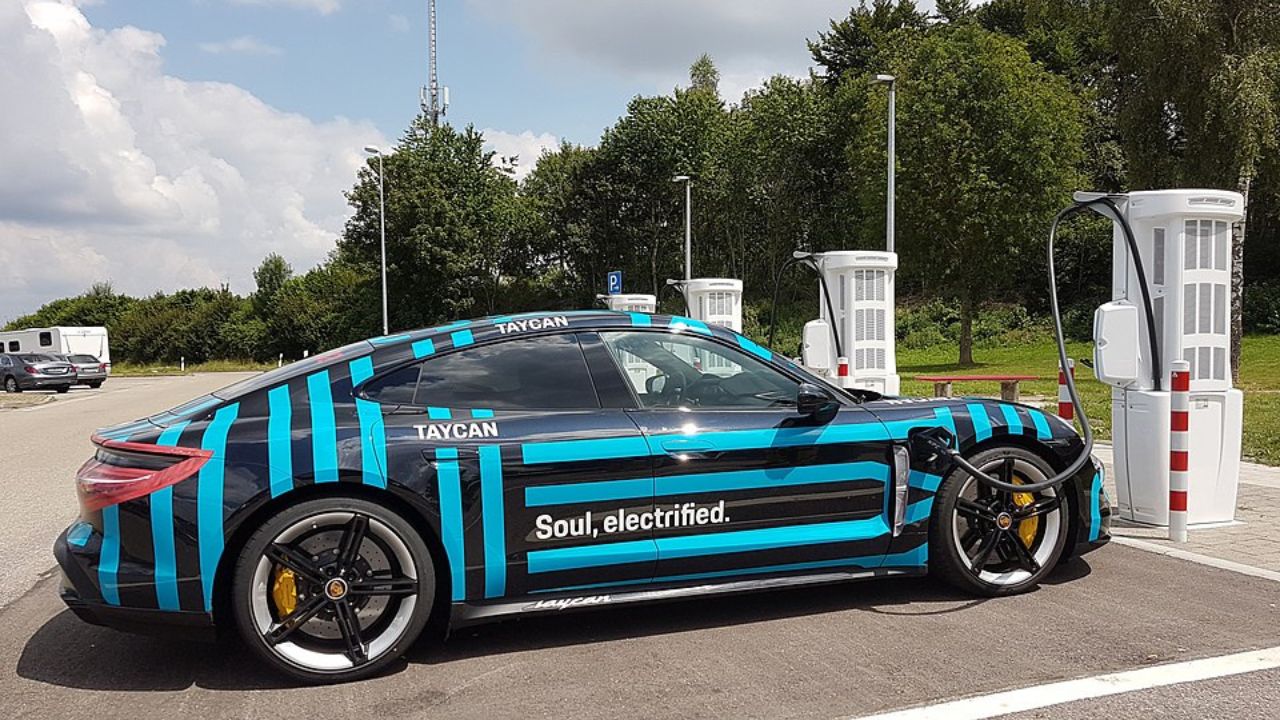
Porsche’s electric drivers no longer have to juggle apps, cards, and cables to juice up at Tesla Superchargers. With new Plug & Charge support, compatible Porsche EVs can now roll up to a stall, connect the cable, and let the car and charger quietly handle the rest in the background. It is a small change in choreography that signals a big shift in how premium brands expect public charging to work.
Instead of treating Tesla’s network as a special case, Porsche is folding it into a broader strategy to make fast charging feel as seamless as filling a tank. I see this as the moment when Porsche EVs truly “join” the Supercharger ecosystem, not just as guests with adapters, but as first class citizens that authenticate and pay automatically.
What Plug & Charge actually changes for Porsche drivers
At the heart of this move is a simple promise: you plug in, and the car takes care of the rest. Porsche Cars North America Inc, or PCNA, is enabling Plug & Charge so that billing and authentication happen automatically between the vehicle and the charger. For owners, that means no more fumbling with QR codes or separate accounts when they pull into a Tesla site, and no extra steps beyond selecting a stall and connecting the cable.
The first wave of cars to benefit are the Macan Electric and model year 2026 Taycan variants, which are being set up to use Plug & Charge at Tesla locations as part of a broader upgrade to their charging tech. PCNA has confirmed that Plug and Charge support will cover all Macan Electric and these newer Taycan models, with the feature designed to work specifically at Tesla’s charging network in North America. In practice, that turns what used to be a multi step process into something that feels almost invisible from the driver’s seat.
From access to true integration with Tesla Superchargers
Porsche had already opened the door to Tesla’s infrastructure, but Plug & Charge is what makes that access feel native. The company has said that Customers will have access to over 23,500 Tesla Superchargers in North America, a huge expansion of fast charging coverage for Porsche drivers. That earlier phase relied on adapters and app based access, but it laid the groundwork for the deeper integration that is now arriving with automatic authentication.
On the hardware side, Porsche has been preparing its lineup for this shift with a dedicated connector strategy. The Adapter that owners have been watching for is part of a broader move in which, Going forward, all new model year 2026 Porsche Taycan and Macan Electric models will include a factory supplied Porsche NACS DC adapter. That hardware lets the cars physically connect to North American Charging Standard cables, including select Tesla Superchargers, while the new software layer handles Plug & Charge in the background.
Macan Electric and Taycan get quicker, cleaner charging
For owners of the brand’s core EVs, the payoff is both practical and psychological. Porsche’s Macan and Taycan electric vehicles have just gotten Quicker to charge, not because their batteries changed overnight, but because the time and friction around each session have been cut. The Macan EV in particular is being positioned as a daily driver that can lean on a much denser fast charging map, and the combination of Plug & Charge and NACS access turns that into a major expansion of options.
I see this as Porsche quietly aligning its user experience with what Tesla drivers have taken for granted for years. Instead of treating public charging as a chore, the brand is trying to make it feel like an extension of the car’s premium character, with Macan and Taycan owners able to pull into a site, connect, and walk away without extra taps. That is especially important for The Macan EV, which is expected to serve as a gateway electric model for many buyers who may be nervous about charging in the first place, and now find that the most intimidating part of the ownership experience has been softened by tighter integration with Tesla’s network.
Beyond Tesla: a wider Plug & Charge ecosystem
What makes this move more interesting to me is that Porsche is not stopping at one network. The company has framed this as Expanding Plug & Charge availability to more than 27,000 additional charging stations, a scale that clearly reaches beyond Tesla alone. That broader rollout is meant to simplify the charging process and enhance everyday usability, so that a Porsche driver can rely on the same automatic handshake at a range of third party fast chargers as well as Superchargers.
In its own communications, Porsche Newsroom US has described how the Company is using Plug and Charge for greater flexibility, with Porsche planning to extend this capability across more locations in the U.S. later this year. The idea is that a Taycan or Macan owner will be able to treat a growing number of public chargers as if they were part of a single, unified network, with billing and authentication handled through the car’s own systems rather than a patchwork of separate accounts, as outlined in the Porsche Newsroom US material.
Canada, fragmentation, and what this signals for EV charging
The Canadian rollout shows how quickly this approach is spreading across borders. In that market, Porsche has highlighted that there is no need for apps, with its EV drivers now getting a seamless charging experience at Tesla stations through Plug and Char support. The Canadian update makes clear that Porsche and Tesla are working together so that a Porsche driver can simply connect at a Supercharger and let the car handle the handshake, a shift that is detailed in the company’s description of Plug & Char in that country.
From my vantage point, this is also a quiet acknowledgment that the nation’s fragmented public charging infrastructure is not sustainable in its current form. Analysts looking at Porsche Adds Plug and Charge Capability for EVs at Tesla Superchargers have pointed out that Plug and Charge Capability for Tesla Superchargers helps stitch together a patchwork of networks into something that feels more coherent for drivers, especially when combined with Porsche’s own charging services, as described in the Cars.com coverage. Key Points from that analysis underline how Porsche and Tesla Superchargers are using Plug and Charge to chip away at the confusion that has dogged early EV adopters, a trend that I expect other automakers will feel pressure to match as Plug and Charge becomes less of a luxury perk and more of a baseline expectation.
More from Fast Lane Only