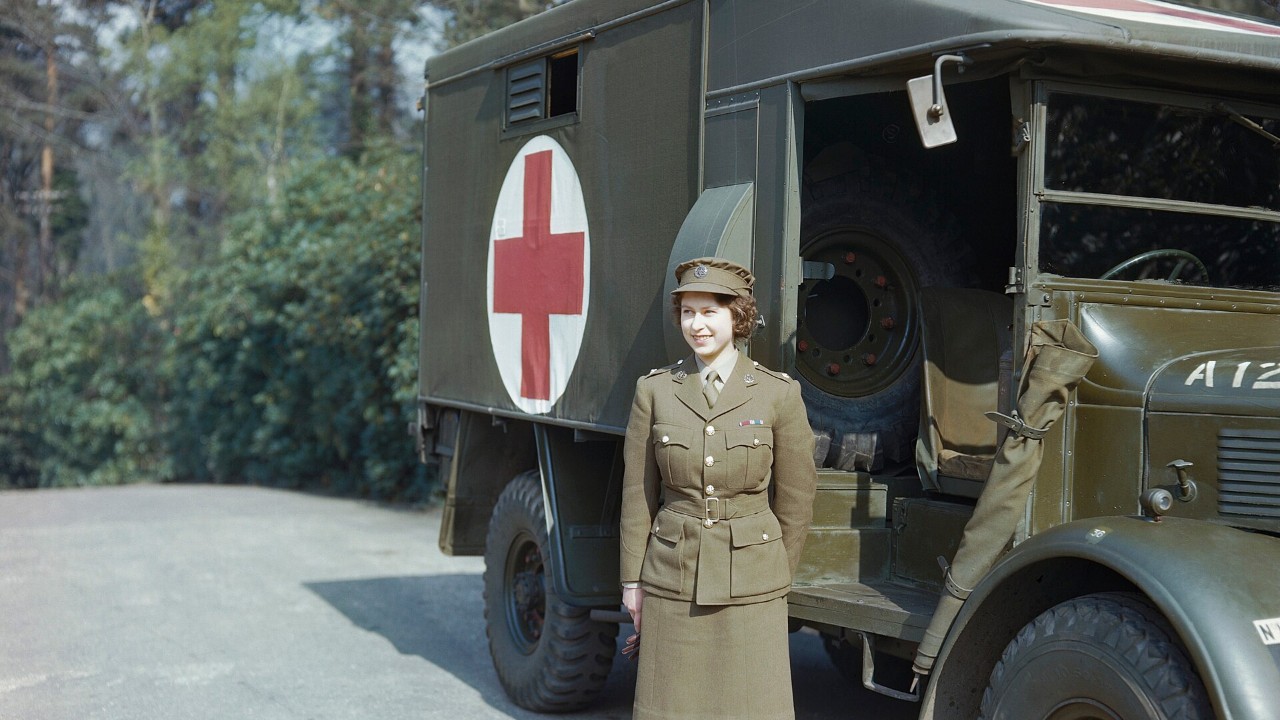
Princess Elizabeth’s ATS service put the future queen in overalls and behind the wheel of heavy army vehicles. In early 1945, at 18, she joined the Auxiliary Territorial Service, the women’s branch of the British Army. There, she trained as a driver and mechanic.
It was a short stint, because the war in Europe ended that May. Even so, it made her the first woman in the royal family to serve full time in the armed forces. Both the Australian War Memorial and the National WWII Museum make that point.
Here is what her training involved, where it happened and what the record shows about the vehicles of her unit.
How Princess Elizabeth joined the ATS
At first, her father did not make it easy. King George VI had ruled against her joining the women’s auxiliaries, according to Trucknews, citing Life magazine. As Life put it, “‘Betts’ had other ideas.”
Eventually, she enlisted in February 1945, the Imperial War Museums says. A newsreel of the time described her as “an ATS Second Subaltern.” In addition, the Australian War Memorial records her service number as 230873.
There was no special rank waiting for her, either. The king ensured she was “not given a special rank in the Army,” writes Vikki Hawkins, an Imperial War Museum curator, for the National WWII Museum. Instead, she started as a second subaltern, Hawkins writes.
Training at Camberley
Her classroom was the ATS No. 1 Mechanical Transport Training Centre at Camberley, Surrey, the IWM says. The course covered driving and vehicle maintenance, including the theory of mechanics and map reading. Above all, recruits learned to service, maintain and drive heavy army vehicles.
Her days were long but not quite like everyone else’s. She worked seven hours a day, according to the IWM. However, she returned to Windsor Castle each evening rather than sleeping in the barracks.
Accounts differ slightly on the dates. Hawkins writes that she began training as a mechanic in March 1945. She also says the princess completed a driving and vehicle maintenance course at Aldershot, qualifying on April 14.
Princess Auto Mechanic
The press, for its part, loved it. Photographers caught her in overalls, working on engines and changing tyres, and newspapers dubbed her “Princess Auto Mechanic,” the IWM notes. One April 1945 photograph in the Royal Collection shows her kneeling as she takes the right front wheel off a car. In the background, an ATS sergeant works on a truck.
Her family came to watch, too. The King and Queen visited the camp with Princess Margaret, the Australian War Memorial says. Together, they watched the future queen learn about engine maintenance.
That royal visit taught her something as well. “I never knew there was quite so much advance preparation,” she told Life magazine, adding, “I’ll know another time.”
The final test and the promotion
Finishing the course, however, took real driving. To pass her final test, she made a solo journey in a heavy vehicle from Camberley into London, the IWM says. According to Trucknews, the museum also says she finished the driving course two days ahead of the prescribed time.
Promotion followed quickly. After five months, she became an honorary Junior Commander, the IWM records. Hawkins notes that this rank was the equivalent of a captain.
Still, the war moved faster than her career. On VE Day, May 8, 1945, she slipped into the London crowds in her ATS uniform. “I remember we were terrified of being recognised,” she later recalled. The war ended before she could put her new skills to practical use, Trucknews notes.
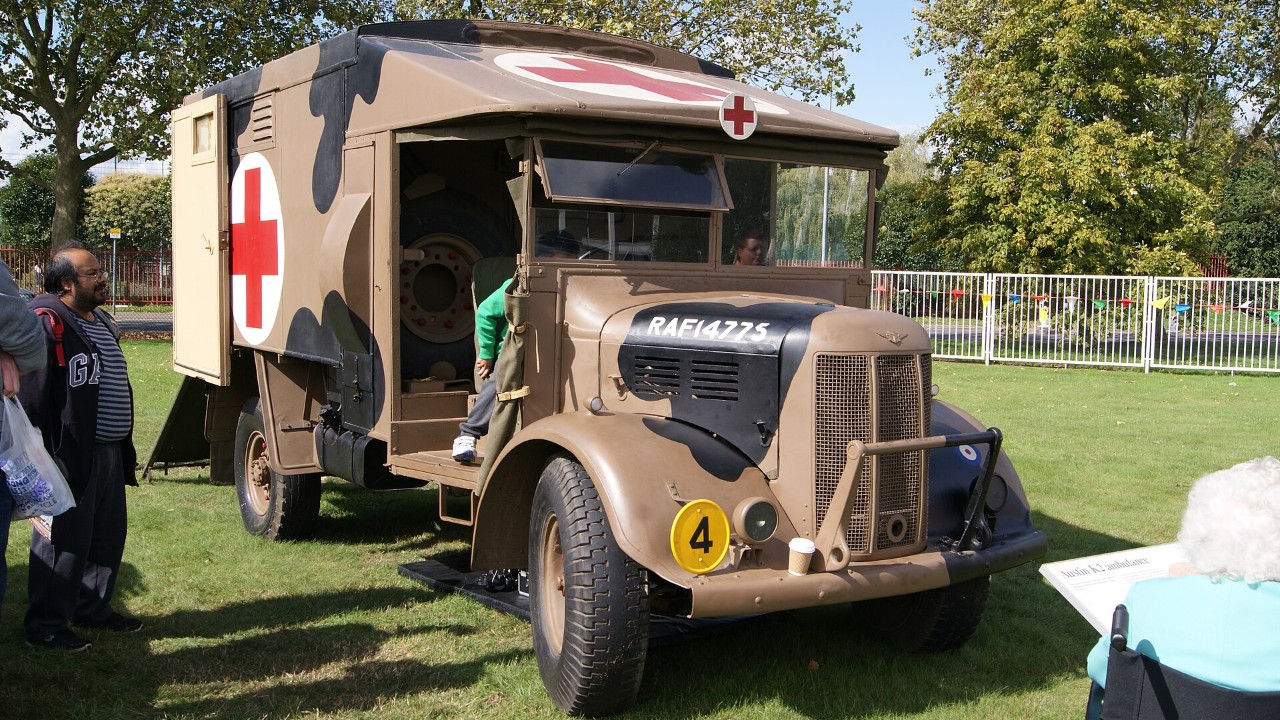
The Austin K2/Y army ambulance
One army vehicle from those years has its own link to her story: the Austin K2/Y ambulance. Austin’s Longbridge plant built some 13,102 of them between 1939 and 1945, according to Lancaster Insurance. Its nickname was the “Katy,” the insurer adds.
Its specification was also simple and tough. A 3,462cc straight-six petrol engine could push three tons of ambulance to 50 mph on tarmac, the same history says. Meanwhile, the body carried four stretcher cases on double-decked bunks or 10 seated casualties.
Lancaster Insurance goes further than the war museums on one point. It states that Princess Elizabeth drove the ambulance as an ATS subaltern. The IWM and the National WWII Museum, by contrast, say only that she drove heavy army vehicles.
Today, one K2 ambulance stands in Hangar Five at the RAF Museum in London. The museum says the type served all Commonwealth forces during the Second World War.
More from Fast Lane Only