Chrysler sold more than 32,000 cars in 1924, the brand’s very first year. That car was the Chrysler B-70, and it set a record for a new model’s debut. A century later, the brand is best known for minivans and the 300. However, its back catalog is far stranger and richer than that.
Along the way, Chrysler built tartan-trimmed sedans, turbocharged hatchbacks and show cars with engines nobody expected. Some sold well and vanished anyway. Others never reached a showroom at all.
These are our picks for nine Chryslers we admire, from the very first car to a crossover that came out of a famous merger. Of course, the admiration is our opinion. The years, engines and figures, by contrast, come from museum records, club histories and period specialists.
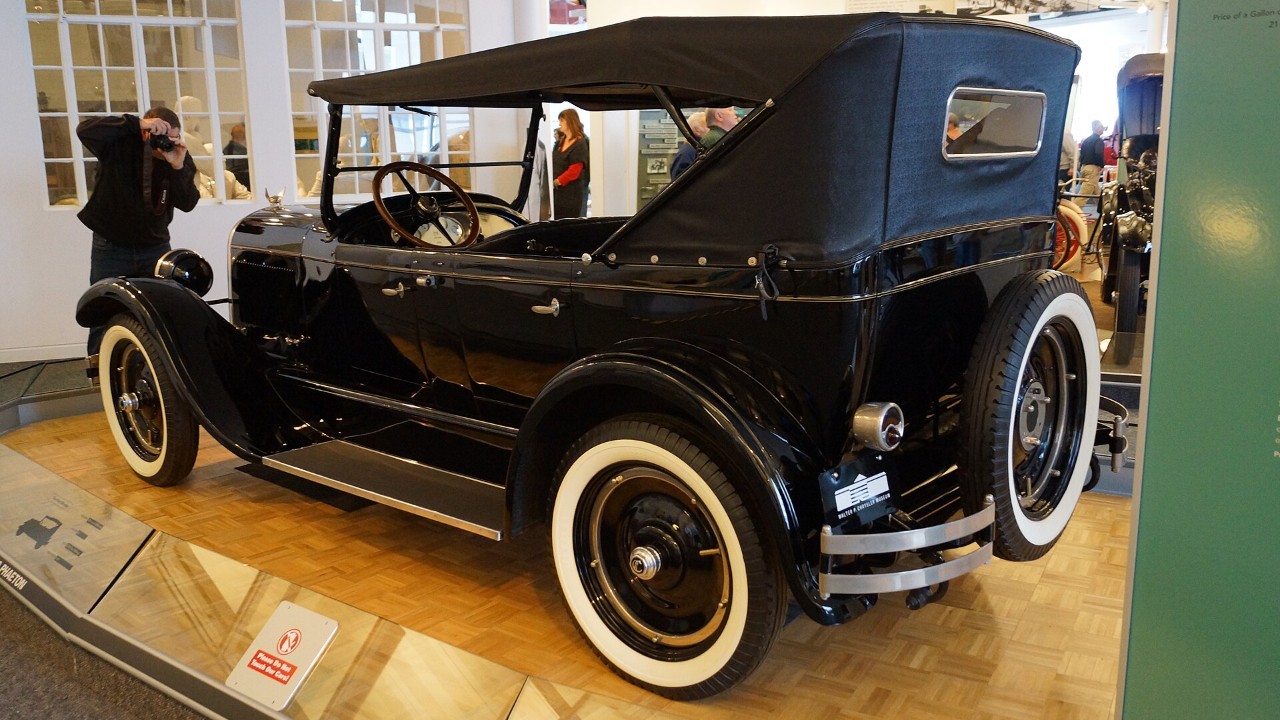
1. 1924 Chrysler B-70 Phaeton
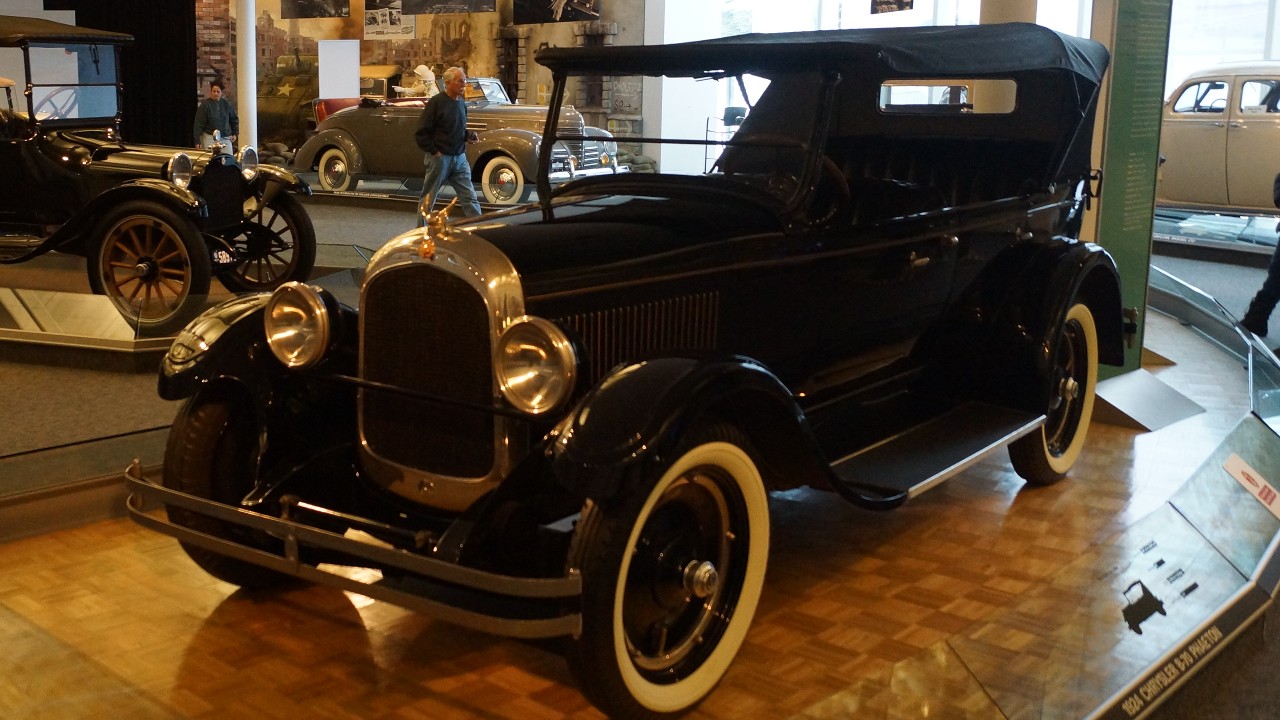
The first Chrysler started life as somebody else’s car. Former Studebaker engineers Fred Zeder, Owen Skelton and Carl Breer began the design as early as 1919 for the Willys Corporation, which planned to call it the Willys Six. Work resumed at Chalmers in mid-1923. Then, in January 1924, Chrysler presented the finished car at the Commodore Hotel during the New York Auto Show.
According to Mopar Insiders, the Chrysler B-70 used a 201-cubic-inch six making about 68 horsepower. It could reach up to 75 mph. Walter P. Chrysler had worked in railroads and the auto business before he took over the Maxwell Motor Company in 1921, and this car became his calling card. It also made four-wheel hydraulic brakes standard rather than optional.
Our take: the open Chrysler B-70 Phaeton is the purest way to see where the whole company began. It was fast and modern. We admire it because it did not feel like a first try. Above all, more than 32,000 buyers agreed in its first year. Starting a car company with hydraulic brakes and a high-compression six was a bold opening move, and it worked.
2. 1938 Chrysler Royal coupe
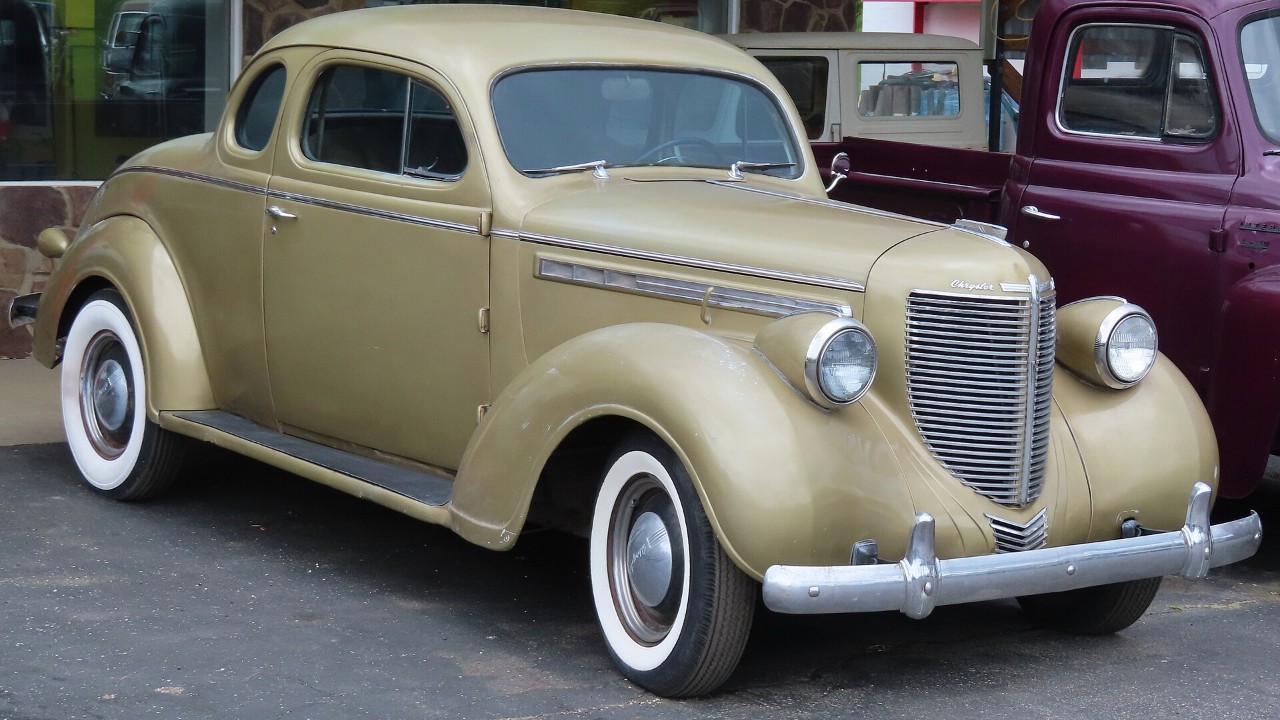
The Royal arrived for 1937 and took the entry-level spot in Chrysler’s lineup. That first-year Royal shared its basic body with the DeSoto Airstream. A November 1936 advertisement listed it from $715, with the four-door sedan at $815. That same ad offered the Royal in ten body types.
By 1938, the Royal used a 228.1-cubic-inch Chrysler six and rode on a 119-inch wheelbase. A longer 136-inch chassis was also available. For 1939, the Royal moved up to a 241.5-cubic-inch six, so the 1938 car was the last with the smaller engine. In other words, it was a solid, honest car for buyers who wanted the Chrysler name without paying for an Imperial.
Our take: the 1938 Royal coupe has the rounded, late-1930s look we never get tired of. For us, a stock example is the more interesting find. We admire it because it shows how Chrysler kept entry-level buyers in the family. In our view, that was a smart business move. Better yet, it gave a young buyer a real Chrysler with a straight six and room to grow, rather than a stripped-down afterthought.
3. 1942 Chrysler Windsor Highlander
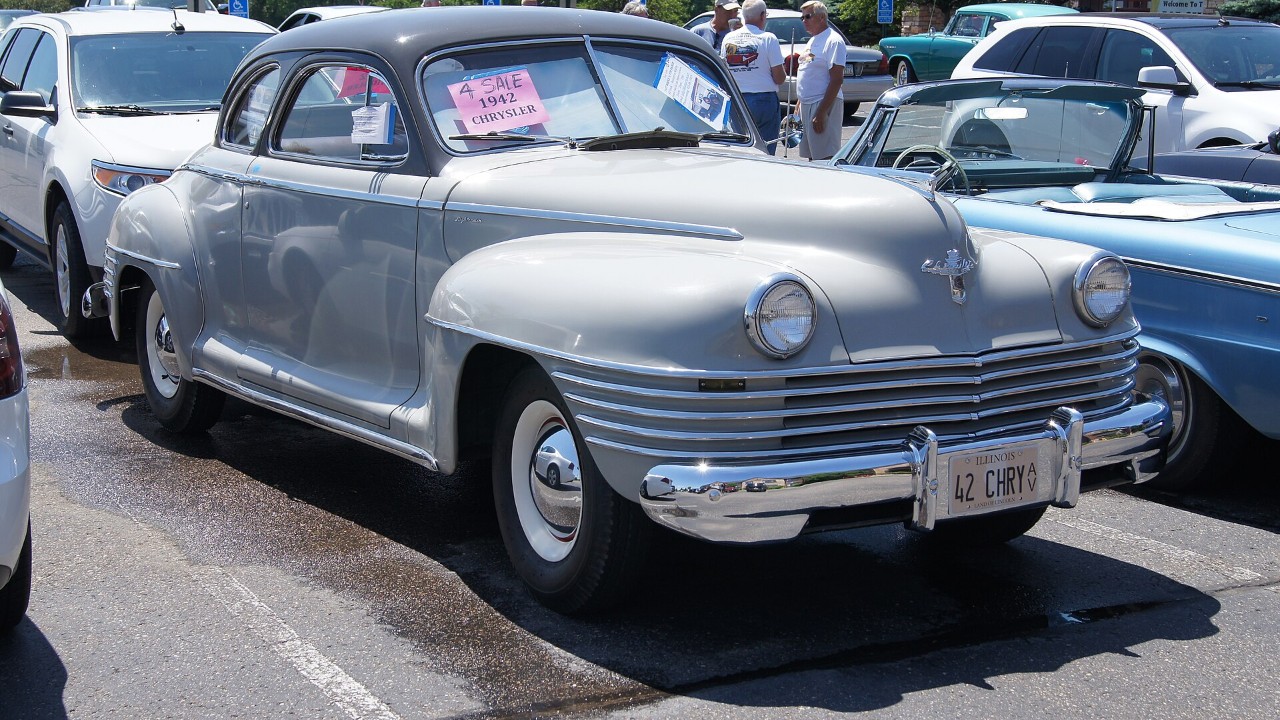
Chrysler announced its Highlander option midway through the 1940 model run. That first year it cost $25 more than a comparable Windsor or New Yorker. According to Old Cars Weekly, Highlander was a tartan plaid upholstery package on the Windsor and New Yorker. For 1941, it spread to every body style in each series. The price premium was $20 for 1941 and stayed the same for 1942.
By 1942, Highlander was no longer a listed sub-series. Instead, plaid interiors were optional on all Windsor and New Yorker models. The plaid came with leather trim in matching red or green. Then the war cut everything short. Chrysler ended car production in January 1942 as American automakers moved to war work.
Our take: a 1942 Windsor with the Highlander plaid is one of the most charming interiors of the era. It was also built in a model year the war cut short. As a result, finding one with its tartan intact feels like finding a time capsule. The 1942 bodies also hinted at postwar design, with fenders blended more smoothly into the bodywork.
4. 1995 Chrysler Atlantic concept
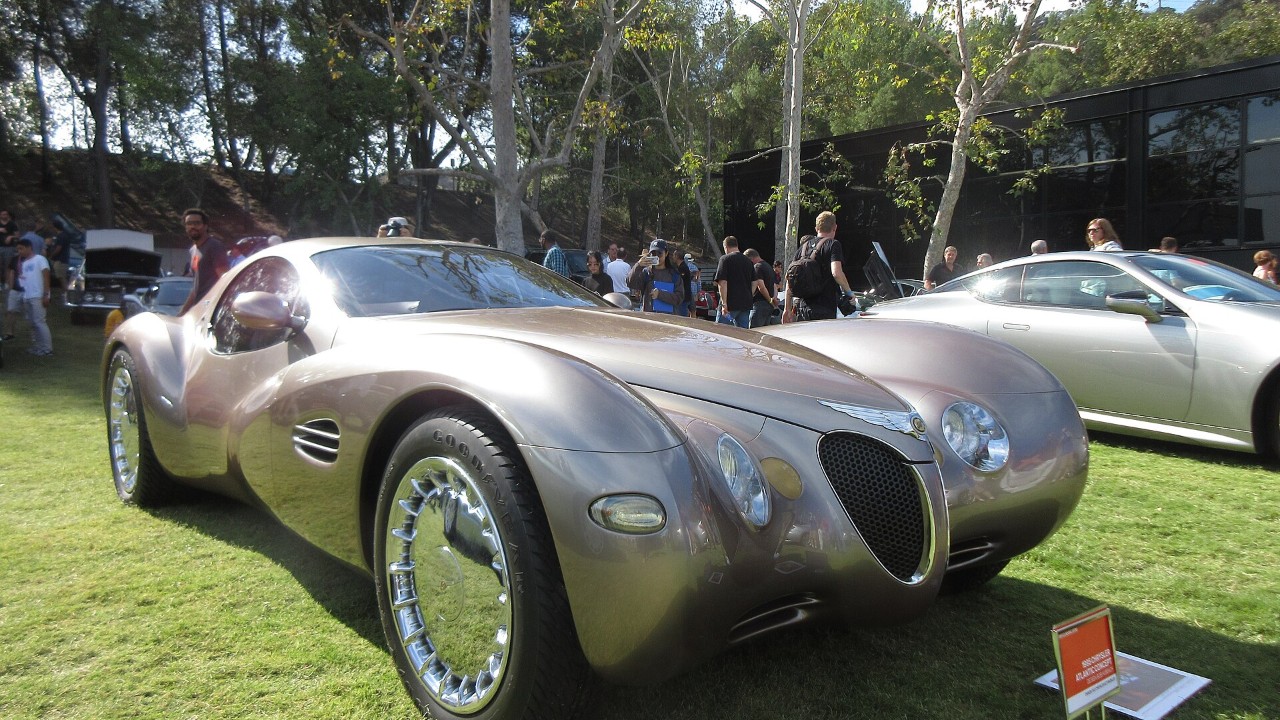
The Atlantic began as a sketch on a napkin. According to Motor1, Bob Lutz and Tom Gale came back from Europe’s shows in 1993 with the idea. The finished car debuted at the 1995 Detroit Auto Show. Its styling drew on the Bugatti Type 57SC Atlantic and other classic French coachwork.
The engine was just as unusual. Chrysler joined two 2.0-liter Neon four-cylinders end to end to create a 4.0-liter straight-eight with about 360 horsepower. It rode on 21-inch front and 22-inch rear wheels, and Bob Hubbach penned the final design. In fact, the Atlantic was built to drive on a modified Dodge Viper platform. Chrysler even let journalists drive it at a modest pace on closed roads.
Our take: this is the concept we would most like to see built. It looked backward without feeling like a costume. Its inspiration list also included the 1937 Talbot-Lago T150SS and the Bugatti Type 41 Royale, and you can see a bit of each in its long hood and tapered tail. Today, the Atlantic belongs to Stellantis’ historic collection and appears at shows from time to time.
5. 2004 Chrysler ME Four-Twelve
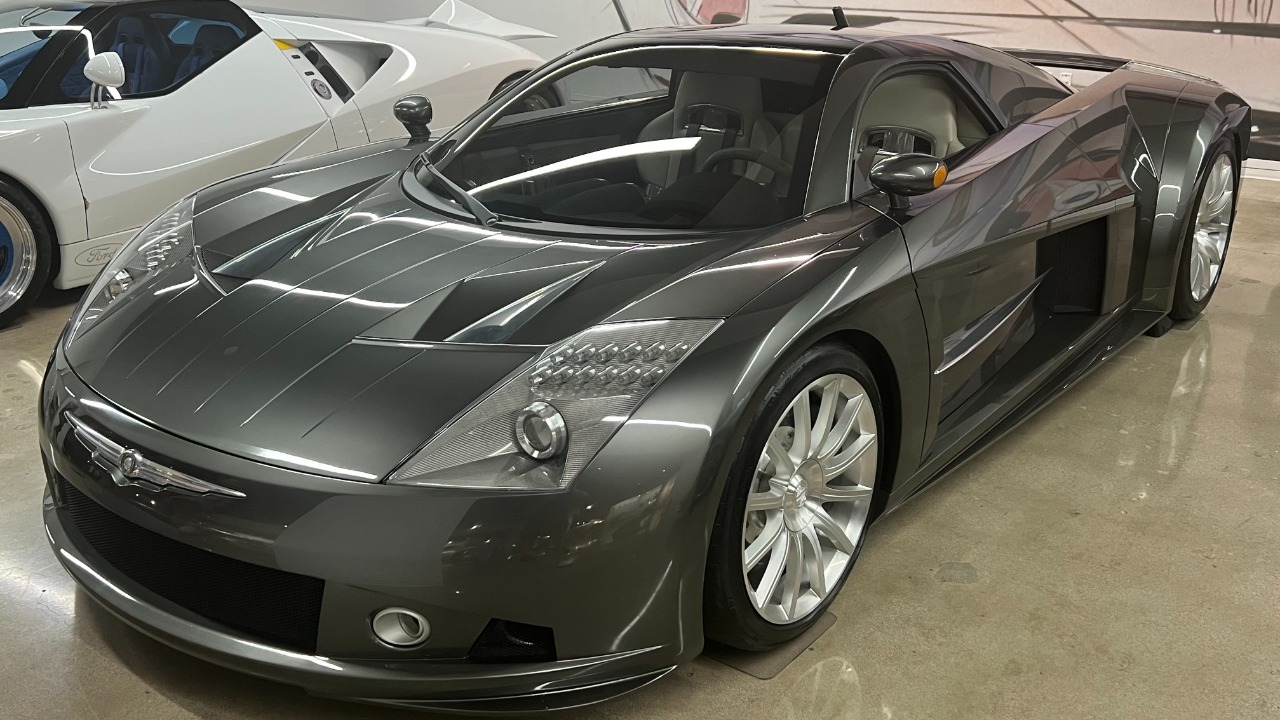
The ME Four-Twelve was a supercar from a company that sold minivans. It debuted at the 2004 Detroit show with a quad-turbocharged 6.0-liter V12 from Mercedes-Benz’s AMG division. The Petersen Automotive Museum lists it at 850 horsepower with a projected top speed of 248 mph.
It wore carbon fiber bodywork over an aluminum honeycomb tub. Meanwhile, a seven-speed dual-clutch transmission sent power to the rear wheels. Chrysler claimed 0 to 60 mph in 2.9 seconds, and the car weighed 2,888 pounds. The gearbox came from Ricardo, with shifts claimed at 200 milliseconds. Design and development took less than a year. For the full story, read our feature The 2004 ME Four-Twelve: Chrysler’s missed miracle.
Our take: we admire the ME Four-Twelve because it proved Chrysler’s engineers could play in the top league. A minivan maker building an 850-horsepower, carbon-bodied supercar in under a year remains one of the great what-ifs of the 2000s. It never reached production, because Chrysler did not take the project further. However, the Petersen features it in its “Modern Concepts” exhibit, from the Collection of Stellantis North America.
6. 1997 Chrysler LHS
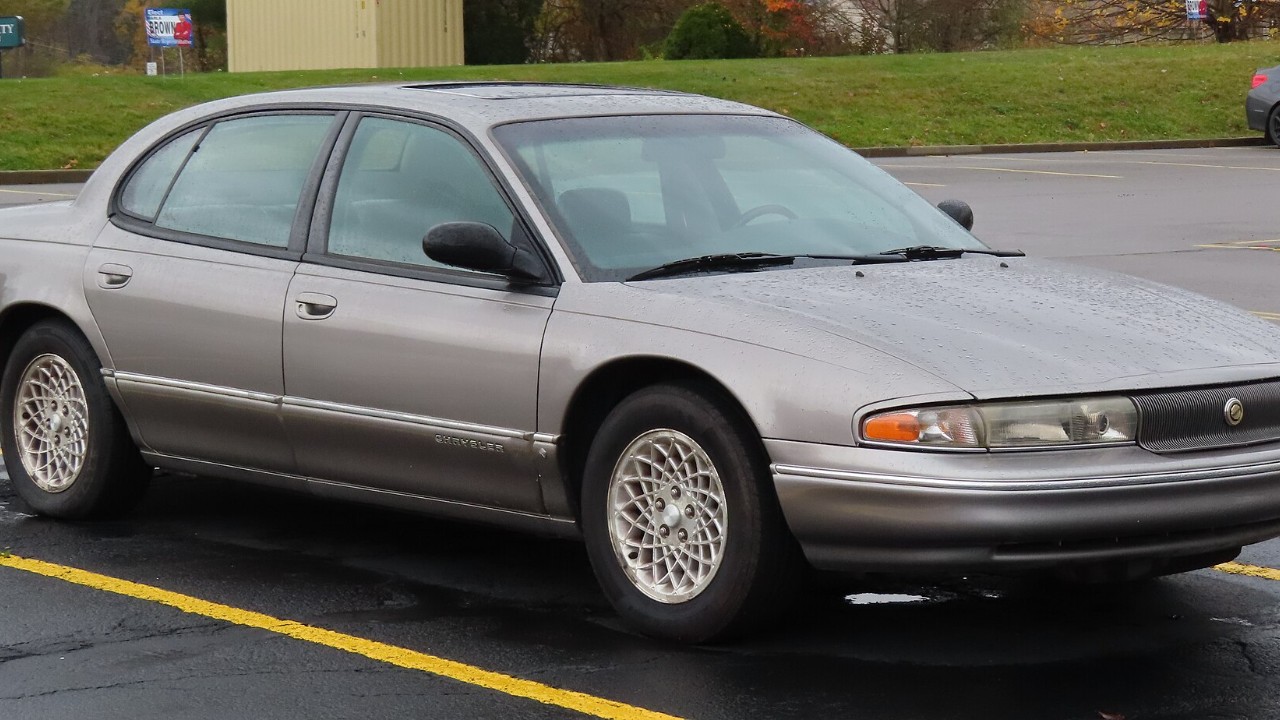
The LHS took over as Chrysler’s flagship for 1994, replacing the Imperial and Fifth Avenue. It rode on the front-drive LH platform with a 113-inch wheelbase. Power came from a 3.5-liter 24-valve V6 rated at 214 horsepower.
Chrysler loaded it up. Leather seats, traction control, automatic climate control and premium sound were all standard. So were aluminum wheels, integrated fog lights and 8-way power front seats. After the New Yorker was dropped following 1996, the 1997 LHS picked up a six-passenger bench seat option to fill the gap in the lineup. That year, Chrysler built 36,525 of them, for a first-generation total of 145,582. Production had dipped to 29,418 in 1995 before climbing back.
Our take: the 1997 LHS is the kind of big American sedan that has nearly disappeared. It was roomy, smooth and fully equipped without a long options list. We admire it as a full-size flagship that came fully dressed. Its first year was its best, with 44,739 built in 1994. Instead, Chrysler simply built the LHS the way most buyers wanted it and left it at that.
7. 1999 Chrysler Concorde LXi
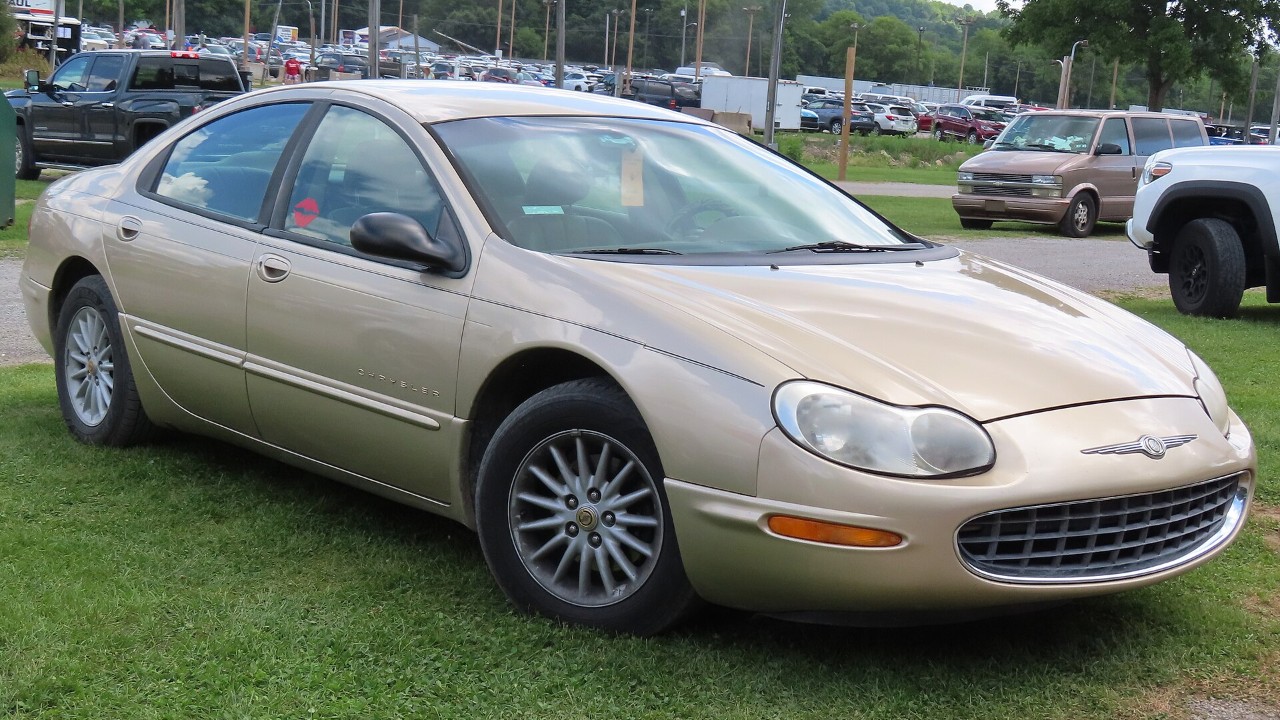
The second-generation Concorde arrived for 1998 with one of the boldest faces of its decade. A full-width grille moved down into the front bumper, which made the car look like a bottom-breathing jet. Two new V6 engines also debuted with this generation: a 2.7-liter with 200 horsepower and a 3.2-liter with 225.
For 1999, Chrysler softened the suspension for a more comfortable ride and added thicker carpeting. A cargo net also became standard. Meanwhile, the LXi gained a new CD player and the Sentry Key anti-theft system. Later, the 2002 to 2004 Concorde Limited offered an upgraded 3.5-liter V6 with about 250 horsepower.
Our take: the 1999 Concorde LXi is a sedan we admire for its nerve. Few family cars of the 1990s looked this dramatic, and fewer still wore it so confidently. It also stood apart from its Intrepid and 300M siblings, which is no small thing on a shared platform. In our view, a clean LXi deserves more respect than it gets. The first generation alone sold 273,720 copies from 1993 to 1997, so the Concorde was no niche car.
8. 1986 Chrysler Laser XT
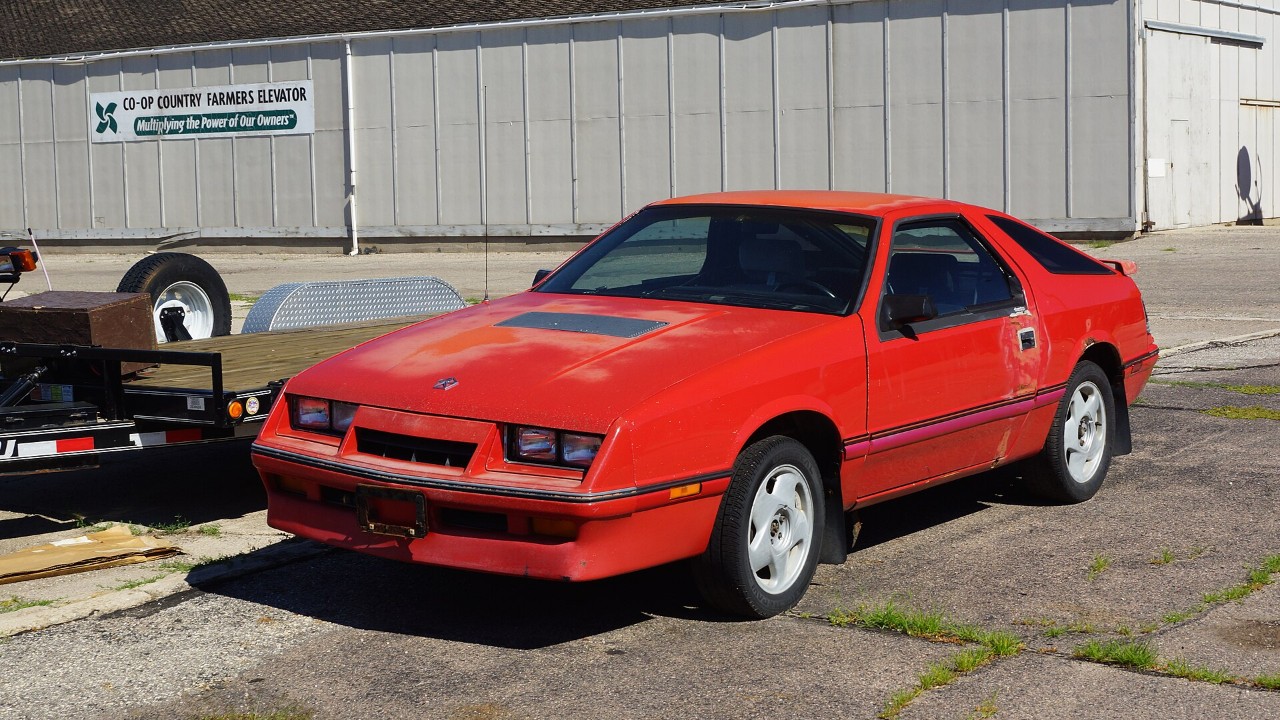
The Laser was the upscale twin of the Dodge Daytona, built on Chrysler’s front-drive G platform. It ran only from 1984 to 1986. The 2.2-liter Turbo I engine made 142 horsepower at launch and 146 from 1985. Then, in mid-1985, Chrysler added the XT as the top version. The Laser even outsold its Dodge twin at first, with 59,858 sales in 1984 against the Daytona’s 49,347.
Inside, the Laser offered digital gauges and an electronic monitoring system with a synthesized voice. Chrysler built it in St. Louis, and sales fell to 36,672 in 1986, its final year. After that, Chrysler replaced it with the Mitsubishi-built Conquest, a rear-drive car. If you want the full story, see our feature on how the 1985 Chrysler Laser tried to redefine American sport coupes.
Our take: the 1986 Laser XT is pure 1980s optimism, with a turbo, a talking dashboard and sharp wedge styling. We admire it because Chrysler aimed high with it. A clean XT is a fun reminder of that moment, and the talking dash alone will draw a crowd at any show.
9. 2004 Chrysler Pacifica
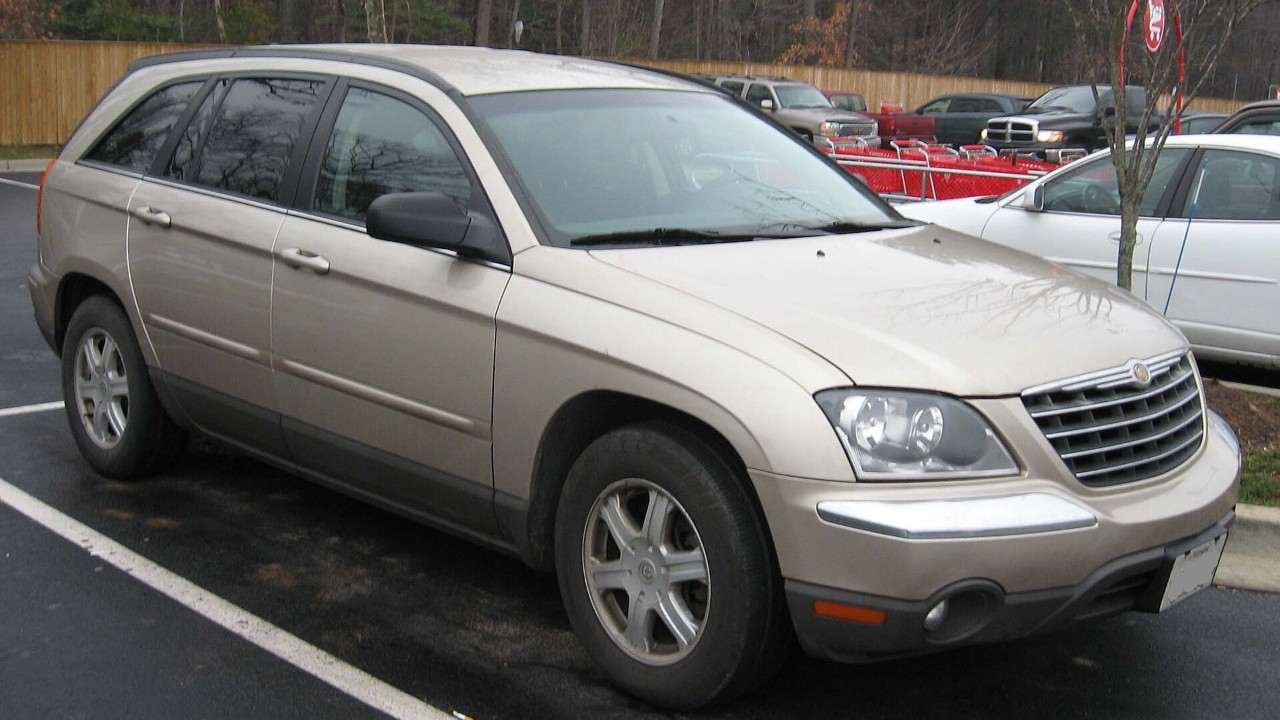
The Pacifica was the first jointly engineered product of the 1998 DaimlerChrysler “merger of equals.” Chrysler developed it in 30 months for less than $1 billion. It drew on the 1999 Pacifica and 2000 Citadel concepts, and the production model debuted at the 2002 New York auto show.
Chrysler built it in Windsor, Ontario, from January 2003 to November 2007. The 2004 model used a 3.5-liter V6 rated at 250 horsepower and 250 lb-ft of torque, with a four-speed automatic. Reviewers called the engine gruff and underpowered for the weight. Even so, we like the rest of the package. It also had a Mercedes-like interior in a tall, wagon-like shape.
Our take: the 2004 Pacifica arrived before crossovers took over the market, and we admire it for that. It was a family hauler that did not look like a minivan. It also showed what the DaimlerChrysler partnership could produce when both sides worked on one car. That is why we would happily park a clean one in our driveway today. Chrysler sold 92,363 of them in the U.S. in calendar 2004.
More from Fast Lane Only