Ford sells more performance than its family-car image suggests, and the proof runs from 1963 big-block sedans to the Ford SVT cars of the 1990s. Many of those quick Fords wore ordinary bodies. Some looked like commuter sedans, a few looked like pickups, and one was a Falcon built for Australian buyers.
That is exactly why they caught people out. A Mustang or a Shelby announces itself, so nobody is surprised when it is quick. However, a Taurus, a Contour or a Fiesta does not. The cars on this list delivered more speed than their badges, their prices or their looks led buyers to expect.
These are our picks for 12 Fords that were faster than their reputation suggested, and the verdicts are our opinion. The engines, outputs, test figures and production counts come from period road tests, trade press and model histories, so the numbers do the arguing.
1. 1963 Ford Galaxie 500 Sports Roof 427
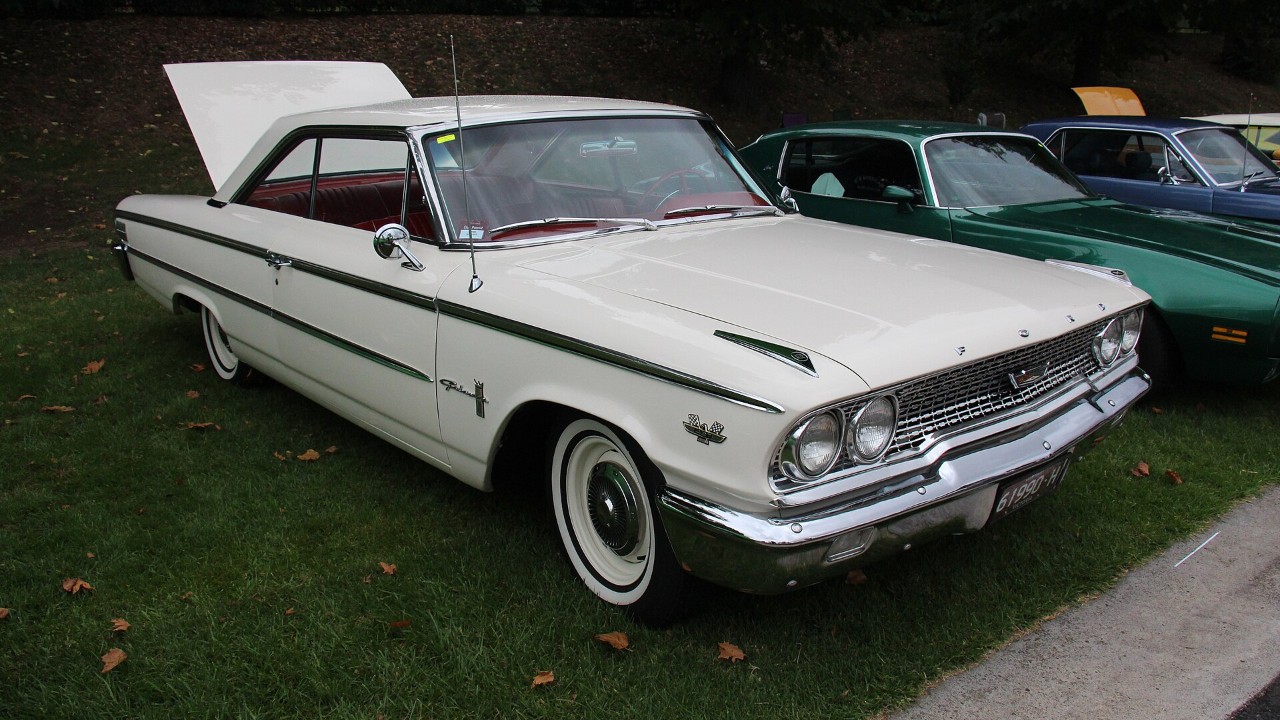
The full-size Galaxie looked like a family car, but its mid-1963 roof change was all about speed. Ford added a lower fastback roofline halfway through the year, and it became the industry’s first official “half-year” model. The goal was less drag and less lift at high speed, which mattered on NASCAR superspeedways. Buyers liked the look too, because the sports hardtops outsold the square-roof cars.
The engine matched the roof. Ford introduced the 427 partway through 1963 to replace the 406 and to fit the 7-liter limit in NHRA and NASCAR rules. With two four-barrel Holley carburetors and a solid-lifter camshaft, it carried a rating of 425 hp. That is a lot of power for a car most people would have parked at church.
It also won far from home. Jack Sears took the 1963 British Saloon Car Championship driving Galaxies and Cortinas, although the heavy Galaxie suffered brake failures. In our view, a big Ford sedan beating European touring cars says everything about how fast it really was. Our take: the Sports Roof 427 is the original Ford sleeper, and a clean one deserves far more respect than a family-car badge suggests.
2. 1966 Ford Fairlane GT
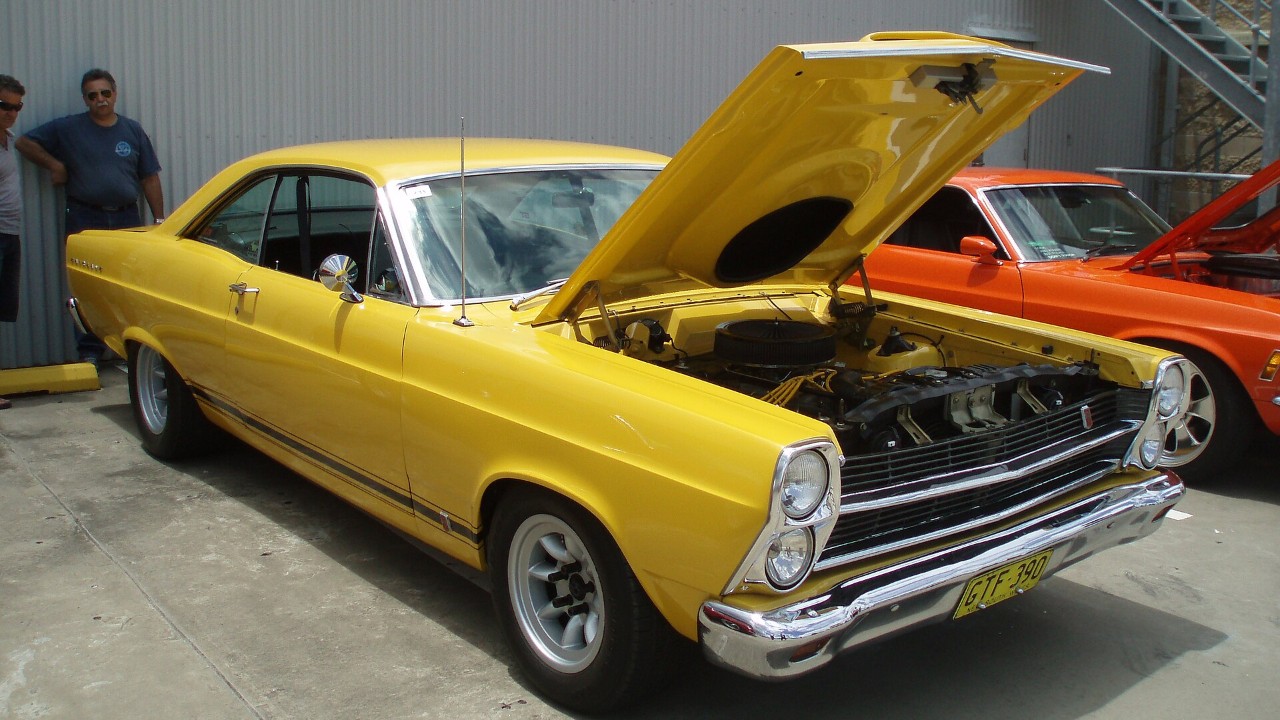
The 1966 Fairlane was a mid-size family car, and the GT version did not shout about itself. Yet the GT came standard with a 390 cubic-inch FE V8. With higher compression and a four-barrel carburetor, that engine made 335 bhp. Buyers who wanted an automatic could order the GT/A with the SportShift Cruise-O-Matic automatic.
The bigger surprise sat in the same showroom. Midway through 1966, Ford built 57 special Fairlane 500 hardtops with a 427 V8 rated at 425 bhp and 480 lb-ft. Those white cars had fiberglass hoods and four-speed Top-Loader gearboxes, and they existed to qualify the engine for NHRA and IHRA Super Stock racing. In other words, the plain Fairlane body was already a race car platform.
We think the GT was quicker than its reputation because it lived in the shadow of GTOs and Chevelles. For a closer look at the car itself, read how the 1966 Ford Fairlane GT helped define early muscle car performance. If you shop for one, confirm the 390 GT details before you pay GT money. A real GT is a quick, well-balanced mid-size car that rarely gets the credit it earned.
3. 1969 Ford Torino 428 Cobra Jet
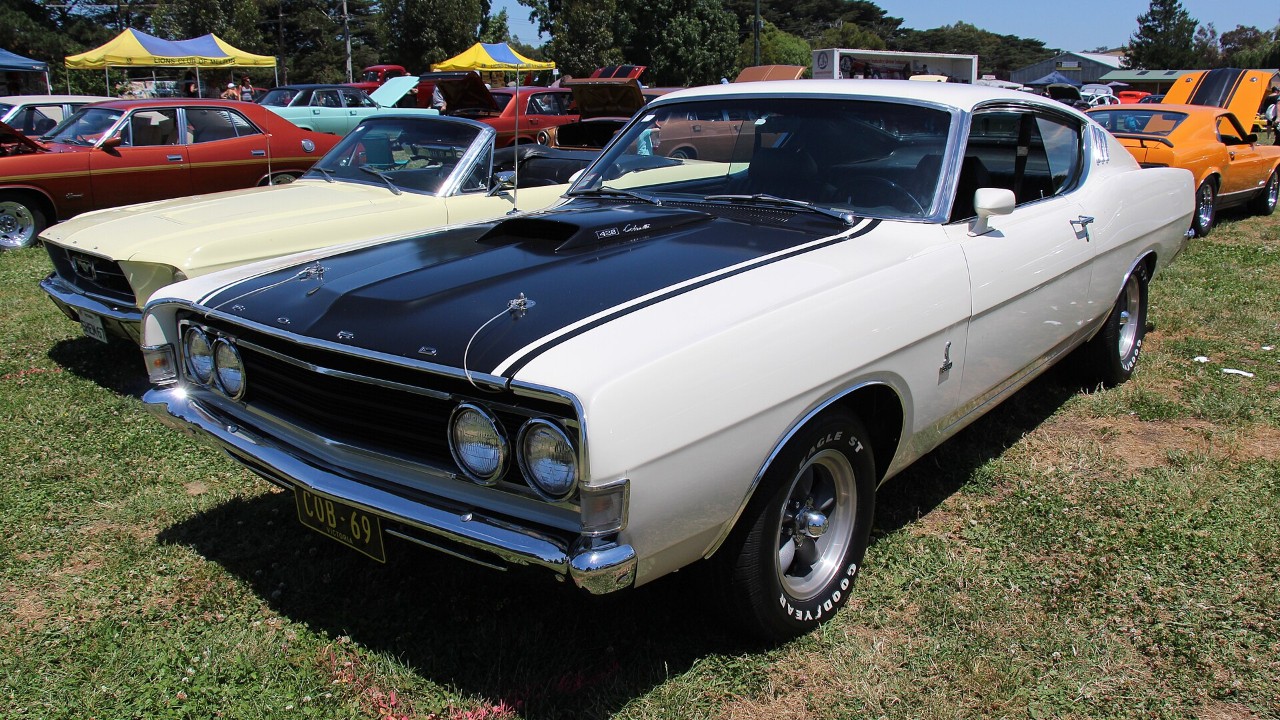
The 428 Cobra Jet reached Ford’s mid-size cars on April 1, 1968, partway through the model year. For 1969, the Torino Cobra made it standard, along with a four-speed, competition suspension and F70-14 tires. Ford also kept the advertised rating at 335 hp, whether or not the car had Ram Air.
That rating is the heart of its reputation problem. On paper, 335 hp sounded ordinary for a big-block. On the road, Road Test magazine ran a Ram Air Cobra through the quarter-mile in 15.07 seconds at 95.74 mph, with a four-speed and 3.50 gears. Even then, the testers believed the lack of a tachometer had cost them time. A 1968 Torino GT with the same engine ran 14.2 seconds at 98.9 mph for Car and Driver.
Ford built 129,054 Torinos for 1969 but did not split out the Cobra in its production totals. That makes provenance work hard for buyers. Our take: the Cobra Jet Torino was faster than its sticker suggested, so check the build paperwork, axle code and Ram Air parts before you believe a seller’s story.
4. 1971 Ford Maverick Grabber
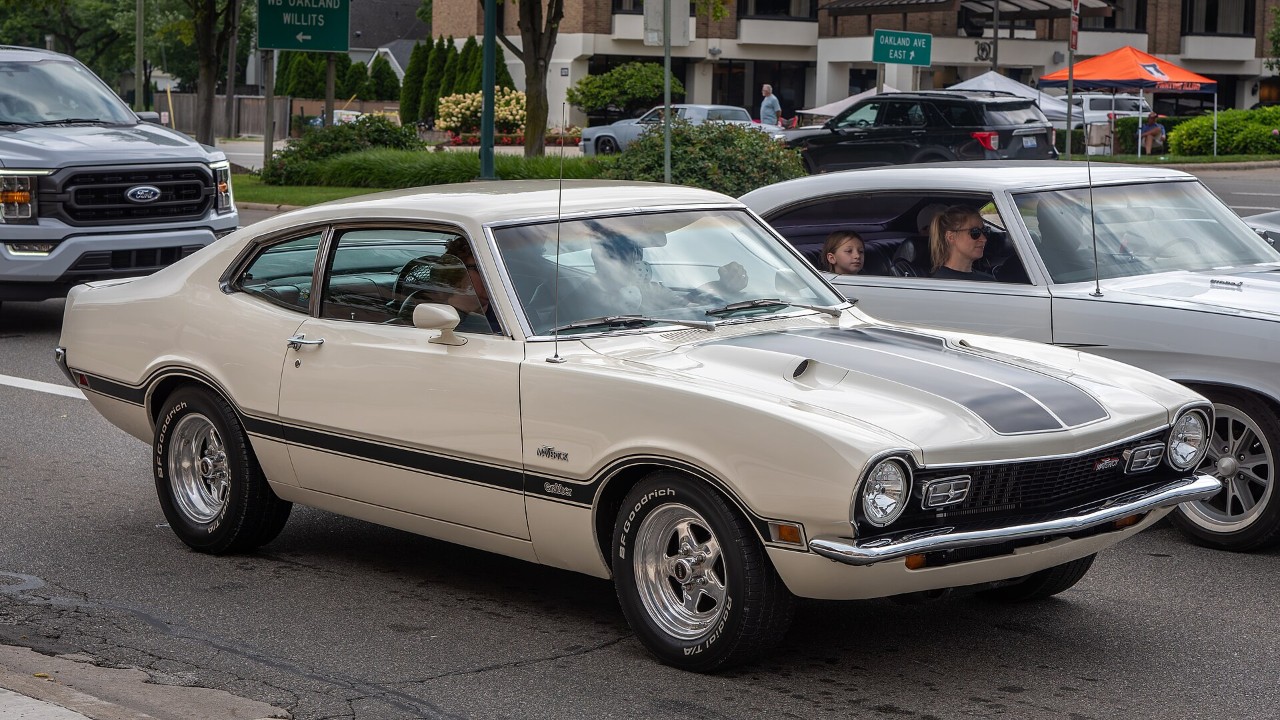
The Maverick began as Ford’s cheap compact. It launched on April 17, 1969, at $1,995, and buyers took nearly 579,000 in the first year. A car sold on price rarely gets a performance reputation. So when Ford added the Grabber in mid-1970, it was easy to dismiss as a dress-up package.
For 1971, that changed. Ford made the new 302 cubic-inch V8 available, rated at 210 hp, while the Grabber wore a dual-scoop hood for 1971 and 1972. Better still, the sedan weighed just 3,011 pounds. That is a light car for a V8, and it gave the Grabber more pace than its compact-car roots suggested. Put simply, the Grabber went from a paint-and-stripes option to a genuine small V8 coupe in one model year.
In our view, the 302 Grabber is the Maverick to want, because the small V8 suits the light body so well. It is the version we would hunt for. We have covered how the Maverick Grabber surprised drivers before. If you are shopping, check the VIN for the V8 code, since the 1971 Maverick was also sold with three inline sixes.
5. 1986 Ford Mustang SVO
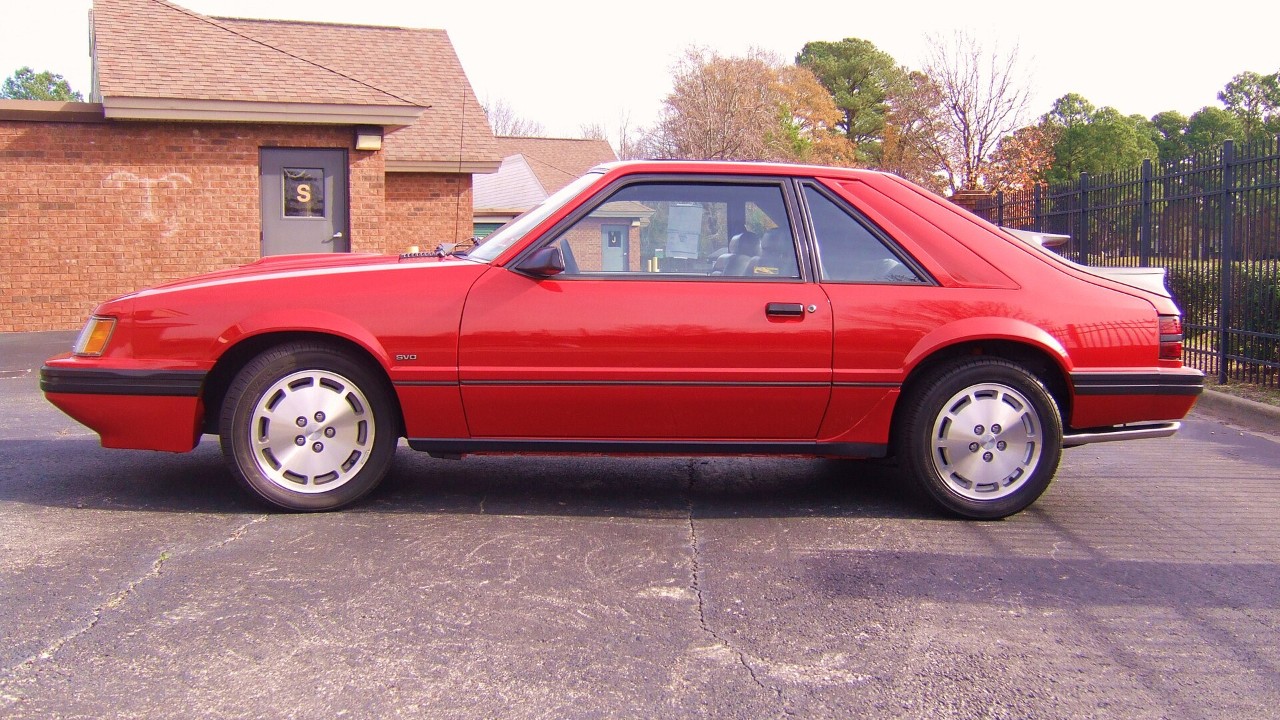
The SVO was a Mustang with four cylinders, which is a hard sell in a V8 country. Under the hood sat a 2.3-liter Lima four with a Garrett AiResearch T03 turbocharger and an air-to-air intercooler. It ran up to 14 psi of boost on premium fuel. For 1986, its final year, the rating was 200 hp. Ford’s own style of figure put 0-60 mph at about 7.5 seconds with the standard 3.45:1 axle.
The rest of the car showed where the money went. It had an adjustable six-shock KONI suspension, a factory Hurst shifter and ventilated four-wheel disc brakes, a first for the Mustang. That hardware made the SVO a car for corners as much as straight lines. Meanwhile, its list price of $15,585 in 1984 was serious money for a four-cylinder Mustang.
Ford built 3,382 SVOs for 1986, out of 9,844 across three years. Our take: buyers who wrote it off because of the engine missed one of the best-balanced Mustangs of the 1980s. If you find one, keep the original turbo plumbing and intercooler, because those parts define the car.
6. 1992 Ford EB Falcon GT
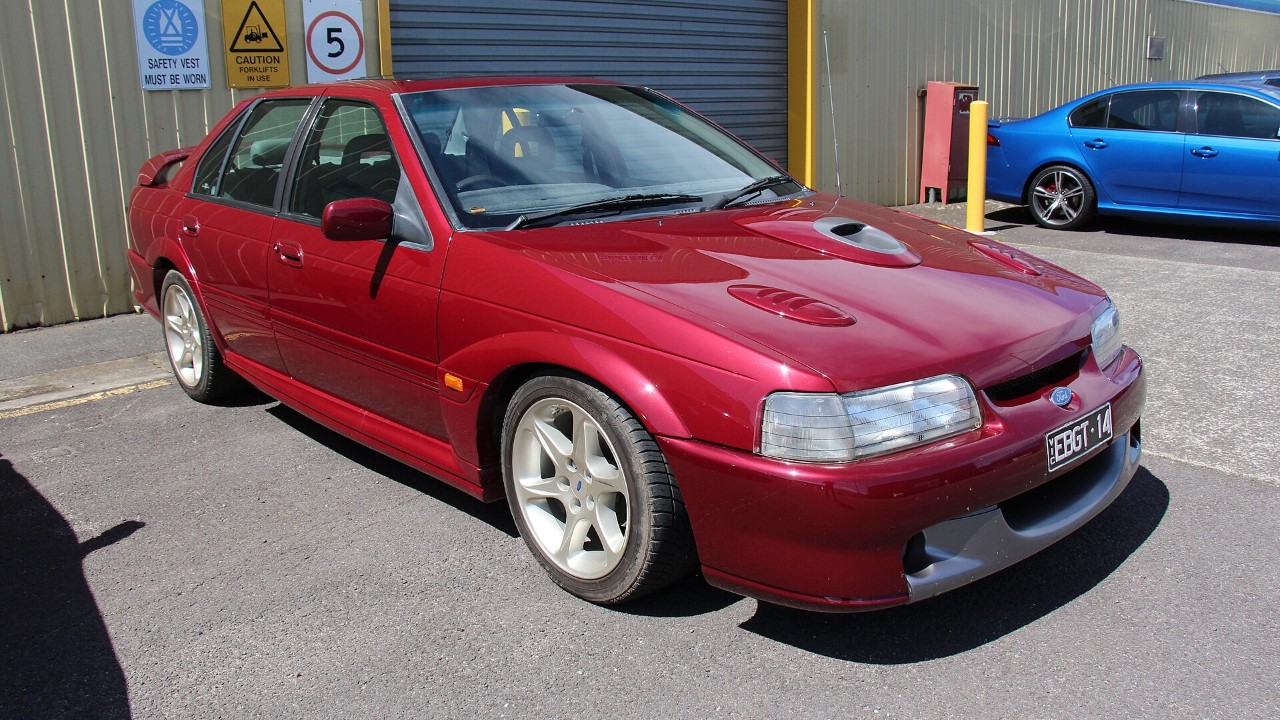
The Falcon GT name carries weight in Australia, but by 1992 it had been gone for years. Ford Australia brought it back for the 25th anniversary of the original Falcon GT. It partnered with Tickford Vehicle Engineering, and it based the car on the EB II Falcon with an interior drawn from the luxury Fairmont Ghia.
That luxury base hid real speed. According to Unique Cars and Parts, the GT used a 4.942-liter (302 cubic-inch) V8 rated at 200 kW, or about 270 bhp, at 5,250 rpm. It also made 420 Nm of torque at 4,000 rpm. The same source lists 0-100 km/h in 7.3 seconds and a 228 km/h top speed, which is about 142 mph.
In our view, the EB GT was faster than its reputation because Australian buyers judged it against the famous GTs of the late 1960s and 1970s. For more on why the nameplate matters there, see why the Ford Falcon became unexpectedly influential in Australia. Today, an anniversary GT with its Tickford parts intact is the one to find, and the manual gearbox makes the most of that V8.
7. 1997 Ford Taurus SHO V8
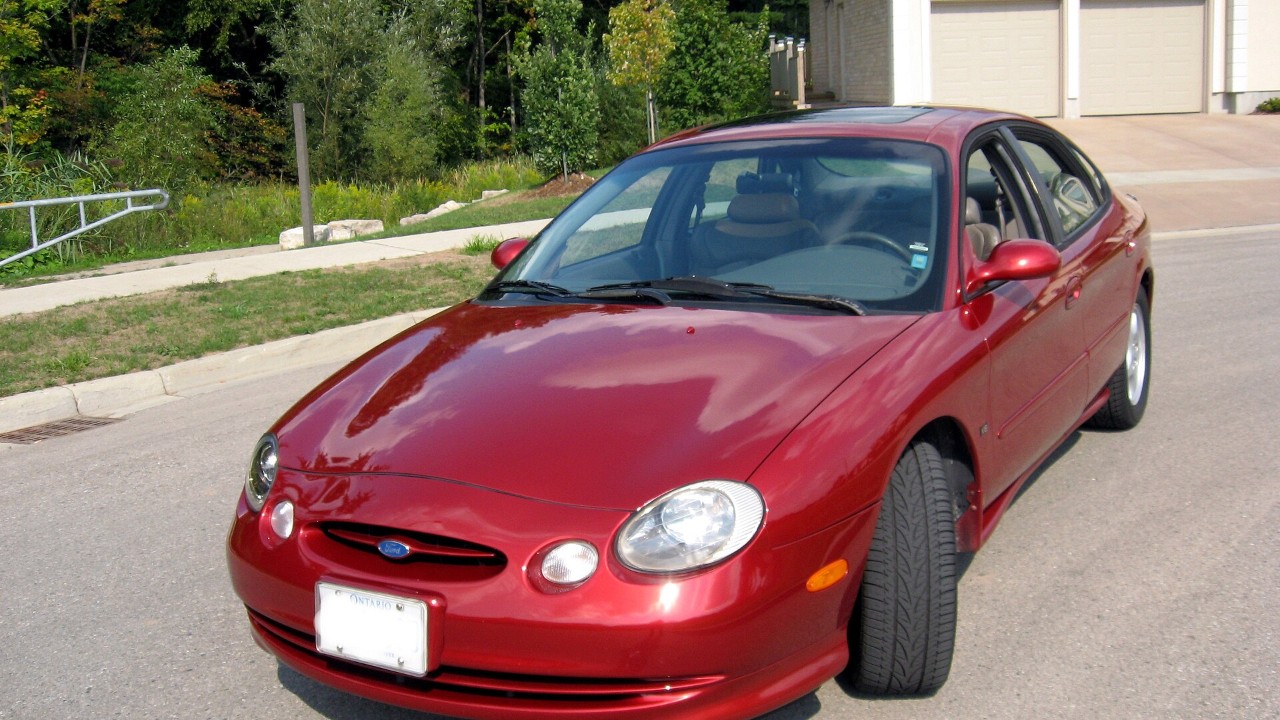
The Taurus was Ford’s mainstream family sedan, so an SHO always surprised people. The first SHO of 1989 used a 220 hp Yamaha-built V6 that revved to 7,000 rpm. That partnership dated to a 1984 contract in which Yamaha agreed to develop a compact twin-cam V6 for Ford.
The third-generation SHO took a different route. It used a 3.4-liter aluminum V8, with Yamaha heads and a Cosworth block, rated at 235 hp. It was the only Taurus ever offered with a V8. However, Ford sold it with a four-speed automatic only, and sales peaked at about 9,000 in 1997.
There is a known weakness. The camshafts could separate from their sprockets, often around 50,000 miles, and about 1,200 failures were reported out of roughly 20,000 engines. Our take: the V8 SHO was faster and more exotic than its rounded body suggested. A Yamaha-headed V8 in a family sedan is a strange and wonderful idea, and few rivals offered anything like it. If you buy one, budget for the cam-welding fix first, because it is the difference between a fun sedan and a dead engine.
8. 1998 Ford Contour SVT
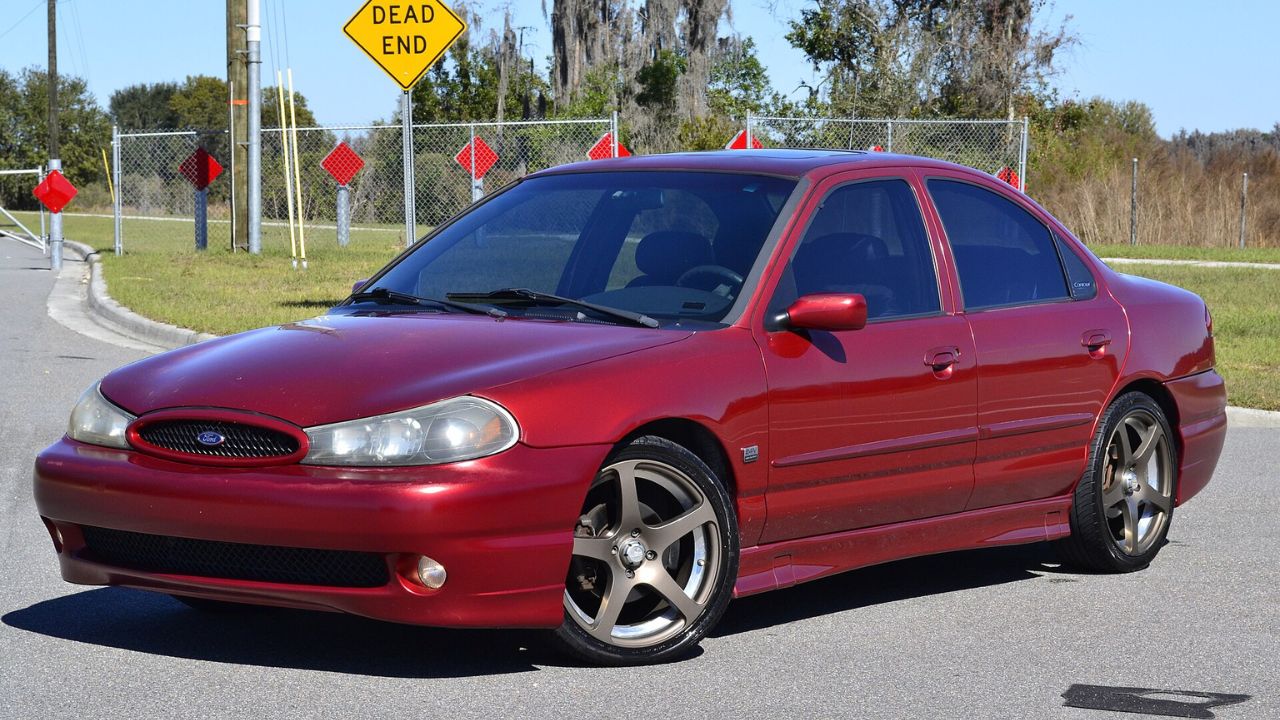
The Contour was Ford’s mid-size sedan for the 1990s, sold to families and fleets. Ford SVT, the company’s Special Vehicle Team, turned it into something else. The SVT Contour used a 2.5-liter Duratec V6, rated at 195 hp for 1998 and 200 hp for 1999.
That was serious output for a front-drive family sedan of its day. In fact, it kept four doors and a usable back seat while it delivered it. To most people on the street, though, it looked like any other Contour. That plain look is exactly why it fits this list. A rented Contour and an SVT version could sit side by side in a parking lot, and only an enthusiast would spot which one had the V6 tuned by Ford’s performance team.
Production was small. Ford built 6,535 SVT Contours in 1998, then 2,760 in 1999 and 2,150 in 2000, for a total of 11,445. In our view, the 1998 cars are the ones to watch, since they were the biggest batch of the run. Look for an unmodified example with full service records and the original wheels.
9. 2000 Ford F-150 SVT Lightning
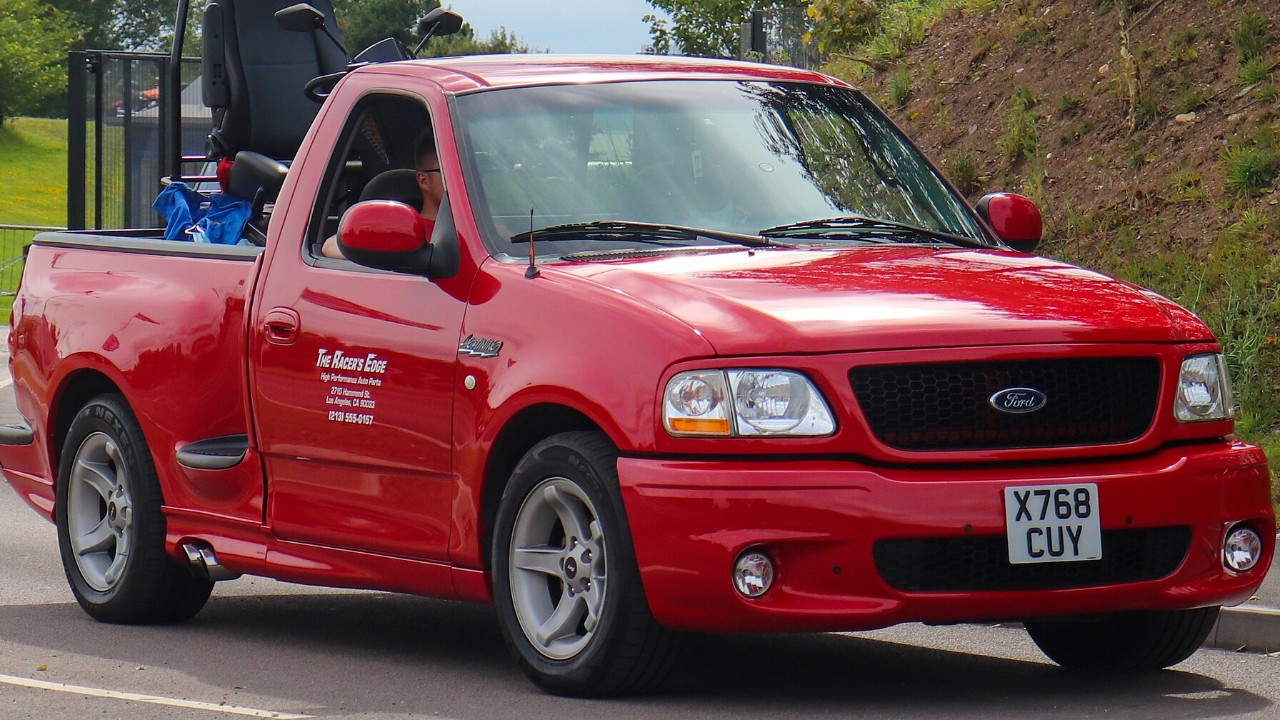
A pickup is not supposed to embarrass sports cars, yet the second-generation Lightning had the hardware to try. Ford SVT gave it a supercharged 5.4-liter Triton V8. For 1999 and 2000, it carried a rating of 360 hp, and from 2001 that rose to 380 hp. Ford built 4,000 of them in the first year alone.
Ford built the second-generation Lightning from 1999 to 2004, and 2000 production came to 4,966 trucks. Across six model years, the total reached 28,124. That is a healthy run for a niche truck, and it shows the buyers were there once they understood what it was. The best year was 2001, when Ford built 6,381 trucks as the rating climbed to 380 hp.
Even so, the Lightning’s reputation lagged behind its numbers. A supercharged pickup simply did not fit the muscle-car stereotype. Our take: the 2000 truck gives you the original 360 hp setup in its second year, when the formula was settled. Check the supercharger and intercooler for service history before you buy. A truck with a clean, documented past is worth paying extra for, since these trucks were built to be driven hard.
10. 2002 Ford SVT Focus
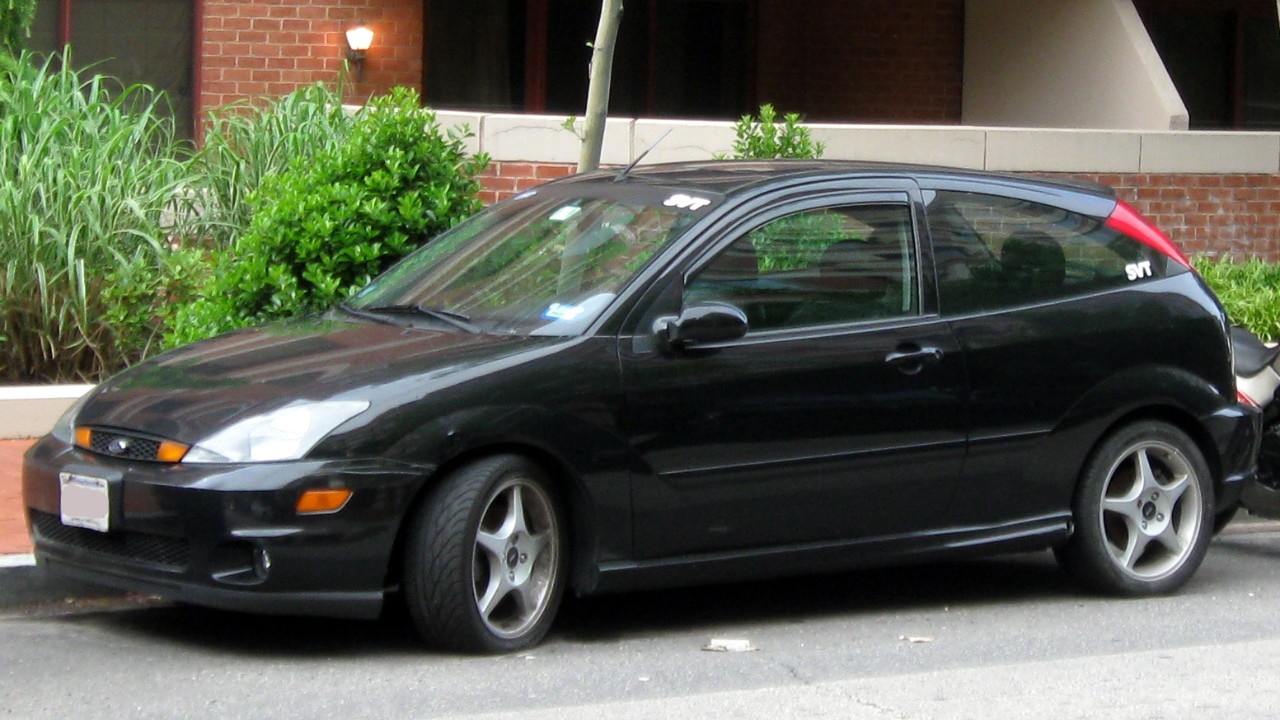
The Focus was a small economy car when it arrived in America, which made the SVT version easy to overlook. Ford SVT gave it a 2.0-liter Zetec four with 170 hp and 145 lb-ft of torque. In a compact hatchback, that was a meaningful jump. More importantly, Ford SVT tuned the whole car rather than just the engine, so it felt like a finished performance model and not a sticker package.
The SVT Focus was a short-lived model. Ford built 4,788 in 2002, then 6,158 in 2003 and 3,057 in 2004, for 14,003 in all. As a result, the 2002 cars represent the first year of a small run.
We think the SVT Focus was faster than its reputation because the Focus badge said “economy” to most buyers. Its real character showed on a twisty road, where a light front-drive hatch with a willing engine can embarrass much bigger cars. Look for a car with its original engine and exhaust, because a stock example tells the SVT story best. In our view, the SVT Focus is one of the most affordable ways into a Ford SVT car today.
11. 2013 Ford Focus ST
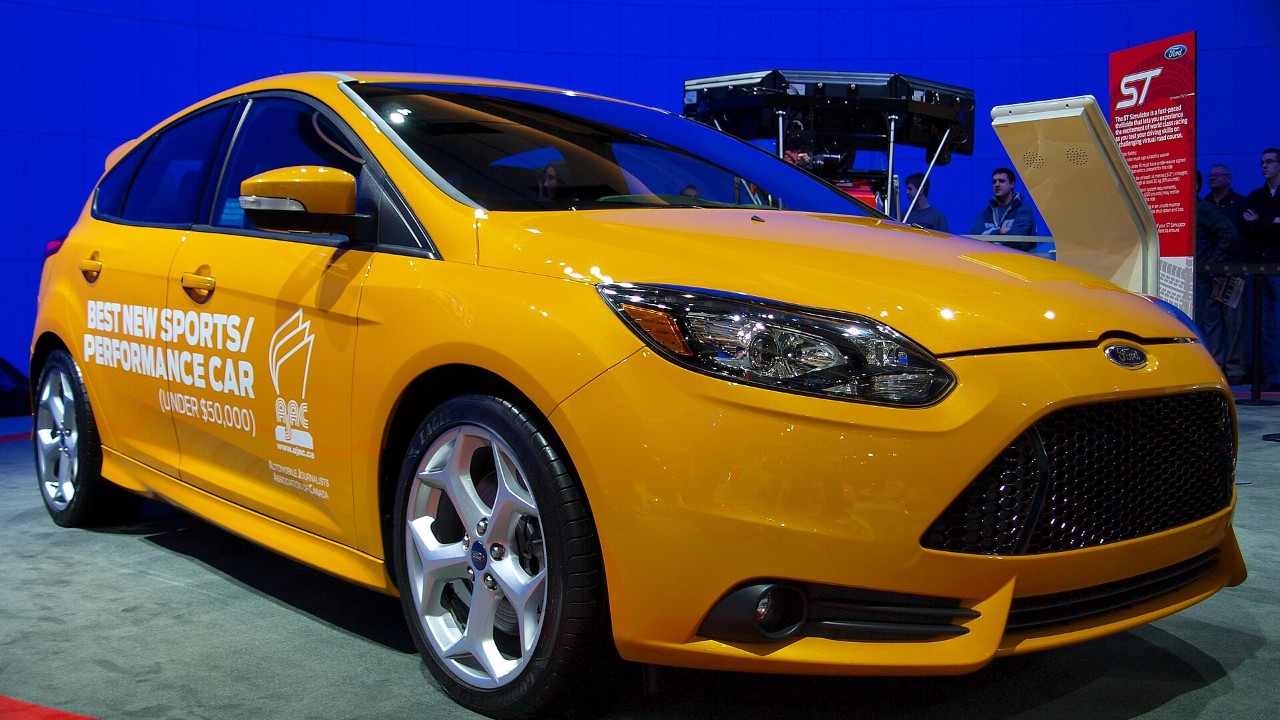
A decade later, Ford tried the hot Focus again, and this time it brought turbocharging. According to Ward’s Auto, the Focus ST’s 2.0-liter EcoBoost four made 252 hp at 5,500 rpm and 270 lb-ft at 2,500 rpm. It came with a six-speed manual only, and Ford offered no automatic.
To manage that power through the front wheels, Ford added torque-steer compensation. The system sensed torque steer and told the electric power steering to keep the car straight under full throttle. Ward’s lists 0-62 mph in 6.4 seconds and a top speed of 154 mph. Recaro seats came in partial or full leather. Ford even fitted a “sound symposer” tube from Mann+Hummel to carry engine sound into the cabin under hard throttle, and it expected to sell about 60,000 a year worldwide.
The price is what made it a sleeper. The ST started at $24,495, the same as a Focus Titanium with about 100 fewer horsepower. Our take: that was a lot of speed for the money. Buy one that has not been heavily tuned, because a stock car is the cleanest version of the idea.
12. 2014 Ford Fiesta ST
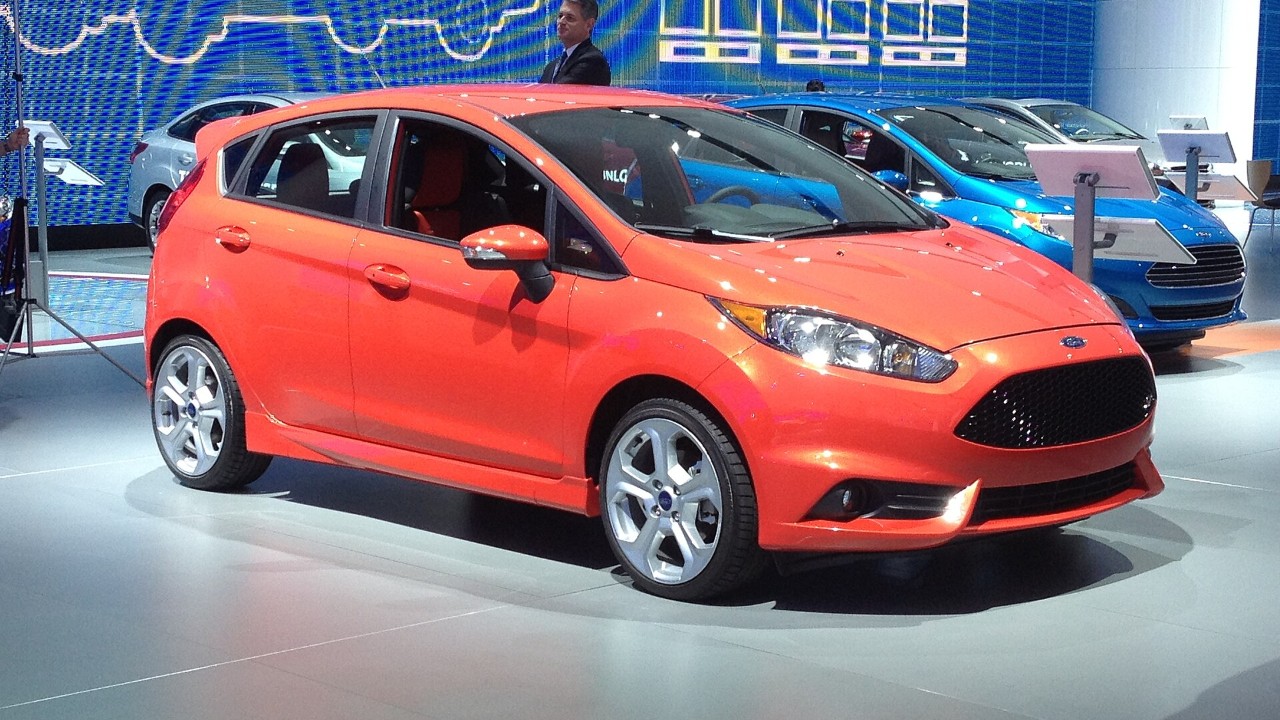
The Fiesta was Ford’s smallest car in America, and the ST turned it into a pocket rocket. Ford showed it at the 2012 Los Angeles Auto Show. According to AutoGuide’s report from the reveal, Ford estimated the turbocharged 1.6-liter EcoBoost four at 197 hp and 214 lb-ft.
The chassis work went just as deep. Ford lowered the suspension almost 0.6 inches and stiffened it to reduce body roll. It also used a quick 13.6:1 steering ratio and torque vectoring control to fight understeer. Then it paired the engine with a six-speed manual and three stability-control modes, including off. Outside, the ST got a new grille, a chin spoiler, a rear diffuser, a dual-tip exhaust and unique 17-inch wheels, though it was small enough to look harmless.
That is a lot of hardware for a subcompact, and many shoppers never looked past the size. Their loss was the enthusiast’s gain. In our view, the Fiesta ST is one of the most fun small Fords ever sold in America. Ford also claimed 34 mpg combined for the 2014 Fiesta ST.
More from Fast Lane Only