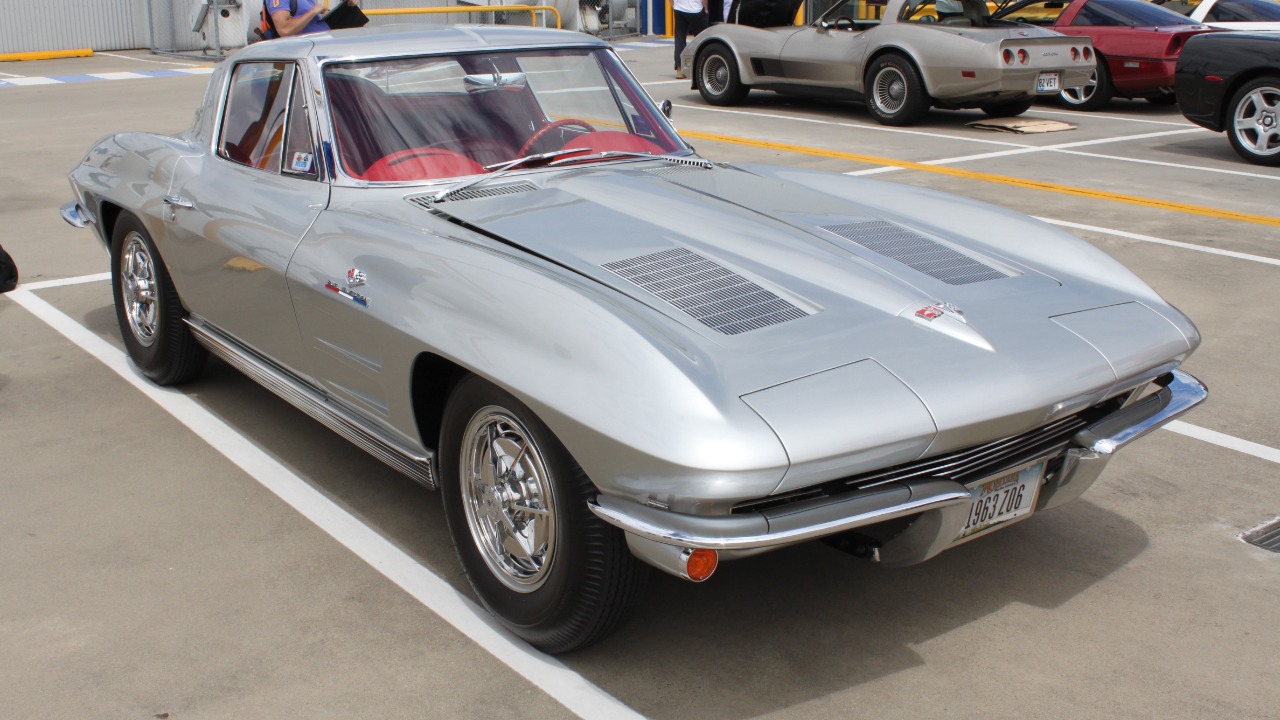
The 1963 Corvette Z06 did not arrive with fanfare or flashy advertising. It slipped onto order sheets as a coded option, built in tiny numbers and aimed at racers who knew what to ask for. Yet that quiet package turned the second-generation Corvette into a genuine competition threat and set a template that still shapes Chevrolet’s flagship sports car.
American road racing grids of the era were dominated by European machinery and a handful of domestic specials. Into that landscape, the hidden Z06 package gave privateers a factory-backed tool that could challenge bigger names. Its story is one of engineering ambition, corporate caution and a handful of determined drivers who proved that a stealthy option code could punch far above its weight.
The secret performance code
The Z06 story begins with the launch of the new C2 Corvette, a car that moved the model from boulevard cruiser to serious sports machine. Chevrolet engineers had been tuning the Corvette concept since the original car arrived in 1953, and by 1963 the platform had been refined for speed and handling rather than pure style, as period coverage of the early cars and their evolution into the 1963 model makes clear in contemporary video analysis that also notes production of over 21,000 vehicles.
Within that broader launch sat Regular Production Option Z06, a package that did not appear in consumer advertising and was not widely promoted in dealer showrooms. Detailed histories of the program describe how Z06 was conceived as a competition bundle that combined heavy duty suspension, uprated brakes and fuel injection, all wrapped inside a standard-looking Corvette coupe. Enthusiast research into the origin of the traces how this configuration was deliberately kept low profile so Chevrolet could support racing without courting regulatory trouble.
Where every 63 and 64 Corvette left the factory with drum brakes, the Z06 package substituted sintered metallic linings and matching hardware designed to survive long races. Coverage of the program notes that the Z06 designation itself was an RPO, short for special performance Regular Production Option, that quietly bundled these competition parts for customers who understood the ordering language and wanted a car that could go straight from showroom to track.
Built in small numbers, aimed at the track
Production of the 1963 Z06 was limited from the start. Chevrolet records and later summaries agree that in 1963 only 199 Z06 Corvettes were built, a figure repeated both in enthusiast discussions of the 1963 Z06 Corvettes and in technical overviews of the C2 generation that note 199 examples and explain that the cars were usually reserved for racing. Those same sources point out that a small subset of the 199 were prepared specifically for endurance events such as Le Mans, underlining how focused the package was on competition.
Even within that tiny run there were layers of specialization. Some Z06 cars received larger fuel tanks, earning them the informal “tanker” nickname, to stretch stints in long distance events. One of the best known of these belonged to Mickey Thompson, whose Personal Chevrolet Corvette Z06 “Tanker” has been described in collector circles as both a daily driver and a development tool, with later coverage of the car highlighting how the Corvette Z06 started as a hidden option that was not publicised, not even on the official sales material, and calling out Mickey Thompson’s Personal as a prime example.
On the surface, most Z06 cars looked like any other 1963 Corvette coupe, often with the distinctive split rear window that has since become an icon in its own right. That subtlety was part of the appeal. Racers got a car that could be delivered through regular dealers and registered for the street, yet carried heavy duty components that had been engineered with competition in mind.
From Sebring to American road courses
The Z06’s reason for existing was simple: Chevrolet wanted the Corvette to win. Corporate policies of the period limited direct factory racing, so the company relied on privateers and carefully orchestrated support. The Z06 package was the hardware side of that strategy, and it quickly found its way to major events on the American calendar.
Accounts of Corvette competition in the early 1960s describe Z06 entries at endurance races and national-level road course events, where the cars could exploit their fuel injected power and upgraded brakes. A broader look at the Z06 badge’s history describes how, since its secretive debut in 1963, the Z06 name has come to represent a track-focused Corvette, with later generations using the same philosophy of stiffer suspension, stronger brakes and more aggressive engines to turn the car into what one modern overview calls an American supercar slayer.
That reputation started with the original cars. Period race reports and later retrospectives credit early Z06 drivers with class wins and strong overall performances that forced established teams to take notice. The package gave privateers a realistic chance to run at the front of domestic sports car races without importing European machinery, and it helped shift perceptions of the Corvette from styling exercise to legitimate contender.
Sharing the stage with the Grand Sport
The 1963 season did not belong to the Z06 alone. In the background, Chevrolet engineers pursued an even more extreme competition car, the Corvette Grand Sport, which stripped weight, added bespoke chassis work and aimed directly at international GT competition. Only a handful were built before corporate politics shut the program down, and later enthusiasts have described the 1963 Chevrolet Corvette Grand Sport as one of the rarest and most legendary Corvettes ever created, a status reflected in modern tributes to the Grand Sport.
In that context, the Z06 played a different but complementary role. The Grand Sport was an experimental weapon aimed at the highest levels of international racing. The Z06, by contrast, was a production-based tool that club racers and national competitors could actually buy. Where the Grand Sport program was short lived, the Z06 concept proved sustainable, and its low-key integration into the regular Corvette line helped it survive internal scrutiny.
The two cars shared DNA, particularly in their emphasis on braking and chassis upgrades, but the Z06’s ability to blend into ordinary production was what allowed it to seed the Corvette’s long-term competition identity. The Grand Sport may command higher auction headlines, yet the Z06 is the car that quietly embedded racing capability into the model’s core.
Daytona, the Chevy Mystery Motor and a wider performance push
Chevrolet’s performance ambitions in 1963 were not limited to sports cars. In stock car racing, the company developed a big block engine that became known as the Chevy Mystery Motor, an experimental V8 that appeared in NASCAR competition. Later video retrospectives on this engine point out that the big block Chevy Mystery Motor was not first raced at the Daytona 500 in a midsize Chevy, as many fans assumed, but was instead prepared to race in the 1963 NASCAR American series at Daytona, a correction that highlights how deeply that Chevy Mystery Motor story is woven into Chevrolet lore.
On the same Daytona weekend, other American brands were pushing their own high performance projects. Coverage of the 250 mile American Challenge Cup race at Daytona recalls how Pontiac Power was represented by Paul Goldsmith in a 1963 LeMans 421SD that won the 250 mile American Challenge Cup race at Daytona, a result that underlined how intense the domestic performance arms race had become by the early 1960s.
Against that backdrop of stock car innovation and interbrand rivalry, the Corvette program had to justify its own competition investments. The Z06 package allowed Chevrolet to support sports car racing while still presenting the Corvette as a showroom model. It was a way to compete at Sebring and other road courses while the company’s full size and midsize cars fought for headlines at Daytona and in NASCAR.
Engineering details that made a difference
The Z06 was more than a trim code. At its heart sat a fuel injected small block V8 that, in period, represented the sharp end of Chevrolet’s engine technology. Later enthusiast summaries describe the 1963 Chevrolet Corvette Z06 as a high performance, race oriented version of the newly introduced C2 Corvette, and they specify that the package paired a solid lifter V8 rated at 360 horsepower with a Muncie M20 four speed manual, a combination that gave the Z06 strong acceleration and flexibility on track.
Chassis tuning was equally focused. The heavy duty suspension included stiffer springs, revised shocks and thicker anti roll bars, all calibrated to keep the car composed at racing speeds. The sintered metallic drum brakes, while still drums, offered far better fade resistance than the standard setup and allowed drivers to brake later and more consistently over a race distance, as technical histories of the 1963 Corvette Z06 explain when they contrast the Z06 hardware with the drums fitted to all 63 and 64 Corvettes.
Some Z06 cars were finished in understated colors that made their intent even less obvious. A modern feature on a Sebring Silver example notes how these cars can appear inconspicuous at casual glance, with one white Z06 singled out as an exception because its visual details reveal the big tank and competition equipment that set it apart from ordinary Corvettes.
Rarity, myths and collector status
With only 199 built, the 1963 Z06 occupies rare territory even within Corvette history. It shares that space with other low volume performance variants, such as the Split Window Corvette Fuelie that later enthusiasts have labeled the holy grail of Corvettes. A modern promotion for a numbers matching example calls the 1963 Split Window Corvette Fuelie one of the most desirable Corvettes ever built and emphasizes that it is Powered by a fuel injected V8, a reminder that fuel injection itself was an exotic feature in early 1960s American performance cars.
The Z06’s limited production and competition pedigree have made it a blue chip collectible. Surviving cars, especially those with documented race history or big tank configurations, command strong interest at major auctions. A recent feature on a historically equipped 1963 Chevrolet Corvette Z06 in Sebring Silver notes that such cars can be tough to spot at shows because they blend in visually, Except for the few that wear distinctive liveries or period race markings that hint at their past.
Despite that collector aura, myths still surround the Z06. Some confusion persists over exact race results or which individual cars competed at specific events, and even the total production figure of 199 has occasionally been misreported before being corrected by cross referencing factory records and detailed registries. Yet the broad outline is clear: the Z06 was built in small numbers, targeted squarely at competition, and quietly effective in reshaping the Corvette’s image.
More from Fast Lane Only