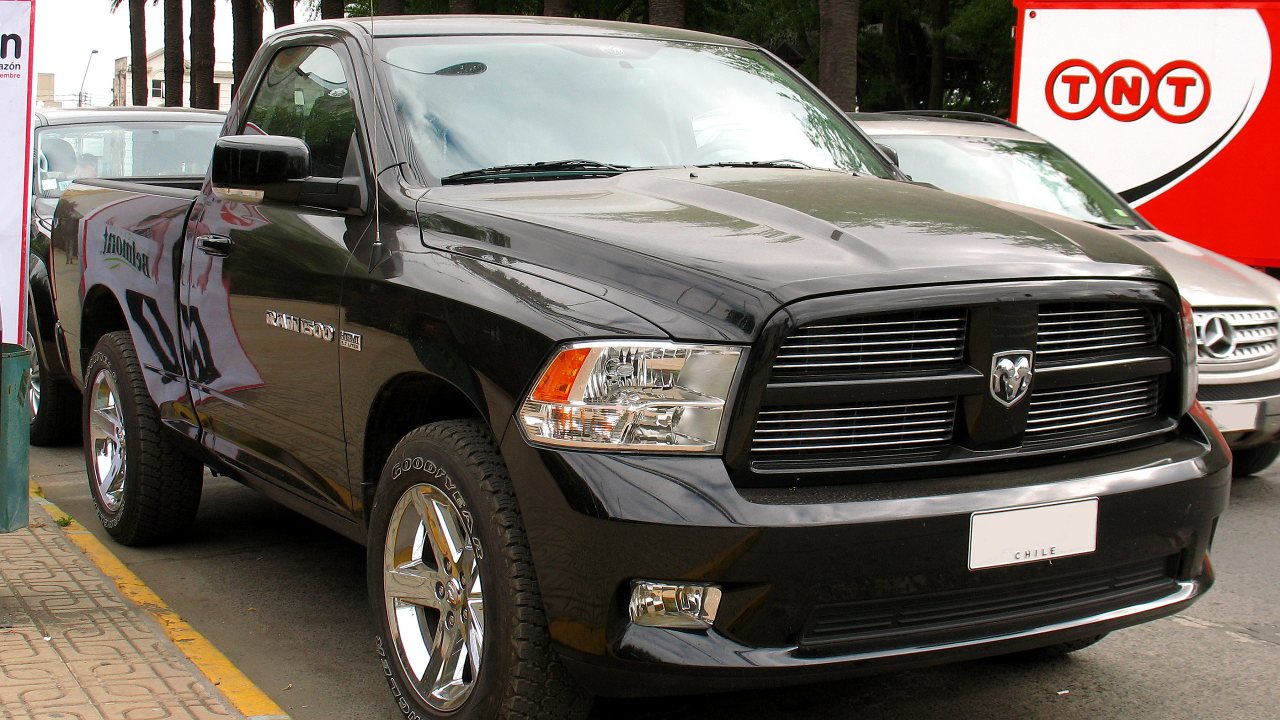
Ram’s decision to revive the HEMI V8 in the 1500 has thrilled traditionalists, but the company has drawn a hard line on one point that matters deeply to purists: there will be no manual transmission HEMI half-ton. In public comments, Ram chief executive Tim Kuniskis has dismissed the idea of a stick-shift 6.4-liter Hemi V8 sport truck as a niche fantasy, effectively ending a wave of speculation that the brand might pair its returning V8 with three pedals. For drivers who still equate a proper performance truck with a clutch pedal, that stance feels less like a product choice and more like a cultural break.
Ram’s HEMI comeback, with a crucial caveat
When Ram confirmed that the 5.7-liter HEMI V-8 would return to the Ram 1500, it was a rare case of a modern automaker reversing course in response to vocal enthusiasts. Company materials describe how Consumer sentiment for the legendary engine created enough momentum to bring the 5.7-liter HEMI V-8 back to the Ram 1500, with executives promising that Ram will continue to invest in the iconic HEMI V-8. The current 2026 Ram 1500 lineup is described as Equipped with one of two 3.0L Hurricane Engines, the newly available 5.7-liter HEMI V8 engine, or a diesel option, underscoring that the V8 is once again a central pillar of the brand’s full-size truck strategy rather than a nostalgic afterthought.
That reversal followed a short but intense period in which Ram had announced that for 2025 the Ram 1500 would no longer offer the popular, proven 5.7-liter HEMI V8 engine, pivoting instead to a new generation of six cylinder powerplants under the Hurricane name. One account describes how After a notable and widely debated absence in the 2025 model year, the HEMI V8 is returning to showrooms, while another notes that One group made enough noise to change the product roadmap, namely HEMI V8 fans who objected after Ram replaced the HEMI with the new twin-turbo T6. The company’s own promotional copy now leans into that reversal, presenting the HEMI as a durable, emotionally resonant choice alongside the more modern Hurricane Engines, but the celebration among V8 loyalists has quickly run into a new frustration over transmissions.
Tim Kuniskis shuts the door on a manual 6.4 Hemi sport truck
Even as Ram leans back into V8 power, Tim Kuniskis has been explicit that the brand will not chase a small but vocal crowd calling for a single cab, rear drive, manual transmission sport truck with a big Hemi. In a one-on-one interview, he addressed the persistent Whispers of a single-cab sport truck from Ram that would use the 6.4-liter Hemi V8, a configuration that enthusiasts have been demanding since the executive known as the father of the Hellcats returned to the truck brand’s CEO seat. Kuniskis cut through the speculation by stating directly that “you’re not getting a single-cab sport truck 6.4,” and added that he did not know where the idea of putting the 6.4-liter Hemi V8 into the 1500 or a regular cab sport truck was coming from.
Kuniskis framed the request as a kind of internet echo chamber, describing it as “like a YouTube thing” where “everybody” says “give me the 6.4,” before conceding that “by the way, I love this.” He then reached for an analogy from his own history in product planning, recalling how journalists once urged him to build a station wagon with a manual transmission and how he would respond that such a car would exist “for you and the six other friends of yours that want to buy it.” In a separate social media exchange highlighted by Now, he extended that comparison, saying that the current calls for a manual single cab truck are the same kind of niche request. The message is consistent: as much as Kuniskis personally appreciates the idea, he sees a manual 6.4 Hemi sport truck as a passion project for a handful of buyers, not a viable Ram program.
“They wouldn’t put in a manual anyway”: why three pedals lost
The bluntness of that stance has resonated with enthusiasts who have watched manual transmissions disappear from full-size pickups over the past decade. In a discussion that circulated around Kuniskis’s comments, one fan summarized the corporate logic with a resigned line: They “wouldn’t put in a manual anyway,” adding that the CEO “knows manuals are on the way out.” That sentiment, shared in a thread that also referenced a hypothetical 1500 regular cab 4×4 and was noted by Fri and Jason Tonkel, captures the sense that even sympathetic executives feel boxed in by market realities. The manual is no longer a mainstream expectation in a half-ton truck, and the people who still insist on it are treated as outliers.
Those market realities are not imagined. Analyses of the last generation of manual heavy duty Rams point out that the G56 gearbox, which was Offered through the 2018 model year in the Ram 2500 and 3500, came with clear tradeoffs. Documentation on the G56 manual transmission notes that the horsepower and torque sacrifices of G56 equipped trucks became apparent over the years, and that the shift toward automatic transmissions accelerated after the 2018 model year. A separate technical look at what killed off the manual transmission in trucks highlights how a 6.7L Cummins diesel produced less grunt when paired with the G56 manual, reinforcing the perception that automatics deliver better performance and capability on paper, even if they lack the engagement that a subset of drivers still craves.
Regulations, economics, and the myth of the “killed” manual pickup
Enthusiasts often blame regulators for the disappearance of manual full-size pickups, but the reality is more complicated. One detailed examination framed the debate with the question, Did the government kill the manual transmission pickup truck, and then pushed back on the idea that emissions rules alone forced automakers to abandon three pedals. Instead, it pointed to a mix of factors, including the cost of certifying multiple powertrain combinations, the difficulty of meeting fuel economy targets with lower take rates, and the simple fact that most buyers were choosing automatics even when manuals were available. In that light, Kuniskis’s comparison to a station wagon with a manual transmission is less a dismissal and more a reflection of how product planners weigh the expense of engineering and certifying a configuration that only a handful of customers will actually order.
There is also a corporate history at play inside Ram’s parent company. Reporting on internal decisions has suggested that Carlos Tavares may have been directly responsible for the 5.7L V8 Hemi being shelved in the first place, with the former Stellantis chief executive described as a driving force behind killing it before his retirement. That context matters because it shows how quickly strategic priorities can shift at the top, from eliminating a long running V8 to bringing it back after a single model year, and it underscores why product planners are reluctant to add complexity like a manual transmission that could be vulnerable in the next round of cost cutting. Manuals in heavy duty Rams, for example, were not only constrained by performance compromises but also by the need to certify separate calibrations, a burden that grew harder to justify as automatic take rates climbed.
What Ram’s stance signals for the future of enthusiast trucks
More from Fast Lane Only