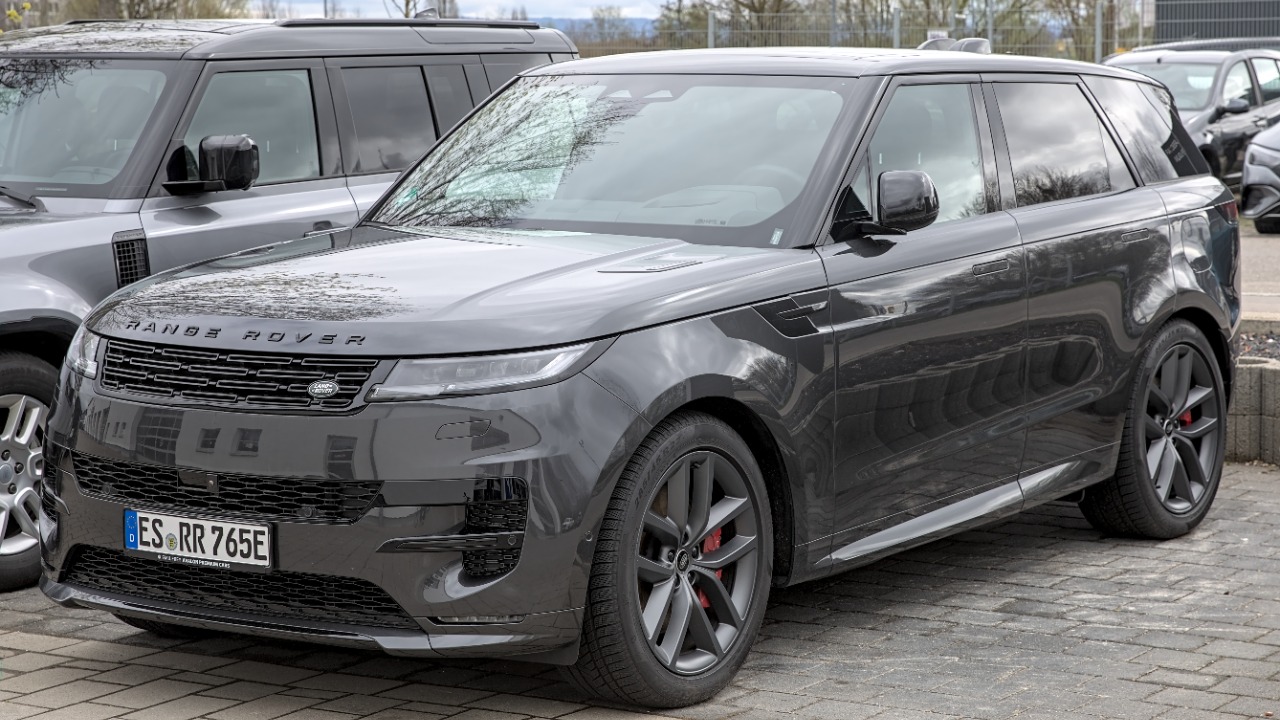
If you are retired or getting close, you probably want your next SUV to feel like a reward, not a recurring headache. The Range Rover Sport promises comfort, status, and serious capability, yet you keep seeing it on lists of vehicles older drivers wish they had skipped. Look past the glossy brochure and a pattern emerges: high costs, complex systems, and reliability worries that make this one of the SUVs retirees regret buying most.
The idea of a luxury truck that can handle a mountain road and a night at the country club in the same day is easy to love. Once you factor in depreciation, maintenance, and the way modern Land Rover electronics age, though, the Range Rover Sport often works against the financial stability you spent decades building.
Why the Range Rover Sport seduces you in the first place
You are not imagining the appeal. The Range Rover Sport SUV is designed to make you feel like you have finally arrived, with a high seating position, rich materials, and a quiet cabin that can turn even a grocery run into a small event. A detailed road test report on the 2026 Land Rover Range Rover Sport SUV notes how thoroughly Land Rover has modernized the model, from its smooth powertrains to its extensive driver-assistance technology and the expectation that you will run it on premium fuel. If you are stepping out of a more basic crossover, the jump in refinement can feel dramatic.
The styling also speaks directly to your sense of identity. You see the Land Rover badge and the Range name and you are reminded of decades of off-road heritage and British luxury. Marketing leans into that image, and you may tell yourself that the higher price simply reflects higher quality. Yet when you compare it with simpler SUVs that still offer heated seats, a strong safety record, and easy-to-use tech, you start to see how much of the Range Rover Sport’s price is tied to image rather than long-term practicality.
Where the ownership experience starts to unravel
Problems usually begin once the honeymoon period ends and the odometer climbs. Detailed breakdowns of Range Rover Sport describe recurring trouble spots such as air suspension issues, electrical glitches, and drivetrain concerns that can show up earlier than you might expect in a premium SUV. Independent repair specialists who regularly work on Land Rover and Range Rover models also flag common problems like Air Suspension System Failures, which can leave you with an undriveable truck and a four-figure repair bill at exactly the time of life when you want predictable expenses.
For you as a retiree, the real strain is not just that things break, but that they break in complicated ways. Modern Range Rover Sport models rely on tightly integrated electronics and software, so a warning light on the dash can trigger a chain of diagnostic steps, parts orders, and labor hours. Compared with a more straightforward SUV where a mechanic can quickly swap a part and send you on your way, the Range Rover Sport starts to look like a risky bet for anyone living on a fixed or semi-fixed income.
Why experts keep steering retirees away from Range Rover models
Buying advice aimed specifically at older drivers tends to land on the same conclusion: high-complexity luxury SUVs are poor matches for retirement budgets. Lists of vehicles retirees should avoid frequently single out the Land Rover Range Rover, warning that the brand’s sophisticated systems and electronics can be far more fragile than their simpler rivals. One detailed guide on SUVs to skip in later life highlights the Land Rover Range as a cautionary example, pointing to its complicated design and the way that complexity tends to show up in your repair bills.
Other expert roundups aimed at pre-retirement shoppers go further, grouping Range Rover Sport and Range Rover Velar together as luxury SUVs that simply do not make financial sense once you are past your peak earning years. In one such analysis, German car expert Alan Gelfand, who owns German Car Depot in Hollywood, Florida, warns that owners can face routine service visits that cost between $2,500 and $3,500, even before major failures are factored in. When you combine that level of routine cost with the potential for surprise breakdowns, the Range Rover Sport quickly becomes a vehicle that can upend the careful planning you have done for your later years.
The financial hit: depreciation, maintenance, and regret
Even if you can handle the purchase price, the Range Rover Sport’s long-term money story is hard to ignore. According to detailed resale data, a 2022 Land Rover Range Rover Sport has already depreciated $38,329, or 52%, in just three years, leaving it with a current resale value of $35,100. That kind of drop is steep for any buyer, but it is especially painful if you are retired and counting on your car to hold value so you can either trade down later or free up cash for medical costs, travel, or helping family.
Maintenance and repairs add another layer of regret. A detailed breakdown of why older drivers end up unhappy with their Land Rover purchases lists High cost of maintenance and repairs as the first of five reasons a Reasons Retiree Regrets. That analysis points out that many retirees rely on a fixed income and that unexpected four-figure shop visits can quickly lead to financial strain. When your SUV not only drops tens of thousands of dollars in value but also demands premium fuel and premium service, you may find yourself cutting back on other parts of your life just to keep it on the road.
What to buy instead if you want comfort without the chaos
The good news is that you have alternatives that still feel special without putting your retirement at risk. Buying guides focused on older drivers highlight mainstream models that deliver comfort, strong safety scores, and far better cost control. One example is the 2026 Toyota RAV4, which is described as the third-best selling vehicle in 2025 in the United States, with 479,288 units sold in the United States, and highlighted as a crossover that is actually worth your retirement money. When a model sells at that scale, you benefit from a deep pool of parts, widespread dealer support, and a long track record of reliability.
You can also look at newer three-row options that blend comfort and value. In one feature that used artificial intelligence to sort through SUVs, the 2025 Mazda CX-90 is singled out as a stylish three-row SUV that balances performance with practicality and is described as a sound financial investment for many buyers, with its fuel economy noted as an amazing rate for the class. That same overview, which asks which models retirees should avoid, treats the Mazda CX family as a counterpoint to high-cost luxury trucks and reminds you that a well-chosen mainstream SUV can still feel upscale. If you are curious about how AI tools frame this choice, you can see how one such system evaluated the SUV Mazda CX lineup as part of a wider retirement shopping guide.
More from Fast Lane Only