Chevrolet launched the Monte Carlo for 1970 as the brand’s first personal luxury car, and the badge lasted until 2007. Along the way, the Monte Carlo SS became a NASCAR star and a familiar sight on American driveways. So the name hardly sounds rare.
However, the long run also hid a handful of short-lived packages. Some lasted a single season. Others came in one color, with a pace-car decal or a racer’s signature on the dash. As a result, these versions rarely show up at a local cruise night, even though their everyday siblings were everywhere.
These are our picks: seven Monte Carlos that, in our view, almost no one has seen up close. The verdict is our own opinion. By contrast, the production figures, engines and dates come from period records and the references linked in the list.
1. 1976 Chevrolet Monte Carlo Landau Coupe
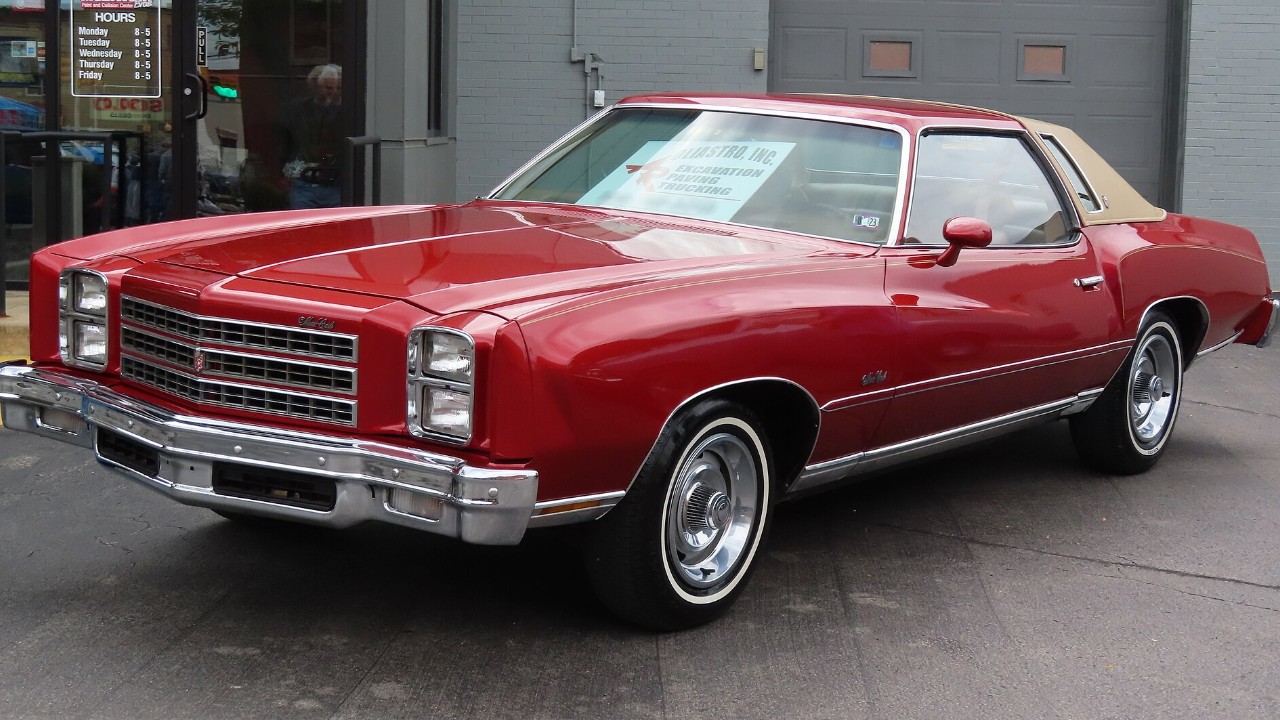
The 1976 Monte Carlo was anything but scarce when it was new. In fact, Chevrolet sold a record 353,272 of them that year, and 161,902 were Landau coupes. The Landau package added $293 to the sticker, and buyers happily paid it for the extra formal dress.
Under the long hood, a 305-cubic-inch V8 rated at 140 horsepower came standard. Buyers could also order a 350 or a 400, while the big 454 left the options list that year. That tells you where Chevrolet aimed this car. It was a comfortable boulevard coupe, not a stoplight brawler, and owners used it that way.
So why put a best-seller on a list like this? Because time did what low production never could. These coupes served as daily drivers through the late 1970s and 1980s, and few owners thought to save one. Then many were stripped, modified or simply worn out. In our view, a clean, stock Landau like the one pictured is now a genuinely unusual sight. If you find one with its original drivetrain and paperwork, we’d keep it exactly as it is, vinyl, chrome and all. A survivor like that tells the story of 1976 better than any restored muscle car could.
2. 1986 Chevrolet Monte Carlo SS Aerocoupe
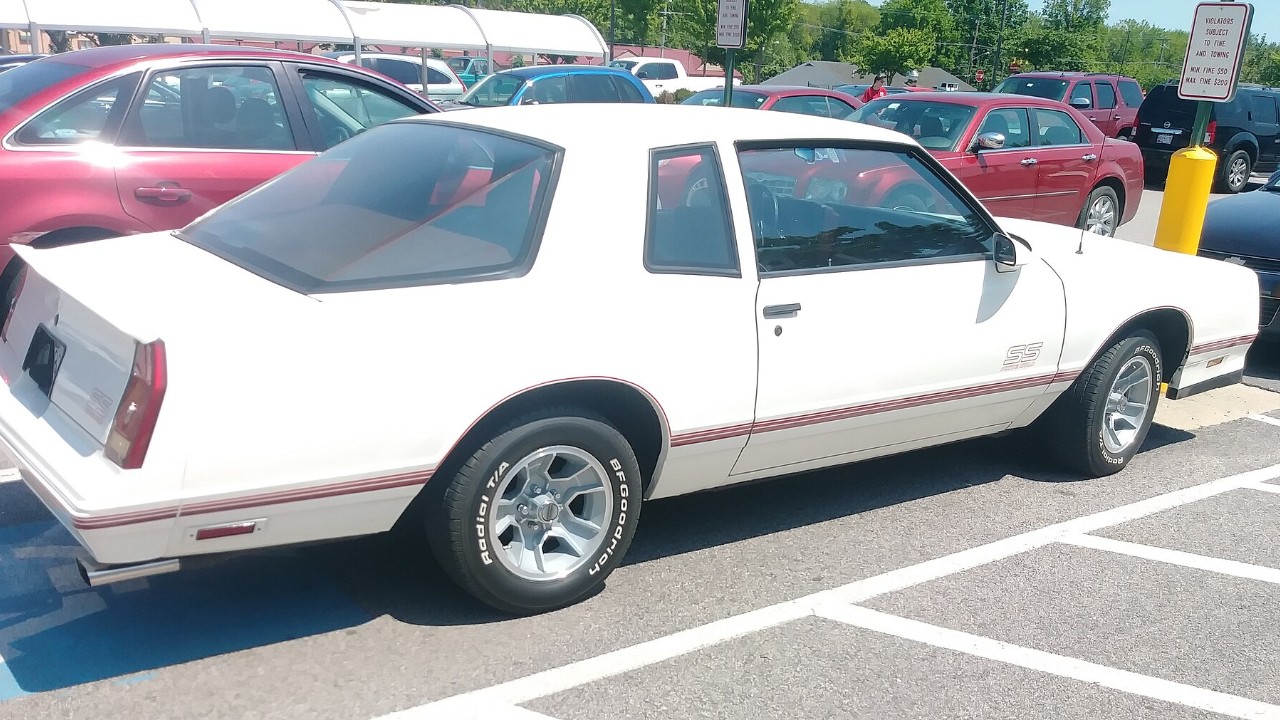
This one exists because of a rulebook. NASCAR needed 200 road cars before it would approve a body shape for racing, so Chevrolet built exactly 200 Aerocoupes for 1986. Every one of them left the factory in white with a burgundy interior.
The key change sat behind the driver. Chevrolet swapped the upright rear window for a big piece of glass sloped at 25 degrees, which also meant a smaller trunk lid. According to Old Cars Weekly, Cars and Concepts of Brighton, Michigan, finished the 1986 cars. Power came from a high-output 305 V8 rated at 180 net horsepower, paired with a four-speed overdrive automatic.
Chevrolet then made 6,052 Aerocoupes for 1987, so the later cars are far easier to find. Hagerty notes that its valuation tool puts Aerocoupe values up to 36 percent above a regular SS coupe. Meanwhile, the slick glass helped Dale Earnhardt’s Monte Carlos fight Ford’s slippery Thunderbirds on the big tracks.
Our take: the 1986 car is the one to chase. With only 200 built, most enthusiasts have seen photos rather than the real thing. If a white example turns up, check that its paperwork backs up the claim, because plenty of 1987 cars wear similar decals.
3. 1995 Chevrolet Monte Carlo Z34 Brickyard 400 Pace Car Edition
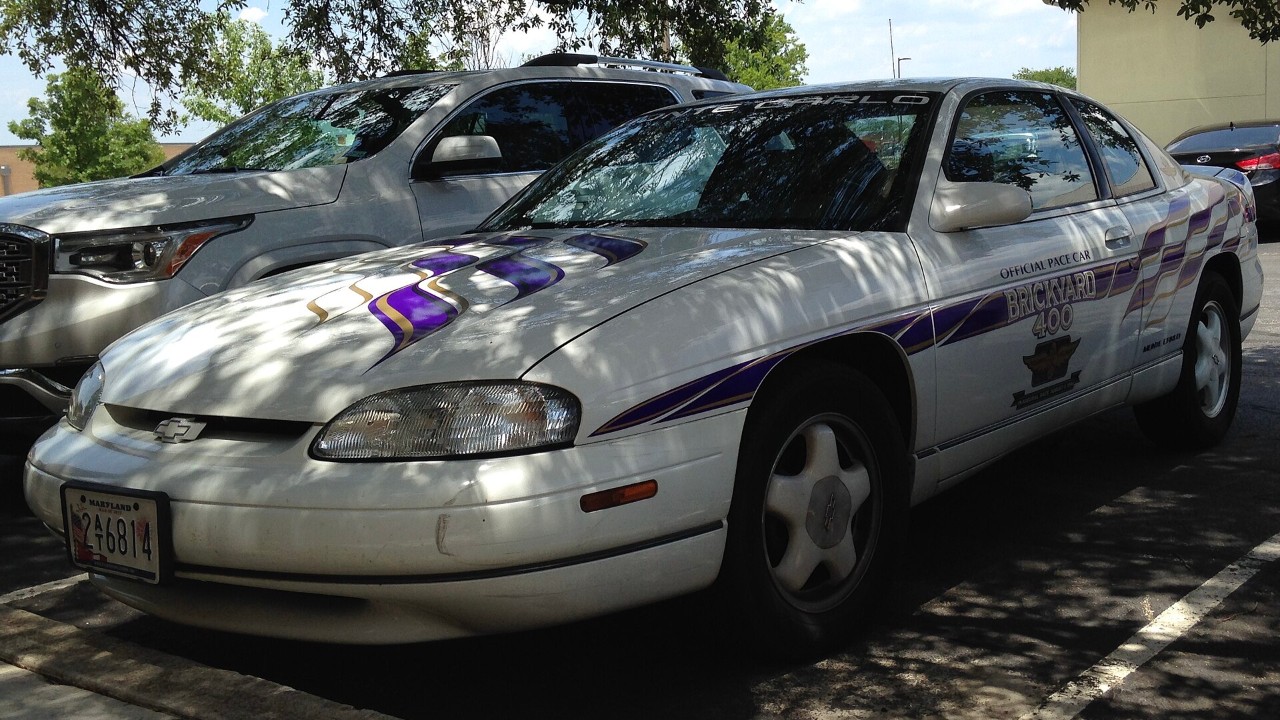
The Monte Carlo name came back for 1995 after a six-year break. This time it rode on GM’s front-drive W-body platform and replaced the two-door Lumina. For traditional fans, one thing was missing, because no V8 was available anymore.
However, Chevrolet gave the sporty Z34 a moment in the spotlight. It offered a Brickyard 400 Pace Car package on the Z34 for $2,195, and only about 400 buyers took it. Meanwhile, Chevrolet built 39,628 Z34 coupes in total for 1995. The pace-car cars are a tiny slice of that number, and many of the rest simply blended into traffic.
A pace-car tie-in to NASCAR’s Indianapolis race made sense as a showroom draw. Today, though, the package sits in an awkward spot. In our view, front-drive 1990s coupes rarely get saved, so we’d bet plenty of these cars faded away with their stripes still on.
In our opinion, this is the sleeper of the list. Most people have no idea a pace-car Z34 exists. If you spot one with its graphics intact, you are looking at one of roughly 400. For a buyer, the documentation matters more than the mileage, since decals are easy to copy.
4. 1997 Chevrolet Monte Carlo Dale Earnhardt Cup car
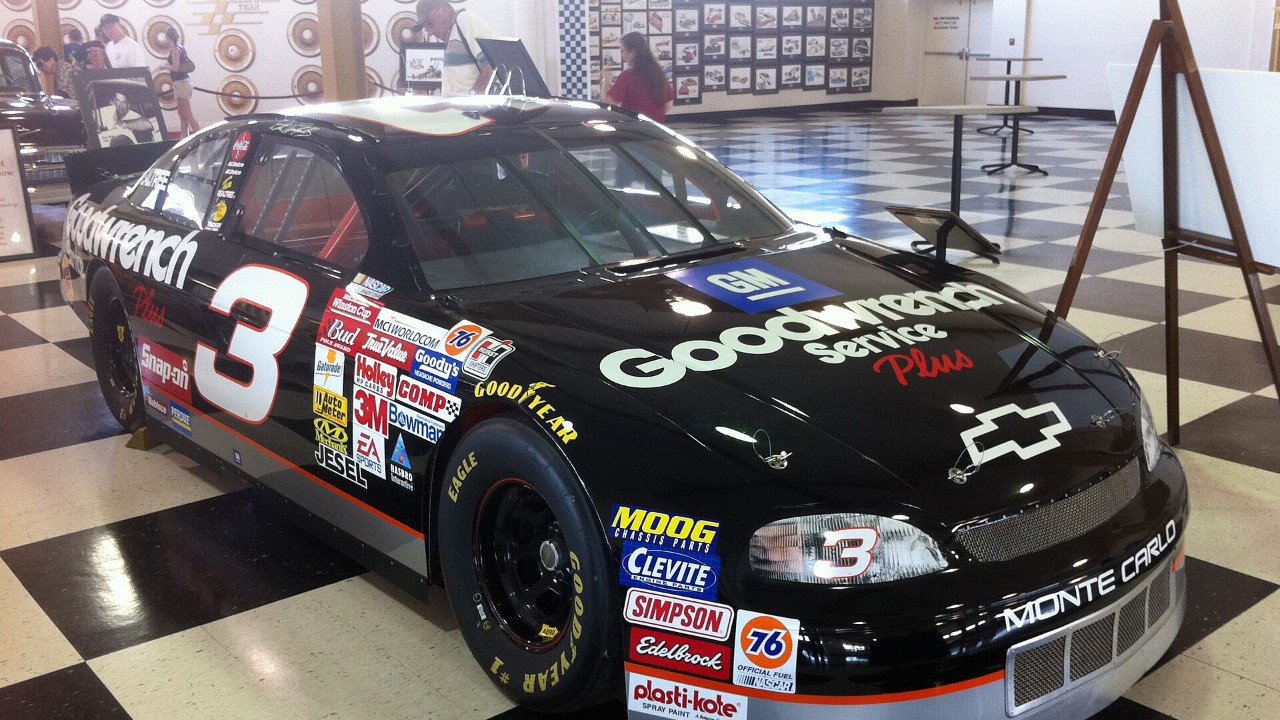
Not every car on this list wore a license plate. Dale Earnhardt drove the No. 3 Chevrolet for Richard Childress Racing, and in 1997 his ride was a Monte Carlo. The car pictured here sits on display at the International Motorsports Hall of Fame, which inducted Earnhardt in 2006.
The 1997 season was a strange one for the seven-time champion. He went without a points-race win, only the second winless year of his career. At the Daytona 500, a late crash flipped his car onto its roof on the backstretch, and he finished 31st. Even so, he ended the year fifth in the standings. Then, in 1998, he finally won the Daytona 500 on his 20th try.
The Monte Carlo itself had a far better run. After the name returned in 1995, Monte Carlo Cup cars piled up 396 Cup Series wins, the most of any nameplate. That makes a 1997 Earnhardt car a piece of a very successful era, even if that particular year was lean.
Our take: you can’t buy this one, but you can see it. That alone puts it ahead of most race cars, which vanish into private hands. If you plan a trip to the Hall of Fame, it’s worth the stop. Few fans realize the Intimidator’s winless season left behind a car this well kept.
5. 2000 Chevrolet Monte Carlo SS Indy Pace Car
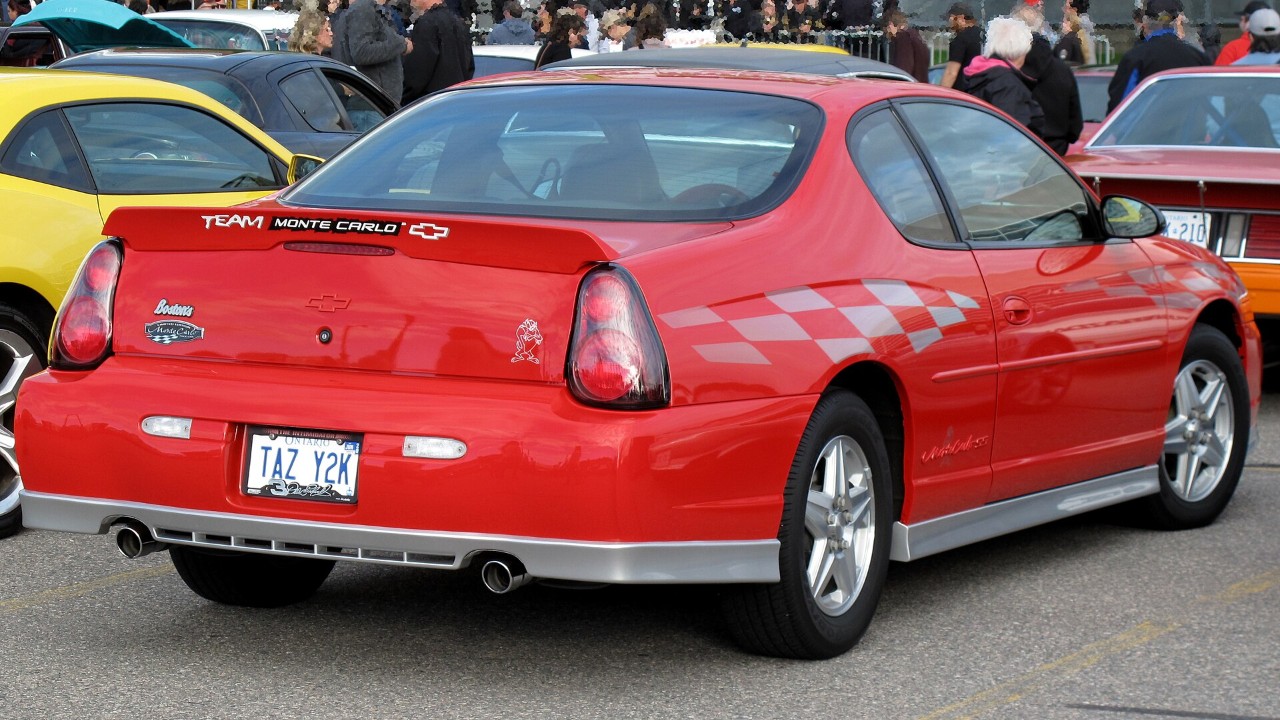
The sixth-generation Monte Carlo arrived for 2000 with sharper styling and a 3.8-liter V6 rated at 200 horsepower in SS form. Chevrolet also used it as the pace car for the 1999 Indianapolis 500. According to Chevy Hardcore, five pace cars led the field to the green flag that day.
For buyers, Chevrolet built 2,222 Pace Car editions. Each one wore Torch Red paint with Galaxy Silver ground effects. Inside, the cars got ebony upholstery with red leather inserts, plus Indy decals along the sides. The replicas also carried Tasmanian Devil cartoon emblems on the trunk and lower quarter panels.
For context, Chevrolet built 64,347 Monte Carlos for the 2000 model year. That puts the Pace Car at a few percent of the total. Moreover, many owners drove theirs hard, because a front-drive V6 coupe didn’t seem like a collectible at the time.
We think that’s exactly why this one is worth a second look today. The loud red paint and cartoon badges make it a true period piece. If you want one, look for low miles and an intact interior, since the red leather inserts are hard to replace. Barely used examples do exist, so be patient.
6. 2002 Chevrolet Monte Carlo SS Intimidator
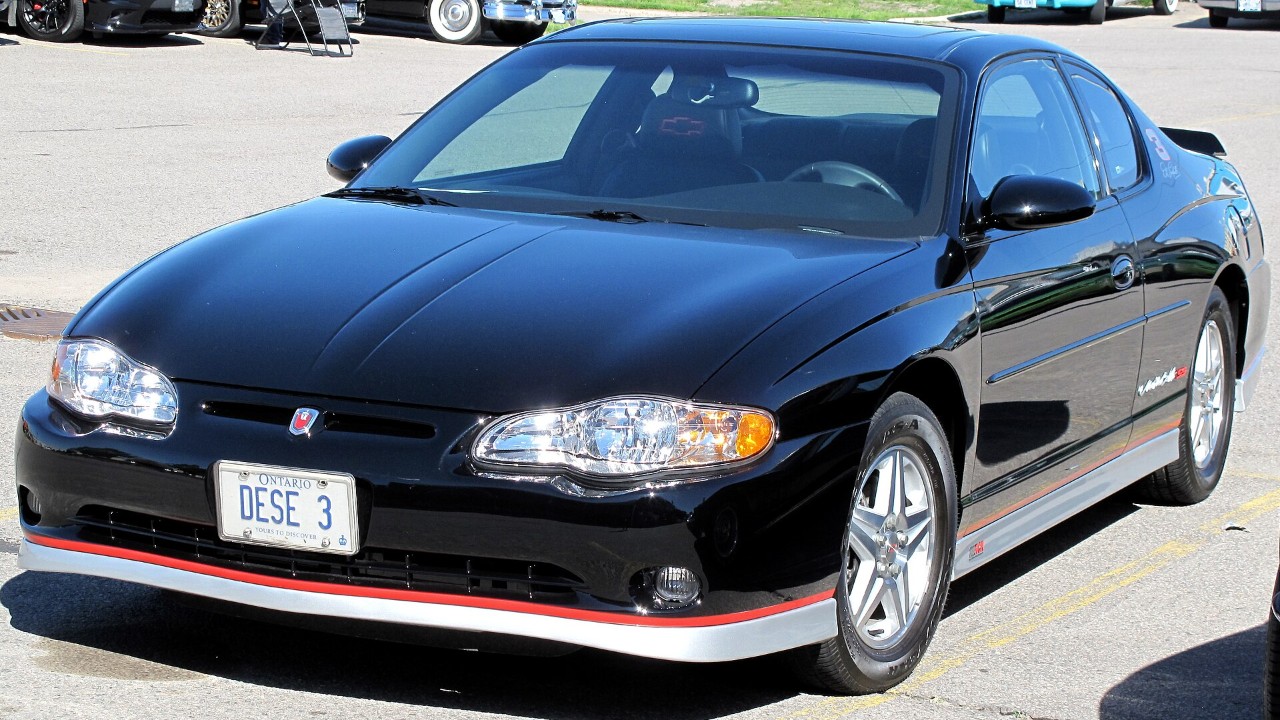
Chevrolet announced a Dale Earnhardt tribute Monte Carlo after the racer’s death in 2001. It turned a family coupe into a rolling memorial. According to Auto123, the run was limited to 3,333 cars, built from October 2001 to March 2002 at the Oshawa plant in Ontario.
Each car was a black Monte Carlo SS with a red stripe low on the body and Galaxy Silver Metallic ground effects. Earnhardt’s signature, the No. 3 and “Intimidator” script appear outside on the decklid and inside on the dashboard. The speedometer even carries the Richard Childress Racing logo. Power came from the familiar 3.8-liter V6.
Even the production total carried a message. The figure 3,333 echoes the No. 3 that fans knew by heart. Inside, red bowtie emblems sit on the headrests, and pewter “No. 3 Intimidator” script decorates the floor mats.
In our view, that makes the Intimidator a rare sight on the road but not in a collection. You’ll see one at an auction long before you pass one on the highway. If you buy, make sure the badges, floor mats and window sticker are all original, because each piece adds to the story.
7. 2004 Chevrolet Monte Carlo SS Supercharged Special Edition
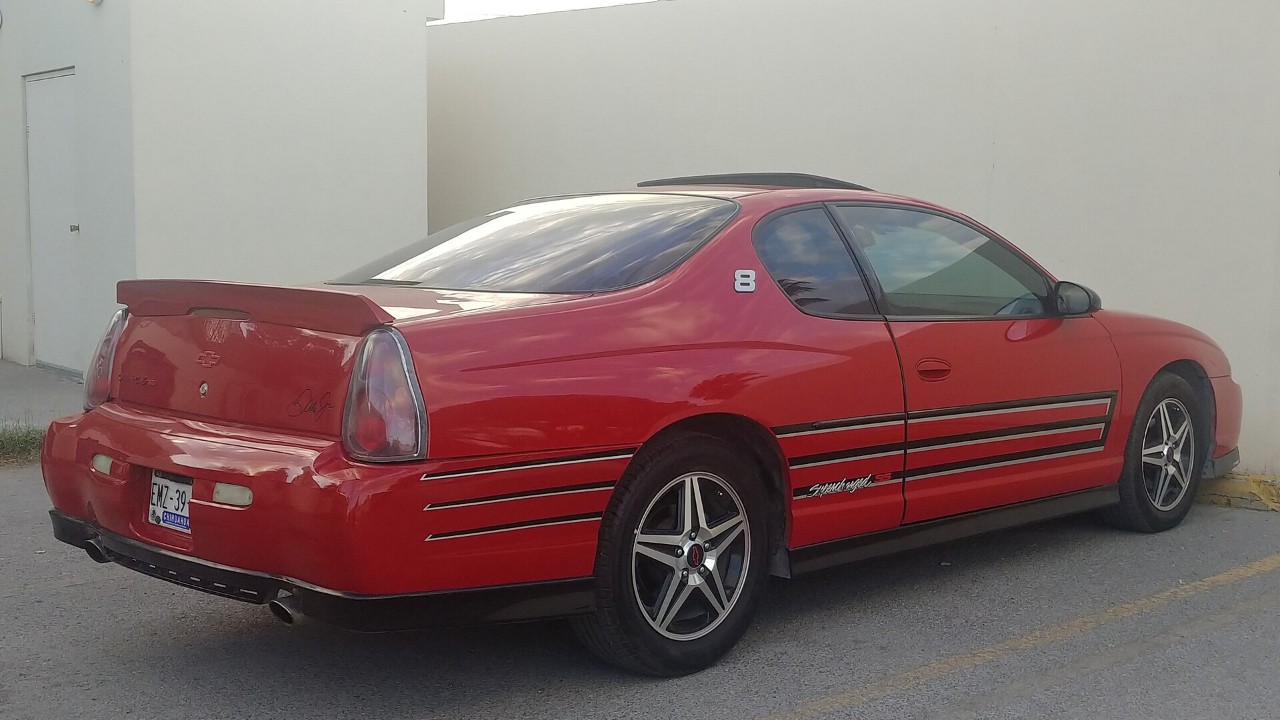
For 2004, Chevrolet finally gave the front-drive Monte Carlo SS real muscle. The supercharged 3.8-liter L67 V6 delivered 240 horsepower and 280 lb-ft of torque. Chevrolet offered the blown SS for only two model years, 2004 and 2005.
The special editions came first. In fact, the 2004 Dale Earnhardt Jr. Edition was the first Monte Carlo to get the supercharged engine. The car pictured is one of the 2004 supercharged special editions, with unique paint and trim.
Chevrolet built 64,771 Monte Carlos for 2004, but supercharged cars made up only part of that total. Then the supercharger disappeared after 2005. That leaves a very short window for this setup, and in our view it explains why these coupes rarely appear at shows.
Our take: the supercharged cars are the best-driving front-drive Monte Carlos. The engine whine alone makes it a fun weekend car. If you’re shopping, ask for service records on the supercharger and the transmission. The last two Monte Carlos rolled off the Oshawa line on June 19, 2007, ending the nameplate’s run.
More from Fast Lane Only