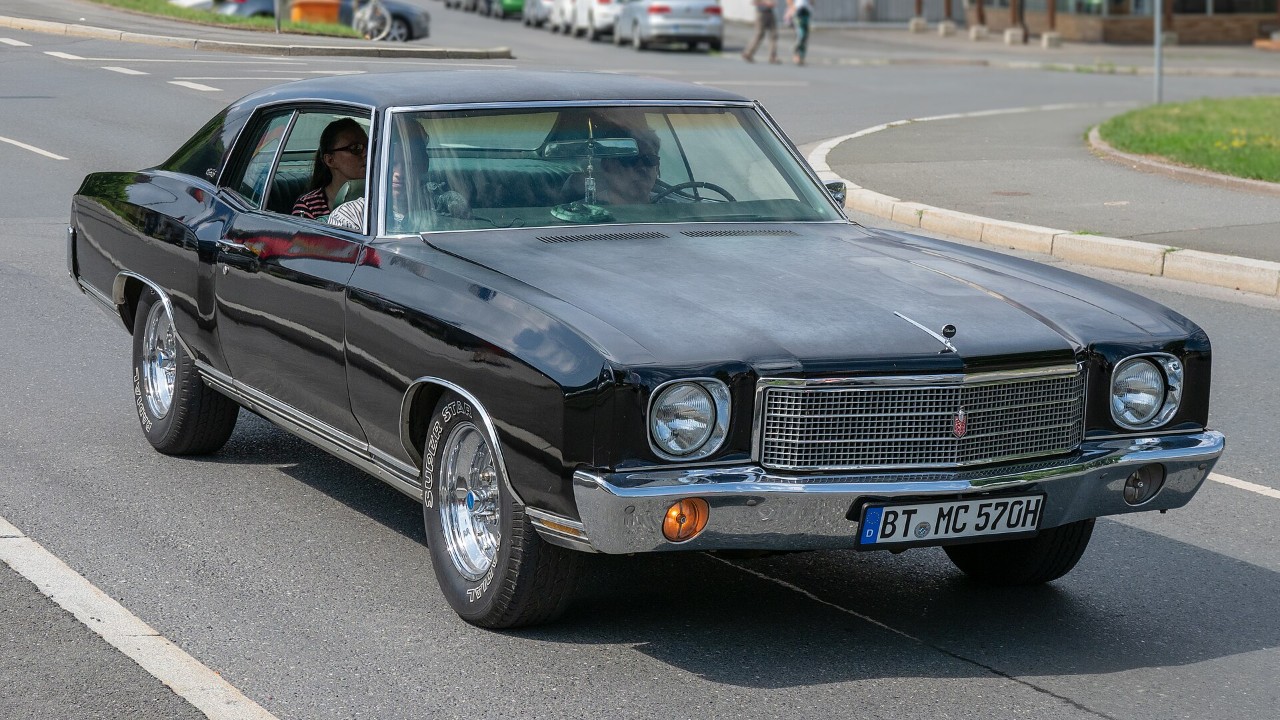
Chevrolet launched the Chevy Monte Carlo for 1970 as a personal-luxury coupe with a long hood and a big-block option. The name lasted until 2007. Over those decades it was a muscle car, a Colonnade cruiser, a NASCAR homologation special and finally a front-drive coupe with a supercharger.
That long run means the badge covers a lot of very different cars. Some Monte Carlos are famous at every car show. Others were good cars that never got much credit, because they arrived in the wrong decade or wore the wrong trim.
These eight are our picks for the best of the bunch, and the rankings are our opinion. We chose one from each major chapter of the story. Every engine figure and production number below comes from a source we read, including Hagerty, period road tests and enthusiast references.
1. 1970 Chevy Monte Carlo SS 454
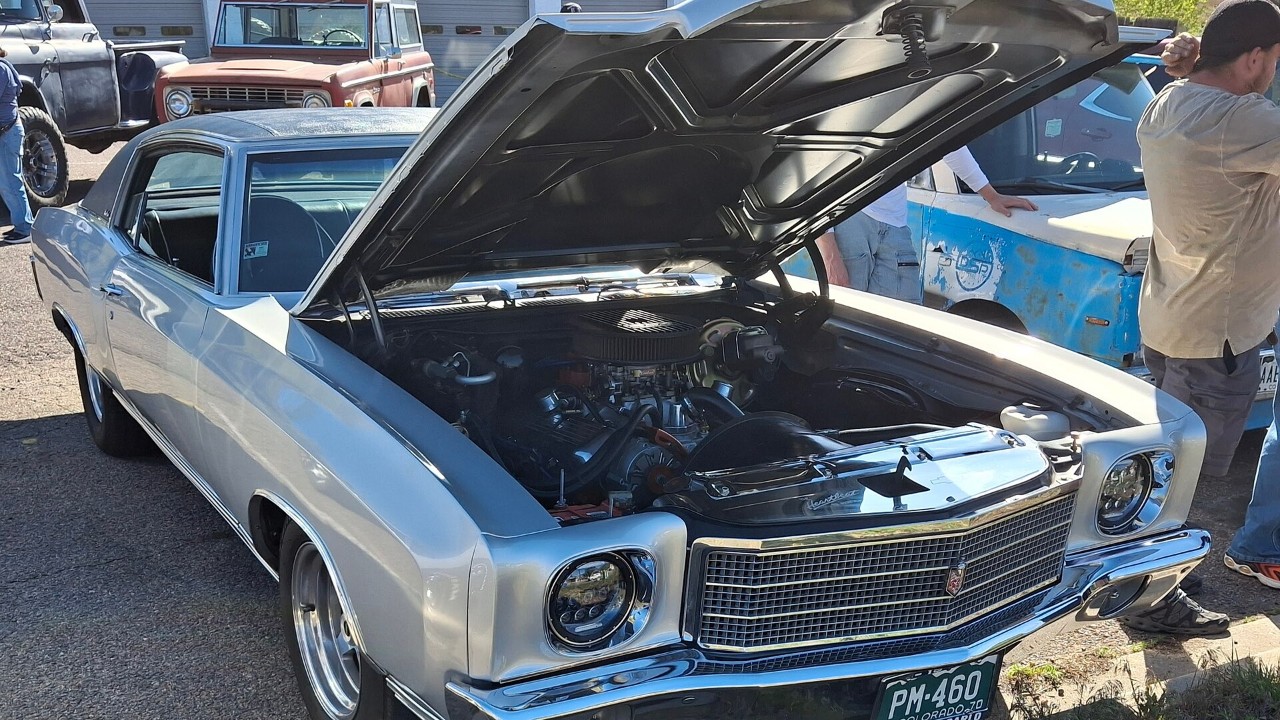
The first-year Chevy Monte Carlo shared its basic structure with the Chevelle, but Chevrolet stretched the nose for a long-hood, short-deck look. The SS 454 package turned that elegant coupe into something much more serious. It also brought useful hardware, such as the F41 performance suspension and optional automatic load-leveling at the rear.
According to Muscle Cars Illustrated, the LS5 454 delivered 360 horsepower and 500 lb-ft of torque. Yet buyers didn’t flock to it, and Chevrolet built 3,823 SS 454s for 1970. Most shoppers chose the Monte Carlo for comfort, not for big-block muscle. For 1971, a new camshaft pushed the rating to 365 horsepower. Even so, output fell to 1,919 cars after a 67-day UAW walkout.
In our view, that’s exactly why this is the one to have. It was a gentleman’s express with the biggest engine Chevrolet offered in it, wrapped in a body that still looks expensive. For the story of how the car began, see our feature on why the 1970 Chevrolet Monte Carlo surprised buyers from day one.
2. 1972 Chevrolet Monte Carlo Custom
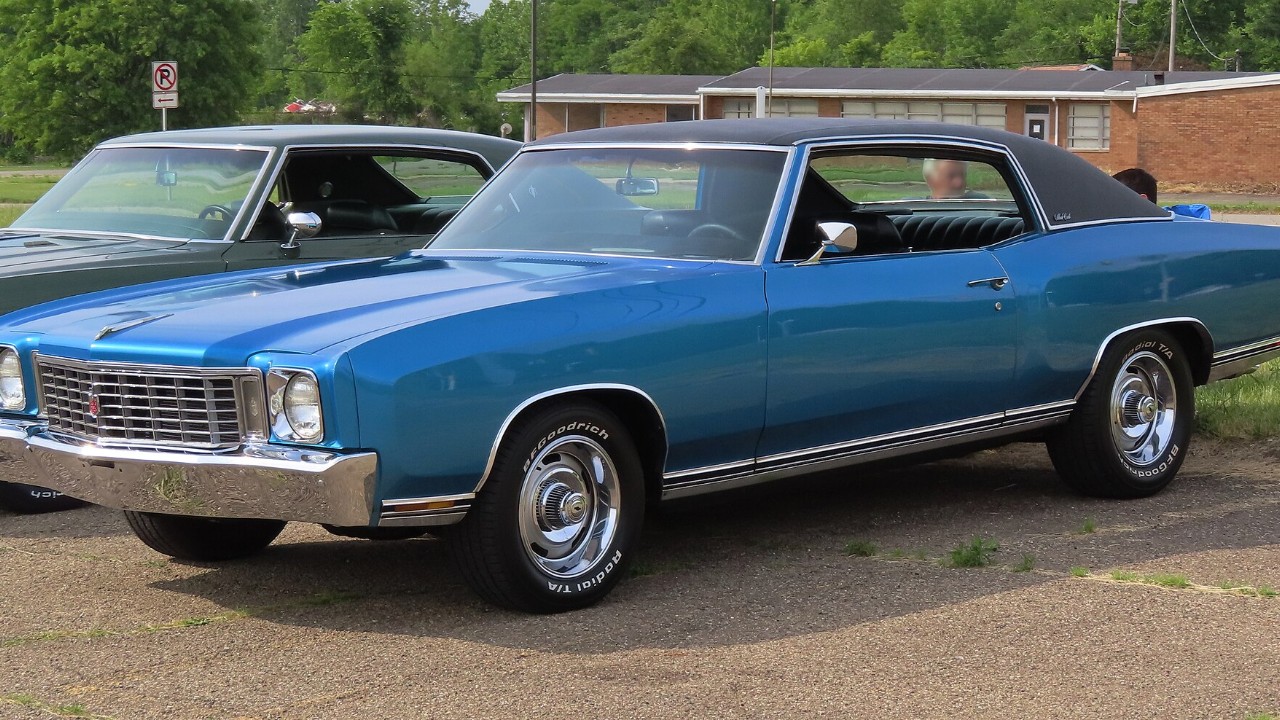
Chevrolet dropped the SS badge from the Monte Carlo after 1971. However, it didn’t give up on the idea of a better-handling coupe. For 1972 only, buyers could order the Monte Carlo Custom option. It brought its own suspension tuning to the last of the first-generation cars.
That makes the Custom a curious footnote. It wasn’t a muscle car, and it didn’t wear loud stripes. Instead, it offered a sharper chassis under the same handsome body, right as the industry was turning away from big performance numbers. Because it lasted one model year, it rarely shows up in buyer’s guides. It also sits at an interesting point in Chevrolet history. The SS 454 had just left the price list, and the bigger Colonnade Monte Carlo was a year away. For a keen driver, that makes the Custom a last chance at the original shape with a chassis tuned for the road.
We think the Custom is the thinking person’s early Monte Carlo. It’s a final-year first-generation car with a chassis upgrade most people have never heard of. If you find one, check the paperwork closely, because the option is easy to miss and hard to prove without the right documents.
3. 1973 Chevrolet Monte Carlo Landau
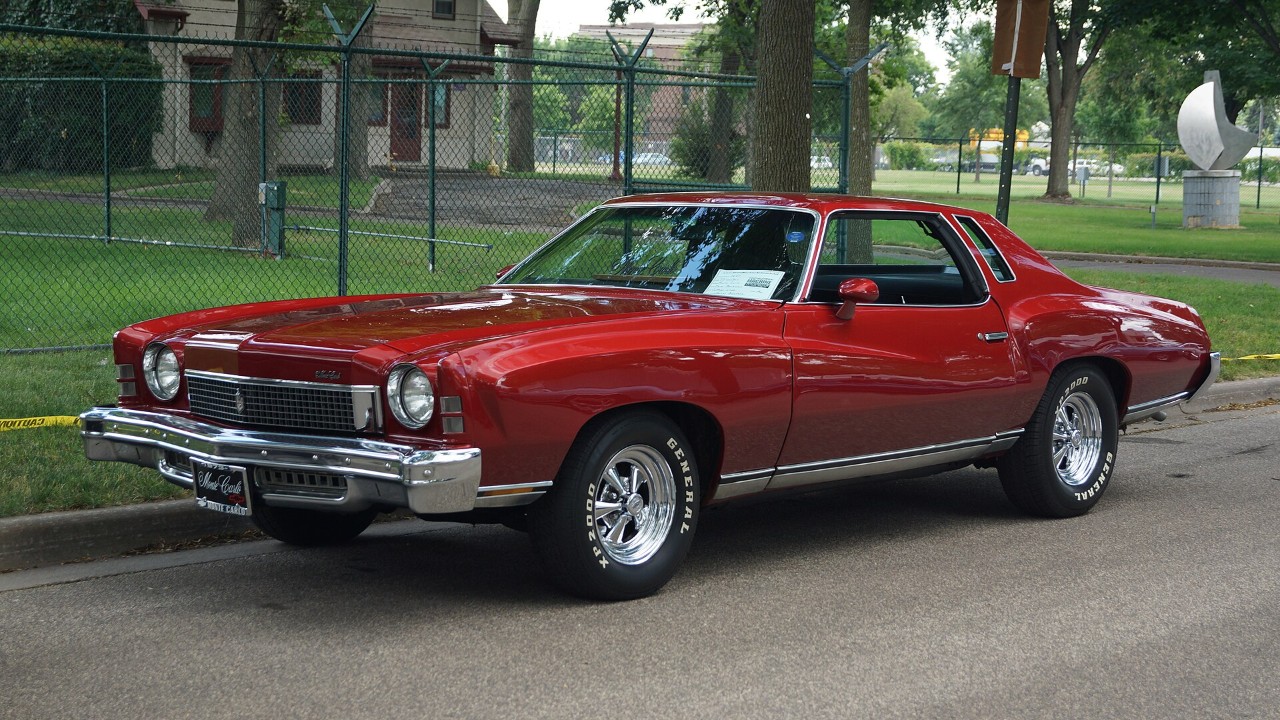
The Monte Carlo moved to GM’s new Colonnade body for 1973, with a double-wall roof, thick C-pillars and small fixed quarter windows. It also gained the Landau trim, which added more formal styling to the new shape. Inside, buyers could even order swing-out Strato bucket seats.
The critics were split on the looks, but the chassis won praise. Mac’s Motor City Garage notes that Motor Trend praised its Euro-flavored ride and handling and named it the 1973 Car of the Year. Buyers agreed, and model-year production jumped from 163,000 in 1972 to 290,000 in 1973. Engines ran from a 145-horsepower 350 to the LS4 454, rated at 245 SAE net horsepower. Buyers could even add an electric steel sunroof called the Skyroof.
Our take is that the 1973 car deserves far more respect than it gets. It proved a big American coupe could ride and steer well in the new era of emissions rules. The Landau is the version we’d pick, because it captures that formal 1970s style best.
4. 1983 Chevrolet Monte Carlo SS
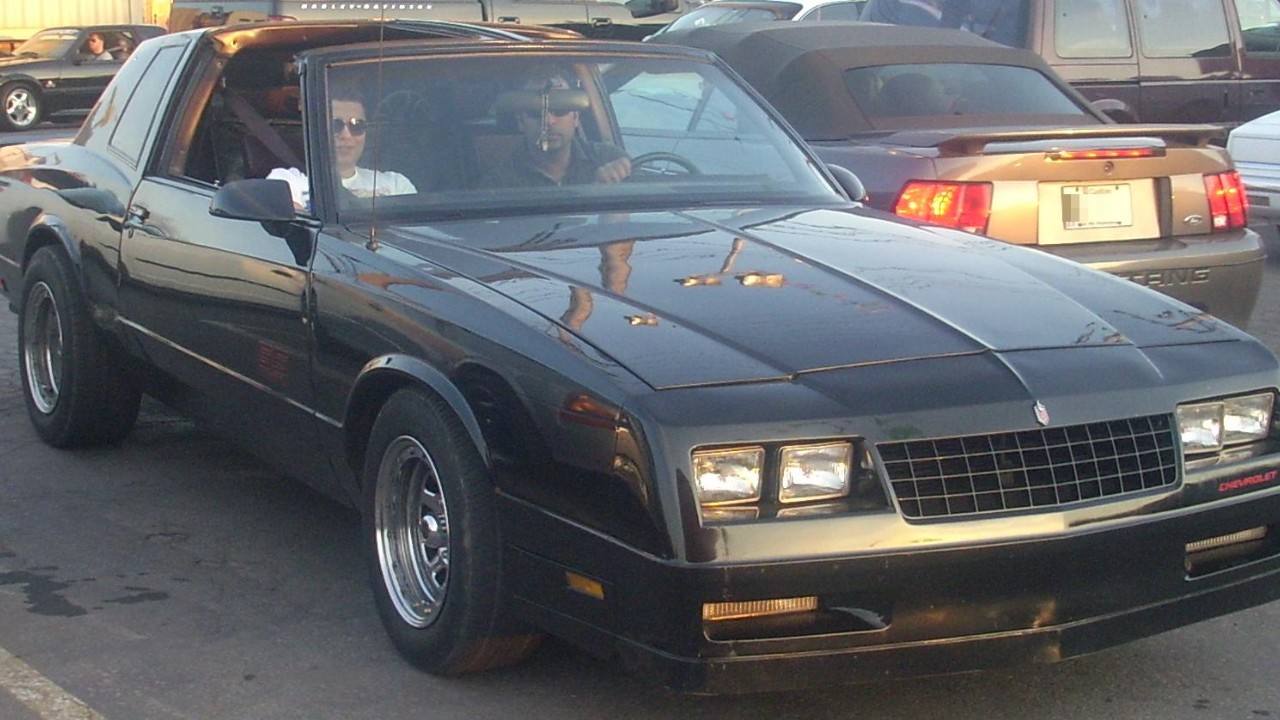
After more than a decade away, the SS badge came back for 1983 on the boxy G-body Monte Carlo. Chevrolet gave it a High Output 305 small-block with a Rochester Quadrajet, an aluminum intake and a camshaft borrowed from the 1982 Corvette. Then it paired that engine with a Turbo 350 automatic.
According to Hagerty, the 1983 SS made 175 horsepower and 240 lb-ft. Car and Driver ran it from 0 to 60 mph in about 8.2 seconds. Chevrolet built only 4,714 of them that first year, against tens of thousands in each of the years that followed. Hagerty also lists the Winston Cup champions who drove a Monte Carlo SS. They were Terry Labonte in 1984, Darrell Waltrip in 1985 and Dale Earnhardt in 1986 and 1987.
We like the first-year car because it’s the rarest of the G-body SS run. It also tied the street car to Chevrolet’s NASCAR program at the start of its winning streak. Before you buy, check that the eighth VIN digit is a G. Hagerty says that’s one way to weed out the many clones.
5. 1986 Chevrolet Monte Carlo SS Aerocoupe
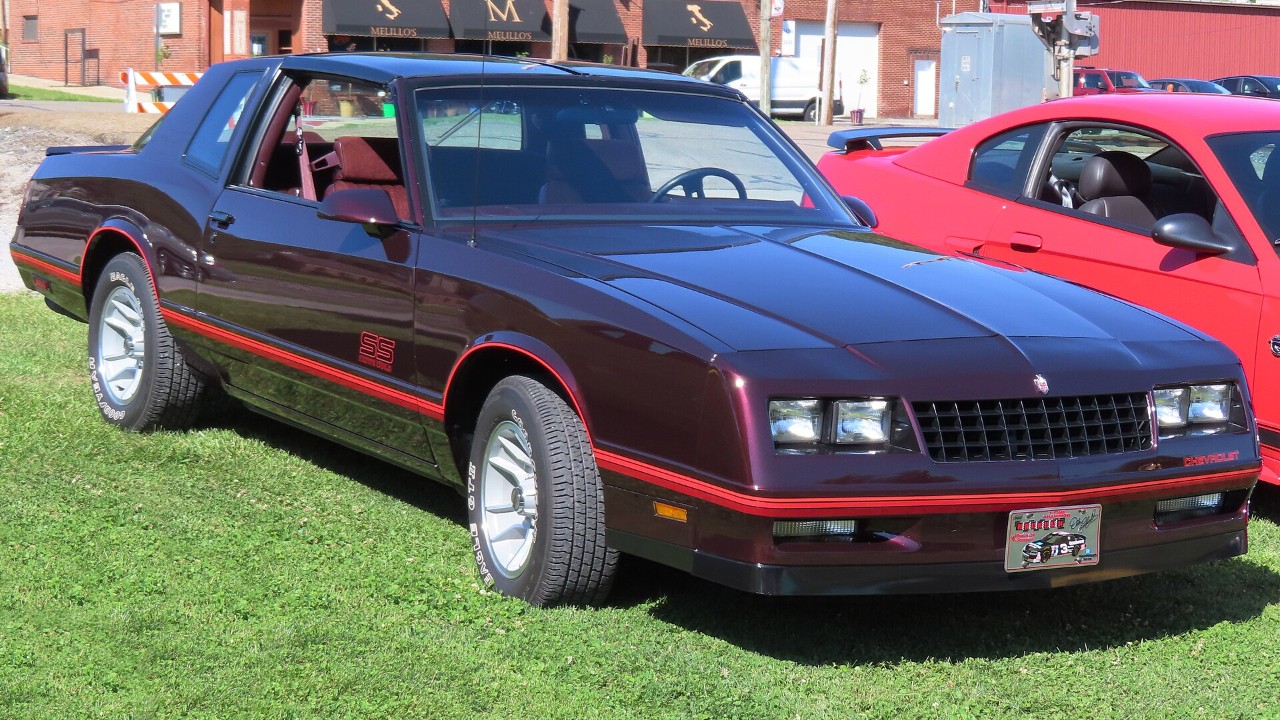
NASCAR’s superspeedways forced Chevrolet’s hand in the mid-1980s. Ford’s sleek Thunderbird was tough to beat, so Chevrolet created the Aerocoupe with a steeply sloped rear window and a shorter decklid. Those changes helped airflow over the back of the race cars.
Silodrome reports that Chevrolet built exactly the 200 cars needed for NASCAR approval in 1986. The rear glass sat at a 25-degree angle. Power came from the 305 High Output V8, rated at 180 horsepower. For 1987, output rose to 6,052, so the first-year car is by far the scarcer one. Hagerty adds that the 1986 cars went to Southeast dealers in the spring. It puts the average Aerocoupe value around $15,200, with concours cars near $27,800.
In our opinion, the 1986 Aerocoupe is the most interesting Chevy Monte Carlo of the 1980s. It exists only because of racing rules, and the production run was tiny. Prefer the later car? Our look at how the 1987 Chevrolet Monte Carlo SS kept performance alive fills in the rest.
6. 1995 Chevrolet Monte Carlo Z34
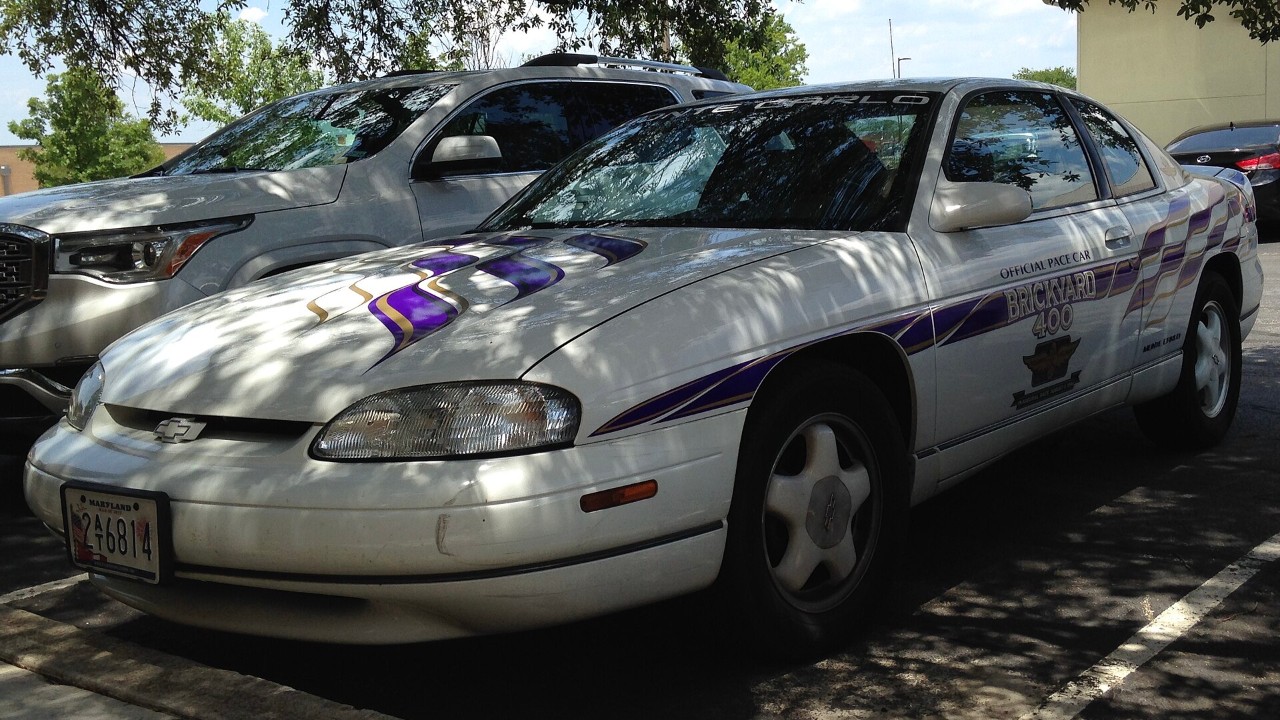
The Monte Carlo name went away after the 1980s, when the Lumina coupe took its place. Then Chevrolet revived it for 1995 on a front-drive platform. The base LS used a 3.1-liter V6, but the Z34 was the sporty one.
According to W-Body Tech, the 1995 Z34 used a 3.4-liter DOHC V6 rated at 210 horsepower, rising to 215 for 1996 and 1997. Both trims used a four-speed automatic. Chevrolet also built a special pace car version for 1995, tied to the Brickyard 400 at Indianapolis. For 1998 and 1999, the Z34 switched to a 200-horsepower 3.8-liter V6. So the twin-cam cars cover only the first four years. The pace car wore black and white two-tone paint with special badges, and Chevrolet built only a limited number.
We’d rank the early Z34 above its later siblings because of that twin-cam engine. It revved freely and gave the revived Chevy Monte Carlo some real character. Look for service records, since these complex V6s reward owners who kept up with maintenance.
7. 2004 Chevrolet Monte Carlo SS Supercharged
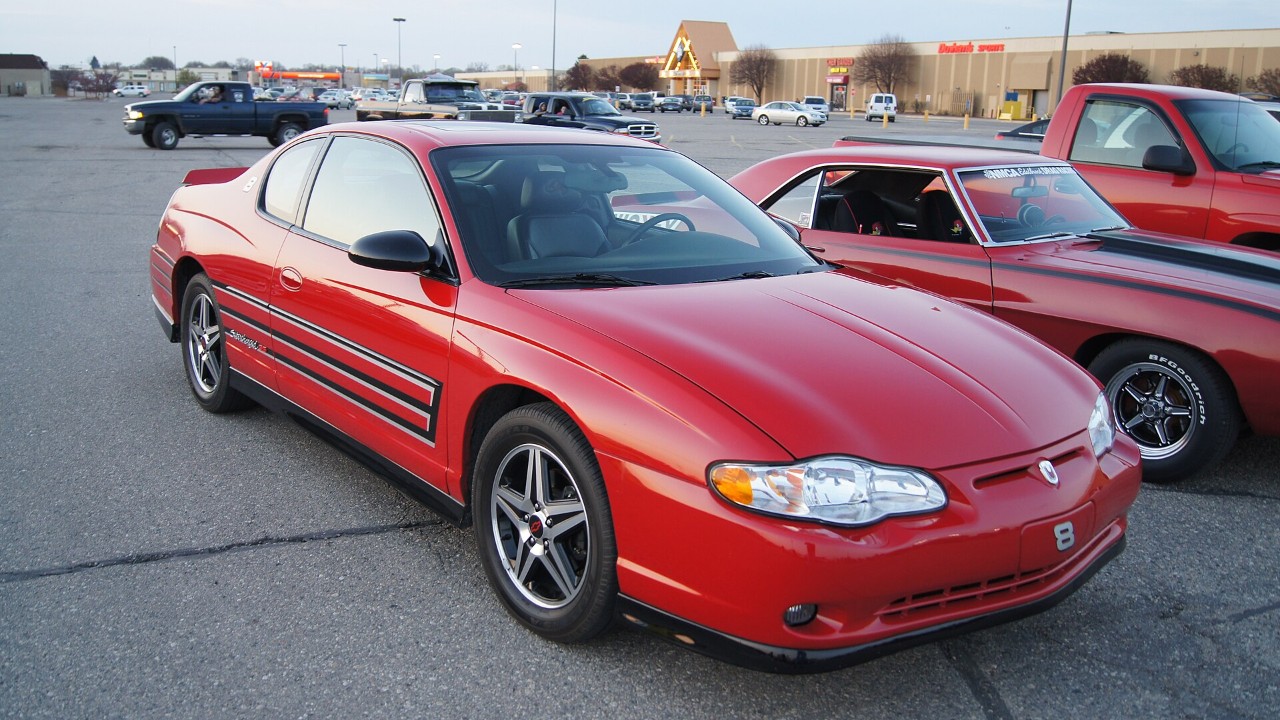
By the 2000s, the Monte Carlo was a comfortable front-drive coupe. The Supercharged SS gave it something worth driving. It used a supercharged 3.8-liter V6 and a four-speed automatic, with a floor shifter and switchable traction control.
The Auto123 road test rated the engine at 240 horsepower and found it strong enough to spin the front tires easily. The reviewer also liked the sound, noting the supercharger whine was barely audible but blended nicely with the exhaust. Auto123 also noted the dash-mounted ignition and the big floor shift handle. Then there’s a bit of a growl when the engine fires up. In our view, those touches give the Supercharged SS a personality the regular models lacked.
In our view, this is the overlooked performance Monte Carlo. It never had the V8 glamour of earlier cars, yet it was quick and easy to live with. If you shop for one, ask for service records and drive it hard enough to feel how the automatic shifts.
8. 2006 Chevrolet Monte Carlo LTZ
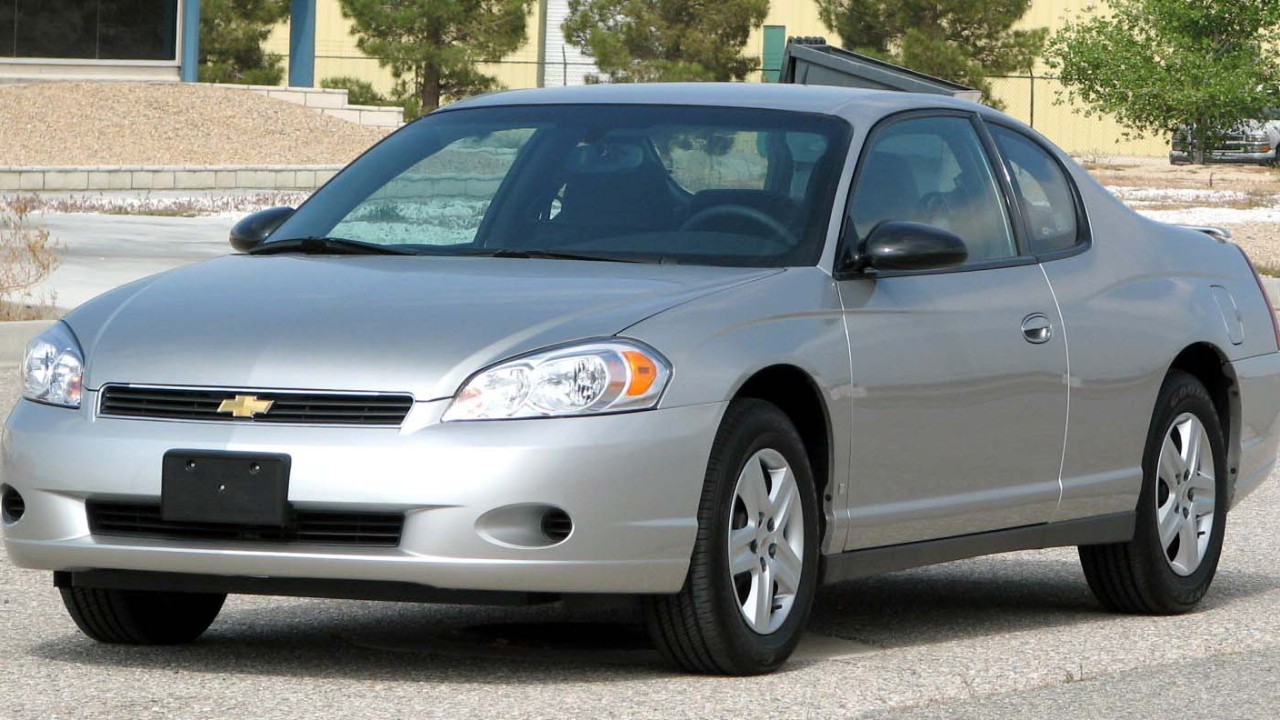
The final Monte Carlo generation arrived for 2006 with a big lineup of LS, LT, LTZ and SS trims. The LTZ sat near the top as the luxury choice. It came with leather upholstery, heated front seats, satellite radio, an upgraded sound system and an auto-dimming mirror.
Consumer Guide lists the LTZ’s 3.9-liter V6 at 242 horsepower and 242 lb-ft, with a four-speed automatic. It also notes that the LTZ trim disappeared for 2007. That makes the 2006 car a one-year version of the last Monte Carlo. The same guide found the final Monte Carlos peppy from a stop. It also praised the generous rear room and big trunk for a sporty coupe. However, it also said no Monte Carlo feels truly agile, so think of the LTZ as a fast, comfortable cruiser.
We’d pick the LTZ as the best everyday Chevy Monte Carlo of the modern era. It offered most of the comfort without the thirst of the V8 SS. Consumer Guide also flags torque converter wiring and transmission shudder as trouble spots, so check those first.
More from Fast Lane Only