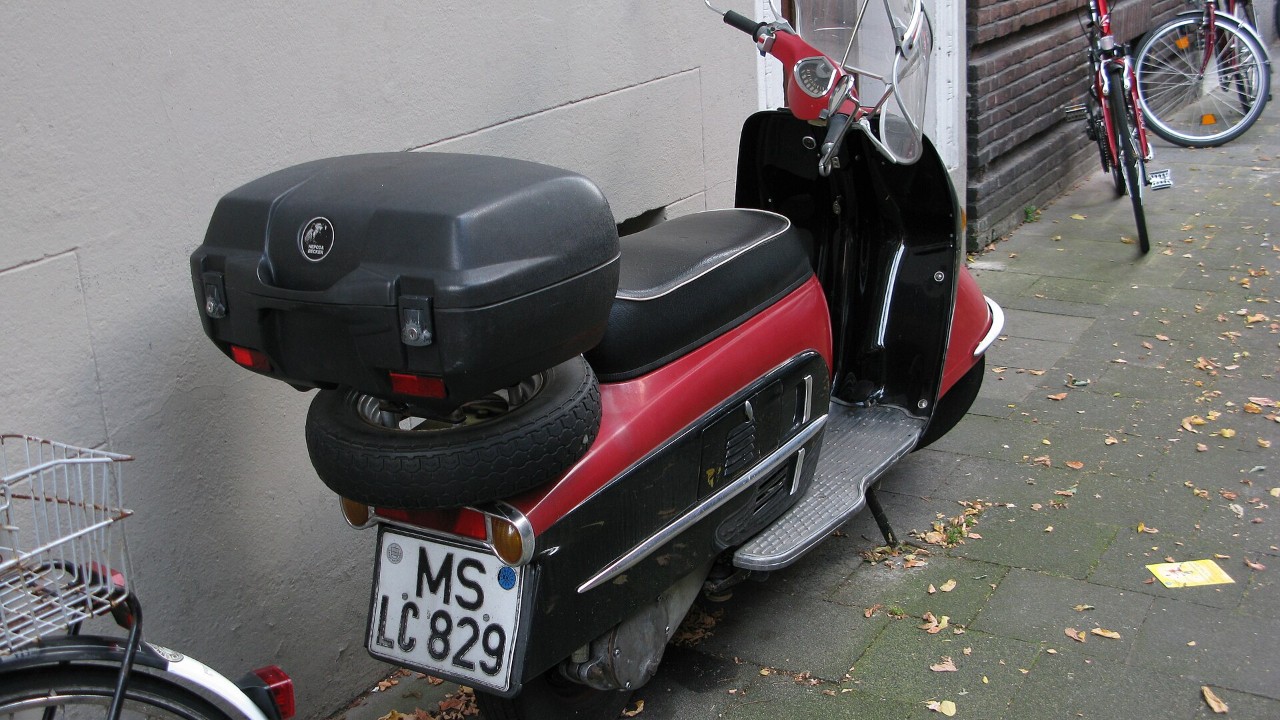
Fuji’s Rabbit S-1 scooter debuted in Japan in June 1946, months before Italy’s Vespa. In fact, the postwar scooter boom ran on three continents at once, and plenty of the machines it produced looked nothing like the Italian template.
Some came from heavy-industry giants, one came from a California inventor, and one tried to be a car on two wheels. Here are eight of them, with the production numbers their museums and makers kept.
1. 1947 Salsbury Model 85
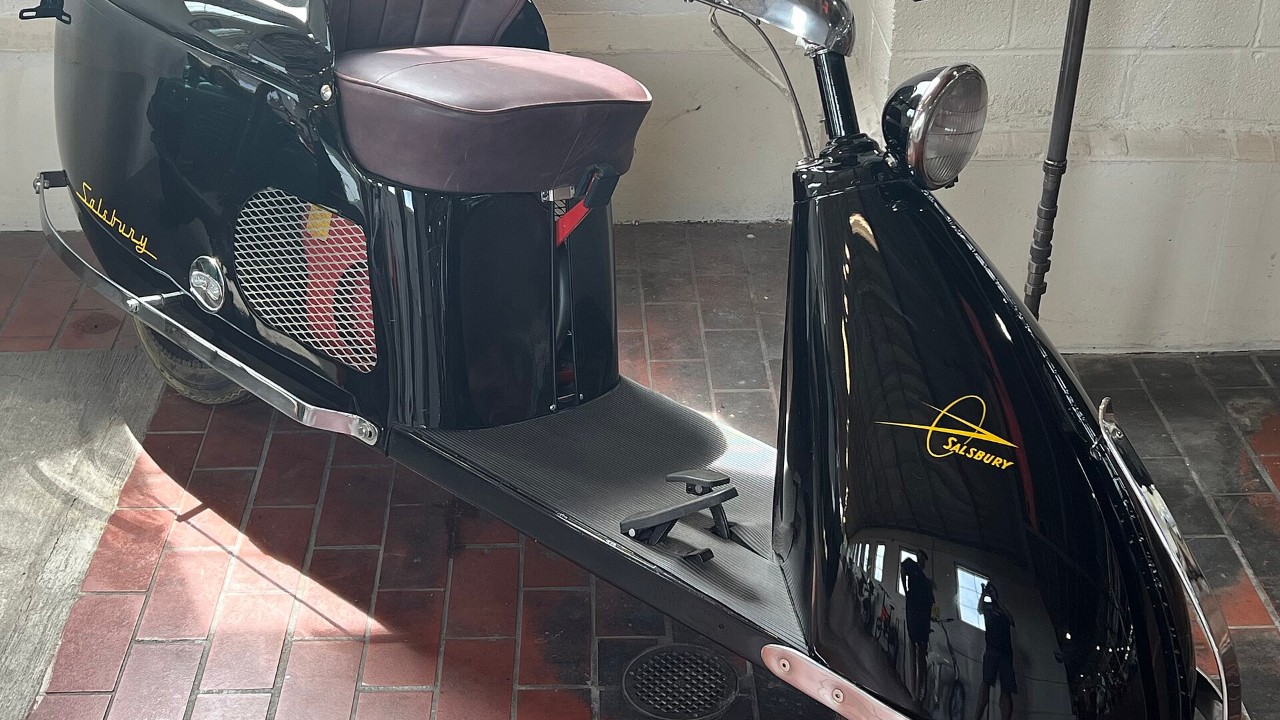
Salsbury sold the Model 85 as “the most completely automatic vehicle ever built,” and the claim had substance. Its 6-hp air-cooled single drove through a patented continuously variable transmission, so the rider never shifted. Instead of a twist grip, the 85 used foot controls for the throttle and brake, much like a car. That was the point, because Salsbury aimed it squarely at car owners.
Lane Motor Museum dates the Model 85 to 1947–1950 and lists an original price of about $800 with a 50-mph top speed. However, nobody knows exactly how many left the plant. The museum’s estimate runs from 70 to 1,000, including exports to Germany. Demand fell off once new cars were easy to buy again.
2. 1947 Mitsubishi Silver Pigeon C-10
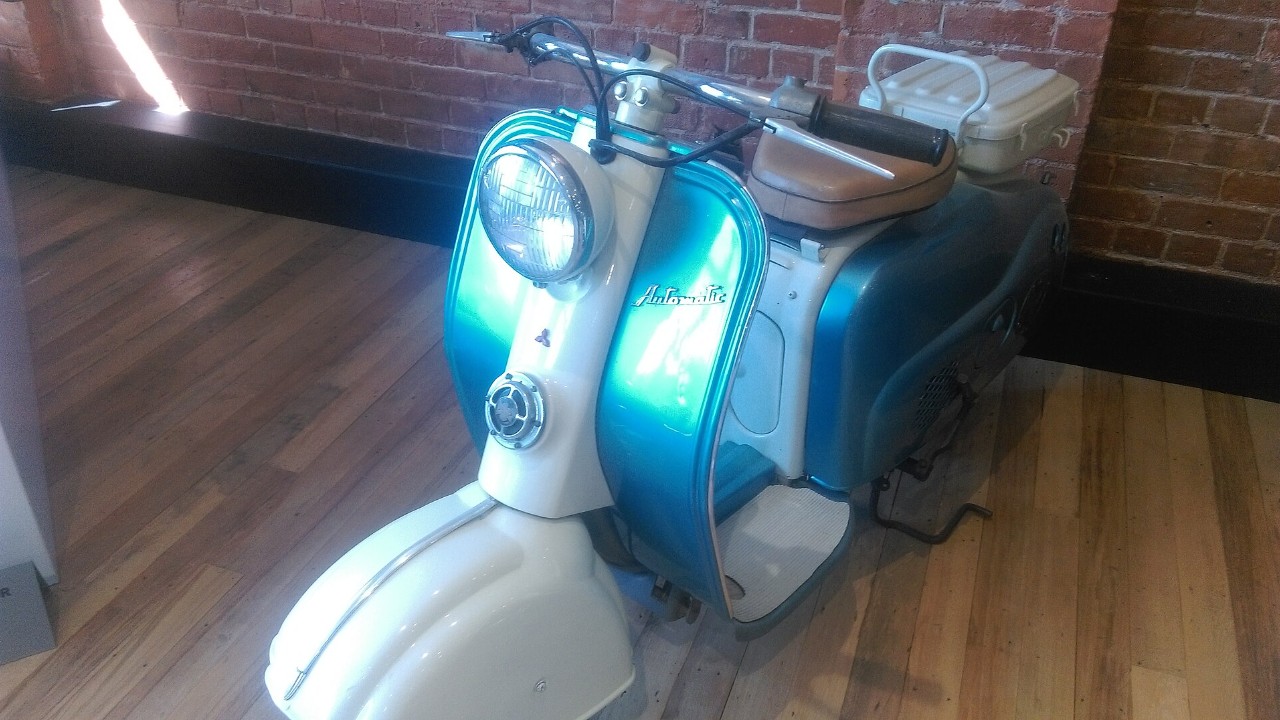
Mitsubishi’s scooter story began with an imported example. Kojiro Maruyama, an engineer at General Motors, brought a scooter home from America. Mitsubishi Heavy Industries then hired him to develop a Japanese version, and the first prototype ran in 1946.
Mass production of the Silver Pigeon started at the beginning of 1947, according to Mitsubishi Motors’ heritage page. Power came from a 112cc side-valve four-stroke single making just 1.5 PS. Even so, production continued for 18 years. Mitsubishi also credits the little machine with helping Japan’s postwar reconstruction.
3. 1952 Maico Mobil MB175
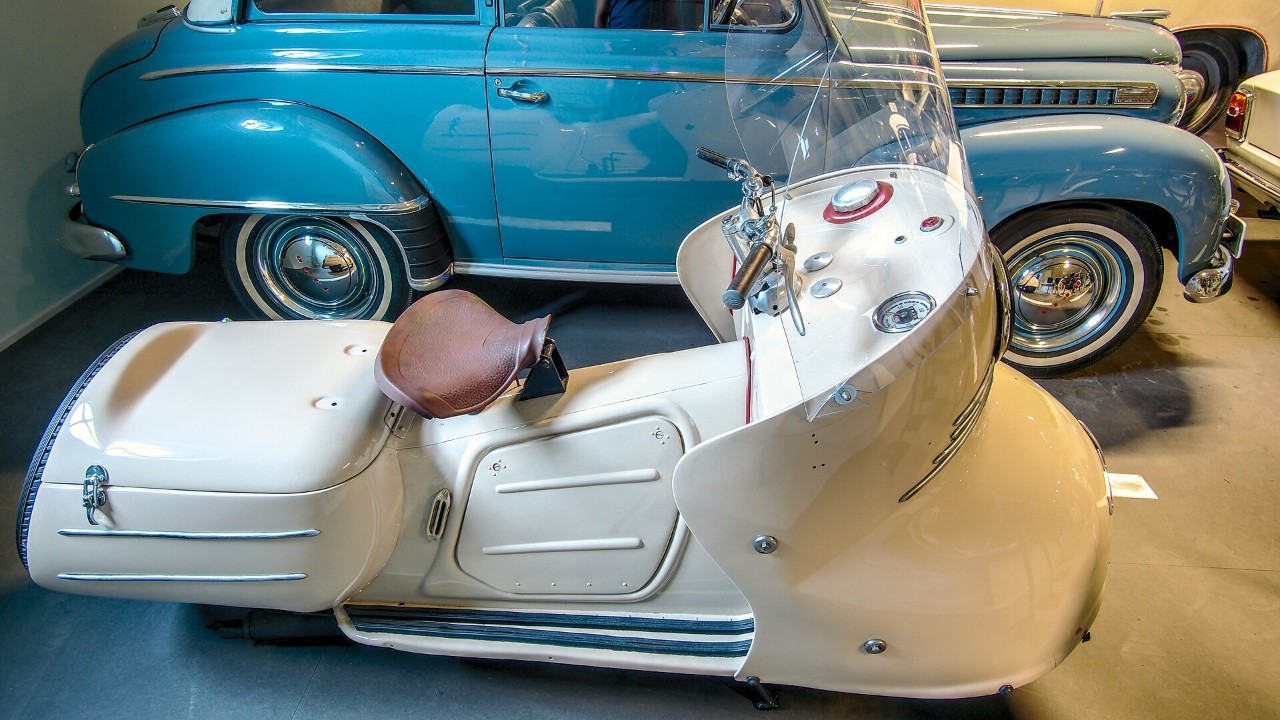
Germany’s Maicowerk started out making bicycles in 1926 and moved into motorcycles in the 1930s. In 1950 it introduced the Mobil, which looked more like a small car with the wheels tucked inside. eBay Motors’ look at a 1952 MB175 describes a wide aluminum body, an oversized front fairing and a wraparound windscreen.
Under that shell sat a 175cc air-cooled two-stroke single. The practical touches went further, too. There were integrated rear panniers, a glove box in the dash and a full-size spare tire mounted at the back. As a result, fans dubbed it the “car on two wheels.” Both ends rode on 14-inch tires, with telescopic forks up front and a coil-sprung swingarm behind.
4. 1953 Zündapp Bella R150
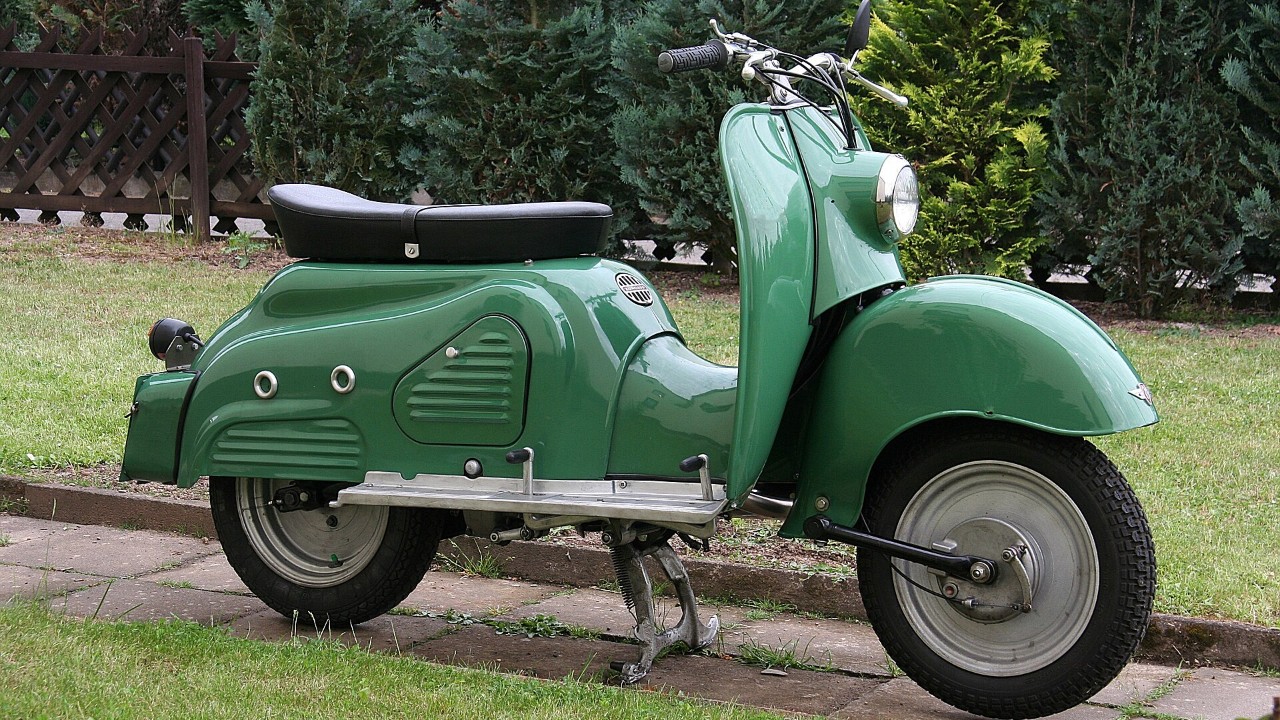
Zündapp entered the scooter market in spring 1953 with the Bella 150. The design was its own, though it drew on Italy’s Parilla scooter. The museum-digital record for a Berlin example lists a 147cc two-stroke single making 7.3 PS and a top speed of 80 km/h. A new one cost 1,595 Deutsche marks in 1954.
That first R 150 ran until 1955, and Zündapp built 14,691 of them. Later versions added a damped swingarm, a one-piece seat and an electric starter, while a 200cc Bella arrived in 1954. In all, Zündapp turned out more than 130,000 Bellas before production ended in 1964, the record says.
5. 1954 Honda Juno K
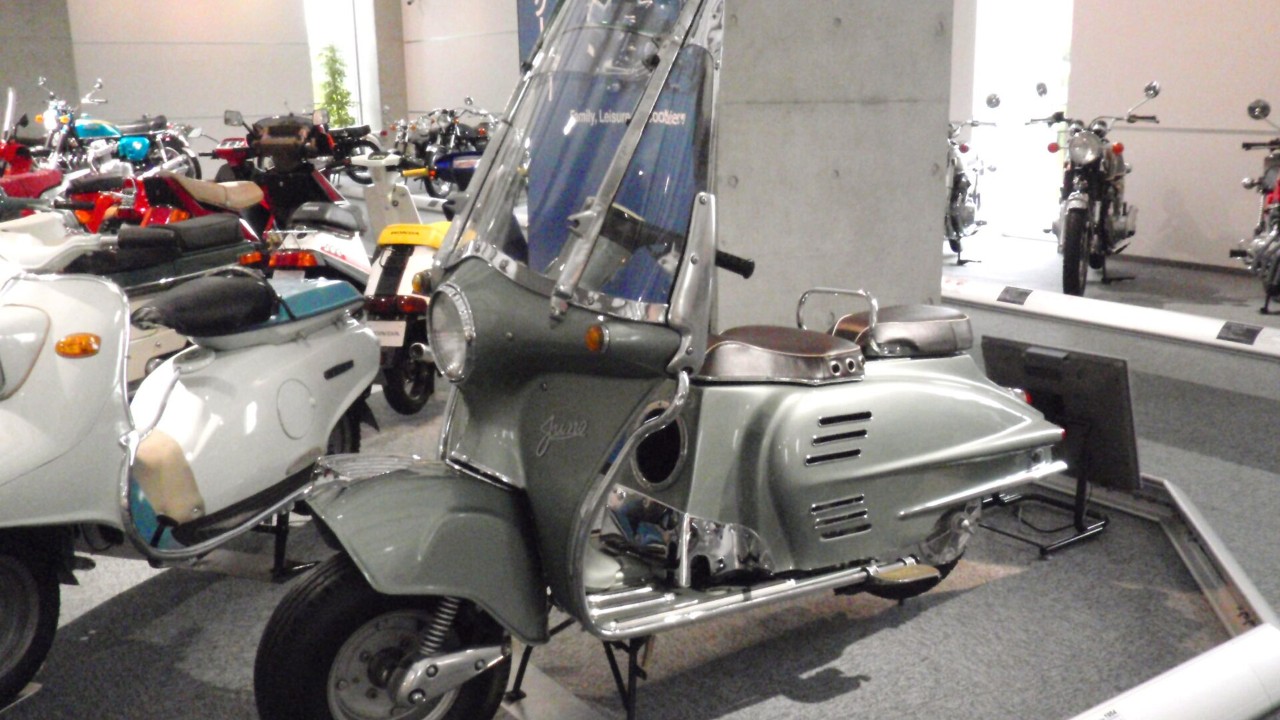
Honda’s first scooter arrived in 1954 as the Juno K-Type. It carried a 220cc four-stroke with three speeds, plus a self-starter. Scooternova also points to a large windscreen and direction indicators.
The body was the bold part. Honda formed the panels from fiber-reinforced plastic, and Scooternova calls the whole project over-engineered. Honda built fewer than 6,000 Junos. Still, that plastics work did not go to waste, because it helped pave the way for the later Cub.
6. 1957 Cushman Eagle
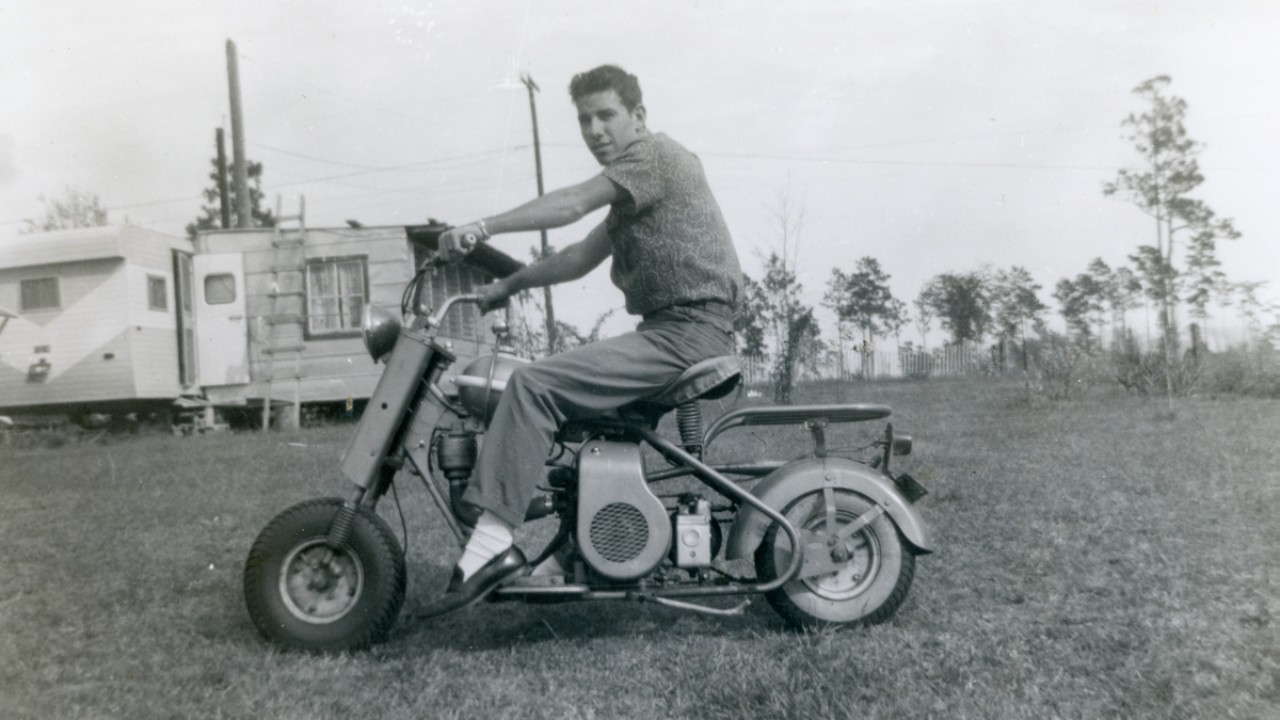
Cushman’s Eagle borrowed its look from big American motorcycles rather than from Italian scooters. Introduced in 1949, it left its engine on display and ran a chrome exhaust back along the right side. Lane Motor Museum’s 1957 example lists a Husky four-stroke single with 7.95 hp, a belt-driven two-speed and a top speed of 50 to 60 mph.
That museum bike is a Standard Cast Iron Eagle with every option: electric starter, buddy seat, saddlebags, turn signals, twin mirrors and a windshield. Period ads offered Black, Huntsman Red, Cascade Blue and Starmist White. Production ended in 1965, though Cushman sold some leftover Eagles as 1966 models.
7. 1960 Heinkel Tourist 103 A1 scooter
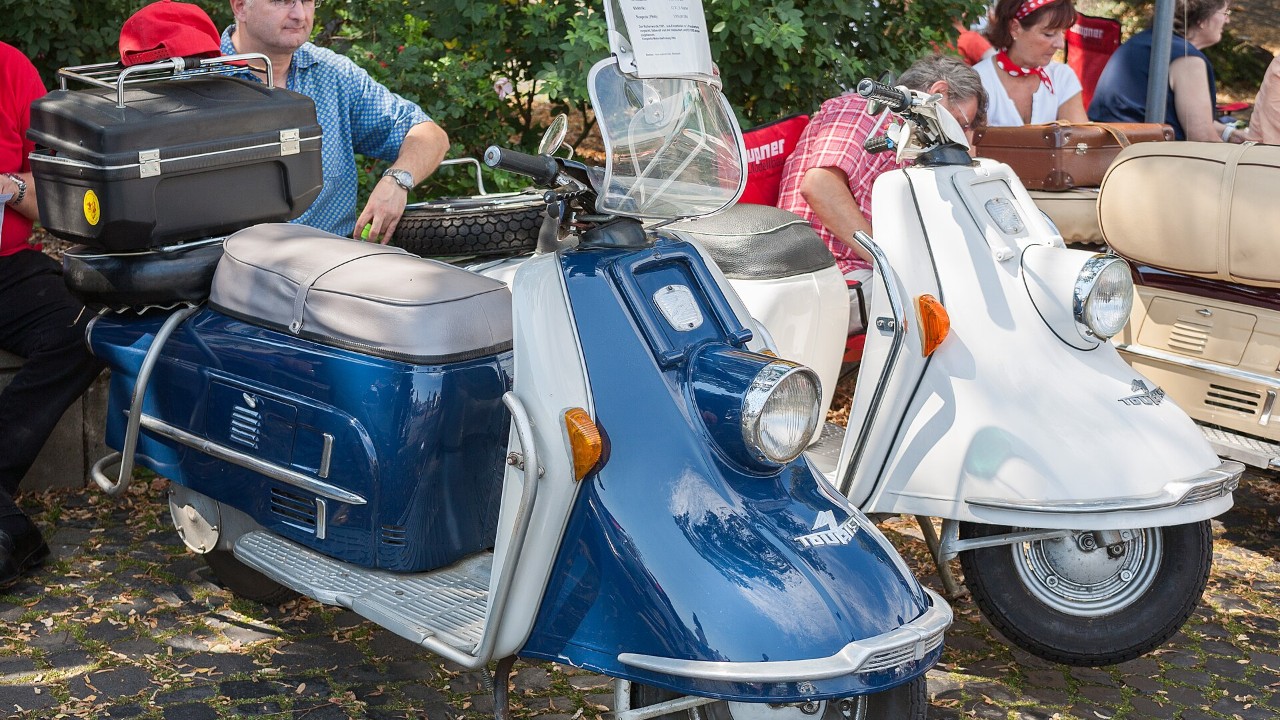
England called the Heinkel Tourist “the Rolls-Royce of Scooters,” while American ads went with “the Cadillac of Scooters.” Its 173cc overhead-valve four-stroke made 9.5 hp and reached 65 mph, according to the Audrain Automobile Museum. It also came with an electric starter, a steering lock and a spare wheel.
Heinkel built more than 50,000 Tourist 103 A1s between September 1957 and June 1960. Few crossed the Atlantic, though. Fewer than 350 sold in the U.S., and the North American Heinkel Registry knows of 175 survivors.
8. 1963 Fuji Rabbit Superflow S601
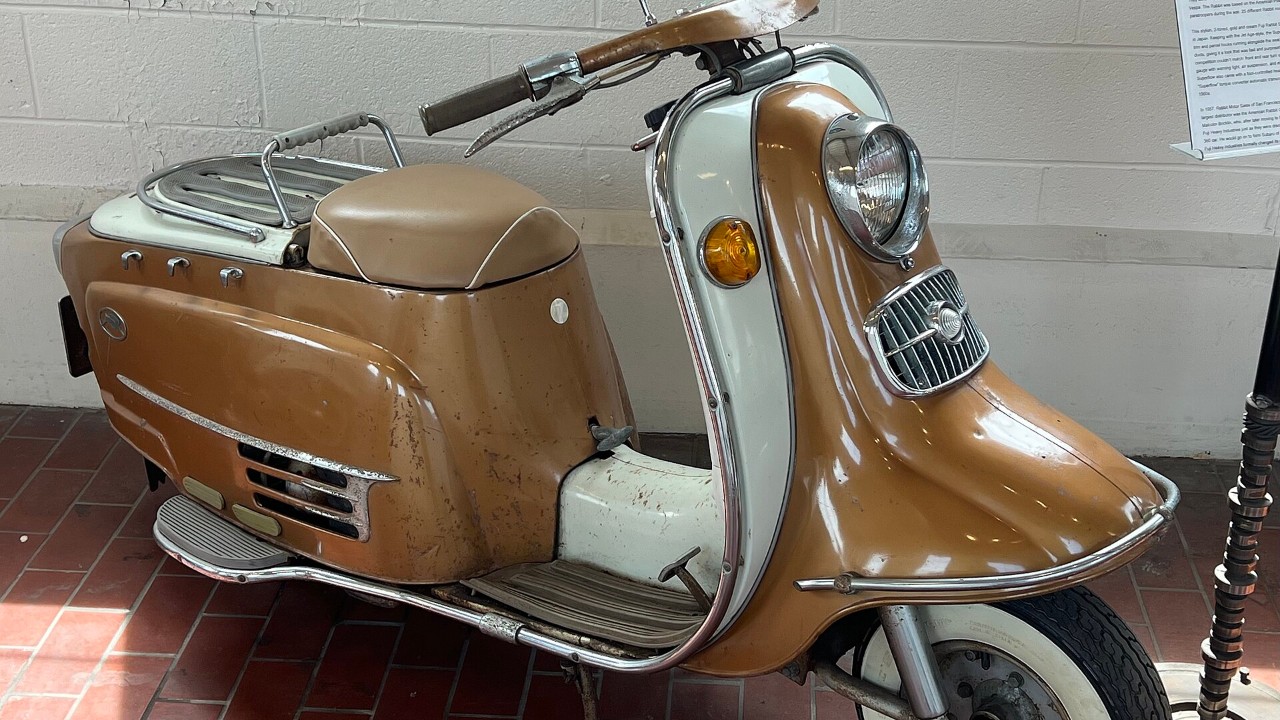
After World War II, Nakajima Aircraft was reborn as Fuji Heavy Industries, and its Rabbit line eventually covered 25 models. The Superflow S601 was the fancy one. It paired a 200cc, 11-hp single with a torque-converter automatic, and it added air suspension and electric start.
Lane Motor Museum says Fuji made 75,000 Superflows from 1962 to 1967, at an original cost of about $495. Meanwhile, Canadian importer Malcolm Bricklin later won an exclusive deal with Fuji and went on to found Subaru of America. The last Rabbit scooter came off the line on June 29, 1968.
More from Fast Lane Only