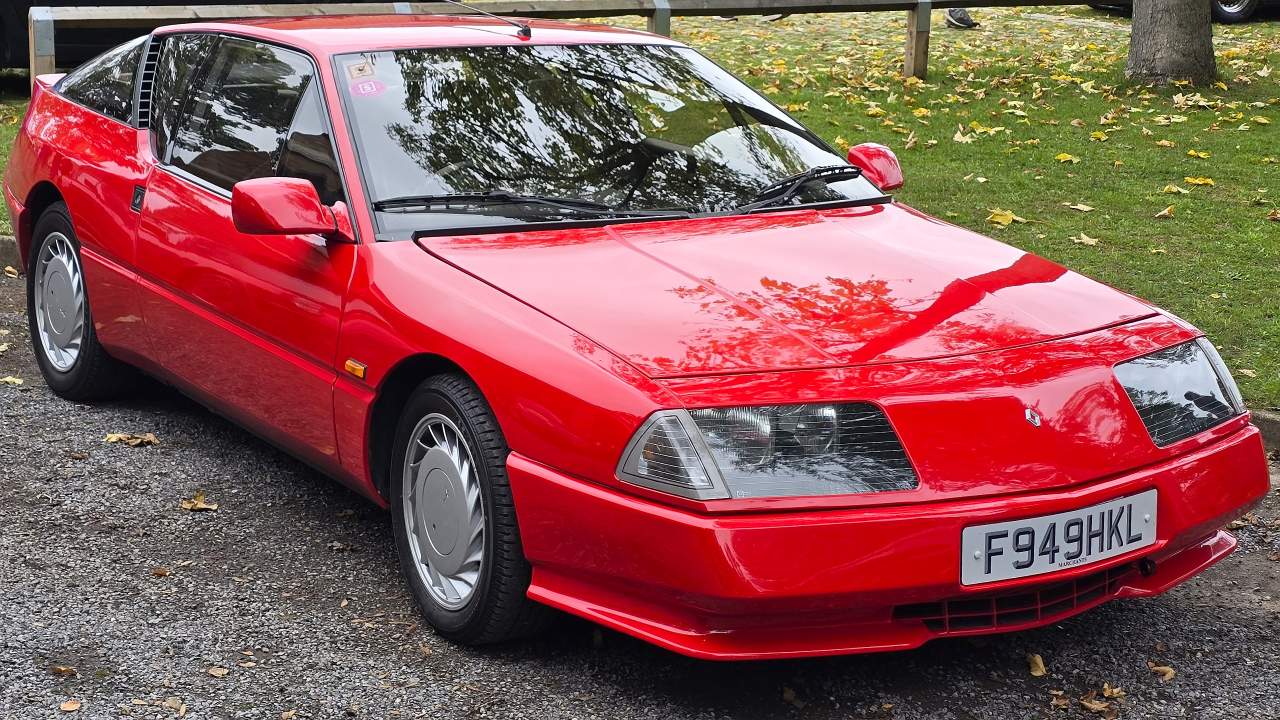
Renault once spent roughly 30 million dollars trying to turn a niche French sports car into a viable American rival to the Porsche 911, only to halt the project after a dozen cars were built. The Alpine GTA Turbo, a rear engined coupe with serious performance ambitions, was engineered to meet United States regulations and positioned as a halo model for the brand. Instead, it became a case study in how corporate turmoil and regulatory complexity can smother even the most promising enthusiast machine.
Looking back at that short lived American program, I see more than a quirky footnote in Renault history. The aborted run of 12 federalized cars captures a moment when European optimism about the United States market collided with political violence, shifting corporate priorities, and the unforgiving math of low volume homologation.
The French 911 that almost crossed the Atlantic
At the heart of this story is the Alpine GTA, a sleek coupe that Renault and Alpine developed as a modern, more refined successor to earlier Alpine sports cars. The GTA placed its engine at the rear, used a lightweight structure, and chased the same blend of everyday usability and performance that made the Porsche 911 such a benchmark, which is why enthusiasts later framed it as a kind of “French 911.” According to reporting on the Alpine GTA Turbo, the car was built in limited numbers from 1984 to 1991, which already made it a rare sight even in Europe.
Renault and Alpine quickly considered exporting the GTA to the United States through American Motors, which was then partially owned by Renault. That plan reflected a broader strategy to leverage American Motors’ dealer network and presence in the United States to give the French brand a foothold in a lucrative performance market. Documentation on the GTA program notes that the car’s evolution into the later A610, with features like flip up headlamps, was part of an effort to keep the concept fresh, but the American push centered on the turbocharged GTA as the most compelling package for demanding buyers.
BEREX, big ambitions, and a 30 million dollar bet
Inside Renault, the push to create a United States ready Alpine was not an afterthought. The company’s advanced research division, BEREX, was tasked with shaping a striking successor that could appeal beyond France. Reporting on the project explains that BEREX developed a car with more comfort and equipment than earlier Alpines, including features such as leather seats and cruise control, to make it more acceptable to American tastes. That work shows how seriously Renault treated the idea of a transatlantic sports car, rather than simply shipping over a lightly modified European model.
To clear United States regulations, Renault invested heavily in engineering changes, testing, and certification. Accounts of the program state that Renault spent about 30 million dollars to make the Alpine GTA Turbo legal for the American market, a staggering figure for a low volume coupe. The same reporting on the federalized GTA Turbo notes that this spending covered the full process of adapting the car to United States safety and emissions rules, a reminder that homologation can consume supercar scale budgets even when the car itself is relatively modest.
Assassination, corporate retreat, and a program cut short
What ultimately doomed the American Alpine was not a failed crash test or a lack of engineering talent, but a violent shock to Renault’s leadership. In November 1986, Renault boss Georges Besse was assassinated by left wing terrorists, an event that shook the company and France more broadly. Subsequent reporting on the Alpine GTA USA effort notes that Besse’s successor took a very different view of Renault’s global ambitions and began to unwind some of the more adventurous projects that had been set in motion under his leadership.
Within that shift, the United States Alpine program quickly lost its political backing. The same analysis of the GTA USA effort explains that after Georges Besse’s assassination, the new leadership moved to pull Renault back from its American entanglements, which included its relationship with American Motors. In that climate, a niche sports car that required ongoing investment and marketing in the United States became an obvious candidate for cancellation, regardless of how much had already been spent to make it compliant.
Twelve cars, pop up lights, and a forgotten lineage
By the time the decision was made to walk away, Renault had already built a tiny batch of federalized Alpine GTA Turbo cars. Reporting on the project states that only 12 examples of the United States specification GTA Turbo were completed before the plug was pulled, turning what was supposed to be a halo model into one of the rarest production cars the company ever created. The same reporting notes that enthusiasts today often do not realize that Renault’s Alpine division once produced something even rarer than its current sports cars, precisely because the American run was so limited and so quickly forgotten.
The broader Alpine story did not end there. The GTA platform evolved into the A610, which gained pop up headlights and a more contemporary look. Coverage of the model’s history points out that the GTA became the A610 and that the styling changes, including those pop up lights, won some fans but did not fully solve the car’s commercial challenges. As one retrospective on The GTA and A610 notes, even in Europe the car could be a difficult sell, which underlines how ambitious it had been to imagine a strong foothold in the United States.
What the failed federalization still tells us today
Looking back from today, I see the 30 million dollar Alpine experiment as a concentrated lesson in how fragile ambitious car programs can be. Renault and Alpine had a clear technical vision, a dedicated advanced research arm in BEREX, and a partner in American Motors that could have provided a distribution path in the United States. The engineering work produced a distinctive rear engined coupe with the comfort and equipment expected by American buyers, and the company was willing to spend supercar level money to clear regulatory hurdles. Yet a single act of political violence, the assassination of Georges Besse, and the resulting change in corporate strategy were enough to strand the project after just 12 cars.
For enthusiasts, those few surviving United States specification Alpine GTA Turbo cars are now physical reminders of that abrupt turn. The detailed accounts of the BEREX developed GTA and the United States export plans show how close Renault came to putting a genuine French alternative to the 911 into American showrooms. Instead, the company retreated, the Alpine name went quiet for years, and the story of the 30 million dollar federalization that stopped at 12 units became a niche piece of automotive lore rather than the start of a lasting transatlantic sports car rivalry.
More from Fast Lane Only: