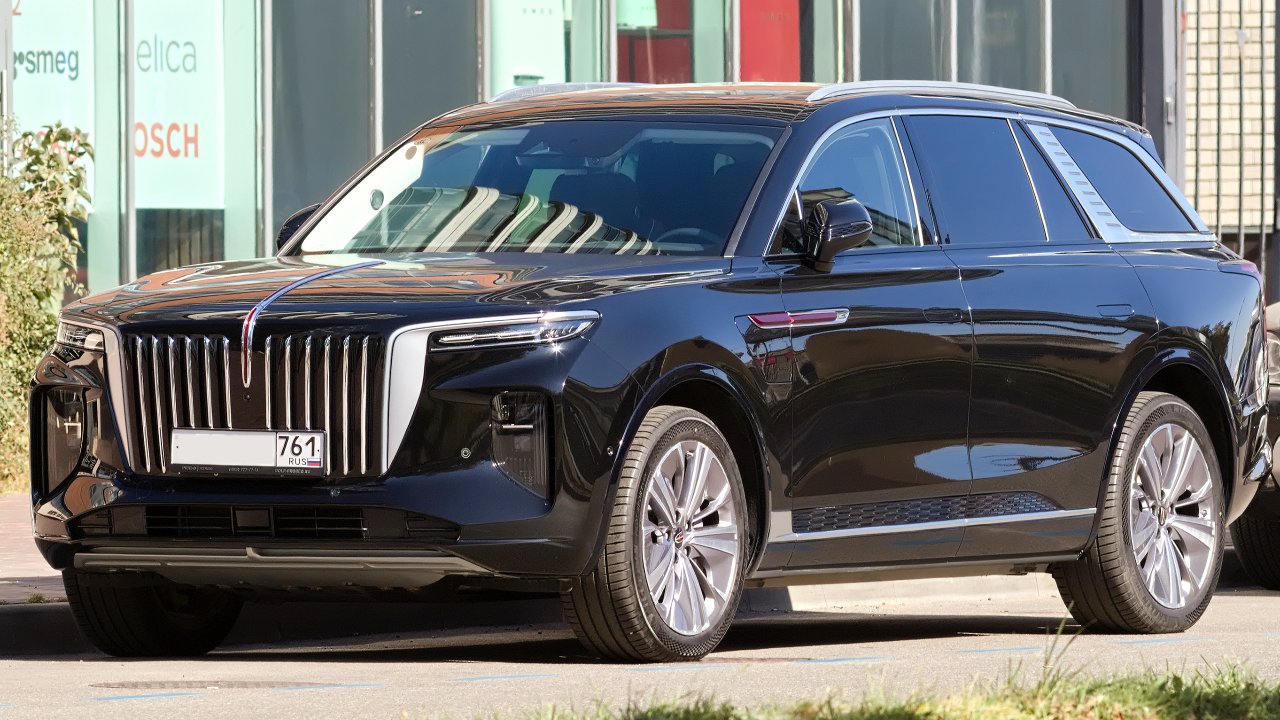
China’s oldest domestic automaker is moving solid-state batteries from the lab to the proving ground, putting one of the industry’s most hyped technologies into real vehicles. As road testing begins under its Hongqi luxury brand, China FAW Group is trying to turn years of research into a commercial edge in the global electric vehicle race.
The company’s prototype cars are part of a broader push across China’s auto industry to validate solid-state chemistry in harsh, real-world conditions. If the technology performs as promised on range, safety, and durability, it could reset expectations for premium EVs and intensify pressure on rivals still reliant on conventional lithium-ion packs.
FAW’s heritage meets a new battery frontier
China FAW Group, often referred to as First Automobile Works, has long been a bellwether for the country’s car industry, evolving from a state-backed truck maker into a sprawling conglomerate with joint ventures alongside other major Chinese players. The FAW Group ( First Automobile Works ) is described as a central pillar of the modern Chinese automotive sector, standing alongside names such as SAIC Motor, Dongfeng Motor and Chang’an Automobile, which underscores why its move into solid-state batteries carries symbolic weight for the broader market. As China’s oldest domestic auto brand, FAW is now using that legacy to frame its solid-state program as the next stage of national industrial upgrading rather than a niche experiment.
The company’s decision to begin testing solid-state EV batteries in vehicles under its Hongqi luxury sub-brand signals that this is not a side project but a strategic bet on the future of premium electrification. Reporting on the initiative notes that FAW Group, identified explicitly as China’s oldest domestic auto brand, has started integrating solid-state packs into Hongqi prototypes to validate performance on the road. That step moves the technology beyond cell-level trials and into full-vehicle systems, where software, thermal management, and chassis integration all have to work in concert for the chemistry to deliver its promised benefits.
Inside Hongqi’s all-solid-state prototype program
At the core of FAW’s push is Hongqi’s first all-solid-state battery prototype vehicle, which has already rolled off the line and entered structured testing. The project ran for 470 days, according to technical summaries from FAW Group’s R&D Center, and focused on breakthroughs in sulfide electrolytes, high-voltage packaging, and the ability to operate across varied temperatures and charging scenarios. That timeline suggests a concentrated effort to move from materials research into a complete pack and vehicle integration, rather than a loose collection of lab milestones.
Technical details emerging from the program indicate that Hongqi’s prototype uses a high energy density design, with one report describing a 380Wh/kg solid-state battery installed in a test vehicle. The pack has reportedly passed extreme thermal abuse testing at 200°C without triggering thermal runaway risks, addressing one of the most persistent safety concerns around high-energy chemistries. FAW Hongqi has also highlighted that the first all-solid-state prototype vehicle was successfully completed at its facilities, with internal documentation noting ionic conductivity figures such as 10 mS/cm and referencing 58 as part of the performance data set, which points to a serious attempt to quantify and benchmark the technology rather than simply showcase a concept car.
From lab promise to road testing reality
Moving solid-state batteries from controlled environments into real vehicles is a critical inflection point, and FAW’s Hongqi program is structured around that transition. The company’s R&D Center has emphasized that the 470 day project was designed to validate the chemistry under different loads, temperatures, and charging conditions that mirror real-world use. By embedding the pack in a Hongqi flagship sedan and SUV platform, engineers can monitor how the solid electrolyte behaves under high-speed driving, rapid acceleration, and repeated fast charging, all of which stress the interfaces between cells, modules, and the vehicle’s thermal systems.
Early reports on the Hongqi prototype suggest that FAW is not limiting itself to mild proving-ground laps but is subjecting the vehicle to aggressive abuse tests that go beyond regulatory minimums. The 380Wh/kg pack’s ability to withstand 200°C thermal abuse without thermal runaway is one example of this approach, indicating that the company is trying to demonstrate safety margins that exceed those of conventional lithium-ion packs. The decision to start road testing under a luxury badge also hints at FAW’s commercial strategy: if the technology proves robust, it can first appear in high-end Hongqi models where customers are willing to pay for cutting-edge range and safety, before trickling down to more affordable segments.
China’s wider solid-state race
FAW’s efforts are unfolding against a backdrop of intensifying solid-state activity across China, as multiple automakers try to secure a first-mover advantage. Industry overviews describe how China’s carmakers are pushing ahead with next-generation solid-state battery technology as competition in the country’s electric vehicle market accelerates, with several companies targeting limited commercial rollout later in the decade. This broader push helps explain why FAW, with its historical role as a national champion, is under pressure to show tangible progress rather than simply announce research partnerships.
Other Chinese brands are already staking out ambitious claims that frame the scale of the opportunity and the risk of falling behind. Chinese automaker Chery, for example, has publicized plans for a solid-state battery EV with a claimed 932 mile range, positioning it as a halo product that could arrive in 2026. Reports on Chery’s program describe a lithium-rich manganese cathode and emphasize that the company aims to be among the first to install solid-state batteries in a passenger EV, with the 932 mile figure serving as a headline-grabbing benchmark. At the same time, Dongfeng Motor has begun extreme cold-weather testing of its own solid-state battery prototype vehicle, with documentation noting that the trials started on January 14 and are focused on validating performance in harsh winter conditions. Together, these efforts show that FAW is part of a crowded field where multiple Chinese brands are already running prototype fleets and publicizing specific technical targets.
What solid-state validation could mean for global EV competition
If FAW and its peers can prove that solid-state packs work reliably in real vehicles, the implications for the global EV market could be significant. Higher energy density figures such as the 380Wh/kg cited for Hongqi’s prototype, combined with safety performance like surviving 200°C abuse tests without thermal runaway, would allow automakers to offer longer range or lighter vehicles without sacrificing crashworthiness. For a luxury brand like Hongqi, that could translate into flagship sedans and SUVs that travel far beyond current premium EV benchmarks on a single charge, while also marketing the intrinsic safety of a solid electrolyte as a differentiator for cautious buyers.
The competitive pressure would not be limited to China. Global manufacturers that have so far treated solid-state as a mid-decade or late-decade technology might find themselves forced to accelerate if Chinese brands begin selling vehicles with validated solid-state packs. The fact that China FAW Group, identified as the country’s oldest domestic auto brand, is already running full-vehicle trials, while companies like Chery talk openly about a 932 mile solid-state EV and Dongfeng Motor conducts prototype cold-weather testing, suggests that the center of gravity for early solid-state commercialization could sit firmly in China. For now, many of the most detailed metrics, from the 470 day development cycle at FAW’s R&D Center to the 932 mile range target at Chery, remain tied to prototypes and projections. Yet as more of these vehicles accumulate real-world mileage, the question will shift from whether solid-state works at all to which automaker can industrialize it at scale and cost.
More from Fast Lane Only