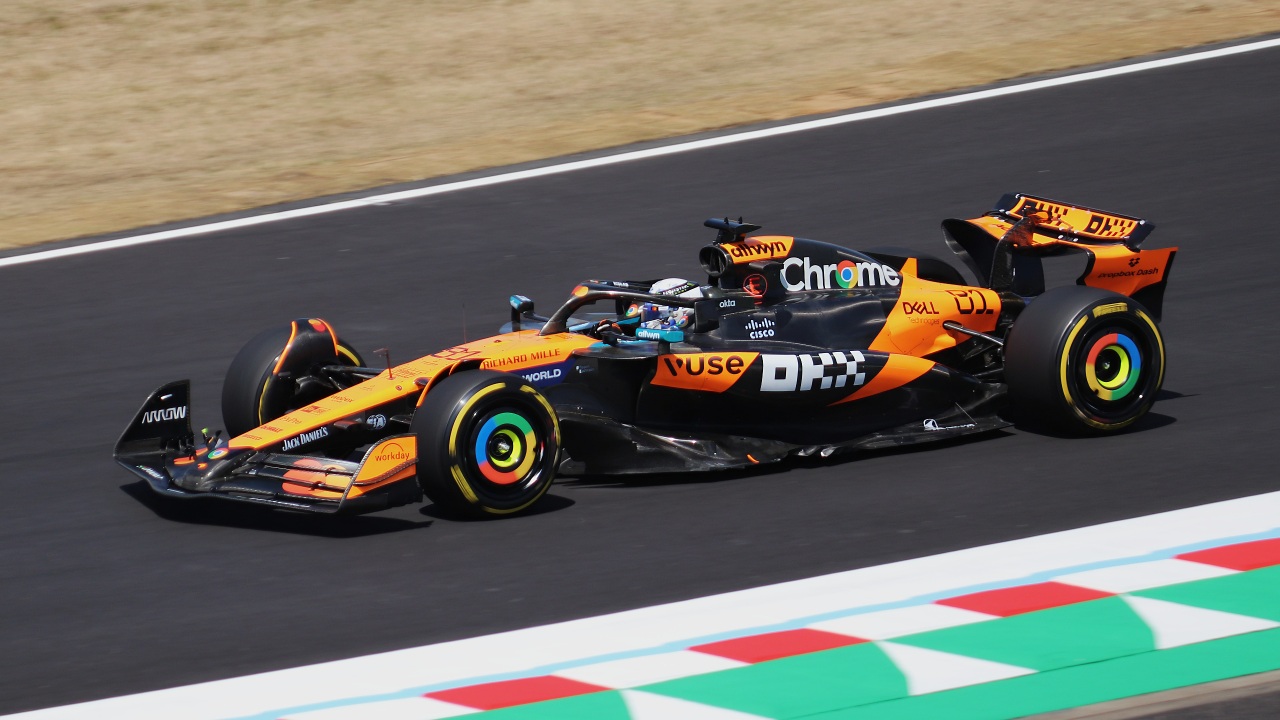
McLaren has chosen to keep its radically new MCL40 under wraps for longer than any of its major rivals, even as the rest of the grid rolls out launch specs and early shakedowns. The decision to delay both the public unveiling and the first laps in Barcelona signals a calculated gamble that extra development time in the factory will outweigh the loss of early mileage on track. It also sets up a fascinating contrast with teams that have already shown their hands under Formula 1’s sweeping 2026 regulations.
Behind the quiet launch schedule sits a car that senior figures at McLaren describe as a complete departure from its predecessor, and a testing plan that compresses learning into fewer, more intense days. How quickly Lando Norris and Oscar Piastri can unlock that package, and how effectively McLaren can manage its internal dynamics while rivals like Cadillac, Racing Bulls, Alpine, Mercedes and Ferrari bank laps, may define the early phase of the new rules era.
McLaren’s late reveal and compressed test plan
McLaren has already confirmed that the MCL40 will not run on the opening day of pre-season testing in Barcelona, making it one of the last cars to turn a wheel under the 2026 rules. While other teams have scheduled filming days and early shakedowns to de-risk their machinery, McLaren has opted against any such running before the official group test, choosing instead to complete the car at the factory and send it directly to Spain. Team representatives have explained that they want the build and sign-off process to run as late as possible so that every available hour can be devoted to development work on the new concept.
The strategy hinges on the fact that each team is allowed three days of official testing, which McLaren intends to use in full despite skipping the first morning. The car is due to arrive in Barcelona for its initial on-track shakedown at the circuit, after which the team will still have three complete test days to gather data. Internally, the view is that the loss of a few hours on day one is a manageable trade-off if it allows more refined parts to reach the car, especially given how complex the MCL40 is understood to be. That approach contrasts sharply with rivals that have already completed shakedowns or will do so before testing, including Cadillac, Racing Bulls, Alpine, Mercedes and Ferrari, all of which have prioritised early mileage to flush out reliability issues.
A radical MCL40 concept under new rules
The willingness to delay track running is rooted in how different the MCL40 is from McLaren’s 2025 car. Team principal Andrea Stella has described the new machine as a complete rework, noting that the entire floor operation, the front of the car and the wings have been fundamentally redesigned to meet the 2026 regulations. Those rules reshape aerodynamics and power unit deployment, forcing teams to rethink how they generate downforce and manage energy across a lap. For McLaren, that has meant embracing a bold concept rather than evolving the previous chassis, which naturally increases the risk of early teething problems but also offers a higher performance ceiling if the ideas prove correct.
Because the car is so different, McLaren’s technical leadership has stressed that the first priority in Barcelona will be understanding, not upgrading. The MCL40 is being treated as a complicated platform that must be mapped thoroughly before any major development steps are bolted on. Engineers want to correlate wind tunnel and simulation data with real-world behaviour, particularly around the new floor and front-end architecture, before deciding where to spend aerodynamic and mechanical tokens. That philosophy explains why the team is comfortable sacrificing an initial day of running, since the early laps will be about system checks and correlation rather than chasing lap times or headline performance.
Why rivals are already on track
While McLaren keeps its powder dry, much of the rest of the field has already committed to early outings with their 2026 cars. Cadillac, Racing Bulls, Alpine, Mercedes and Ferrari have either completed shakedowns or scheduled them before the end of the current preparation window, using private runs to validate cooling layouts, suspension systems and power unit integration. These teams are effectively front-loading their risk, preferring to discover reliability issues away from the glare of official testing so that the Barcelona days can be focused on performance work and set-up sweeps.
That divergence in philosophy creates an intriguing competitive picture. If the early runners enjoy largely trouble-free shakedowns, they will arrive at the group test with a baseline set-up and a clear understanding of their cars’ operating windows, which could translate into stronger form at the opening races. On the other hand, if their launch-spec concepts prove conservative, they may find themselves reacting to more aggressive ideas that appear on the MCL40 once McLaren finally reveals it. The British team is effectively betting that its extra design time will yield a car that is competitive out of the box, even if it has fewer kilometres on the clock than its rivals when the season begins.
Inside McLaren’s testing logic and upgrade restraint
McLaren’s leadership has been explicit that the decision to skip the first day of running is not a sign of trouble but a deliberate attempt to maximise development time. They have pointed out that the regulations grant three full days of testing, and that the team will still use that allocation in Barcelona despite the delayed start. The logic is that a car which arrives later but in a more mature specification can deliver more meaningful data, particularly when engineers are trying to understand a completely new aerodynamic and mechanical platform. In their view, the cost of compressing the schedule is offset by the benefit of bringing a more refined package to the track.
That same caution extends to McLaren’s approach to upgrades. Rather than rushing early development parts onto the MCL40, the team intends to resist the temptation to introduce significant updates until it has a firm grasp of the baseline car. Engineers have framed this as a discipline issue: with such a complicated design, layering on new components too quickly risks masking fundamental characteristics and making correlation work harder. The plan is to run the initial specification long enough to build a robust data set, then target upgrades at clearly identified weaknesses. If the car proves competitive from the outset, that restraint could also preserve resources and development headroom for later in the season, when the competitive picture is clearer.
Managing Norris, Piastri and intra-team dynamics
All of this unfolds against the backdrop of a driver pairing that is expected to be central to McLaren’s 2026 ambitions. Lando Norris and Oscar Piastri have already shown they can push each other to a high level, and the team is preparing to streamline the internal rules that govern how they race and share information. Andrea Stella has indicated that, with such a radically different car, clarity over procedures and priorities will be essential so that both drivers can contribute effectively to the learning process without tripping over each other on or off the track. The aim is to reduce ambiguity, particularly in areas like run plans, set-up divergence and race-day cooperation.
The compressed testing window will intensify that need for structure. With fewer hours available, McLaren must extract maximum value from every lap that Norris and Piastri complete in Barcelona, which means carefully dividing responsibilities and ensuring that feedback is comparable. A streamlined framework for how the pair operate should help engineers interpret their comments on the new floor, front-end feel and energy deployment characteristics, all of which are central to the MCL40’s performance. If the team can balance that internal management with the technical challenge of a late launch and limited early mileage, it may yet turn a cautious start into a competitive advantage once the season settles into its stride.
More from Fast Lane Only