Hal Needham’s Pontiac Trans Ams began with a phone call. The stuntman-turned-director asked Pontiac for six black Trans Ams for his first film, Smokey and the Bandit, and then haggled down to four. Those four cars carried Burt Reynolds through the 1977 hit, and none of them survived the shoot.
The deal cost Pontiac very little. In return, it got a starring role in one of the biggest films of the decade. Still, the story behind the cars is stranger than most fans know, because the black-and-gold “1977” Trans Am on screen was not really a 1977 car at all.
It also says a lot about how Needham worked. He was a stunt veteran with no directing credits, a tight budget and a studio that doubted him. So he did what stuntmen do. He found a way around the problem.
How Needham pitched Pontiac
Needham told the story himself in his 2011 memoir, Stuntman!, and Fortune ran an excerpt the year it came out. In it, he explains that the film’s plot came first. While he was in Georgia making Gator in 1976, Coors beer kept vanishing from his hotel fridge. That small mystery gave him the idea for a bootlegging comedy.
Then he needed a car. According to the excerpt, Needham saw a picture of a Pontiac Trans Am in a magazine and spotted a product placement chance. He phoned Pontiac and offered the car a place in the movie. When Pontiac asked how many cars he needed, he asked for six Trans Ams. He settled for four.
Hagerty’s account of the film tells the same story from the other side. It says Needham asked Pontiac whether it would give him cars in exchange for product placement, and that General Motors provided four Trans Ams for the Bandit. Needham also wanted four Bonnevilles for Jackie Gleason’s sheriff, Buford T. Justice, and in his telling he got two. Hagerty likewise names two Bonnevilles for the sheriff’s car.
Free cars mattered, because money was short. Needham wrote that Universal agreed to fund the film for $5.3 million. Two days before filming, however, the studio cut $1 million from that figure. Reynolds took $1 million as his fee, which left $3.3 million to make the picture.
Hal Needham’s Pontiac Trans Ams were 1976 cars in disguise
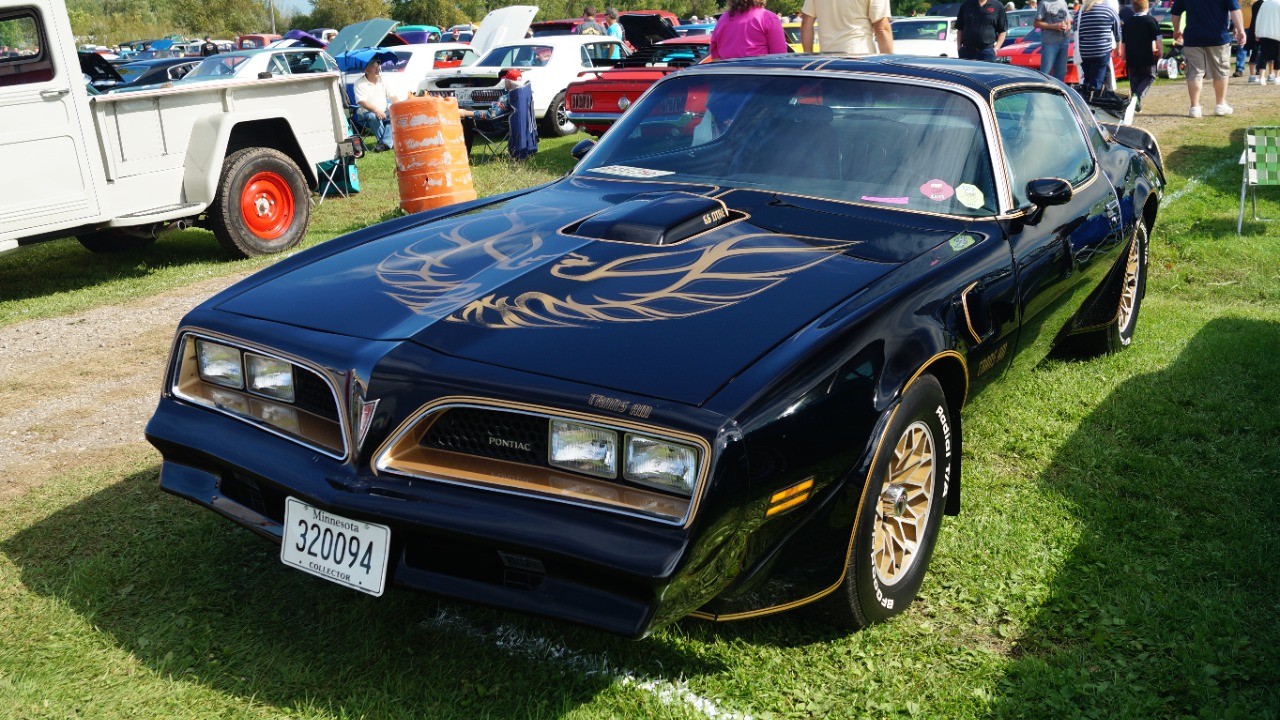
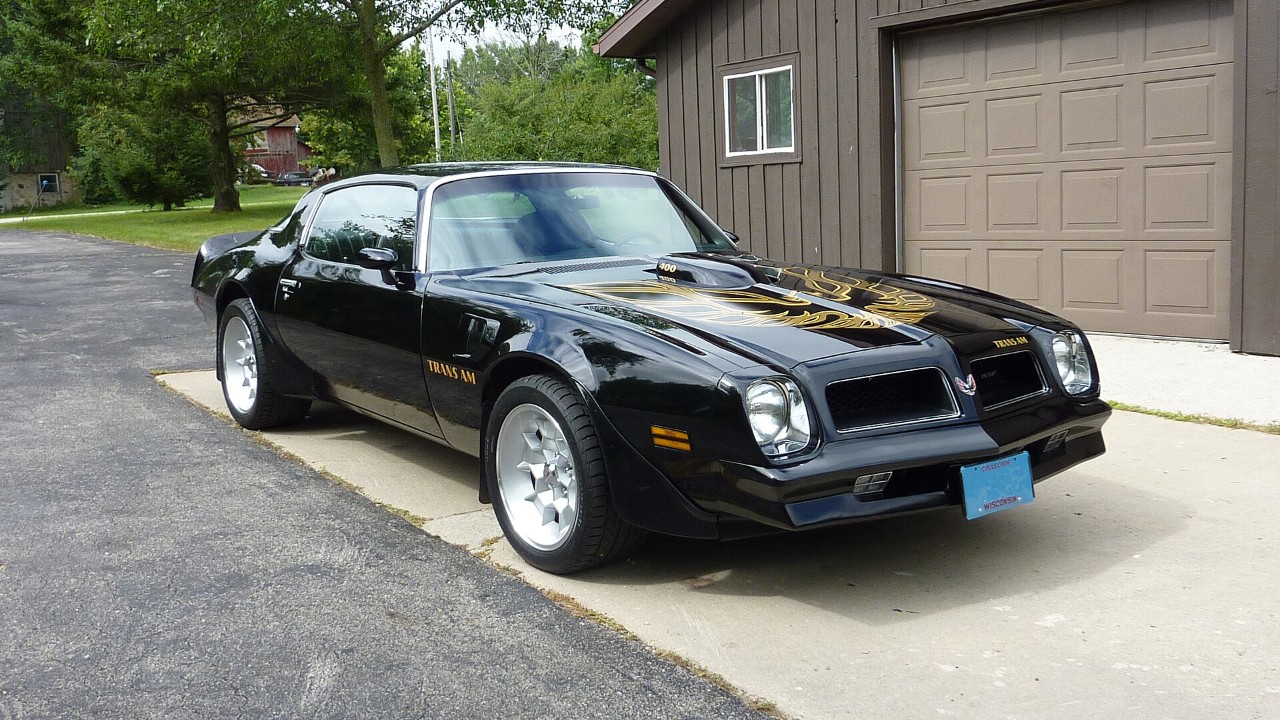
Timing created a problem. The 1977 Trans Am had a new face, but filming started before those cars reached showrooms. As a result, the Bandit’s car was a dressed-up older model. Hagerty says the film car “was actually a 1976 Trans Am modified to look like the yet-to-be-released 1977 model.”
Hagerty’s UK site adds the timeline. Its feature on the film notes that filming started in August 1976, just before the 1977 model-year changes. Its account says the crew swapped the round headlights for square units. They also changed the hood graphics to read “6.6 LITRES” instead of the earlier cubic-inch callouts.
Pontiac author Rocky Rotella reaches a similar view on PontiacV8.com. He writes that the Trans Ams Pontiac supplied for the film were likely 1976 models fitted with 1977-specific parts. Those parts include the nose, the hood, the Shaker scoop and the cast-aluminum Snowflake wheels. In other words, audiences saw the 1977 look months before most buyers could order it.
Four cars, one hard shoot
Four cars do not go far on a stunt-heavy chase film. Needham’s own account lists the damage. The famous bridge jump destroyed one Trans Am. Then a jump over a ball field fence finished off another. Curbs, ditches and embankments took care of the rest.
The bridge car got extra help, too. Hagerty’s UK feature quotes Needham, who drove the jump himself, saying a NASCAR garage fitted it with a 700bhp engine and a manual gearbox. Even so, he said the landing wrecked the body.
By the last day, the fleet was spent. Needham wrote that the final car would not start for the closing scene, so the crew pushed it into place with another vehicle. Hagerty says every Trans Am used in filming was destroyed.
The exact count has drifted over the years, though. Hagerty notes that Reynolds later claimed 12 Trans Ams appeared in the film. Meanwhile, Hagerty’s UK site puts the number GM supplied at five, and Rotella writes that it is unclear how many Pontiac sent. Needham’s memoir, written by the man who made the call, says four.
What the Needham Pontiac Trans Ams did for sales
Pontiac got far more than it gave. Hagerty says Smokey and the Bandit became the second highest-grossing film of 1977, behind only Star Wars. After the release, it adds, Pontiac’s profits shot up and buyers faced a six-month wait for a Trans Am.
Needham remembered the same thing. In his memoir he wrote that Trans Am sales “went through the roof,” and that a black Trans Am meant a wait of at least six months. Hagerty’s UK site puts a number on it: 25,000 extra Trans Am sales for Pontiac in 1978.
The goodwill went to the star as well. According to Hagerty, Pontiac even agreed to give Reynolds a new car every year. That arrangement did not last forever, however. Hagerty adds that later GM leadership let Reynolds know it did not care for his movies.
The sequel order Pontiac did not argue with
The haggling ended once the box office numbers came in. For Smokey and the Bandit II, Needham asked Pontiac for ten Trans Ams and 55 Bonnevilles, five for Gleason and fifty for the Canadian police in the story. By his account, Pontiac said yes to all of it.
More from Fast Lane Only