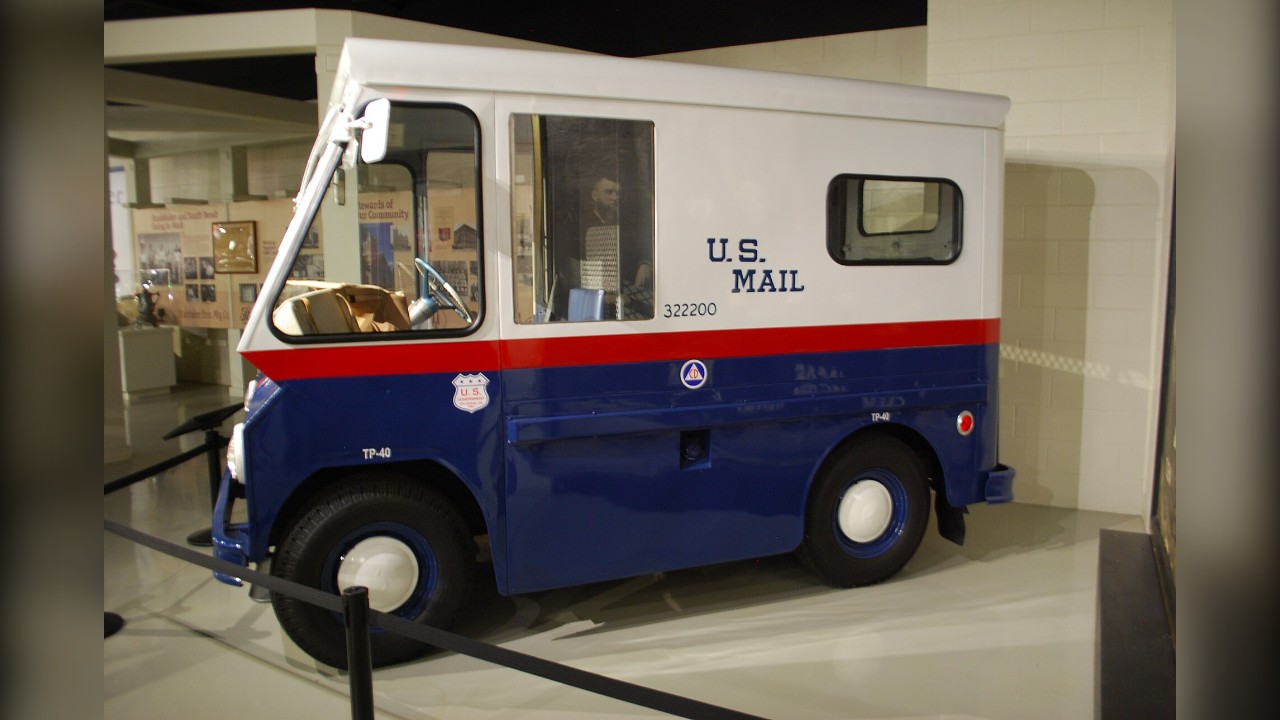
Studebaker started out building wagons in South Bend, Indiana, in 1852, and it didn’t enter the car business until 1902. Yet some of its best work had nothing to do with cars. From a stylish 1930s pickup to the Studebaker Zip Van that carried America’s mail, the company built trucks that did far more than anyone expected of a small independent.
Most of those trucks are forgotten now, overshadowed by Ford, Chevrolet and Dodge. Even so, several of them broke company sales records, won over soldiers on the other side of the world or kept working long after Studebaker closed its doors.
These are our picks for seven forgotten Studebaker trucks that over-achieved. Saying they over-achieved is our opinion. The production totals, engines and prices that back each pick come from period records, museum examples and model histories.
1. 1938 Studebaker Coupe Express
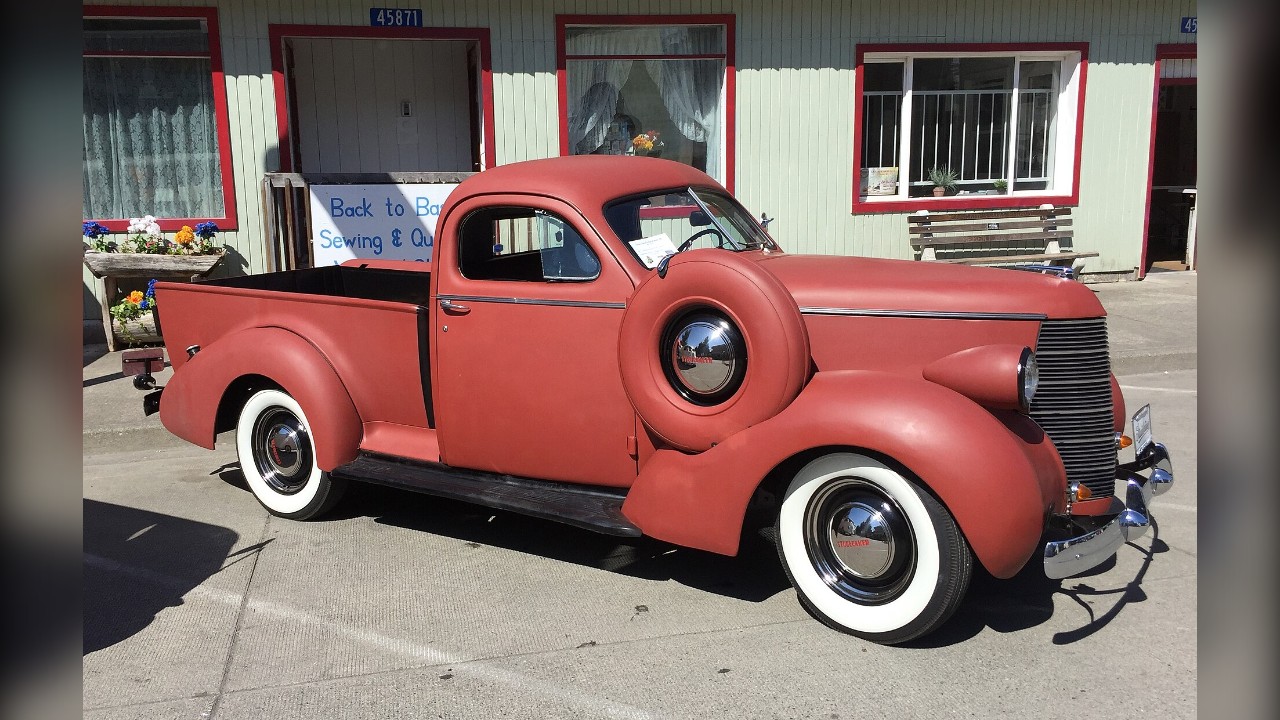
The Coupe Express was a car-based pickup decades before the El Camino. Raymond Loewy designed it, and Studebaker built it on the Dictator passenger car’s frame. It also borrowed the Dictator’s running gear and front sheet metal. For 1938, Studebaker restyled the cab to match its modernized cars and made the bed slightly longer.
It was never cheap, though. According to Collectors Auto Supply, the 1937 version cost $647, while a Chevrolet half-ton cost $515 and a Ford $526. Prices then climbed and sales fell. Model histories put output at about 3,000 for 1937, then roughly 1,200 for 1938 and 1,000 for 1939.
Our take: the Coupe Express over-achieved on style rather than sales. A small maker turned a sedan’s nose into a working pickup and made it look like a show car. Buyers could even order it as a cab and chassis and fit their own bed. In our view, that blend of looks and usefulness was years ahead of its time. If you’re shopping, expect to pay for originality. A complete truck saves a long hunt for trim, so it’s worth waiting for.
2. 1947 Studebaker M5 half-ton pickup
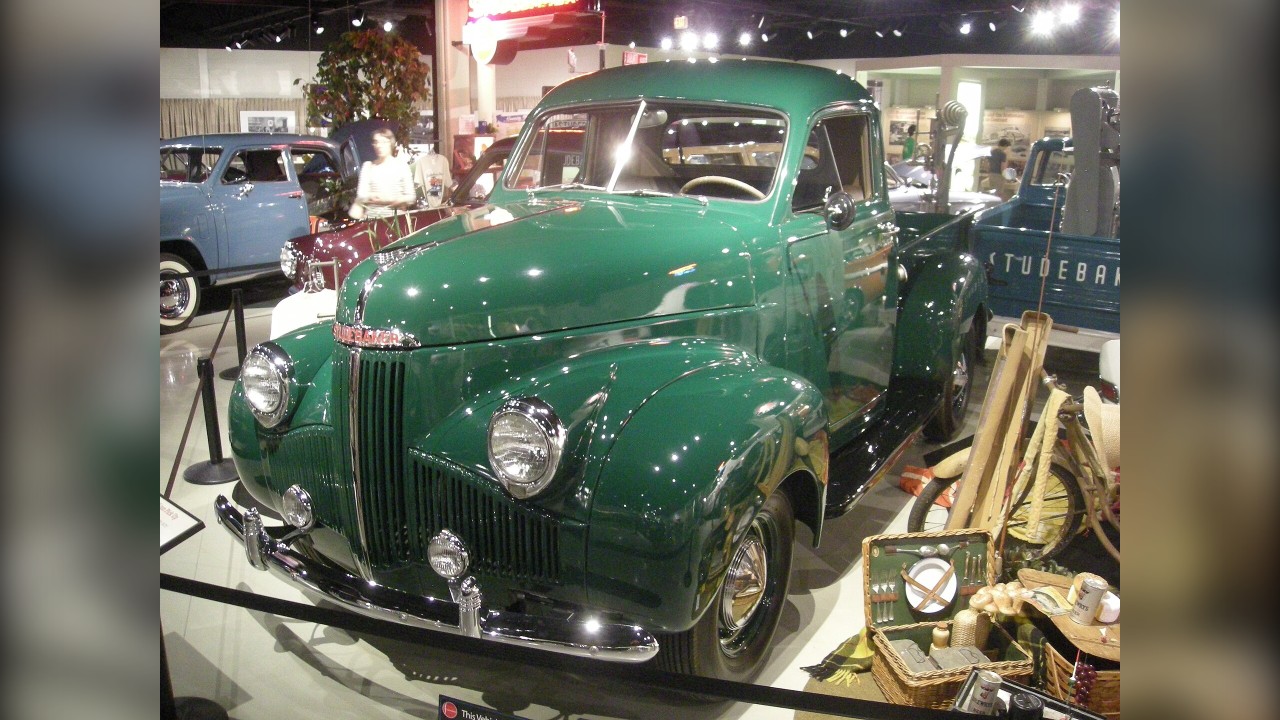
The M-series arrived for 1941 with styling all its own, rather than a borrowed car face. Then the war stopped civilian production in 1942. Studebaker kept building heavy-duty M trucks for essential services and used M parts in military trucks. In early 1945, it won permission to build some M-series trucks for civilian buyers again.
The M5 was the half-ton of the family. It used Studebaker’s 169-cubic-inch Champion inline-six, a small engine that matched the truck’s light-duty job. The M series stayed in production until the 2R replaced it in 1949.
Our take: the M5 over-achieved by bridging two eras. It carried Studebaker’s truck business from the prewar years, through the war and into the postwar boom, and it did it with a simple, honest design. The example pictured here lives at the Studebaker National Museum in South Bend. In our view, it’s the most underrated pickup Studebaker ever built. If you want one, look for a truck with a sound cab and bed floor. The Champion six is simple to rebuild, but rusted sheet metal costs more to fix.
3. Studebaker US6
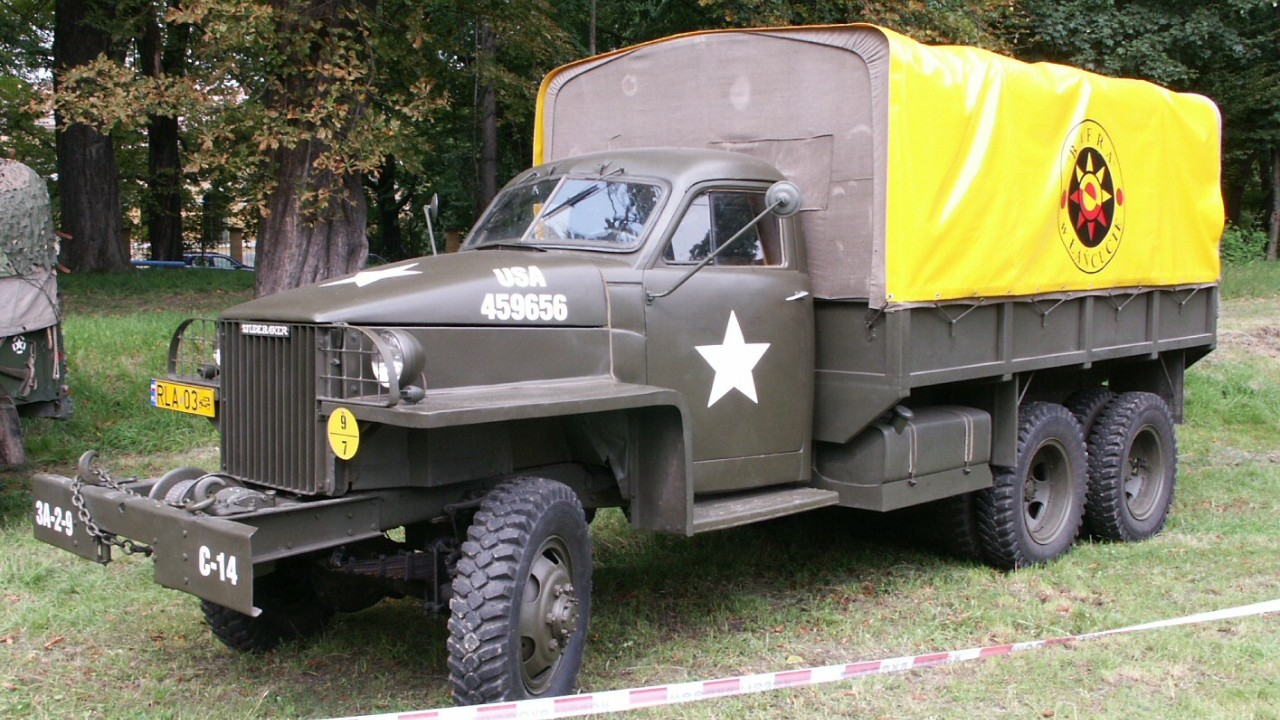
The US6 was a wartime workhorse built in 2.5-ton 6×6 and 5-ton 6×4 versions. Studebaker built 197,678 of them in South Bend, and REO added 22,204 in Lansing, Michigan, from 1944. All production ended in 1945. Most of those trucks went to the Soviet Union under Lend-Lease, and the first ones arrived there in the autumn of 1941.
Its engine was modest. The Hercules JXD inline-six displaced 320 cubic inches and made 86 hp, but it delivered 200 lb-ft of torque at just 1,150 rpm. That low-speed pull suited muddy roads and heavy loads. Soviet troops called the truck the “Studer,” and soldiers nicknamed it the “King of Roads.” The Red Army also used it as a platform for Katyusha rocket launchers.
Our take: no Studebaker truck over-achieved more than this one. The U.S. Army preferred the GMC CCKW for the Western Front. Even so, the US6 still served on the Ledo Road and the Alcan Highway. Meanwhile, it became a legend thousands of miles from Indiana. In our view, that’s an extraordinary record for a truck most Americans never saw. If you find one today, check that the military data plate and drivetrain match. A documented US6 is a far better buy than a parts truck.
4. 1953 Studebaker 2R5 pickup
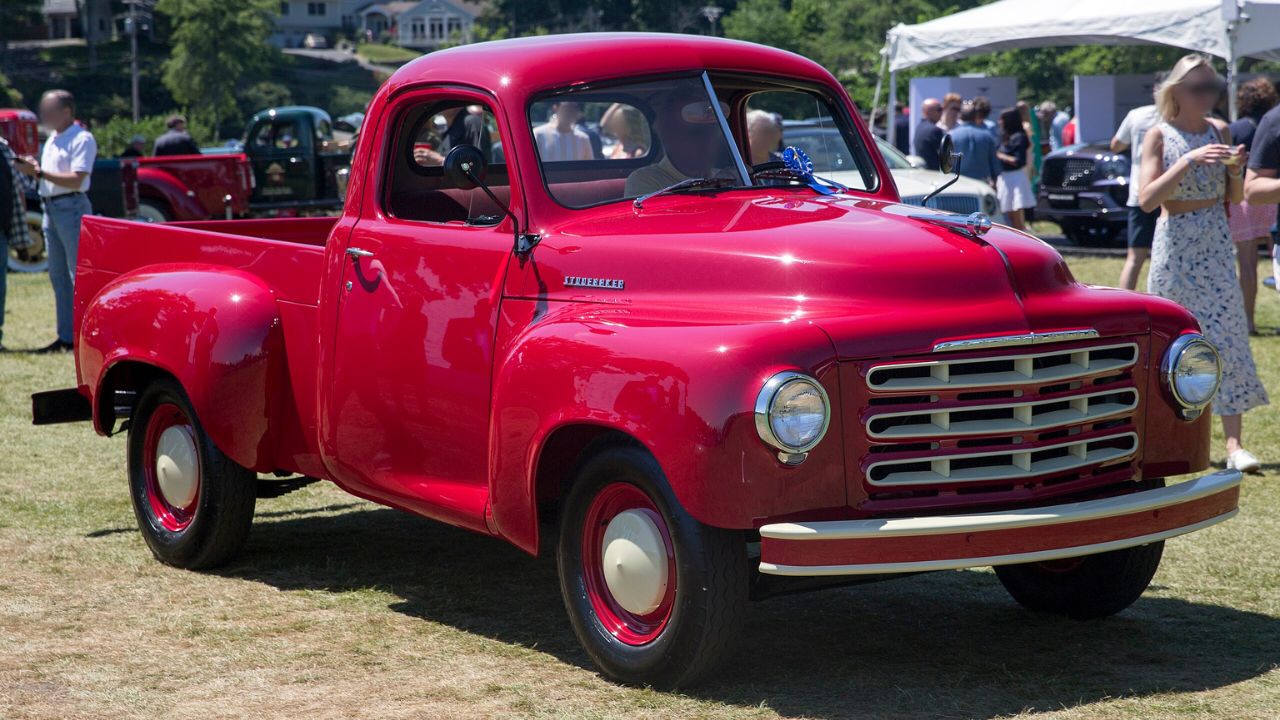
The 2R series was Studebaker’s first truly modern pickup. Robert Bourke is credited with the design, though Virgil Exner likely had real input. Unlike the M series, it used no car body or interior panels. The front fenders blended into the body, and there were no running boards. In addition, the bed had double walls, so dents inside didn’t show outside.
The 2R5 was the half-ton on a 112-inch wheelbase with a short bed. Lighter 2R trucks used the 170-cubic-inch Champion six, rated at 85 bhp. According to Curbside Classic, the series reached nearly 5% of the truck market. That was a higher share than Studebaker’s cars ever reached. Roughly 273,000 were built, including about 32,000 in 1953.
Our take: the 2R over-achieved in the clearest way possible, with record sales. Studebaker built it at a new truck plant near South Bend and at its Hamilton, Ontario, plant. Small touches, such as gauges you could service from under the hood, show how much thought went into it. In our view, a 1953 2R5 is one of the best-looking pickups of the decade. When shopping, inspect the cab corners and floors. Then check that the Champion six runs cool, because overheating is easy to fix early.
5. 1954 Studebaker 3R pickup
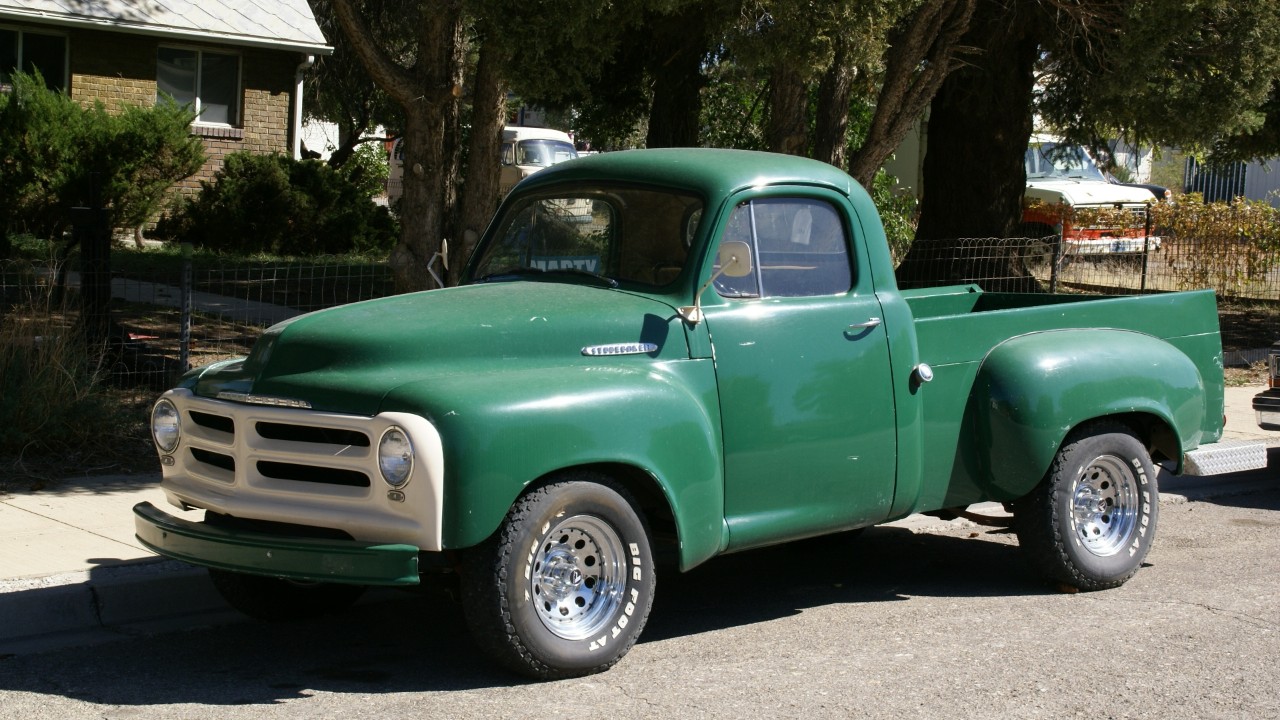
For 1954, Studebaker renamed the truck the 3R. It got a fresh face and a one-piece windshield, a cleaner look than the split glass of earlier trucks. Underneath, it kept the proven 2R cab and chassis, so buyers got a modern-looking truck without new risks.
That cab had a remarkably long life. In some forms, the 2R cab stayed on sale as late as 1964. Meanwhile, the 3R carried the line for a single model year before the E series replaced it for 1955.
Our take: the 3R over-achieved by making an aging design look new for very little money. A small company couldn’t afford a fresh truck every year, so Studebaker updated the parts buyers saw first. In our view, the one-piece windshield and new grille make the 3R the handsomest of the R-series trucks. The truck pictured here was photographed in Ely, Nevada, still wearing its working-truck look. If you want one, we’d look for a truck that has spent its life in a dry climate. Plan to source glass and trim early, because one-year parts take time to find.
6. 1959 Studebaker Scotsman 4E3 pickup
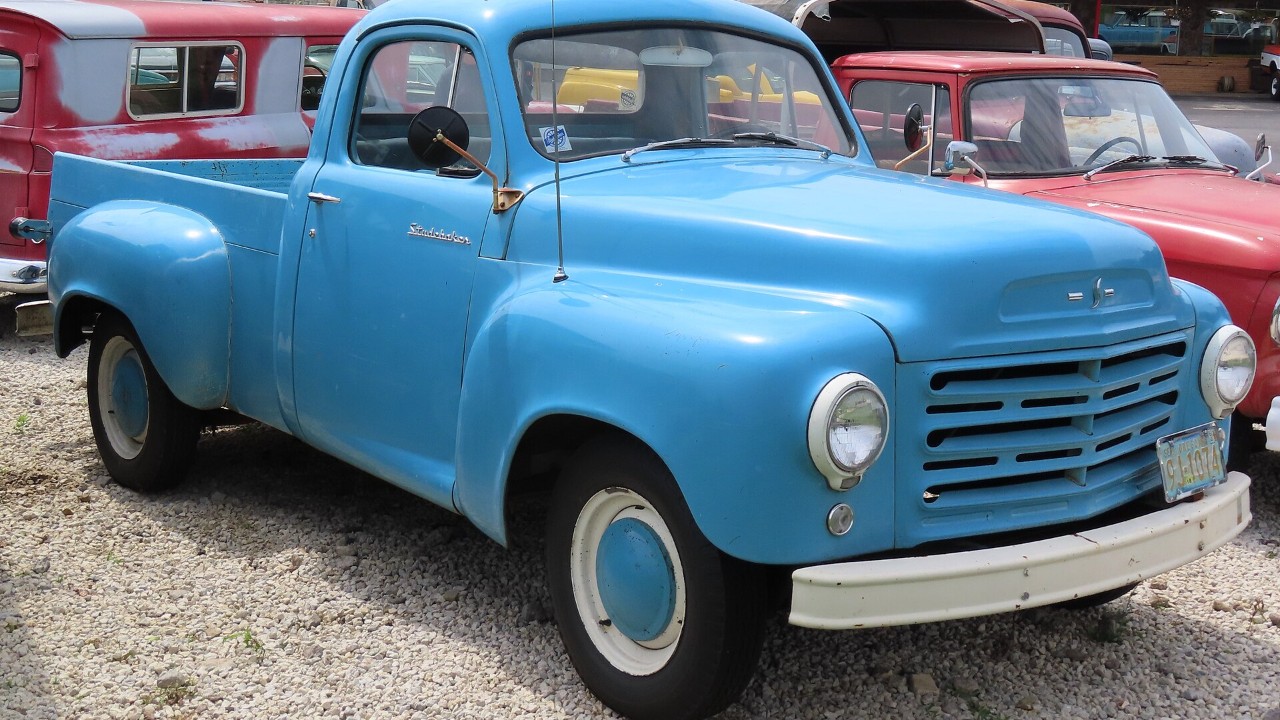
The Scotsman was Studebaker’s bargain truck, and it made no secret of it. When it launched in 1958, the price was $1,595, among the lowest for any pickup. To get there, Studebaker painted the hubcaps, dropped the chrome badges and left out the glove box door, side mirror and spare tire. It even used the 1949 2R’s grille, fenders and headlights.
For 1959, Studebaker added limited badging and brought back the glove box door. A 122-inch wheelbase with an 8-foot bed became available, according to Old Cars Weekly. The standard engine was a 169.6-cubic-inch six with 90 hp. Buyers could also step up to a 118-hp six or a 180-hp, 259-cubic-inch V8.
Our take: the Scotsman over-achieved during a recession. Nearly a quarter of Studebaker’s non-military truck sales in 1958 went to it. In our view, that proves plain, cheap and honest can sell when money is tight. Production ended after 1959, so this was the last year to get one new. If you’re shopping, we’d pick an original Scotsman over a dressed-up one. Keep the painted hubcaps and plain trim, because that simplicity is the whole point.
7. 1963 Studebaker Zip Van
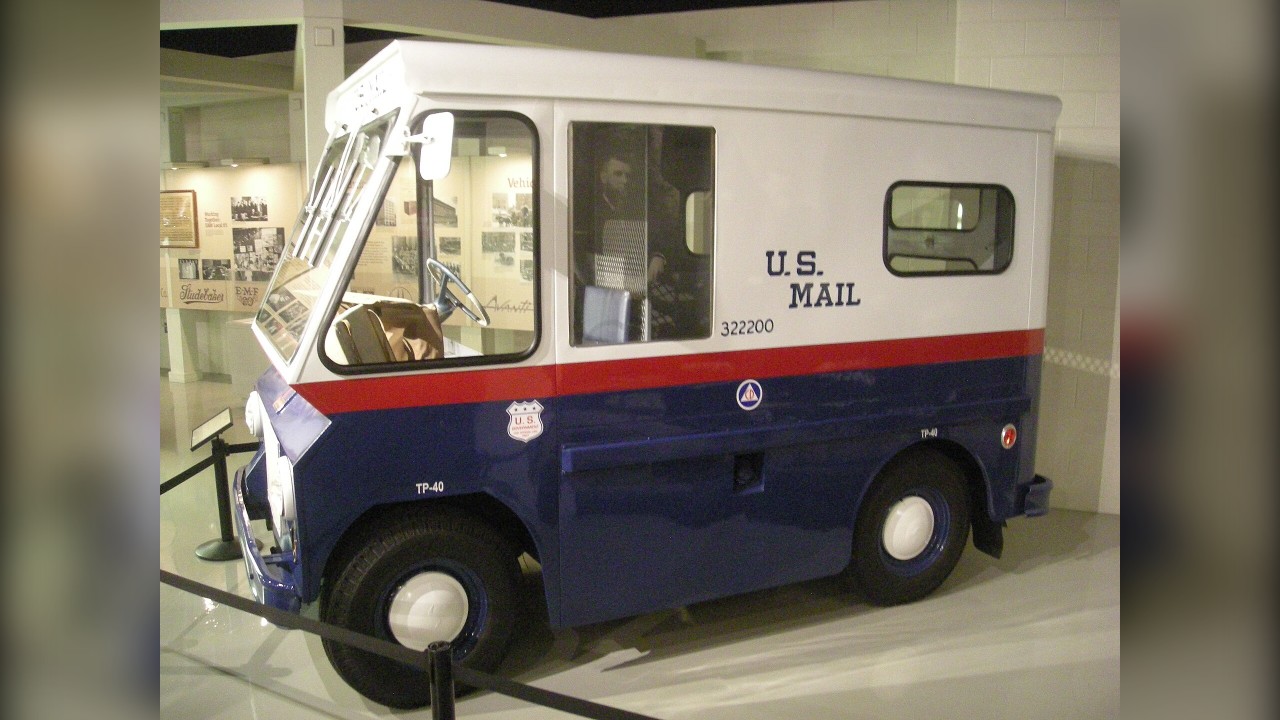
The Studebaker Zip Van was built for one customer, the U.S. Post Office. The government issued its purchase order on April 25, 1963, and the name came from the ZIP codes the Post Office introduced that July. According to Old Cars Weekly, plans called for 3,391 vans. After an extra 847 were ordered, the total reached 4,238.
Met-Pro of Pennsylvania built the unitized body, and Studebaker supplied the chassis. Power came from a 170-cubic-inch overhead-valve “Skybolt” six rated at 112 hp, with a three-speed automatic. The van had right-hand drive, a sliding door and two gas pedals, one for sitting and one for standing. Its rear door also rolled up like a garage door.
Our take: the Zip Van over-achieved because it kept going after its maker stopped. Studebaker built its last Champ truck in December 1963. Even so, Zip Van production continued after civilian trucks ended in order to finish the government contract. In our view, that makes it the last great Studebaker truck. The example pictured here sits in the Studebaker National Museum. If you want one, expect a former mail van with plenty of miles. Check the body mounts and the automatic transmission first.
More from Fast Lane Only