The 1969 Buick Riviera GS 430 arrived at a moment when American buyers wanted muscle car performance without giving up quiet cabins and power accessories. In that single model year, Buick managed to wrap serious speed in thick carpet, woodgrain trim, and hidden headlights, creating a personal luxury coupe that could cross states quickly while its driver barely broke a sweat.
Today the car stands out as a rare case where a big-block Gran Sport package did not ruin the ride. Instead, the GS 430 sharpened the Riviera’s reflexes just enough to match its power, so the car delivered brisk acceleration and confident handling while still feeling like a premium highway cruiser.
Personal luxury meets American muscle
Among late 1960s coupes, the Buick Riviera occupied a niche between full-size sedans and stripped muscle cars. It combined formal luxury cues with genuine performance, which is why enthusiasts still describe the 1969 Buick Riviera as a blend of luxury, muscle, and bold styling. The GS 430 option simply pushed that formula further, adding hardware that made the big coupe feel more responsive without abandoning its upscale mission.
The 1969 model also closed a chapter. It marked the final year of the second-generation Riviera, a body style that had steadily evolved into a cleaner, more aggressive shape. Collectors often single out this year because it captures peak late 1960s American performance and comfort in one package, with the GS 430 variant representing the most focused expression of that idea.
Long hood, hidden lights, and fastback drama
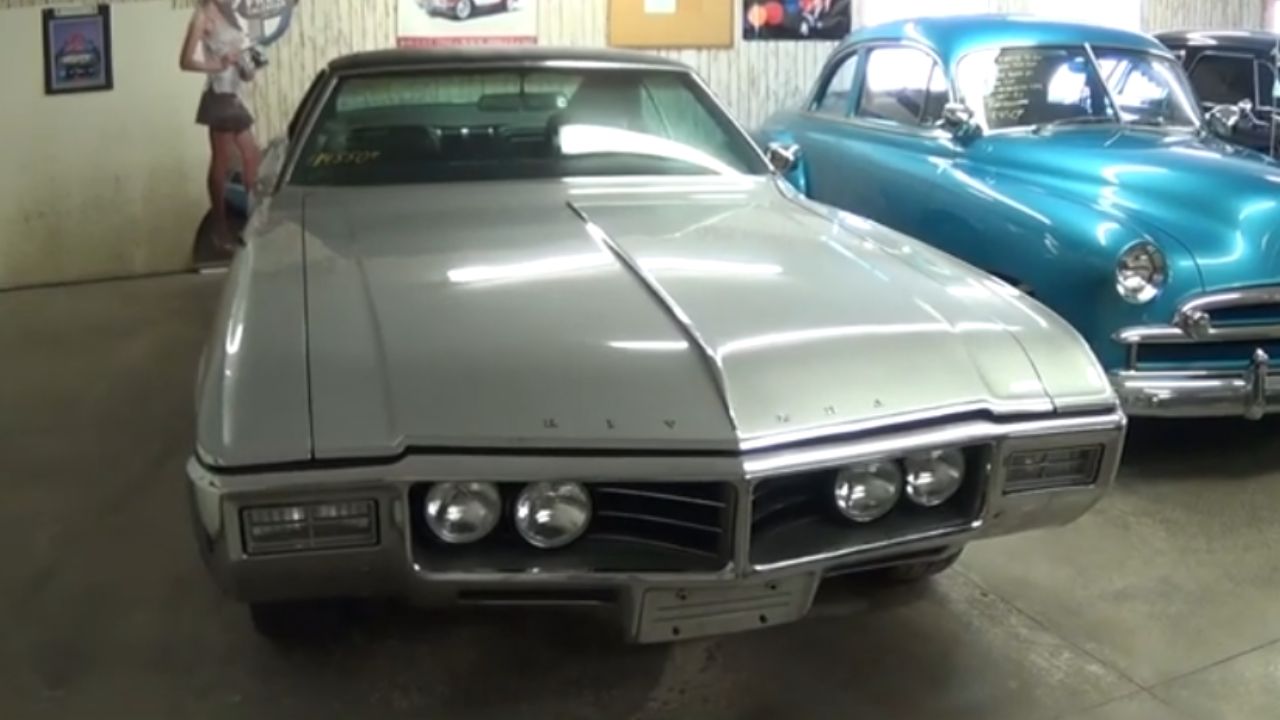
Visually, the 1969 Riviera leaned heavily into the personal luxury theme. Sculpted body lines and signature hidden headlights gave the front end a clean, almost formal face when the lights were closed, while the long hood and sweeping roofline suggested serious power underneath. A fastback-style rear, combined with a relatively short deck, gave the car a planted stance that still turns heads in modern traffic.
Descriptions of a preserved car photographed in Beirut highlight the effect of that design. With its long hood, fastback roofline, and concealed lamps, the Riviera projects the kind of presence normally reserved for European grand tourers, yet it remains unmistakably American in scale and attitude. Enthusiasts often point to that car’s long hood and proportions as a textbook example of late 1960s American styling confidence.
The Gran Sport treatment built on that drama. The GS package added sporty elements, including performance suspension, distinctive badging, and a more aggressive stance. Subtle GS emblems on the front fenders and inside the cabin signaled that this was not an ordinary Riviera, while still keeping the overall look tasteful rather than boy-racer loud.
Inside: comfort as a priority
If the exterior hinted at speed, the cabin made clear that comfort remained the main priority. The car offered a plush, well-appointed interior with woodgrain accents, bucket seats, and advanced comfort features for its time. Period photos and surviving cars show generous use of soft materials, thick carpeting, and wide door panels that reinforced the sense of a high-end lounge on wheels.
One detailed walkaround of a surviving example focuses on the Interior, showing black bucket seats, a center console, and wood grain accents on the dashboard and console. A two-spoke steering wheel and clear, horizontal instruments emphasize width and stability, themes that match the car’s broad stance outside.
Equipment lists from the time read like a catalog of late 1960s luxury technology. Options included power windows and, automatic climate control, and an AM/FM 8-track stereo. For buyers stepping up from more basic coupes, the Riviera’s cabin delivered the kind of quiet, gadget-filled environment that made long trips far less tiring.
The 430-cubic-inch heart of the GS 430
Under the hood, the Riviera was equipped with a 430-cubic-inch V8 producing 360 horsepower and 475 lb-ft of torque, delivering strong acceleration with refined manners. That engine, often referred to as Buick’s mighty 430, gave the car the ability to surge from low speeds without drama, a key trait for a machine aimed at executives and long-distance drivers rather than drag strip regulars.
Descriptions of the 1969 Buick Riviera repeatedly stress that Buick’s mighty 430 cubic-inch V8, delivering 360 horsepower and 475 lb-ft of torque, made it one of the most powerful luxury coupes of its time. That combination of big torque and relatively modest revs meant the car could move quickly without needing to be worked hard, which fit the Riviera’s understated personality.
The GS package did not change displacement, but it did sharpen the engine’s character. Under the hood, the GS package featured a 430 cubic inch V8 engine with higher performance tuning, delivering strong acceleration and smooth highway cruising. Many surviving GS engines are described with a big 4-barrel carburetor on top and a chrome air cleaner lid that was part of the GS package, often sitting over bright Dante Red paint on the block. Together, these details underline that the GS 430 was still a Riviera first, but one with a more serious powertrain.
Transmission and real-world performance
Raw numbers only tell part of the story. Period testing of the Riviera recorded 0 to 60 miles per hour in 8 seconds or less and the standing quarter mile in about 16 seconds, with an observed top speed of 115 miles per hour. For a personal luxury coupe that weighed around 4,500 pounds, those figures placed the car firmly in the performance conversation of its era.
The drivetrain helped make that performance feel effortless. Contemporary descriptions explain that this massive torque output made the Riviera a smooth, with a 3-speed Turbo Hydra-Matic automatic transmission delivering power to the rear wheels. The Turbo Hydra-Matic shifted with a smoothness that matched the car’s luxury mission, yet it could still hold gears long enough to use the V8’s torque when the driver pressed deeper into the throttle.
On open highways, the combination of tall gearing, deep torque, and that automatic gearbox allowed the GS 430 to lope along at modern traffic speeds with engine revs kept low. Drivers could cover long distances quickly while the cabin remained relatively quiet, which is exactly the balance Buick was chasing.
What the GS 430 package actually changed
Beyond the engine tuning and cosmetic touches, the GS 430 package added meaningful mechanical upgrades. Riviera GS Option A9 consists of heavy duty suspension, performance axle (3.42), positive traction differential, whitewall tires, chrome air cleaner, and specific badging. Together, those changes gave the car better traction and flatter cornering while preserving the plush ride that Riviera buyers expected.
Owners and specialists describe the GS hardware in more detail. Discussions of the 69 Riviera GS explain that it included front and rear heavy duty suspension, which enthusiasts believe meant special-rate springs and shock absorbers. Another description of a restored GS notes that The GS got 3.42 g ears on a limited slip out back, so acceleration is brisk if not electrifying, given the car’s 4,500 pound curb weight, and it feels competent and eager.
Visually, The GS package added sporty elements, including performance suspension, distinctive badging, and a more aggressive stance. That stance came from the combination of the suspension changes and the performance axle ratio, which pulled the rear wheels slightly forward in the visual balance and made the car look ready to move. A walkaround of one example emphasizes that The GS package created a more assertive look without sacrificing the Riviera’s underlying elegance.
Luxury features that justified the badge
Performance alone would not have made the Riviera GS 430 special. The car had to justify its price as a luxury object. Sculpted body lines, hidden headlights, and carefully detailed trim pieces reinforced that identity from the outside. Inside, the focus on comfort was just as strong.
Descriptions of the 1969 Riviera’s cabin emphasize that Inside it offered and well-appointed interior, with woodgrain accents, bucket seats, and advanced comfort features for its time. The availability of power windows, cruise control, automatic climate control, and an AM/FM 8-track stereo meant that owners could tailor the environment around them in ways that more basic muscle cars could not match.
In that sense, the GS 430 did not transform the Riviera into a track weapon. It created a more capable version of an already luxurious coupe, one that could be driven briskly on a winding road and then settle into a quiet highway cruise without drama. The comfort features and sound insulation made sure that the driver always knew they were in a premium product, even when the V8 was working hard.
Why 1969 still matters to collectors
For collectors and historians, the 1969 Riviera GS 430 represents a specific moment in American automotive history. The 1969 model marked the last year of the second-generation Riviera, making it a favorite among collectors for its blend of performance, class, and bold design. That final-year status, combined with the Gran Sport hardware, gives the GS 430 a natural place on many wish lists.
Descriptions of the car often frame it as a standout example of late 1960s American luxury and performance, combining elegance with muscle-car flair. The Buick Riviera is frequently cited as a personal luxury coupe that managed to balance American scale and presence with a level of refinement that rivaled some imported grand tourers. The GS 430 version adds an extra layer of desirability because it delivers that experience with stronger acceleration and more engaging dynamics.
Surviving examples, especially those that remain close to stock, serve as rolling time capsules. One preserved car in Beirut, for instance, shows how the long hood, fastback roofline, and hidden headlights still look cohesive decades later. The fact that the engine in that car is described as a mighty 430 cubic inch V8 delivering 360 horsepower and smooth acceleration underlines how much performance was baked into the design from the start.
Speed and comfort, then and now
Looking back, the 1969 Buick Riviera GS 430 reads like an early answer to a question that modern automakers still wrestle with: how to combine high speed with genuine comfort. The Riviera had improved all-around performance, with Motor Trend recording 0 to 60 miles per hour in 8 seconds or less and the standing quarter mile in about 16 seconds, yet the car remained quiet, well equipped, and visually restrained compared with many muscle cars of its era.
The key was the way Buick matched its mechanical choices to its luxury mission. Under the hood, the Riviera was equipped with that 430-cubic-inch V8 producing 360 horsepower and 475 lb-ft of torque, delivering strong acceleration with refined manners. The GS suspension and axle ratio, including the 3.42 performance axle and heavy duty springs, gave the car better control without making it harsh. Features like automatic climate control and power accessories made sure drivers stayed relaxed even when the car was traveling quickly.
More from Fast Lane Only