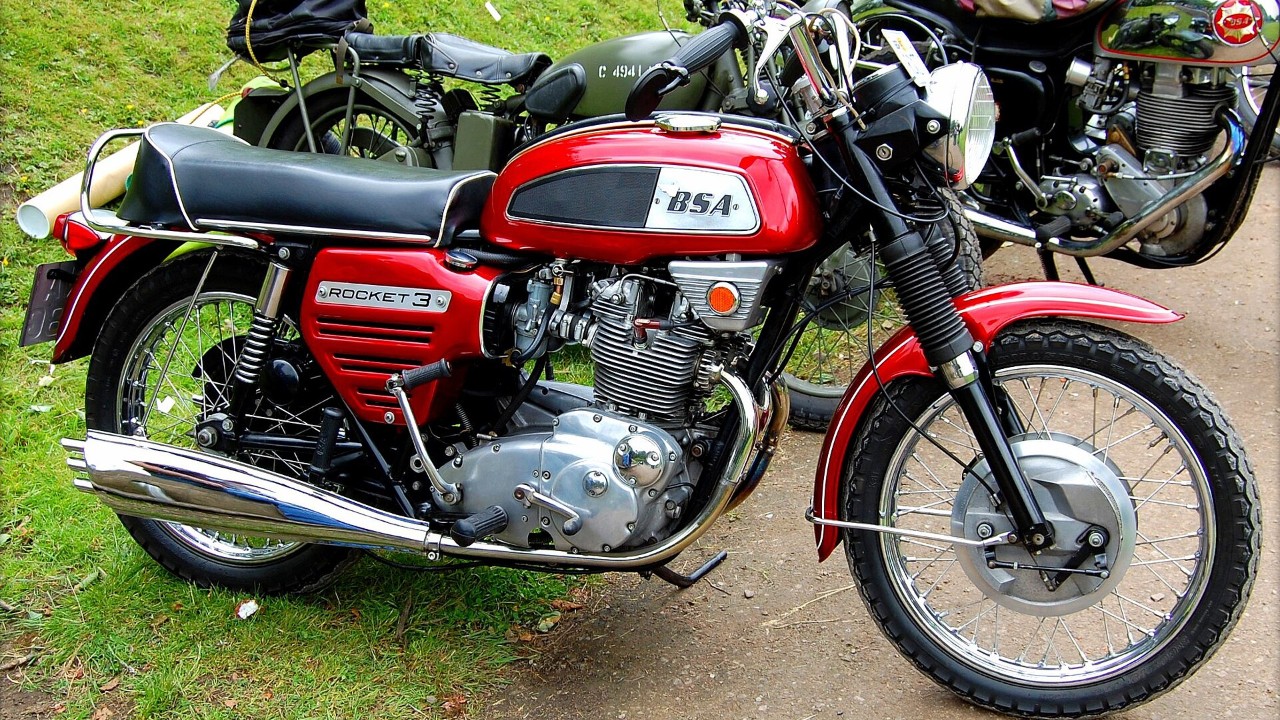
BSA’s postwar motorcycle range ran from a 125cc lightweight to a 750cc three-cylinder machine. In between came long-running singles, a family of parallel twins and a racing star that gave its name to two models. These eight models show how the company’s bikes grew, one step at a time.
Each figure below comes from a named source, from period-spec references to auction catalogs. Where sources only estimate, we say so.
1. 1945–1959 BSA B31
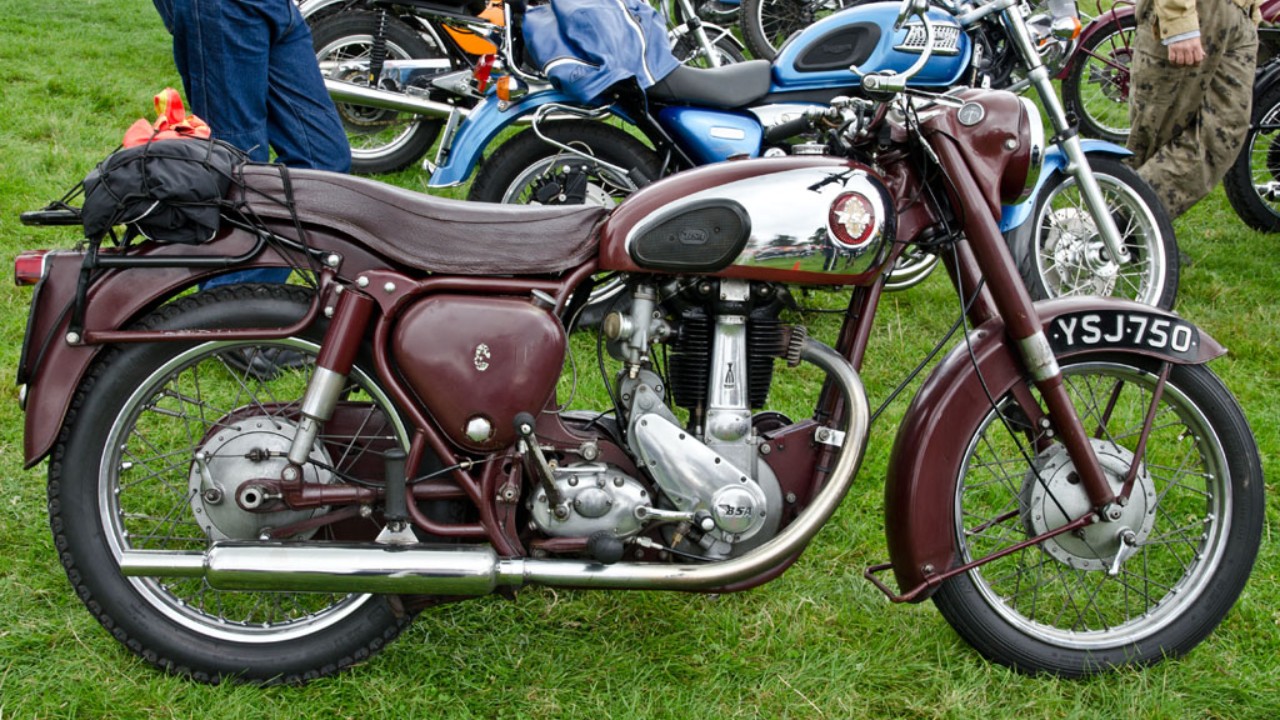
The B31 was the everyday single that carried the company out of the war. It used a 348cc overhead-valve engine and ran from 1945 to 1959. A period summary quoted by Cybermotorcycle lists 75 mph and 80 mpg, along with “excellent steering and brakes.”
The chassis changed more than the engine did. At first, the B31 had a rigid frame with telescopic forks. Then plunger rear suspension arrived in 1949, and a swinging arm followed in 1954, according to Cybermotorcycle’s B31 history.
2. 1946–1950 BSA A7
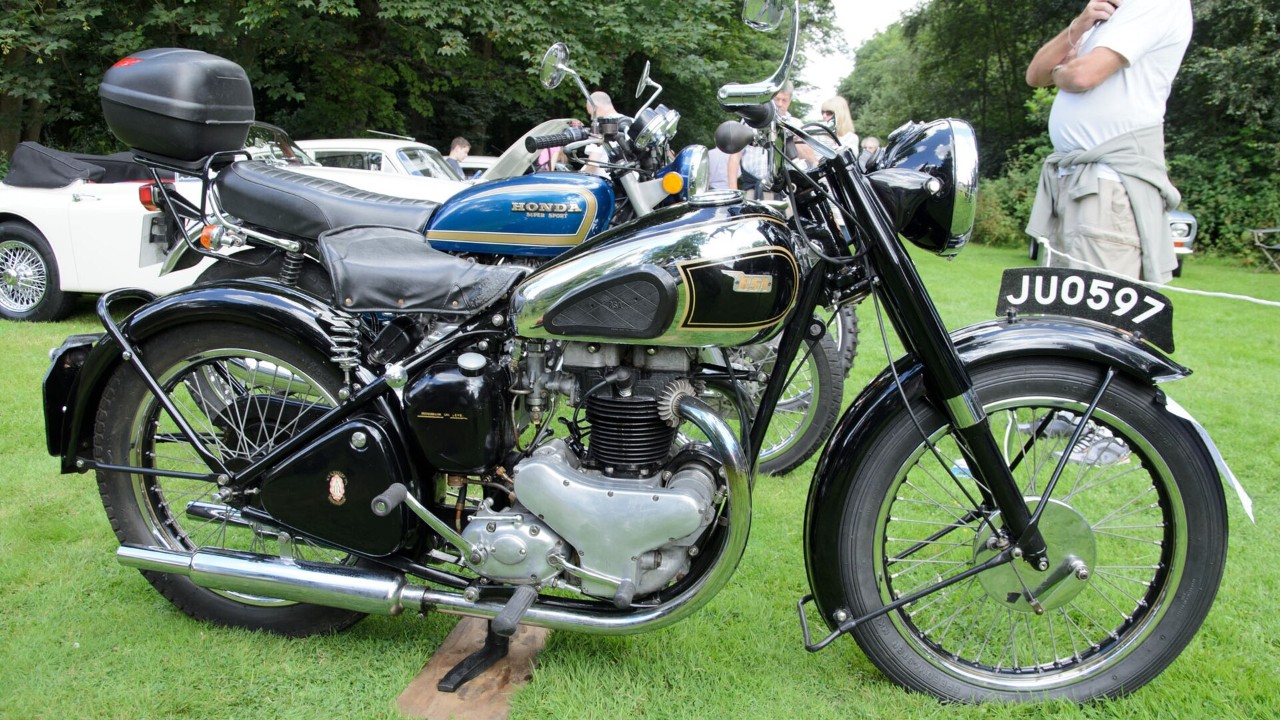
The A7 was the company’s first parallel twin, a 500cc machine that Motorcycle Classics dates to 1946–1950. Valentine Page gets credit for the basic layout. Edward Turner also worked on the project in the early 1940s, before Herbert Perkins finished the detail work.
Its long-stroke engine measured 62 by 82 mm and made a modest 26 horsepower at 6,000 rpm, with an 85 mph top speed. However, the more lasting idea was the gearbox. The four-speed bolted to the back of the engine in “semi-unit” fashion, and that layout carried over into the first 650cc A10, Motorcycle Classics reports.
3. 1948 BSA Bantam D1
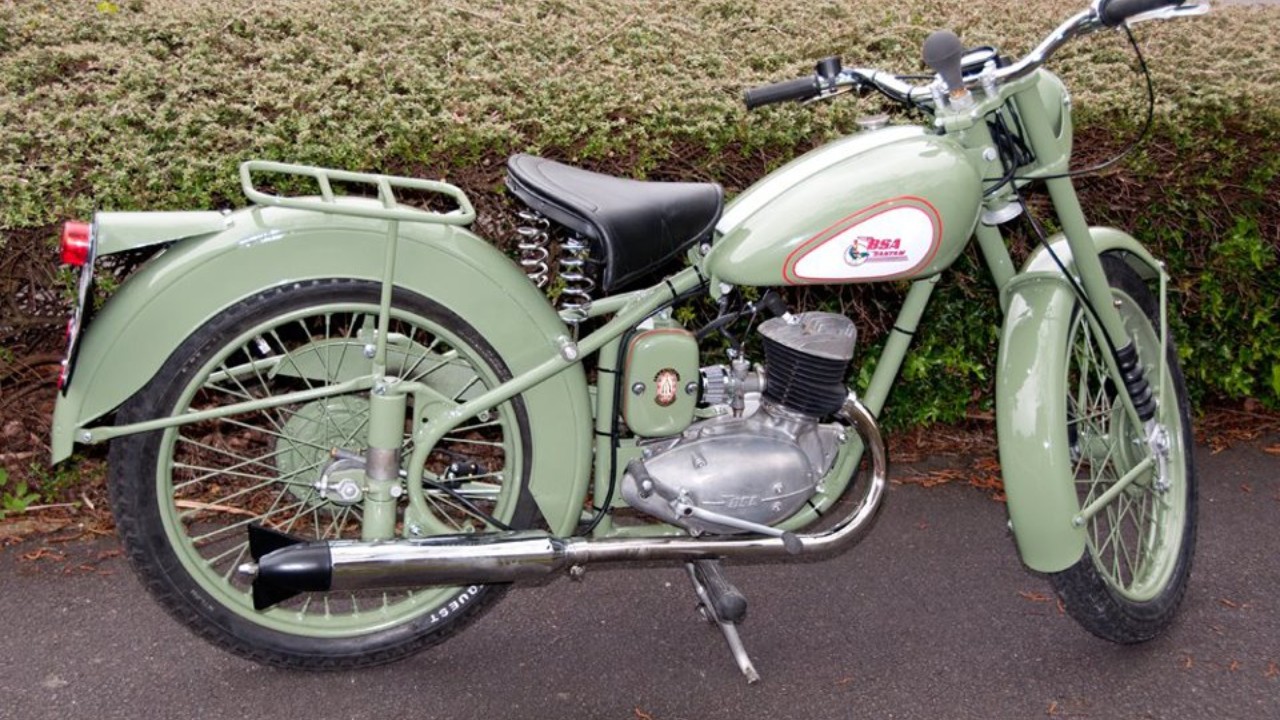
The Bantam came from an unlikely place. In fact, its engine design came from Germany’s DKW after World War II. The first D1 of 1948 displaced 125cc, and Harley-Davidson’s Model 125 also traced back to the same DKW RT125.
Later Bantams grew in size. For example, the 150cc D3 arrived in 1954, and 175cc D5 and D7 models followed from 1958. Nobody has a precise total, but Cybermotorcycle estimates that somewhere between a quarter and half a million Bantams left the factory before production ended in the early 1970s.
4. 1950–1962 BSA A10 Golden Flash
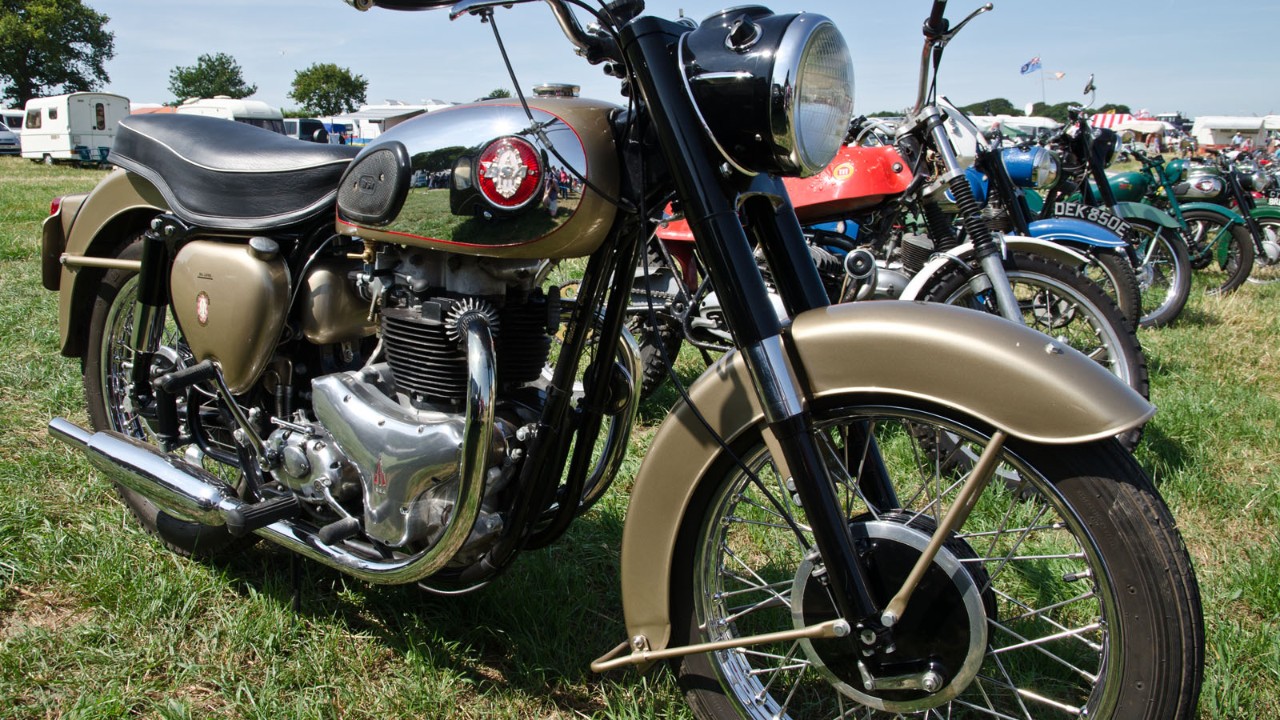
Chief designer Herbert Perkins drew the 650cc A10, with input from former Triumph designer Val Page. The Golden Flash ran from 1950 to 1962. Even early on, it topped 100 mph in 1950 tests and ran the standing quarter-mile in under 16 seconds.
The A10 family also grew sportier over time. By 1958, the Super Rocket made 40 hp at 6,000 rpm and reached 105 mph. As a result, the A10 helped make the parallel twin the dominant British layout of the 1950s, ’60s and ’70s, according to Cybermotorcycle’s A10 history.
5. 1956–1963 BSA Gold Star DBD34
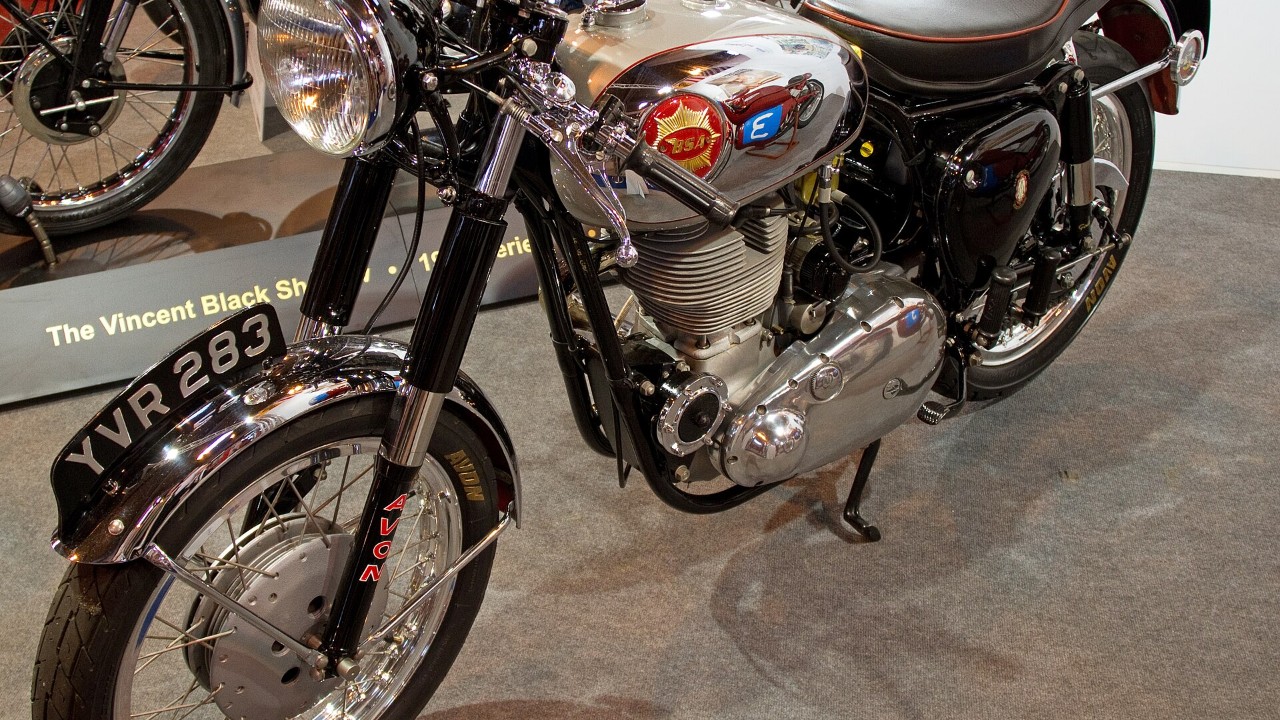
The Gold Star name began with a lap, not a model. In 1937, Wal Handley lapped Brooklands at over 100 mph and earned a Brooklands Gold Star for it. The first production Gold Stars followed in 1938.
The DBD version reached showrooms in 1956 and lasted until 1963. Its 499cc single made a claimed 40 hp at 7,000 rpm and breathed through a 1 1/2-inch Amal GP carburetor. Meanwhile, a close-ratio gearbox was optional, and the bike dominated Clubmans TT races. Motorcycle Classics estimates a new price of $985 and values of $12,500 to $20,000.
6. 1962–1963 BSA Rocket Gold Star
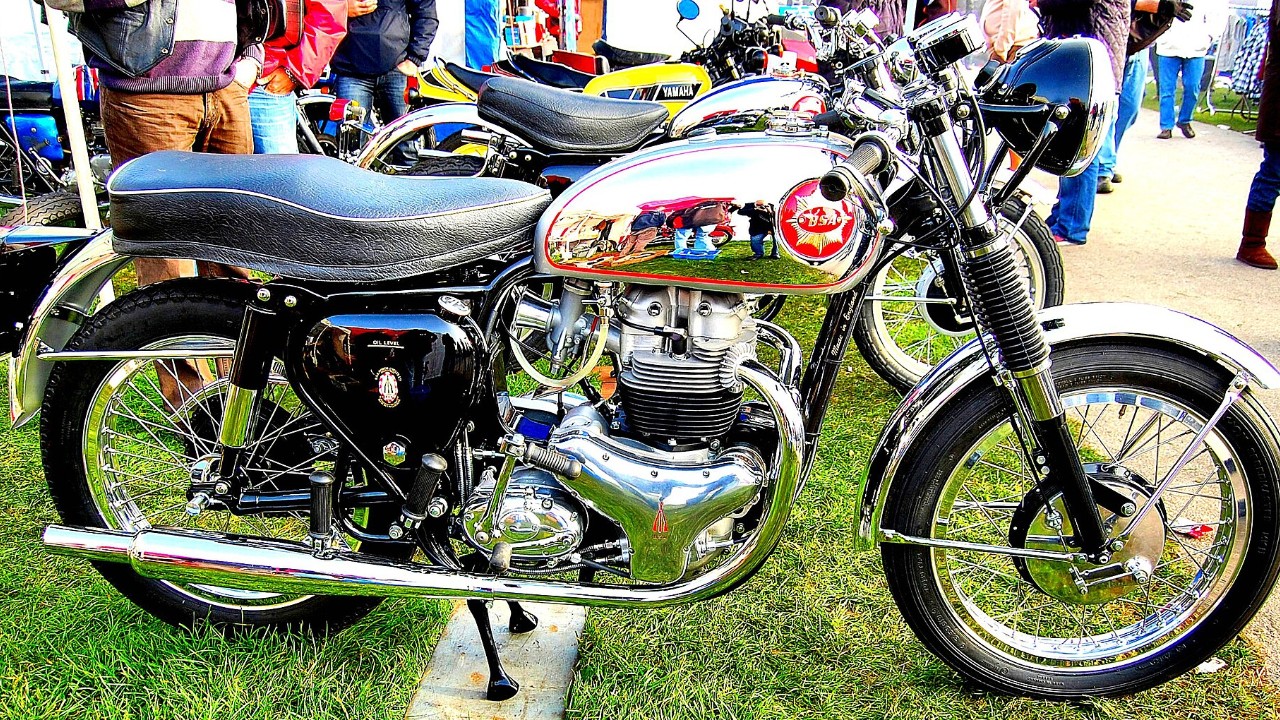
The Rocket Gold Star mixed two lines of the range. Specifically, it put a tuned A10 twin into the Gold Star single’s frame. Cybermotorcycle lists it as a 1962–1963 member of the A10 family.
The factory based it on Eddie Dow’s idea, according to RealClassic. With higher compression and the Spitfire cam, power rose to 46 bhp, and a racing exhaust took it to 50 bhp. RealClassic also notes that a smart example sold for £7,475 in 2018.
7. 1965–1972 BSA A65 Lightning
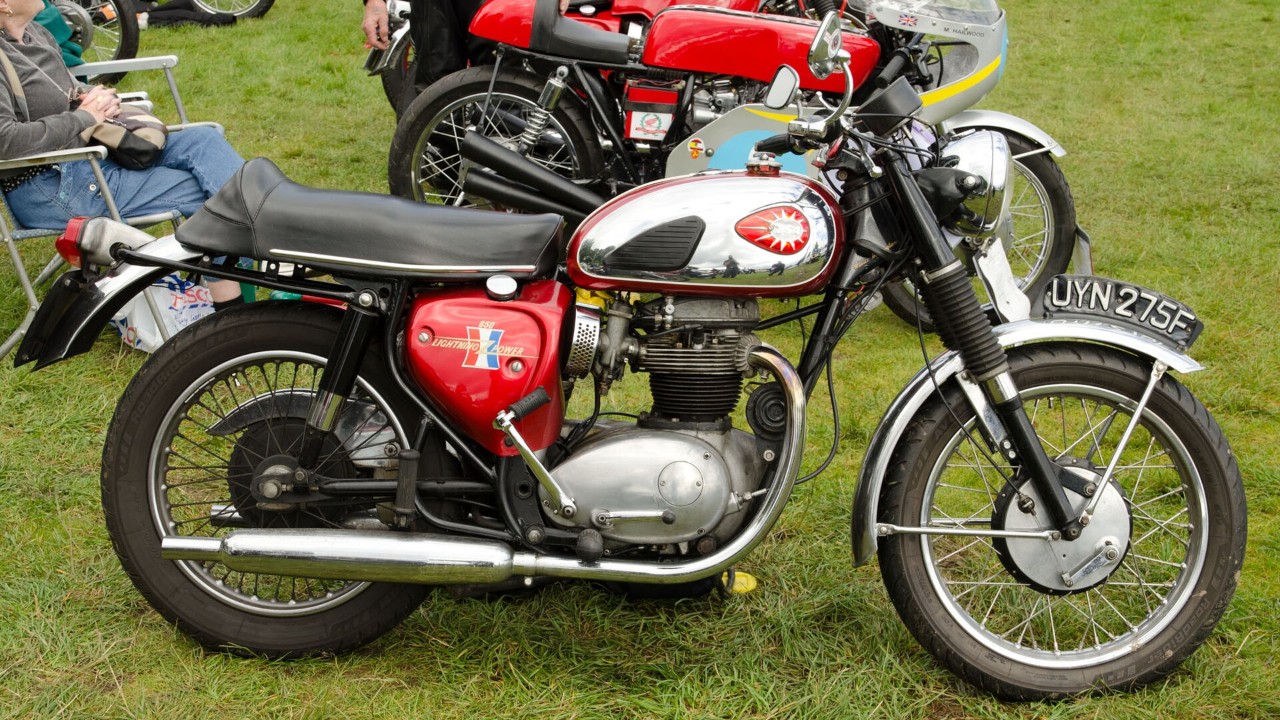
The A65 Lightning carried the twin into the unit-construction era. Iconic Auctioneers’ catalog says the company built it in Birmingham from 1965 to 1972. It used a 650cc unit-construction engine with twin carburetors and could top 100 mph.
Bike-urious gives the exact displacement as 654cc and adds that the engine had alternator and battery electrics. Still, a nice Lightning doesn’t always find a buyer. A 1965 example restored in 2015 went unsold as Lot 458 at the NEC Classic Motor Show Sale on Nov. 12, 2023, according to Iconic Auctioneers.
8. 1968–1972 BSA Rocket 3
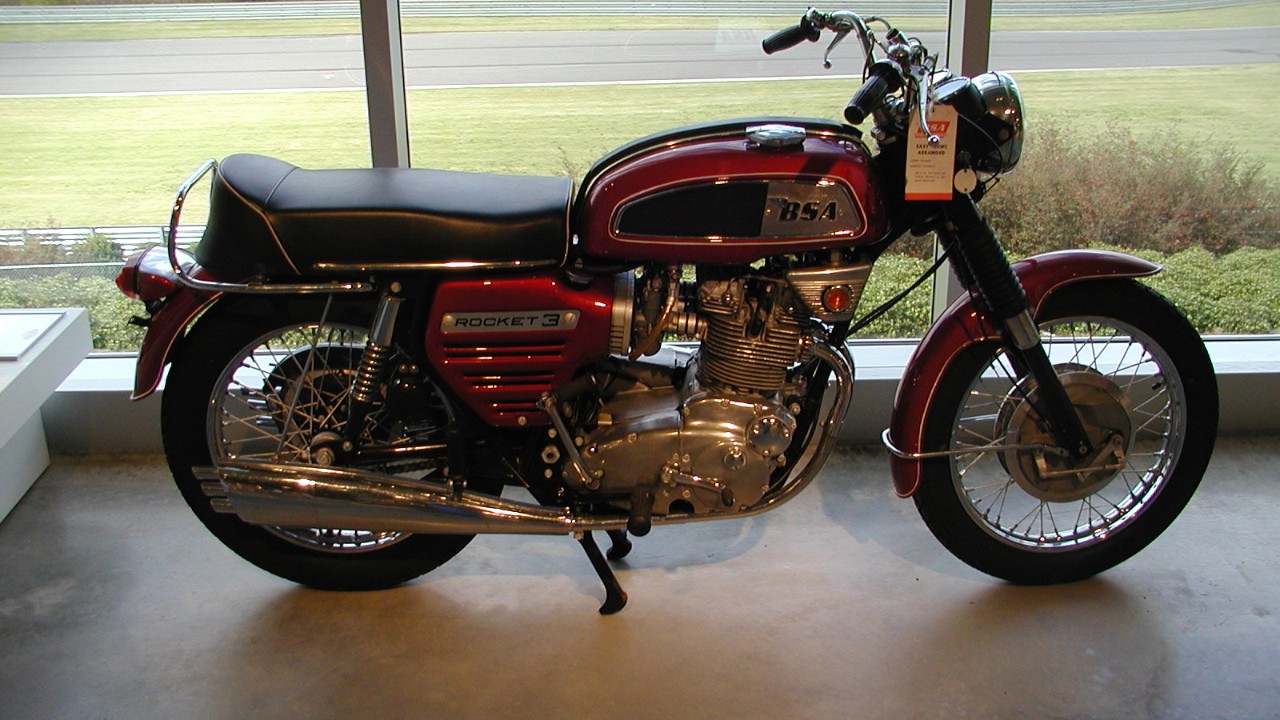
BSA introduced the Rocket 3 in 1968 with a 750cc three-cylinder engine and a 125 mph top speed. The motorcycling press billed it as “the world’s first Superbike,” as Motorcycle Classics recounts.
Then Honda’s CB750 Four arrived in 1969. Motorcycle Classics says the Rocket 3 was faster and handled better than the Honda, but it failed to impress buyers. Finally, the last Rocket 3 rolled out of the Small Heath factory in 1972.
More from Fast Lane Only
- Unboxing the WWII Jeep in a Crate
- 15 rare Chevys collectors are quietly buying
- 10 underrated V8s still worth hunting down
- Police notice this before you even roll window down
This article was created with the help of AI and was reviewed and edited by Fast Lane Only editors before publication.