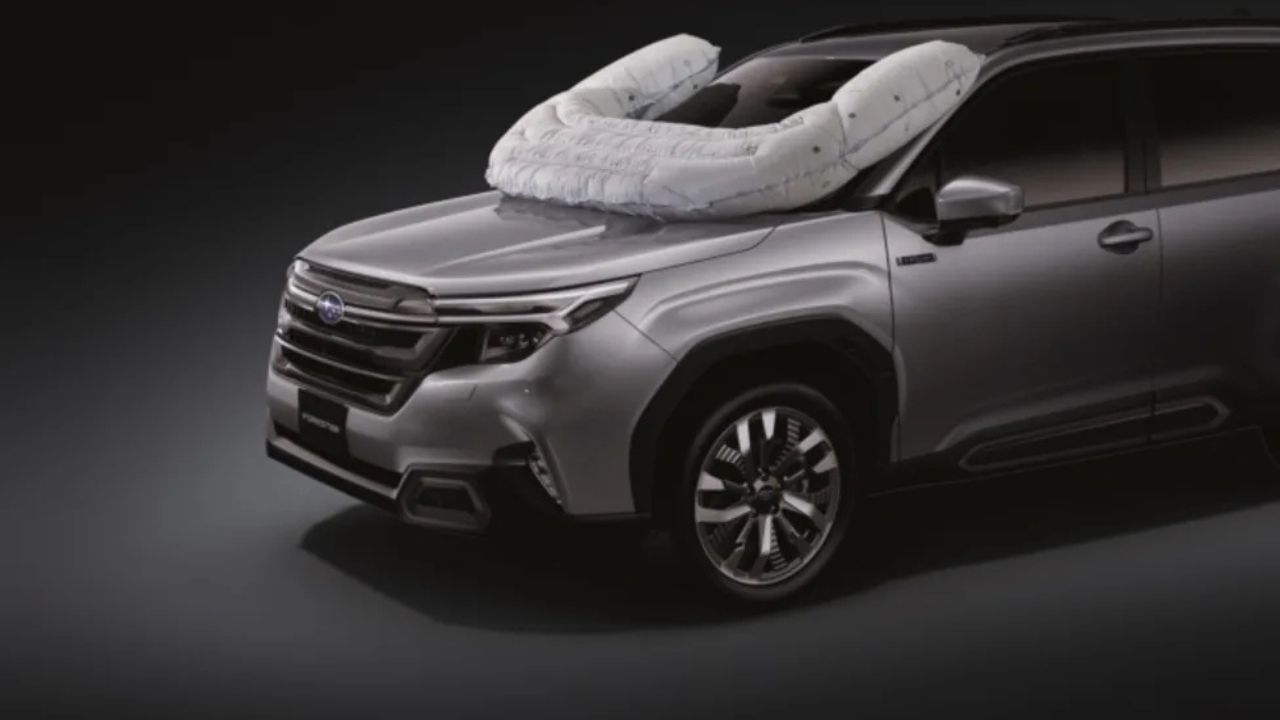
Subaru has turned a quiet piece of cabin hardware into a headline feature, with a redesigned front airbag system that has earned new recognition from the Insurance Institute for Highway Safety for protecting occupants more effectively. The latest IIHS award shows that Subaru’s safety engineering is not just keeping pace with tougher crash tests but using them to rethink how people are restrained in real-world crashes.
Behind the trophy is a broader story about how airbag design is evolving as IIHS raises the bar, and how a brand that already traded heavily on its safety reputation is trying to stay ahead of both regulators and rivals.
What changed in Subaru’s latest airbag design and IIHS evaluation
IIHS has steadily tightened its criteria for both Top Safety Pick and Top Safety Pick+ awards, particularly around how well vehicles protect front passengers in small overlap frontal crashes and side impacts. Recent winners have had to meet tougher standards for structure, restraint performance, and head protection, pushing automakers to rethink airbags that once focused primarily on the driver.
Subaru’s new front airbag setup responds directly to those updated tests. In earlier generations, models like the Subaru Ascent already drew praise for how their structure and restraint systems performed in demanding crash scenarios, with the 2019 Ascent earning strong results in IIHS evaluations that highlighted the company’s “no compromise on safety” approach to body engineering and seatbelt tuning. That foundation gave Subaru room to innovate on the restraint side rather than patch structural weaknesses.
The latest design focuses on controlling head movement for both the driver and the front passenger when the vehicle hits an object off-center. In these small overlap crashes, occupants tend to slide sideways on the seat as the vehicle rotates, which can cause the head to miss the main airbag and strike interior trim, the A-pillar, or the dashboard. Subaru’s updated airbag geometry is shaped and vented to stay in the occupant’s path longer and to spread forces in a more controlled way, so the head is cradled rather than allowed to glance off the bag’s edge.
IIHS has also given more weight to how well rear-seat passengers fare, which has led Subaru to coordinate its front airbag changes with belt pretensioners and load limiters that work together as a system. The goal is to keep occupants in the best possible position so the airbag can do its job, rather than relying on the bag alone to fix poor kinematics. That systems approach is central to the latest award, which recognizes not just a single component but how the entire restraint package performs when IIHS pushes it harder.
As IIHS has introduced new side-impact tests with higher speeds and heavier barriers, Subaru has had to ensure that its frontal airbags and side curtain bags overlap in coverage so that heads remain protected even when the crash vector is not purely frontal. The award reflects that integration, with the new airbag strategy tuned to work in a broader range of angles and severities than older designs.
Why the IIHS recognition for Subaru’s airbag matters now
The timing of Subaru’s latest safety accolade is significant because IIHS has just rolled out a tougher Top Safety Pick regime that has trimmed the list of qualifying vehicles. The organization has raised thresholds for acceptable performance in the updated moderate overlap test and the newer side-impact evaluation, making it harder for automakers to earn the coveted Top Safety Pick+ badge. In this context, Subaru’s success with its new airbag system is not a routine box-checking exercise but a sign that its engineering has adapted quickly to the new rulebook.
For shoppers, IIHS awards still carry substantial weight. Buyers who prioritize crash protection often start with models that appear on annual lists of top-rated vehicles, and Subaru’s presence among the 2025 Top Safety Pick winners helps keep its crossovers and sedans on those shortlists. The fact that the brand’s latest award is tied to occupant protection improvements, rather than marginal gains in driver assistance technology, speaks directly to families who care about how the cabin protects them when things go wrong.
Independent evaluations of the safest new cars of 2024 and 2025 have repeatedly highlighted how IIHS’s tightened criteria are reshaping product planning. Vehicles that once sailed through earlier tests now have to demonstrate better head and neck protection for passengers of different sizes, in both front and rear seats, and across a wider range of crash types. Subaru’s new airbag solution addresses that reality by focusing on repeatable performance across multiple seating positions instead of tuning the bag for a single dummy size or impact angle.
The award also matters to Subaru’s brand story. The company has long marketed its vehicles around safety and all-wheel-drive confidence, and its past IIHS results for models like the Ascent have reinforced that message. By securing recognition tied specifically to improved occupant protection, Subaru can credibly claim that it is not simply coasting on structural strength or legacy ratings but actively revising core components as testing evolves.
From a market perspective, the recognition arrives as more rivals chase the same safety-conscious buyers, often with advanced driver assistance features that promise to prevent crashes altogether. Subaru’s focus on better airbags is a reminder that even the most sophisticated collision avoidance systems cannot eliminate every impact, and that what happens in the split second after contact still matters. In that sense, the award is as much about restraint fundamentals as it is about keeping pace with the latest technology trends.
How Subaru’s airbag upgrade fits into a tougher safety benchmark
IIHS’s recent shift to higher testing standards has already reshaped which vehicles qualify for its top honors. The updated Top Safety Pick criteria require stronger performance in the new side-impact test, better protection for rear-seat occupants, and improved pedestrian crash avoidance. Many models that previously carried Top Safety Pick+ badges have fallen short under the revised rules, turning each remaining award into a more meaningful differentiator.
Subaru’s new airbag design fits squarely into that recalibrated benchmark. By focusing on occupant kinematics and head protection in small overlap crashes, the company has addressed one of the trickiest scenarios in the IIHS playbook. The award signals that the vehicle’s structure, belts, and airbags are working together to control movement and reduce injury measures in both front and rear seating positions, which is exactly what IIHS has been pushing the industry to deliver.
The recognition also aligns with broader rankings of 2025 passenger vehicles that emphasize how well cars and SUVs protect occupants in both lab tests and real-world crash data. Subaru’s presence in those rankings reinforces the idea that its safety engineering is not limited to one standout model but extends across its lineup, with the new airbag philosophy likely to migrate from flagship vehicles into more affordable trims over time.
For repairers and body shops, the tougher IIHS standards have meant that structural repairs and airbag replacements must meet higher expectations. Subaru’s integrated restraint strategy, which coordinates the new front airbags with pretensioners and side curtains, increases the importance of using correct parts and procedures so that post-repair vehicles continue to perform as tested. The award therefore has implications beyond the showroom, influencing how the aftermarket approaches Subaru safety systems.
Consumer advocates have welcomed IIHS’s decision to raise the bar, arguing that it pushes automakers to deliver real safety gains rather than incremental tweaks. Subaru’s response, which centers on a tangible change to a core safety component, provides a concrete example of how those tougher tests can translate into better protection for everyday drivers and passengers.
What comes next for Subaru’s occupant protection strategy
The latest IIHS award is likely not the endpoint for Subaru’s airbag development but a marker along a longer path. As IIHS continues to refine its crash tests and as regulators consider new requirements for rear-seat protection and pedestrian safety, Subaru will face pressure to extend its improved airbag concepts to every seating position and to integrate them tightly with sensor-driven restraint control.
More from Fast Lane Only
- Unboxing the WWII Jeep in a Crate
- 15 rare Chevys collectors are quietly buying
- 10 underrated V8s still worth hunting down
- Police notice this before you even roll window down
*Research for this article included AI assistance, with all final content reviewed by human editors