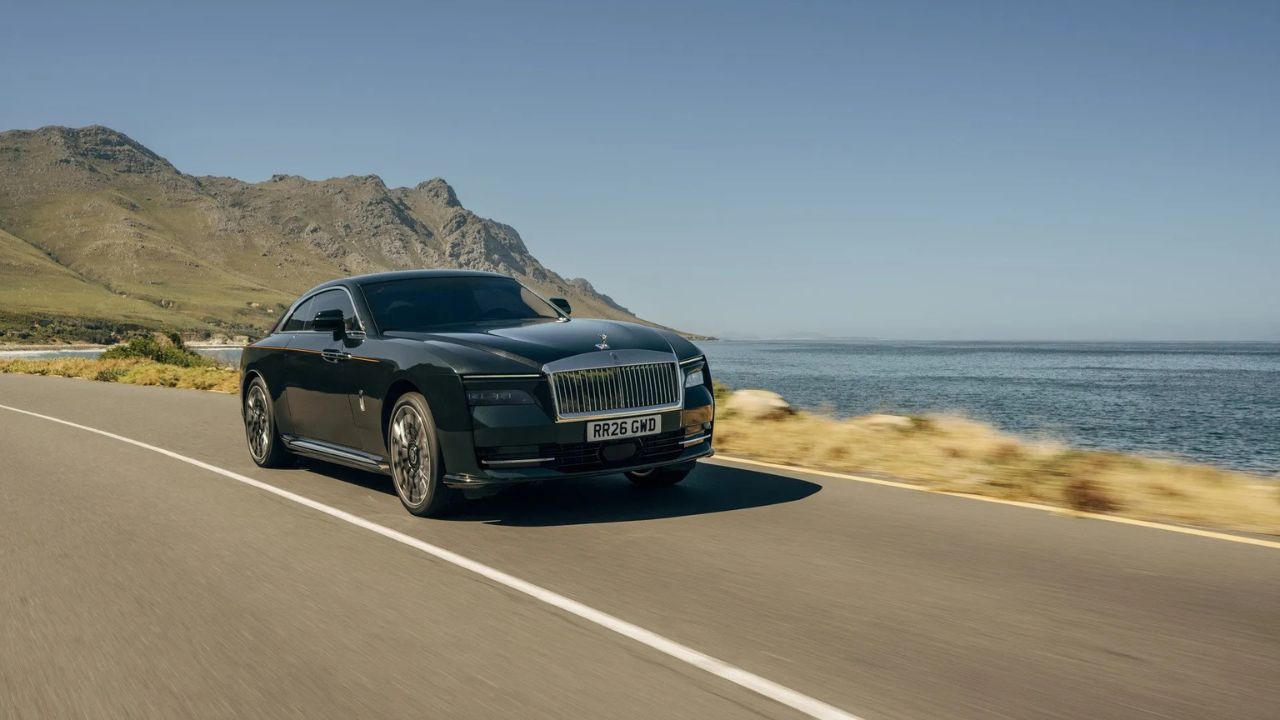
Rolls-Royce has sharpened its all-electric coupé, unveiling the Spectre Series II as a more powerful, more refined evolution of its first battery-powered model. The update arrives just as Ferrari prepares to enter the luxury EV arena with the Luce, setting up a rare head-to-head between two very different visions of electric grand touring. Rather than chase lap times, Rolls-Royce is doubling down on serenity, craftsmanship and discreet technology to defend its place at the top of the ultra-luxury market.
Key upgrades that define the new Spectre Series II
At the heart of the Series II update is a reworked dual-motor powertrain that lifts both output and usable range compared with the original Spectre. Rolls-Royce has revised the control software for the front and rear electric motors, extracting more power while also improving efficiency over long-distance cruising, according to technical details shared for the new model. The result is a coupé that accelerates with even greater ease yet fits more miles into each charge, a combination that matters when owners expect to cross countries without planning around public chargers.
The chassis has been tuned to keep that extra performance aligned with the brand’s comfort-first philosophy. Engineers have updated the active suspension, steering calibration and stability systems so the Spectre maintains its signature “magic carpet” ride even as torque delivery becomes more immediate. Reports on the 2027 Spectre Series describe a car that still isolates occupants from rough surfaces yet feels more precise when changing direction at speed. The balance leans toward unruffled composure, not aggressive cornering, which fits the role of a grand tourer rather than a track toy.
Visually, the changes are subtle but deliberate. The iconic grille and split headlamps have been reworked to give the front end a cleaner, more contemporary expression, while aerodynamic tweaks along the body help the car slip more efficiently through the air. Designers have used new lighting signatures and trim details to distinguish the Series II without disturbing the recognisable Spectre silhouette. The goal is evolutionary design that signals progress to those in the know while avoiding the fashion-driven churn that can date a high-end car too quickly.
Inside, the update leans heavily on craftsmanship and digital integration. Rolls-Royce has expanded the palette of bespoke materials and finishes, including intricate embroidery and new wood veneers that can be specified across the dashboard and doors. At the same time, the brand has refined its infotainment and digital interfaces so they sit more harmoniously within the cabin rather than dominating it. The Series II introduces updated displays and software, but the emphasis remains on tactility and calm surfaces, not on turning the interior into a rolling gadget showcase.
How Rolls-Royce is positioning its electric coupé against Ferrari Luce
The timing of the Spectre Series II is no accident. Ferrari is readying the Luce, its first production EV, which is expected to bring the marque’s performance heritage into the battery-electric era. While Ferrari is likely to stress acceleration, lap times and driver engagement, Rolls-Royce is using the Spectre to define a different pole of the luxury EV spectrum. The British brand is arguing that electric power best serves silence, smoothness and instant yet unhurried thrust, rather than pure theatrics.
Reports on the Spectre’s evolution describe it as the first “luxury sports EV” from Goodwood, but that label hides a more nuanced mission. The Series II refresh focuses on making the car an even more capable long-distance companion, not a rival to mid-engined supercars. Coverage of the Series II overhaul highlights the way Rolls-Royce has blended traditional coachbuilding cues with a fully electric platform, creating a coupé that feels familiar to long-time clients while still signaling a technological break from V12 heritage.
This positioning matters because Ferrari Luce will almost certainly appeal to a different instinct within the same rarefied customer base. Some buyers will want an EV that feels like a continuation of their 812 Superfast or SF90, with a focus on drama and responsiveness. Others will be more interested in crossing continents in near silence, cocooned in leather and lambswool, with the powertrain fading into the background. By giving the Spectre more range and power without abandoning its focus on quiet luxury, Rolls-Royce is betting that the second camp is large enough, and wealthy enough, to sustain a dedicated electric grand tourer.
The Spectre’s update also speaks to how legacy ultra-luxury brands interpret the shift to electrification. Rather than chase the acceleration figures of smaller, lighter sports cars, Rolls-Royce is using batteries as a way to enhance the qualities its clients already value. Instant torque allows effortless passing without drama, while the absence of engine vibration and noise makes it easier to maintain the brand’s signature isolation. The Series II simply refines this formula, ensuring that buyers who might be tempted by a new Italian EV have a distinctly different alternative.
Ferrari’s entry into the segment raises expectations for digital sophistication and driver-assistance technology, and here too Rolls-Royce has responded. The Spectre Series II incorporates updated software and connectivity, along with advanced assistance systems that support the driver without intruding on the experience. The focus is on subtlety, with technology that anticipates needs rather than constantly demands input. This quiet competence is part of the way Rolls-Royce seeks to differentiate its electric coupé from performance-focused rivals.
What the Spectre Series II signals about the future of ultra-luxury EVs
Beyond the immediate comparison with Ferrari Luce, the Spectre Series II offers a glimpse into how the top of the market will handle the next decade of electrification. By committing to a significant update so early in the model’s life, Rolls-Royce is acknowledging that EV technology moves quickly and that affluent buyers expect tangible progress in range, performance and digital capability within a few years. The Series II serves as a rolling statement that Goodwood will not let its first electric model stagnate while rivals catch up.
Reporting on the new version suggests that Rolls-Royce is already thinking about how its electric architecture can support future body styles and derivatives. Lessons learned from the Spectre’s powertrain, battery management and charging strategy will likely inform upcoming models, whether they take the form of sedans, SUVs or additional coupés. The decision to refine rather than radically redesign the Spectre also hints at a longer product cycle, with regular technical enhancements that keep the car current without forcing owners into constant replacement.
The commercial stakes are significant. The Spectre is a test of whether traditional luxury clients are ready to embrace an all-electric flagship at Rolls-Royce pricing. Early feedback on the original car suggested strong demand, and the Series II’s improvements in range and power are intended to reassure those who might still be hesitant. Coverage of the updated model, including detailed impressions of the Spectre Series II, frames it as a confident answer to questions about whether an electric Rolls can feel as special as its combustion predecessors.
Looking ahead, the rivalry with Ferrari Luce is likely to shape how both brands talk about sustainability and performance. Rolls-Royce will emphasize the environmental benefits of zero tailpipe emissions without sacrificing comfort, while Ferrari will frame electrification as a way to deliver new forms of speed and control. The Spectre’s evolution suggests that ultra-luxury EVs will not converge on a single template; instead, they will reflect the distinct identities of their makers, from ride quality and cabin design to the way power is delivered.
For buyers, that divergence is good news. The arrival of the Spectre Series II means that those shopping at the very top of the EV market can choose between different philosophies rather than variations on the same theme. Some will gravitate toward the drama of a high-revving Italian-inspired electric powertrain, even if the sound is synthesized. Others will prefer the hush and gravitas of an English coupé that treats speed as something to be suggested rather than shouted. The Spectre’s latest update makes that choice more interesting, and it signals that the quiet contest between elegance and excitement in the electric era has only just begun.
More from Fast Lane Only
- Unboxing the WWII Jeep in a Crate
- 15 rare Chevys collectors are quietly buying
- 10 underrated V8s still worth hunting down
- Police notice this before you even roll window down
*Research for this article included AI assistance, with all final content reviewed by human editors