Supercars are supposed to be wild, loud and slightly impractical, but the most shocking thing about some of them is not the power or the price, it is how little they actually weigh. When you stack a few of today’s featherweight exotics against the typical commuter car, the family hatchback starts to look like it is wearing lead boots. I want to walk through the numbers, and a few gloriously obsessive engineering stories, that prove some of the fastest machines on sale are literally lighter than your daily driver.
Why your normal car is secretly a heavyweight
Before I start cheering for the supercar diet squad, it helps to know what “normal” looks like on the scales. Most modern passenger vehicles land somewhere between 2,600 to 4,500 pounds, which means the average school run is basically a rolling gym session for your suspension. That range covers everything from compact runabouts to chunky crossovers, and it is a reminder that weight has quietly crept up as we have demanded more space, more tech and more “just in case” features.
Even the basics of Vehicle Size and Type work against you. A Compact model is Usually lighter, but once you add the tall body of an SUV, a big battery pack or a third row of seats, the curb weight balloons. Enthusiasts love to blame batteries for everything, yet owners of electric sedans have pointed out that All of the extra safety and luxury systems in modern cars are what really drive the weight up. So if your daily driver feels a bit sluggish, it is not your imagination, it is physics hauling a couple of tons of comfort down the road.
Supercar physics: when less weight beats more power
Once you accept that your commute is basically a strongman event, the appeal of a lightweight supercar becomes obvious. Shaving mass does not just help with bragging rights, it transforms how a car accelerates, brakes and changes direction. Instead of throwing more horsepower at the problem, some engineers treat every pound like an enemy combatant. That is how you end up with track specials that weigh less than a well optioned compact, yet lap circuits like they are running a different video game difficulty level.
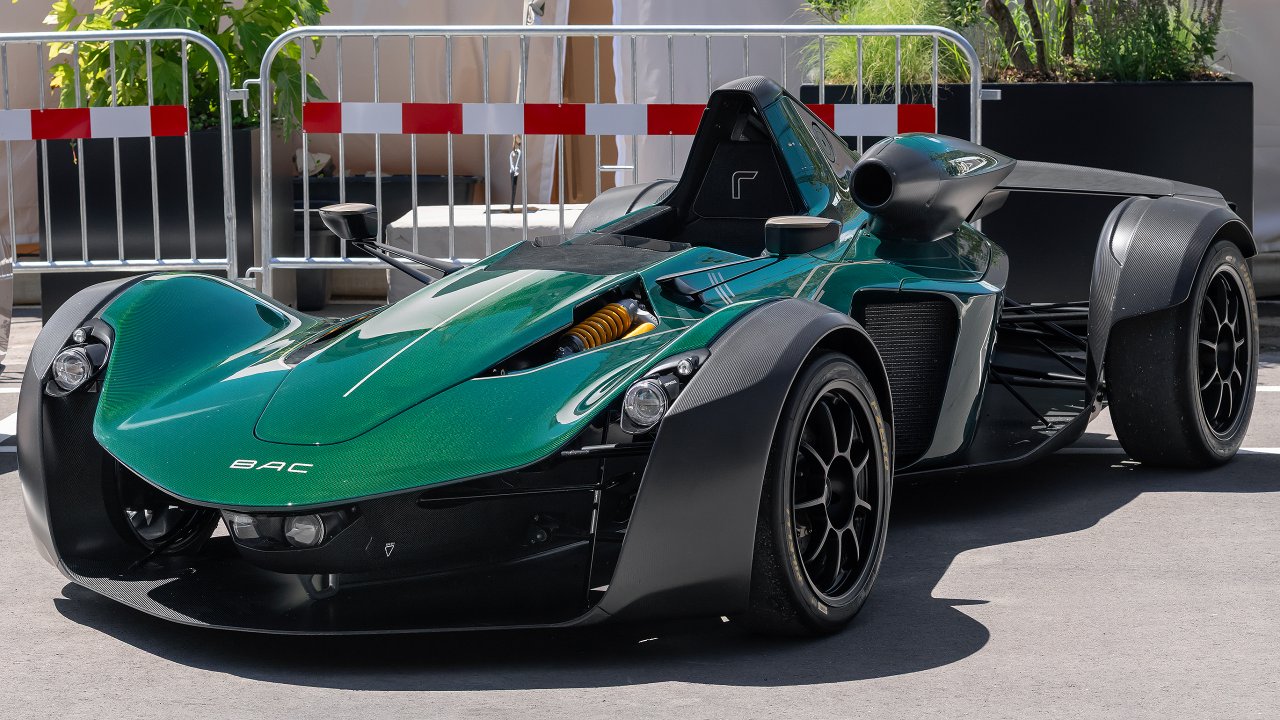
One of the purest examples is the BAC Mono, a single seat missile that treats practicality as a theoretical concept. A more extreme version, the BAC Mono R, clocks in at just 1,224 pounds, undercutting the Ariel Atom by a significant 88 lbs. That is not just lighter than most daily drivers, it is lighter than some classic city cars, yet it delivers performance that would embarrass plenty of full fat supercars. When you are dealing with a curb weight that starts with a “1” instead of a “3” or a “4,” every horsepower has far less work to do.
Icons of lightness: from Colin Chapman to modern track toys
The obsession with weight did not start with Instagram track days, it has roots in old school engineering stubbornness. Colin Chapman built an entire philosophy around adding lightness, and his influence still shows up in cars that feel like they are made of good intentions and a thin layer of aluminum. A modern Caterham Seven keeps that spirit alive, with a 2020 version tipping the scales at just 500 kg. Caterham models are never heavier than they need to be, because the whole point is performance derived from simplicity and removing weight, not burying the driver under layers of insulation.
That same mindset shaped legends like the McLaren F1, where Gordon Murray went to extremes to keep mass down. Each lightweight component was treated as a small victory, even when it meant spending absurd amounts of money to shave grams. Enthusiasts still point out that the lightest materials were used throughout, with a weight coming in around 2,500 pounds, which is significantly lighter than Lightest supercars being made today. When a three seat 1990s V12 halo car weighs less than some modern hot hatches, you start to see how far the weight creep has gone.
When “lightweight” still means two tons

Of course, not every modern exotic can live on a carbon fiber salad. Some of the latest supercars are technically “light” only in the context of their power and complexity. Take the Lamborghini Revuelto, a plug in hybrid V12 that still manages to keep its Weight to 3,256 lbs. On paper that is still more than some family sedans, but for a car juggling a big engine, electric motors and a battery pack, it counts as surprisingly restrained. It is the automotive equivalent of a bodybuilder who insists they are “bulking” while still fitting into skinny jeans.
Even the supposedly svelte end of the supercar spectrum can look hefty next to the true featherweights. A list of the lightest exotics you can buy includes machines that still come in at 3,649 lbs, with models like the Valhalla, Corvette, Maserati and Ferrari all fighting to keep the numbers down while delivering outrageous power. When a car that weighs nearly two tons is marketed as one of the lightest in its class, you know the baseline has shifted. Compared with the Most common passenger cars in that 2,600 to 4,500 pounds window, some of these machines are still lighter than the big SUVs clogging the left lane, even if they are not quite BAC Mono territory.
Sports cars that prove light can still be livable
Not everyone wants a single seat track toy that treats luggage as a moral failing, so I pay special attention to sports cars that balance lightness with actual usability. The Mazda MX line is a perfect example, with the Miata showing up again and again in lists of the best lightweight sports cars. A guide to fun, low mass machines highlights the Mazda MX and Miata as benchmarks, because they deliver agility and feedback without demanding a race trailer or a chiropractor. They are not quite in supercar territory on performance, but they absolutely qualify as proof that you can have a light, joyful car that still handles grocery duty.
Lotus has built an entire brand on that same idea, and the Lotus Emira shows how far the formula can be pushed while staying civilized. Reports on the lightest cars that offer the most fun per dollar point out that Lotus has always been known for building some of the lightest sports cars on the market, and the Emira continues that tradition with a focus on driver engagement instead of raw size. When you compare these cars to the reality that Today, cars are heavier than ever before, they start to look less like niche toys and more like a quiet rebellion. Even with advanced materials and clever production methods, the increased complexity of modern vehicles keeps pushing mass upward, so any company that still sweats every kilogram feels refreshingly stubborn.
Why the lightness race matters for everyone
It might sound like all this talk of curb weights and Colin Chapman is just enthusiast trivia, but the lightness race has real world consequences. A lighter car needs less power to feel quick, which means smaller engines, lower fuel use and less strain on brakes and tires. That is true whether you are in a BAC Mono R or a humble hatchback. When engineers focus on taking pounds off rather than adding brute power, they unlock efficiency and performance at the same time, which is a rare win win in a world of trade offs.
There is also a safety and comfort angle hiding in the background. As one electric car owner pointed out, All of the extra systems we demand, from advanced driver aids to massaging seats, add weight that then has to be controlled in a crash or a sudden lane change. Supercars that stay light despite huge power outputs prove that careful engineering can keep mass in check without stripping away every comfort. If that mindset trickles down into mainstream models, your next daily driver might feel a little more like a sports car and a little less like a rolling fortress.
For now, the contrast is stark. On one side you have everyday vehicles sitting comfortably in the 2,600 to 4,500 pounds band, padded with features and bulk. On the other, you have machines like the BAC Mono R at 1,224 pounds or the Caterham Seven at 500 kg, which feel like they are built out of pure intent. I find that gap oddly encouraging. It means there is still plenty of room for carmakers to rethink how much metal we really need to drag around every day, and it proves that some of the wildest supercars on sale are not just faster than your daily driver, they are literally carrying less of everything to get the job done.