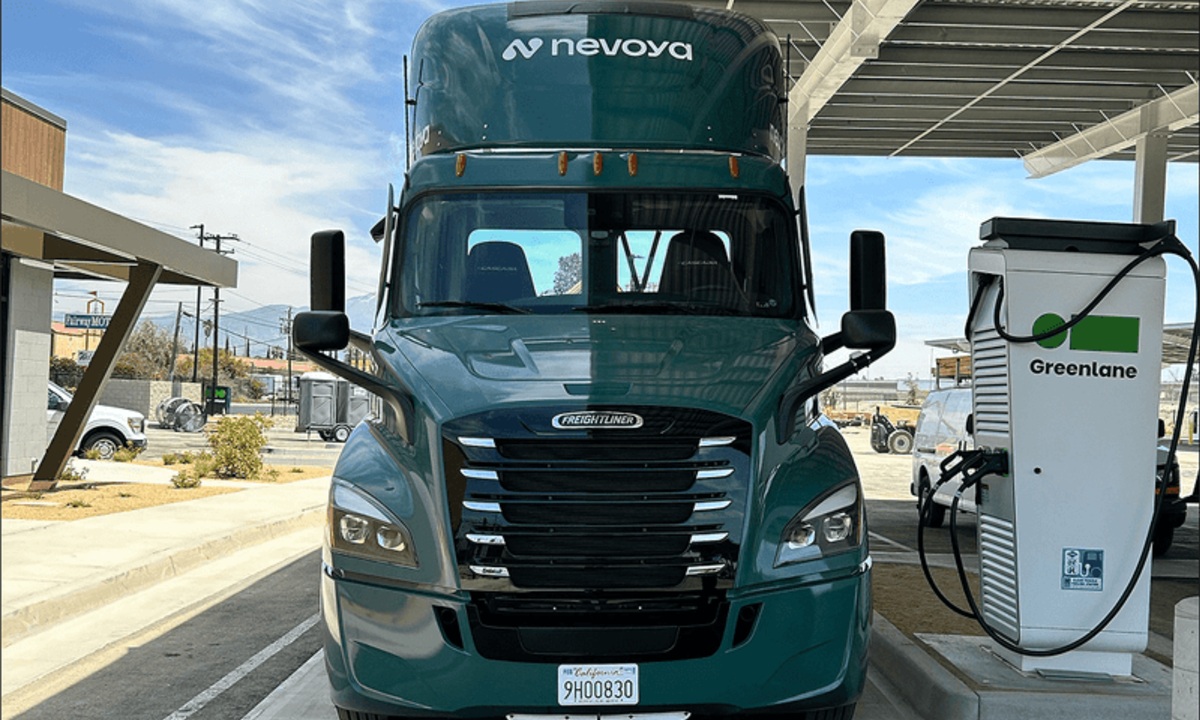
Texas is about to test whether electric trucking can live up to the state’s outsized reputation for freight. A dedicated zero‑emission carrier, Nevoya, is preparing to put a fleet of 40 battery‑electric big rigs into regular service on some of the state’s busiest corridors, turning a long‑running climate ambition into a visible presence on the highway. The move signals that heavy‑duty electrification is shifting from pilot projects to real freight work, with Texas emerging as a proving ground.
A new kind of trucking company rolls into Texas
Nevoya is positioning itself not as a traditional carrier that happens to buy a few electric trucks, but as a fully electric motor operator built around battery power from day one. The company is adding 40 Class 8 trucks in Texas, a scale that would have been unthinkable for zero‑emission freight only a few years ago and that now stands out as the largest known deployment of its kind in the state. By committing to a fleet of that size, Nevoya is signaling confidence that the technology, charging infrastructure, and customer demand have finally aligned enough to support daily operations rather than short‑term demonstrations.
The trucks themselves are part of a broader ecosystem that includes purpose‑built charging and digital tools to manage routes and energy use. Reporting on the rollout notes that Nevoya’s fleet will rely on modern battery‑electric platforms, including models such as the Freightliner eCascadia, that are designed for regional haul and urban freight rather than cross‑country runs. These vehicles are being paired with corridor charging developed through initiatives like Greenlane, which is focused on heavy‑duty charging along major freight routes in Texas. The combination of a dedicated electric carrier, 40 trucks committed to service, and corridor‑based charging marks a shift from scattered experiments to a coordinated attempt to decarbonize a meaningful slice of the state’s freight traffic.
Dallas–Houston becomes a zero‑emission test lane
The centerpiece of Nevoya’s Texas strategy is the busy corridor between Dallas and Houston, one of the most heavily trafficked freight lanes in the country. Company leadership has described “Launching the Dallas to Houston lane” as proof that a new era of trucking is possible, combining zero‑emission capacity with intelligent orchestration of vehicles and charging. Rather than treating electric trucks as niche assets, Nevoya is integrating them into a high‑volume route where reliability and turnaround times are non‑negotiable, a choice that will quickly reveal whether the technology can handle the pressure of real‑world logistics.
That corridor is also where Texas has already been experimenting with other advanced freight technologies, including autonomous trucking. On May 1, 2025, Aurora Innovation began running driverless freight deliveries on Interstate 45, the main artery between Dallas and Houston, using 30,000-pound robot trucks without a human driver or supervisor on board. The coexistence of driverless diesel rigs and human‑operated electric trucks on the same route underscores how Texas has become a laboratory for overlapping innovations in freight. If electric trucks can match the uptime and predictability that shippers expect on this lane, they will have passed one of the toughest tests in American trucking.
Big‑rig batteries meet Texas distances
Electrifying heavy trucks in Texas is not as simple as swapping engines, because the state’s geography and freight patterns stretch the limits of current battery technology. Early details on Nevoya’s deployment indicate that the trucks are optimized for regional hauls, with a loaded range in the neighborhood of 220 miles per charge, which fits the Dallas–Houston distance but leaves little room for detours or delays without careful planning. That reality is pushing carriers and infrastructure providers to coordinate charging locations, dwell times, and load planning in ways that diesel fleets have rarely needed to consider.
The charging backbone for these trucks is being built around high‑capacity stations on key freight corridors, including those supported by the Greenlane initiative. By clustering chargers at logistics hubs and along major highways, operators can keep trucks cycling between depots and customers without stranding vehicles far from a plug. The strategy mirrors broader trends in the industry, where companies are preparing for a wave of new electric models, from the Freightliner eCascadia already in service to future offerings like the Tesla Semi, which Tesla executives have said they plan to ramp up for Class 8 production in 2026. Texas, with its long stretches of highway and dense freight flows, is emerging as a natural test bed for whether these vehicles can handle real‑world duty cycles at scale.
Coalitions and customers behind the 40‑truck leap
The decision to deploy 40 electric big rigs in Texas did not happen in isolation, but as part of a coordinated procurement effort designed to de‑risk early adoption for both carriers and shippers. The Center for Green Market Activation, often referred to as GMA, organized what it describes as the first trucking procurement of its kind, bringing together major companies that want to cut emissions from their supply chains. By aggregating demand for zero‑emission freight, GMA and its partners created enough guaranteed volume to justify a large fleet order, while also sending a signal to manufacturers and infrastructure providers that there is a real market for heavy‑duty electric trucks in the state.
That coalition includes logistics and cargo owners that move significant volumes through Texas ports and distribution hubs, and that are under growing pressure to report and reduce their climate impact. Some of those companies are also involved in other clean transport initiatives, such as sustainable aviation and maritime shipping, which makes the Texas trucking project part of a broader decarbonization strategy rather than a one‑off experiment. By tying the 40‑truck deployment to a structured procurement and a network of committed customers, GMA and Nevoya are trying to avoid the common pitfall of early pilots that run a few trucks without a clear path to long‑term utilization or expansion.
From Texas corridors to cross‑border and national change
Although the first wave of trucks will focus on intrastate routes, the implications reach far beyond Texas. The state sits at the heart of North American freight, with major corridors linking Dallas, Houston, and San Antonio to border crossings at Laredo and onward to industrial hubs such as Monterrey in northern Mexico. If electric trucks can prove themselves on Texas highways, it will be far easier to imagine zero‑emission freight running between U.S. distribution centers and Mexican manufacturing zones, especially as cross‑border trade continues to grow. The Dallas–Houston lane, in that sense, is a starting point for a potential network that could eventually stretch from the Gulf Coast to factories and logistics parks south of the border.
The Texas deployment also lands at a moment when the broader trucking industry is bracing for rapid change in equipment and expectations. Companies are watching how early electric fleets perform while preparing for additional models and capacity, including the planned ramp‑up of the Tesla Semi for Class 8 customers and the continued refinement of autonomous freight services from operators such as Aurora. In parallel, public sentiment is being tracked through tools like reader poll features that accompany coverage of these developments, reflecting how drivers, residents, and industry professionals view the trade‑offs between cleaner air, new technology, and traditional jobs. If the 40 electric big rigs now headed for Texas roads can deliver reliable service while cutting emissions, they will not only reshape local freight operations, but also influence how regulators, investors, and shippers across the country think about the future of heavy‑duty transport.
More from Fast Lane Only