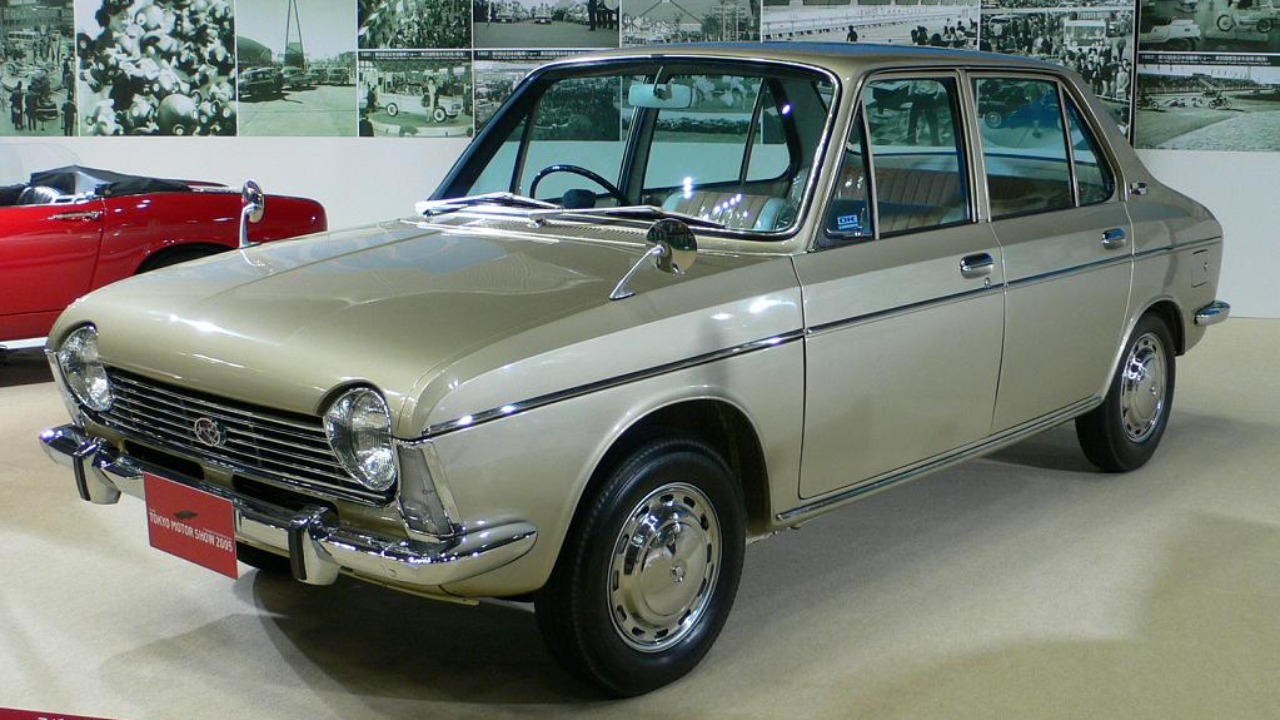
The Subaru 1000 arrived in the mid 1960s looking like a modest compact sedan, yet it quietly set the template for everything the brand would become. Beneath its unassuming body, it introduced a new engine layout and a new way of packaging a small car that still shapes Subaru showrooms today. What seemed like a conservative family car in period now reads as the moment Subaru decided what it wanted to be.
A small car with big firsts
To understand why the 1966 Subaru 1000 mattered, it helps to see where the company was coming from. Previous Subaru models such as the Subaru 360 and the Sambar were tiny rear engined kei cars that had helped motorize postwar Japan but offered little guidance for a larger, more modern family car. The 1000 was conceived as a compact sedan with real highway capability and room for a growing middle class, not just a city runabout.
According to factory history, Subaru chose the 1000 as the first front engine, front wheel drive model in its lineup. The layout let engineers stretch the cabin, lower the floor and free up trunk space, all within the limits of the Japanese government compact car classification. As a result, The Subaru 1000 combined a relatively airy interior with tidy exterior dimensions that suited narrow city streets.
Under the skin, the car carried a number of unusual solutions for a mid 1960s compact. Contemporary technical descriptions note a hybrid suspension system that blended torsion bars and coil springs, and inboard front drum brakes that reduced unsprung weight and made an independent front suspension easier to execute. The heating system was unconventional as well, drawing warmth directly from the radiator rather than from a separate heater core. None of these features grabbed headlines, yet together they showed a company willing to rethink the standard small sedan formula.
The Boxer decision that changed Subaru
The truly transformative choice sat between the front wheels. Subaru decided that its new compact would not use an inline engine, which was the default for most rivals. Instead, engineers created a horizontally opposed four cylinder that lay flat in the engine bay. This configuration, with pistons punching toward each other like gloved fighters, would soon be known inside the company simply as the Boxer.
Corporate records describe how Subaru’s signature Boxer engine was first introduced on the Subaru 1000 compact passenger car on May 14, 1966. The company has since treated that date as the birth of its defining technology. A later technical reflection explains that the flat four was developed as the EA series engine, generating 55 PS and 56 lb ft of torque with a 9.0:1 compression ratio. As one retrospective on the powerplant puts it, the unit could be described as a horizontally opposed, flat four or a 180-degree V4, but the simplest name was boxer, and that label stuck.
The low profile of the new engine allowed designers to keep the hood line down and concentrate mass close to the road. Internal analysis highlighted how opposing pistons cancel out some of each other’s inertia, which reduces vibration compared with a similar inline unit. Later overviews of Subaru technology have pointed out that this layout, combined with a longitudinal mounting and a straight line driveline, would eventually support the brand’s symmetrical all wheel drive systems. In other words, a decision made for a modest front drive sedan ended up shaping the mechanical identity of future rally cars and crossovers.
Period accounts differ slightly on output figures, with one historical summary citing a meager 54 horsepower for the early production engine and another giving the 55 PS and 56 lb ft figures for the EA series. Both agree, however, that the unit was compact, relatively smooth and willing to rev, which made the 1000 feel more sophisticated than its modest numbers suggested. The specification also left room for later growth into larger displacements and higher performance versions that would power everything from family wagons to turbocharged performance models.
Engineering roots and the road to front drive
The 1000 did not emerge from nowhere. Subaru had already experimented with a larger sedan, the 1500, also known as the P 1, earlier in the 1950s. That car never reached full mass production, but it gave engineers valuable experience with packaging a front engine layout and chasing stable handling at higher speeds. Company historians later described how the team was keeping an eye on the coming age of motorization and aiming to achieve excellent driving stability, even if the project was commercially limited.
Lessons from the 1500 program filtered into the 1000. One of the most significant was the development of a constant velocity joint for the front drive shaft. A corporate retrospective on the P 1 notes that the constant velocity joint developed for the front drive shaft was especially important for the subsequent growth and success of FF vehicles. That hardware would prove essential for a front wheel drive car that needed to combine tight turning circles with smooth power delivery and acceptable durability.
By the time the 1000 reached showrooms, Subaru could therefore pair its new flat four with a front drive layout that felt mature rather than experimental. A historical overview of the model highlights how the 1000 was the first front wheel drive Subaru and that it fit neatly into the Japanese compact class while offering a more modern driving experience than many rear drive rivals. The car’s configuration also provided a template for later models that would migrate to all wheel drive without abandoning the basic longitudinal, boxer based architecture.
Quiet innovation in a conservative wrapper
Visually, the Subaru 1000 was almost deliberately understated. Period photographs show a three box sedan with clean lines, thin pillars and minimal ornamentation. There were no wild fins or fastback flourishes, just a straightforward shape that would not scare off conservative buyers. This restraint likely helped the car gain acceptance in a market where buyers were still getting used to the idea of private car ownership at scale.
Under that modest styling, however, the car hid several details that would appeal to engineers and keen drivers. A specialist history site describes how the 1000 featured inboard drum brakes up front, a solution more often seen on racing or high end European cars of the time. By mounting the brakes near the differential instead of at the wheel hubs, Subaru reduced unsprung weight and allowed the front suspension to respond more quickly to bumps. This choice also made it easier to package an independent front suspension, which improved ride comfort and grip.
Another historical note from enthusiasts points to the hybrid suspension system that mixed different spring types to balance comfort and control. Combined with the low center of gravity created by the flat four, this gave the 1000 a level of composure that surprised drivers who expected a basic economy car. Owners could enjoy stable cornering and a relatively smooth ride on rougher roads, even if the car’s modest power figures limited outright speed.
The heating system, which took its warmth directly from the radiator rather than through a separate heater core, illustrates the same blend of simplicity and lateral thinking. It saved parts and weight, and while it might have lacked the fine control of more complex systems, it matched the 1000’s role as a practical, cost conscious family car.
From obscure sedan to brand foundation
Viewed from today, the 1000’s most important legacy is not any single component but the combination of Boxer engine and front engine, front drive layout that it established. A corporate anniversary statement released when Subaru celebrated 50 years of its flat four technology explicitly tied the modern lineup back to the compact sedan that first carried the engine. The company described how the boxer layout had become a signature feature and credited its debut in the 1000 with setting that course.
Enthusiast retrospectives echo that view. One detailed feature on the history of the Subaru flat four notes that The Subaru 1000 debuted in 1966 with a horizontally opposed engine and that There were many ways to describe it, including flat four and 180-degree V4, but the boxer name captured the imagination. The same piece explains how the EA series engine that began in the 1000, with its 55 PS and 56 lb ft output, laid the groundwork for later developments that would turn Subaru into masters of all wheel drive performance.
Another retrospective produced for a dealer audience describes the 1966 launch of the Subaru 1000 as the moment the brand’s boxer engine story began. It emphasizes that the car was the first production Subaru to use a horizontally opposed engine and that the layout’s low center of gravity became a key selling point for later models. That same piece links the 1000’s engine directly to modern performance icons and crossovers, arguing that without the compact sedan, there would be no rally legends or high riding family wagons with boxer power today.
Historical summaries from independent automotive historians also stress the 1000’s influence. One overview of Subaru history notes that the Japanese company introduced its signature boxer technology in the 1000 compact and that this choice differentiated the brand from competitors that relied on inline engines. The layout supported the later development of symmetrical all wheel drive systems, which in turn became central to Subaru’s image in markets from Japan to North America.
Why the 1000 stayed in the shadows
Given this long shadow, it can seem surprising that the Subaru 1000 is not more widely celebrated among classic car fans. Several factors help explain its relatively low profile. For one, the car was sold primarily in Japan and select export markets, and it never achieved the global reach of later Subaru models. That limited production and distribution means fewer surviving examples and less visibility at international shows or in enthusiast media.
The 1000 also lacked the motorsport pedigree that often cements a model’s place in enthusiast lore. While later Subarus became synonymous with rally stages and high performance variants, the 1000 was aimed squarely at families and commuters. Its achievements were measured in reliability, packaging efficiency and engineering foresight rather than trophies.
Finally, the car was quickly overshadowed by its successors. Later models built on its mechanical foundations while offering more power, more space and bolder styling. For buyers and even for Subaru’s own marketing, it was easier to spotlight the cars that turned the boxer and all wheel drive combination into a global selling point than the quiet sedan that started it all.
The quiet importance of a forgotten compact
Strip away the mythology that has grown around Subaru’s boxer engines and all wheel drive systems, and the 1000 emerges as a remarkably modern piece of thinking for its time. It took a risk on a flat four powerplant when most rivals saw no reason to abandon inline engines. It combined that engine with front wheel drive and thoughtful suspension design in a compact package that fit the needs of Japanese families in the 1960s.
More from Fast Lane Only