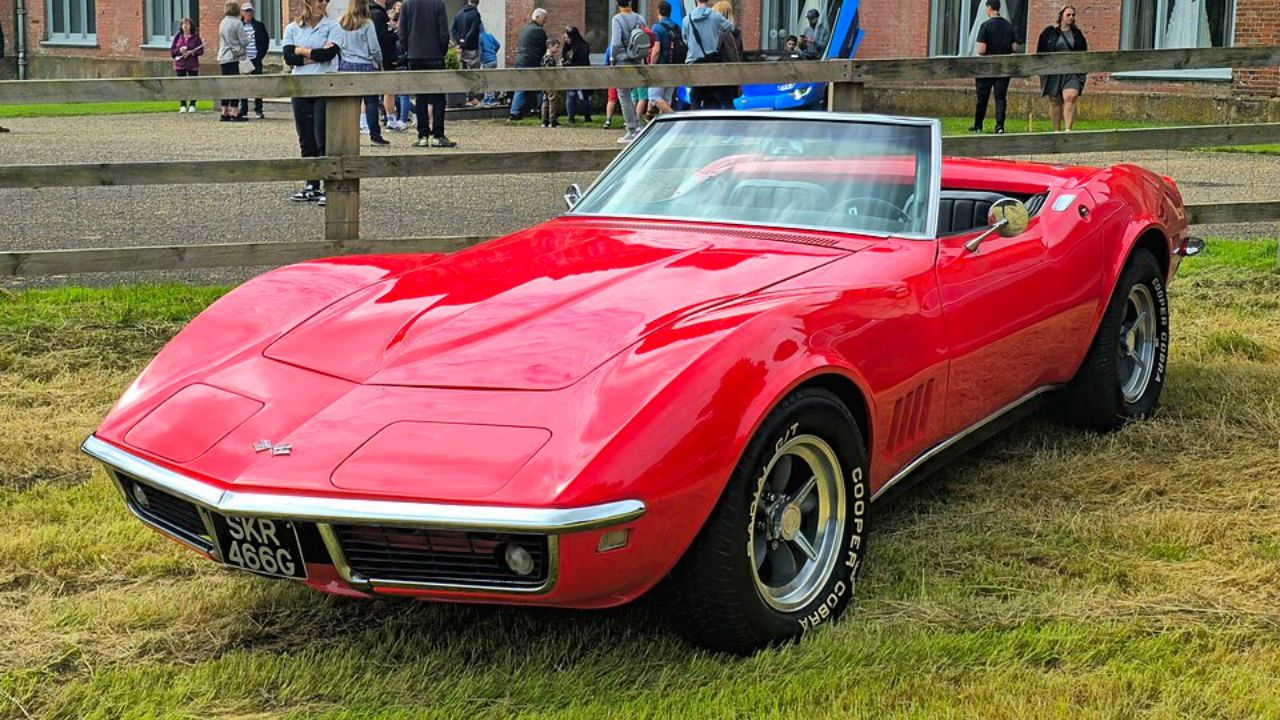
When Chevrolet unveiled the 1968 Corvette, it marked far more than the arrival of a new model year. It represented the first complete redesign of America’s sports car since 1963 and introduced a bold new vision that would shape the Corvette’s identity for more than a decade.
The 1968 model launched the third-generation Corvette, commonly known as the C3, and signaled a major shift in Chevrolet’s approach to performance, styling, and market appeal. Inspired by cutting-edge concept cars and changing consumer tastes, the new Corvette abandoned many of the design themes that had defined its predecessor while embracing a more dramatic and aggressive personality.
More than half a century later, the 1968 Corvette remains one of the most significant turning points in the model’s long history.
The Success of the Sting Ray Created a Challenge
The second-generation Corvette, introduced for 1963, had been a tremendous success. Known as the Sting Ray, it featured striking styling, independent rear suspension, and performance capabilities that helped establish the Corvette as a world-class sports car.
By the mid-1960s, however, Chevrolet understood that even a successful design could not remain unchanged forever. Competitors were introducing fresh styling, and buyers increasingly expected new technology and modern features.
The challenge facing Chevrolet’s designers and engineers was considerable. The Sting Ray was widely admired, meaning any replacement would have to improve upon a highly respected formula.
Rather than making minor updates, Chevrolet chose to create an entirely new Corvette.
Inspiration Came from a Radical Concept Car
The design of the 1968 Corvette owed much to one of General Motors’ most famous concept vehicles: the Mako Shark II.
Created under the direction of GM design chief Bill Mitchell, the Mako Shark II showcased sweeping fender lines, dramatic curves, and a muscular stance unlike anything else on the road.
Its influence on the production Corvette was impossible to miss.
The new car featured sharply sculpted bodywork, prominent wheel arches, hidden windshield wipers, and a long, flowing profile that emphasized speed even when standing still. Compared to the cleaner lines of the 1963–1967 Sting Ray, the 1968 Corvette looked more aggressive and futuristic.
It immediately became one of the most recognizable sports cars in America.
The New C3 Platform Arrived
Although the 1968 Corvette looked dramatically different, it retained several key engineering elements from the previous generation.
Chevrolet continued to use a fiberglass body and independent rear suspension, both of which had contributed to the Corvette’s strong performance reputation. However, the chassis received important refinements aimed at improving ride quality and handling.
The redesign focused on creating a sports car that remained capable on winding roads while becoming more comfortable for everyday driving.
This reflected a broader shift in Chevrolet’s thinking.
Rather than appealing solely to hardcore sports car enthusiasts, the company wanted the Corvette to attract a wider audience.
A More Refined Sports Car
One of the biggest changes introduced with the 1968 Corvette was its increased emphasis on comfort and style.
The cockpit featured a redesigned dashboard, improved seating, and a more modern interior layout. Buyers could enjoy a higher level of refinement without sacrificing the performance expected from a Corvette.
The new model also offered removable roof panels on coupe versions, allowing drivers to enjoy open-air motoring without committing to a full convertible.
These features broadened the car’s appeal and helped position it as both a performance machine and a desirable grand touring vehicle.
Big-Block Power Remained Available
While comfort became more important, Chevrolet never lost sight of performance.
The 1968 Corvette offered an impressive range of engines, including several potent V8 options. Buyers seeking maximum performance could choose big-block powerplants that delivered remarkable acceleration and top-end speed.
Among the most famous options was the 427 cubic-inch V8, available in multiple configurations. Depending on specification, these engines transformed the Corvette into one of the quickest American production cars of its era.
The combination of dramatic styling and powerful engines ensured that the new Corvette remained true to its performance roots.
Early Production Challenges
Despite its excitement and popularity, the 1968 Corvette was not without problems.
Because the redesign was so extensive, early production cars experienced quality-control issues. Fit-and-finish concerns, leaks, and minor assembly defects affected some vehicles during the model’s first year.
Chevrolet worked quickly to address these problems, and many improvements were implemented during subsequent production runs.
Although the issues generated criticism at the time, they did little to diminish enthusiasm for the new design.
Sales remained strong, demonstrating the public’s excitement about the Corvette’s fresh direction.
A Design That Defined an Era
Perhaps the most remarkable aspect of the 1968 Corvette is how long its influence lasted.
The C3 generation remained in production through the 1982 model year, making it one of the longest-running Corvette generations ever produced. While styling and mechanical features evolved over time, the basic design introduced in 1968 endured for fifteen years.
That longevity reflected just how successful Chevrolet’s redesign had been.
The car’s dramatic appearance continued to attract buyers throughout the 1970s and into the early 1980s.
A Lasting Legacy
Today, the 1968 Corvette is remembered as one of the most important models in Chevrolet history. It introduced a bold new design language, expanded the Corvette’s appeal, and established the foundation for an entire generation of America’s sports car.
Collectors appreciate the 1968 model for its unique first-year features and its connection to the iconic Mako Shark concept. Enthusiasts view it as the beginning of an era that helped transform the Corvette from a pure sports car into a broader performance and touring machine.
Its impact can still be seen in modern Corvette development.
Conclusion
The 1968 Corvette became the first major redesign in years and fundamentally changed Chevrolet’s direction for its flagship sports car. Inspired by futuristic concepts and evolving customer expectations, the new Corvette blended aggressive styling, powerful performance, and increased refinement into a package that redefined the model’s future.
By launching the C3 generation, Chevrolet created a car that not only captured the spirit of its era but also influenced the Corvette’s identity for decades to come.
More from Fast Lane Only