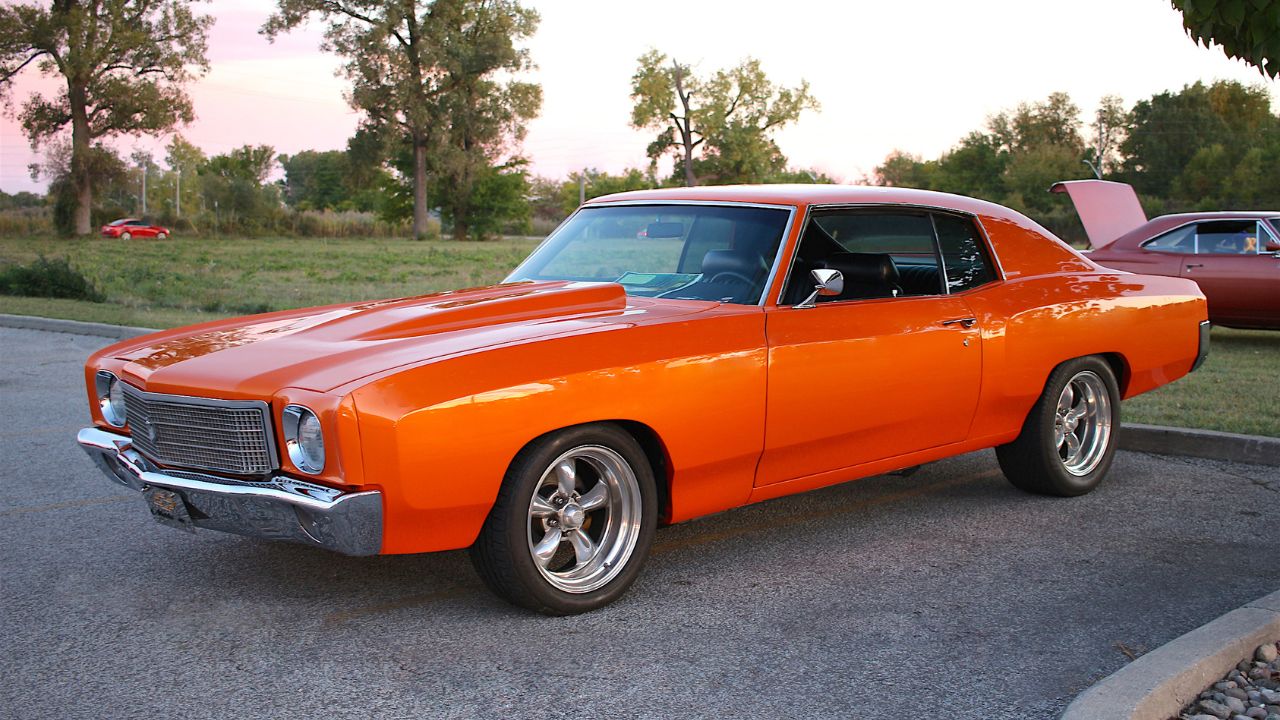
When Chevrolet introduced the Monte Carlo for the 1970 model year, it wasn’t simply adding another coupe to its lineup. The company was creating a vehicle that occupied a unique position between traditional family cars and high-end luxury models. In doing so, Chevrolet helped define a new category that would become one of the hottest segments of the 1970s.
The Monte Carlo blended elegant styling, personal luxury, and V8 performance into a package that appealed to buyers who wanted something more sophisticated than a muscle car but more affordable than a premium luxury coupe. The formula proved so successful that the Monte Carlo quickly became one of Chevrolet’s most important models.
Its debut marked a turning point not only for Chevrolet but also for the broader American automotive market.
Chevrolet Saw a Growing Opportunity
By the late 1960s, American car buyers were increasingly interested in personal luxury vehicles. Models such as the Ford Thunderbird and Pontiac Grand Prix demonstrated that many consumers wanted stylish coupes designed primarily for the driver rather than large family transportation.
These buyers weren’t necessarily looking for the biggest car available. Instead, they wanted a vehicle that offered comfort, prestige, and individuality.
Chevrolet recognized that it lacked a direct competitor in this growing market.
While the company offered everything from economy cars to full-size luxury sedans, there was a gap in the lineup for a personal luxury coupe that combined upscale styling with attainable pricing.
The Monte Carlo was created to fill that gap.
A New Kind of Chevrolet
The Monte Carlo was built on General Motors’ proven A-body platform, which it shared with vehicles such as the Chevelle. However, Chevrolet’s designers worked hard to ensure the new model looked and felt distinct.
The car featured a dramatically long hood, a short rear deck, and elegant body lines that projected a sense of luxury. Its proportions gave it a more expensive appearance than its actual price suggested.
Unlike traditional muscle cars that emphasized aggressive styling and performance graphics, the Monte Carlo focused on refinement and sophistication.
It introduced a new personality to Chevrolet showrooms.
Luxury at an Attainable Price
One reason the Monte Carlo succeeded so quickly was its ability to deliver a premium experience without an extravagant cost.
Buyers could enjoy features often associated with more expensive vehicles, including plush interiors, woodgrain trim, upgraded upholstery, and numerous comfort options.
At the same time, the use of an existing platform helped Chevrolet keep prices competitive.
This combination allowed customers to enjoy a taste of luxury without stepping up to a Cadillac or another premium-brand vehicle.
The formula attracted a wide range of buyers and expanded Chevrolet’s reach into a growing market segment.
Performance Was Still Part of the Package
Although luxury was the primary focus, Chevrolet understood that many buyers still valued performance.
The Monte Carlo offered a variety of engine choices, including several V8 options that delivered strong acceleration and smooth highway cruising. For enthusiasts seeking additional excitement, Chevrolet introduced the Monte Carlo SS 454.
Powered by a 454 cubic-inch big-block V8, the SS version combined the elegance of a personal luxury coupe with the muscle car performance that Chevrolet was famous for.
This dual personality helped distinguish the Monte Carlo from many competitors.
Owners could enjoy comfort and style without giving up power.
The Timing Was Perfect
The Monte Carlo arrived at exactly the right moment.
As the 1970s began, many consumers were shifting away from stripped-down performance cars and toward vehicles that offered a blend of comfort, style, and prestige. Insurance rates for muscle cars were increasing, and some buyers wanted a more mature alternative that still retained a sporty image.
The Monte Carlo fit these changing preferences perfectly.
It offered much of the visual appeal and driving enjoyment associated with performance cars while adding a level of sophistication that appealed to a broader audience.
This timing contributed significantly to the model’s early success.
Creating a New Space Within Chevrolet
Perhaps the Monte Carlo’s greatest achievement was how effectively it carved out its own identity within Chevrolet’s lineup.
It wasn’t a muscle car like the Chevelle SS. It wasn’t a full-size luxury cruiser like the Caprice. And it wasn’t an economy-minded vehicle aimed at practical transportation.
Instead, it occupied a unique middle ground.
The Monte Carlo gave Chevrolet a strong presence in the personal luxury market without overlapping heavily with existing models. This allowed the company to attract customers who might otherwise have looked elsewhere.
The strategy proved remarkably effective.
Competitors Followed the Trend
The success of the Monte Carlo reinforced the growing popularity of personal luxury coupes throughout the industry.
Manufacturers increasingly focused on vehicles that combined upscale styling with intermediate-sized platforms. Throughout the 1970s, personal luxury models became some of the best-selling and most profitable vehicles in America.
The Monte Carlo remained a key player in this trend and helped establish Chevrolet as a serious competitor in the segment.
Its influence would continue for decades.
A Lasting Legacy
Today, the 1970 Monte Carlo is remembered as one of Chevrolet’s most important introductions of the era.
Collectors appreciate its distinctive styling, available big-block performance, and historical significance. It represents the beginning of a model line that would remain part of Chevrolet’s lineup for generations.
More importantly, it illustrates how changing consumer preferences can create entirely new opportunities in the automotive market.
By recognizing those changes early, Chevrolet positioned itself at the forefront of a growing trend.
Conclusion
The 1970 Chevrolet Monte Carlo created an entirely new space for Chevy by combining personal luxury, stylish design, and available V8 performance in a single package. It successfully bridged the gap between traditional family cars and premium luxury vehicles, attracting buyers who wanted comfort, prestige, and individuality without an excessive price tag.
Its success helped define the personal luxury coupe segment and gave Chevrolet a powerful new identity within one of the most important automotive markets of the 1970s. More than fifty years later, the original Monte Carlo remains a landmark vehicle that changed the direction of the brand and expanded what a Chevrolet could be.
More from Fast Lane Only