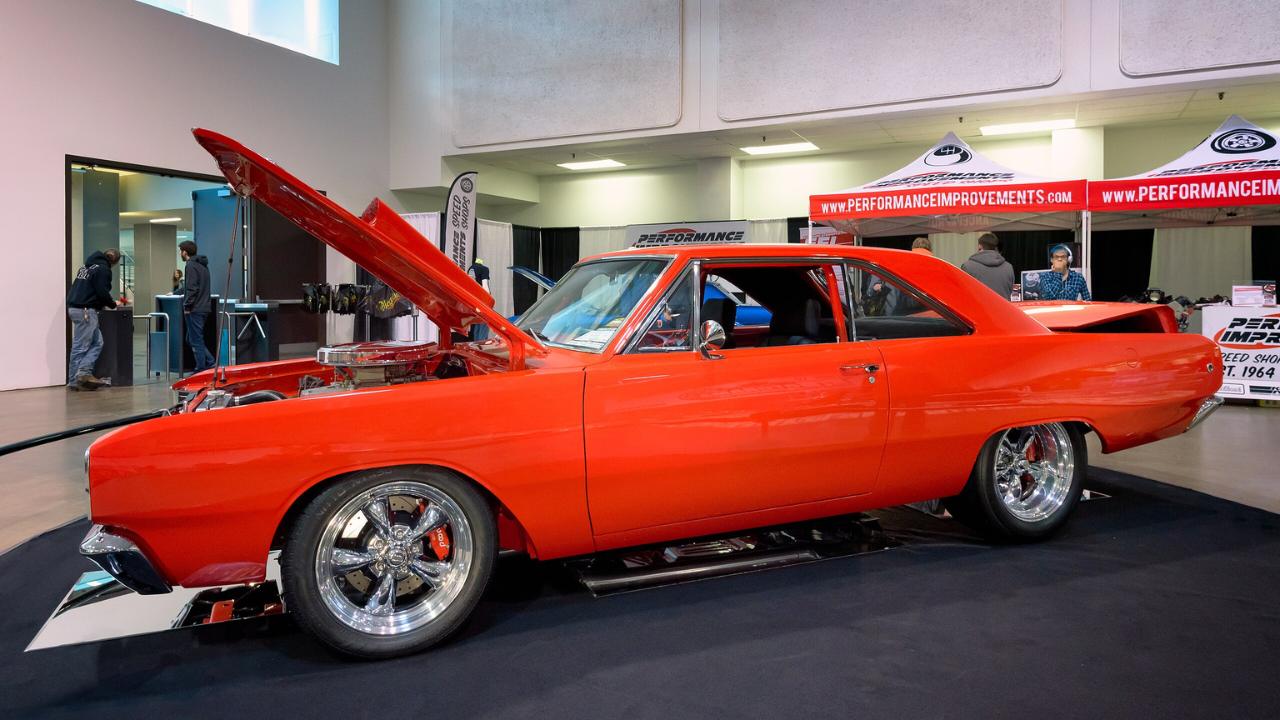
On paper, a compact Dodge Dart with a Hemi sounds like the ultimate sleeper. In reality, the factory-built Hemi Dart was a purpose-built drag car that happened to wear license-plate-sized bumpers. It was created to win races first, and it asked drivers to accept all the compromises that come with that mission.
That’s why people who’ve only seen photos sometimes assume it was a hot street model Dodge sold to anyone who walked into a dealership. It wasn’t. The whole point was to get a light, simple A-body into the winner’s circle with a brutally powerful engine and as little extra baggage as possible.
It existed for one job: dominate Super Stock
By 1968, Chrysler had already learned what worked in Super Stock drag racing: big power in a small, relatively light platform. The Dart’s compact dimensions and straightforward construction made it a strong starting point. The Hemi, of course, was the knockout punch.
Cars like this were shaped by rulebooks as much as by engineers. Super Stock classes rewarded the right mix of displacement, weight, and traction, and the Hemi Dart was aimed squarely at that sweet spot. Everyday comfort and broad drivability just weren’t part of the brief.
It wasn’t built like a normal production Dart
The Hemi Dart wasn’t simply a regular Dart with a bigger engine checked on an order form. It was a limited run of cars prepared specifically for competition use. That reality shows up in the way they were equipped and the kinds of choices that were made to prioritize performance.
When a car is built around track use, the “nice-to-haves” are the first things to go. Anything that adds weight, complexity, or heat management headaches becomes suspect. The result can look like a street car at a glance, but the experience behind the wheel tells a different story.
Street manners were never the priority
A race-oriented Hemi doesn’t behave like a typical commuter V8, especially in the late 1960s. It’s happiest when it’s fed plenty of air and fuel and allowed to spin, and it tends to be less agreeable at low speeds. That’s fine if your world is staging lanes and quarter-mile blasts, but it’s a very different deal in stop-and-go traffic.
Big power also brings big heat, more noise, and more vibration, and those are exactly the things a street car usually tries to minimize. Even when a Hemi Dart could be driven on the road, “could” and “should” weren’t the same thing. The car’s personality made it clear where it belonged.
Weight savings came with real compromises
Drag racing rewards light weight, and the Hemi Dart was designed with that in mind. Saving pounds makes a measurable difference in elapsed time, so the car was set up to shed unnecessary mass wherever possible. That approach can transform the driving experience in ways that don’t feel especially friendly on ordinary roads.
Lightweight panels and stripped-down equipment can mean more noise, less insulation, and a more raw, hollow feel. It can also mean a car that feels less “settled” over bumps and uneven pavement. Those trade-offs are easy to accept when a time slip is the goal, and much harder to love on a grocery run.
Drivetrain choices favored launches, not errands
Getting a powerful car off the line consistently is a science, and the right gearing can make or break a drag setup. Race-minded combinations often use gearing that keeps the engine in its power band during a pass. On the street, that same gearing can make cruising loud and busy, and it can exaggerate the sense that the car wants to sprint rather than stroll.
Traction-focused setups can also be less forgiving when conditions aren’t ideal. A car that’s tuned for a prepared drag strip doesn’t automatically feel relaxed on cold pavement, rough asphalt, or in the rain. The engineering priorities are simply aimed at a different environment.
Brakes, suspension, and tires weren’t aimed at comfort
Track-driven cars are often configured around straight-line stability and weight transfer. That can mean suspension choices that help plant the rear tires and keep the car pointed true under acceleration. Comfort and refined handling balance tend to take a back seat to repeatability and bite.
Even if the hardware is technically “streetable,” it might not feel pleasant or confidence-inspiring in daily use. The car may ride harshly, follow road imperfections, or feel nervous compared with a normal street Dart. That’s not a flaw so much as a clue about what it was designed to do.
It was sold in a way that signaled its real purpose
The Hemi Dart’s mystique comes partly from how specialized it was. These weren’t mainstream showroom offerings built to satisfy a broad audience of drivers. They were created for racers who understood that they were buying a tool, not a refined product.
That kind of buyer expects to tinker, tune, and tailor the car for a class and a track. They also expect compromises that would be unacceptable in a true daily driver. The whole purchase makes more sense when you view it as the first step in a racing program, not a weekend cruiser upgrade.
Why the myth of a street Hemi Dart won’t die
Part of the confusion is that the Dart itself was an everyday car in other trims. People naturally assume the Hemi version must’ve been a wilder, but still normal, option. Add the fact that the car looks relatively understated compared with some era muscle cars, and it’s easy to imagine it blending into traffic.
But the Hemi Dart’s legend is rooted in its role as a factory-backed drag weapon. Its appeal today is wrapped up in rarity, history, and the sheer audacity of the concept. It’s captivating precisely because it breaks the usual rules of what a street car is supposed to be.
Seen through that lens, the car’s quirks aren’t surprises—they’re the point. Everything about it reflects a narrow goal: go fast in a straight line, as quickly as possible, with as few distractions as possible. If that doesn’t sound like everyday driving, that’s because it never was.
More from Fast Lane Only
- Unboxing the WWII Jeep in a Crate
- 15 rare Chevys collectors are quietly buying
- 10 underrated V8s still worth hunting down
- Police notice this before you even roll window down
*Research for this article included AI assistance, with all final content reviewed by human editors.