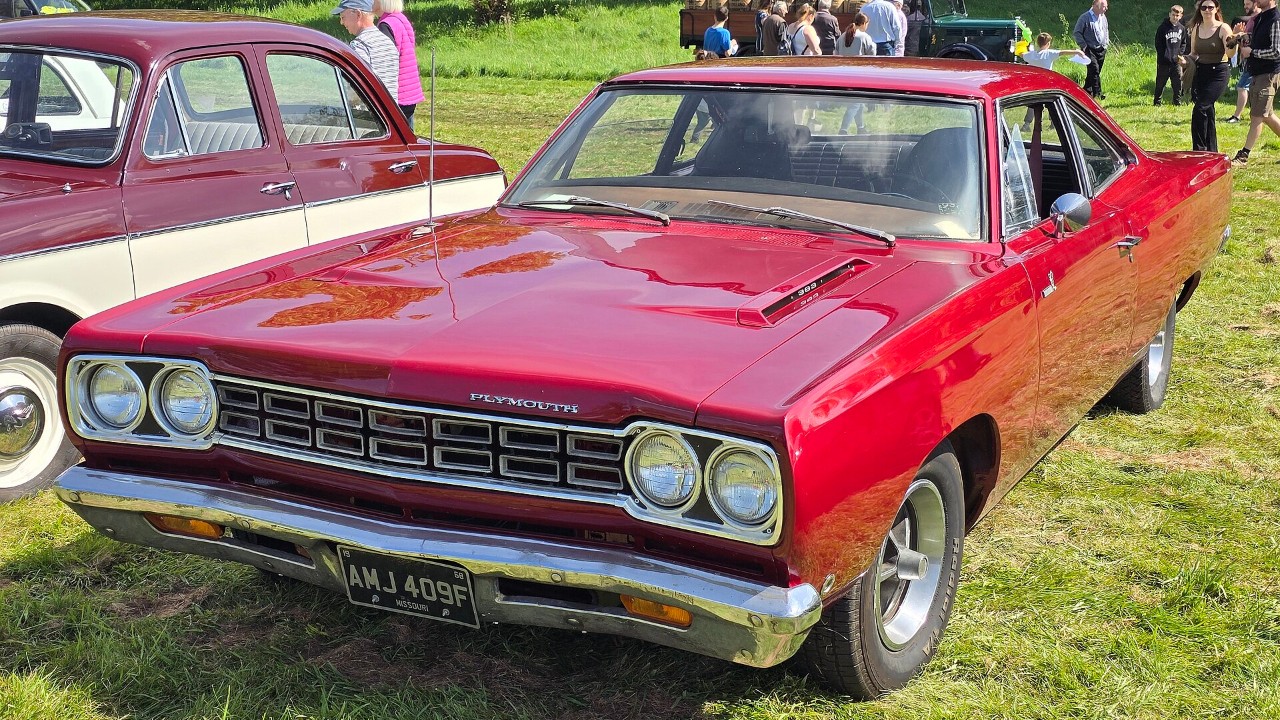
Plymouth’s 1968 Road Runner came with a horn that went “beep, beep,” just like the cartoon bird. That Road Runner horn did not come cheap. Plymouth paid $50,000 to Warner Bros.-Seven Arts for the name and likeness, then $10,000 more to develop the sound, according to the model’s recorded history and Hagerty’s valuation guide.
The car itself was built to be cheap. Plymouth based it on the Belvedere, its basic mid-size model, and paired a strong engine with spartan trim. As a result, its price undercut pricier muscle cars such as the Pontiac GTO and Plymouth’s own GTX.
So the horn looks like an odd place to spend money. Still, the cartoon tie-in gave a budget car a personality, and the sales numbers suggest buyers liked the joke.
What Plymouth paid for the Road Runner horn and name
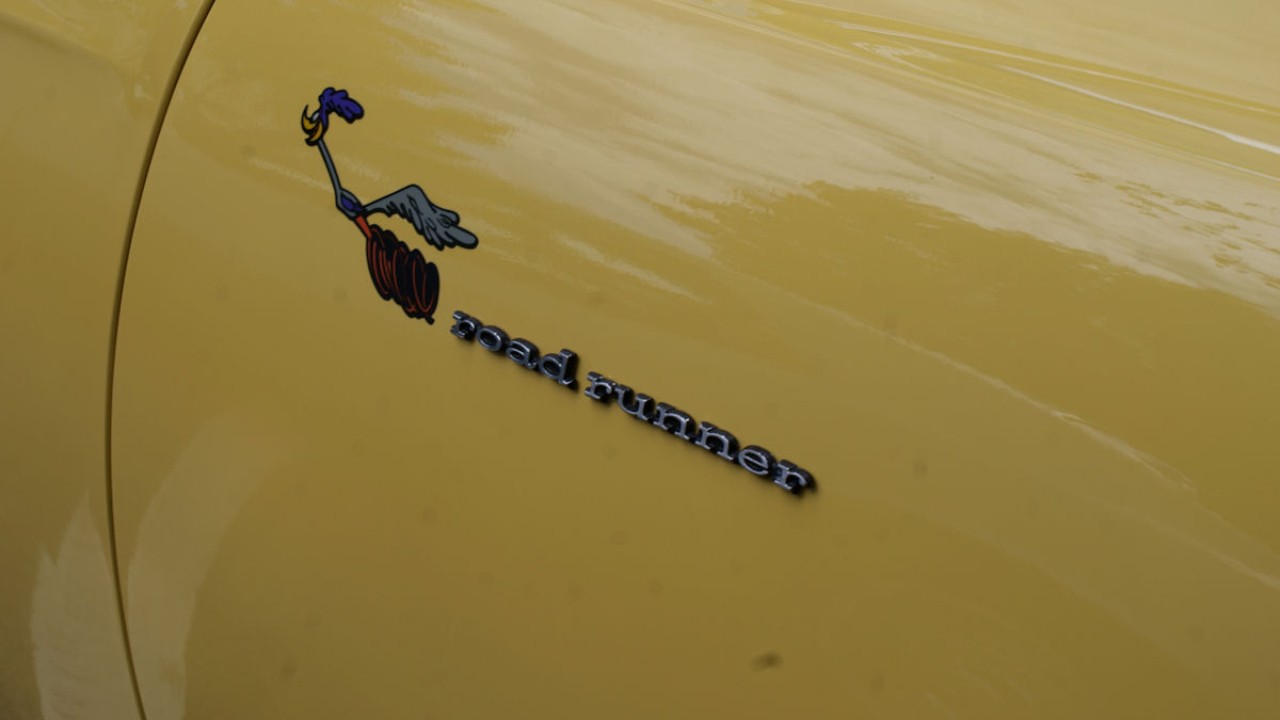
According to Wikipedia’s Plymouth Road Runner history, Plymouth paid $50,000 to Warner Bros.-Seven Arts to use the Road Runner name and likeness. It also paid $10,000 to develop a “beep, beep” horn. Those two payments add up to $60,000.
Hagerty’s valuation guide for the 1968 Road Runner gives the same two figures, but it hedges them. It calls the car’s horn a “charming beep-beep Road Runner cartoon horn.” Then it says the horn “supposedly cost $50,000 to license from Warner Brothers,” plus $10,000 “to develop the beep-beep sound.”
In other words, the sources agree on the sums but frame the deal a little differently. Wikipedia ties the $50,000 to the name and likeness, while Hagerty ties it to the horn. Meanwhile, Jerry’s history of the Plymouth Road Runner splits it the way Wikipedia does: $50,000 “for naming rights” and “a further $10,000 for the horn sound.”
Jerry’s piece also says the car “centered on the horn that made an iconic beeping noise.” In fact, the sound was meant to mimic the chirp of the cartoon bird, so the horn did the marketing every time a driver pressed it.
A budget muscle car with a cartoon sound
Hagerty puts the 1968 base price at $2,870. For that money, buyers got a 383-cubic-inch V8 rated at 335 bhp, fitted with 440 Super Commando heads and camshaft, according to Hagerty. Wikipedia adds that the engine was exclusive to the Road Runner, ran a four-barrel Carter carburetor and made 425 lb-ft of torque at 3,400 rpm.
Meanwhile, the cabin stayed plain. Wikipedia describes a basic vinyl bench seat and no carpeting in early cars. A four-speed manual was standard, and the three-speed TorqueFlite automatic was optional. Early four-speed cars used Inland shifters, and then Hurst shifters replaced them during the model year.
The options list was short, too. It included power steering, front disc brakes, an AM radio, air conditioning and the automatic. However, ordering air conditioning swapped in a 330-hp version of the 383, and buyers could not pair it with the Hemi.
The $714 Hemi option
For buyers who wanted more, the 426 Street Hemi was on the menu. Hagerty lists it at 425 bhp and $714.30 extra, while Wikipedia rounds the option price to $714. By Hagerty’s numbers, that one engine added about a quarter of the base price.
Also, the body lineup grew during the year. The first 1968 cars came only as two-door pillared coupes, according to Wikipedia. Later in the model year, Plymouth added a two-door hardtop without the pillar.
That second body style mattered for the final count. Even so, the coupe stayed the bigger seller, as the production split below shows.
Sales beat the plan by more than double
The real payoff came at the dealership. Plymouth expected to sell about 20,000 Road Runners in 1968, Wikipedia says. Instead, actual sales came to around 45,000, which placed the car third among muscle cars.
Hagerty’s breakdown is more exact. It counts 29,240 coupes and 15,359 hardtops, for 44,559 cars in total. Put simply, the $60,000 spent on the name and the Road Runner horn went into a car that more than doubled its own sales target.
That ratio is the best argument for the cartoon deal. Spread across Hagerty’s 44,559 cars, the two payments came to less than $1.50 per car.
What came next for the Road Runner
For 1969, Plymouth added a convertible, and Wikipedia records 2,128 of them that year. The car also got revised taillights and grille, side marker lights, optional bucket seats and new decals.
Another cartoon touch arrived with the 1969 Air Grabber hood option. Its air cleaner lid carried a decal of Wile E. Coyote saying “Coyote Duster.” Plymouth also added the 440 Six Barrel engine for 1969, rated at 390 hp.
Then the awards followed. Motor Trend named the Plymouth Road Runner its Car of the Year for 1969, and domestic production for all body styles reached 81,125 that year, according to Wikipedia.
More from Fast Lane Only
- Unboxing the WWII Jeep in a Crate
- 15 rare Chevys collectors are quietly buying
- 10 underrated V8s still worth hunting down
- Police notice this before you even roll window down
This article was created with the help of AI and was reviewed and edited by Fast Lane Only editors before publication.