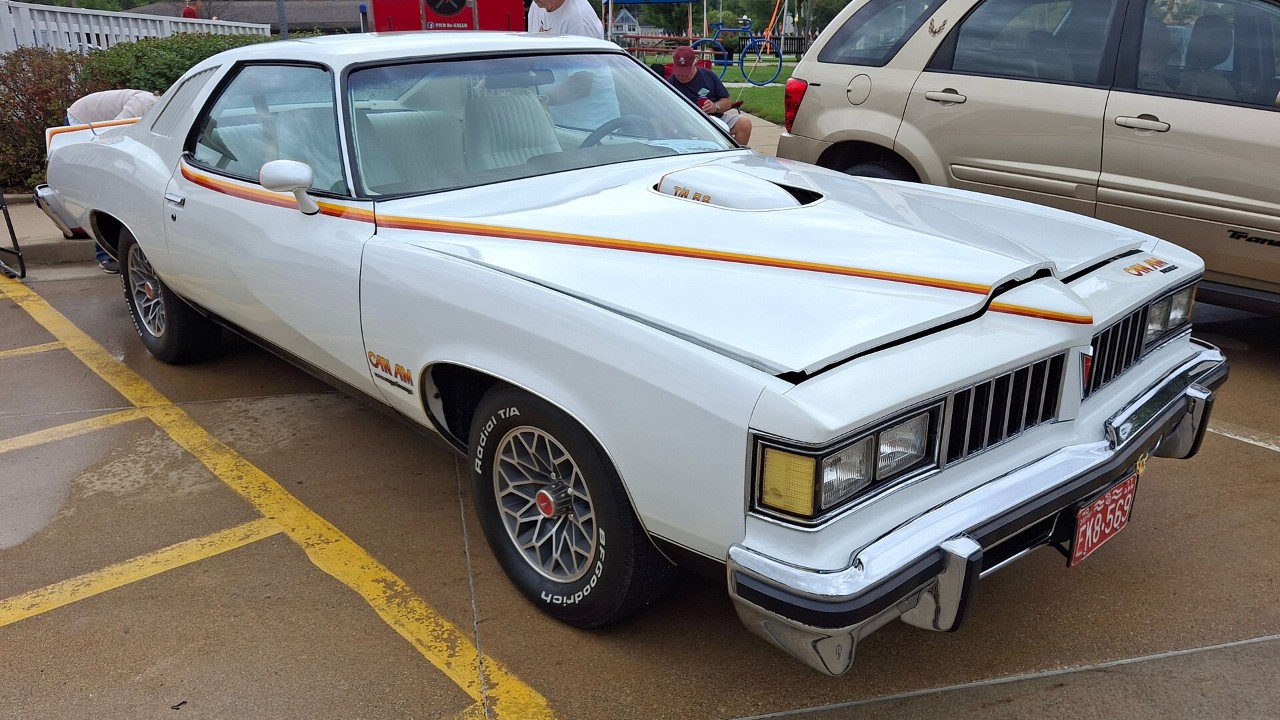
The 1977 Pontiac Can Am lasted about half a model year, and a broken tool started its end. The mold that made the Pontiac Can Am spoiler, a fiberglass ducktail, broke at the shop that converted the cars. Production stopped, and Pontiac management then chose to cancel the car instead of restarting it.
The Can Am was a trim package on the LeMans coupe. Pontiac shipped Cameo White coupes to Jim Wangers’ Motortown, which added the appearance parts. That outside conversion is why one damaged mold could halt the whole program.
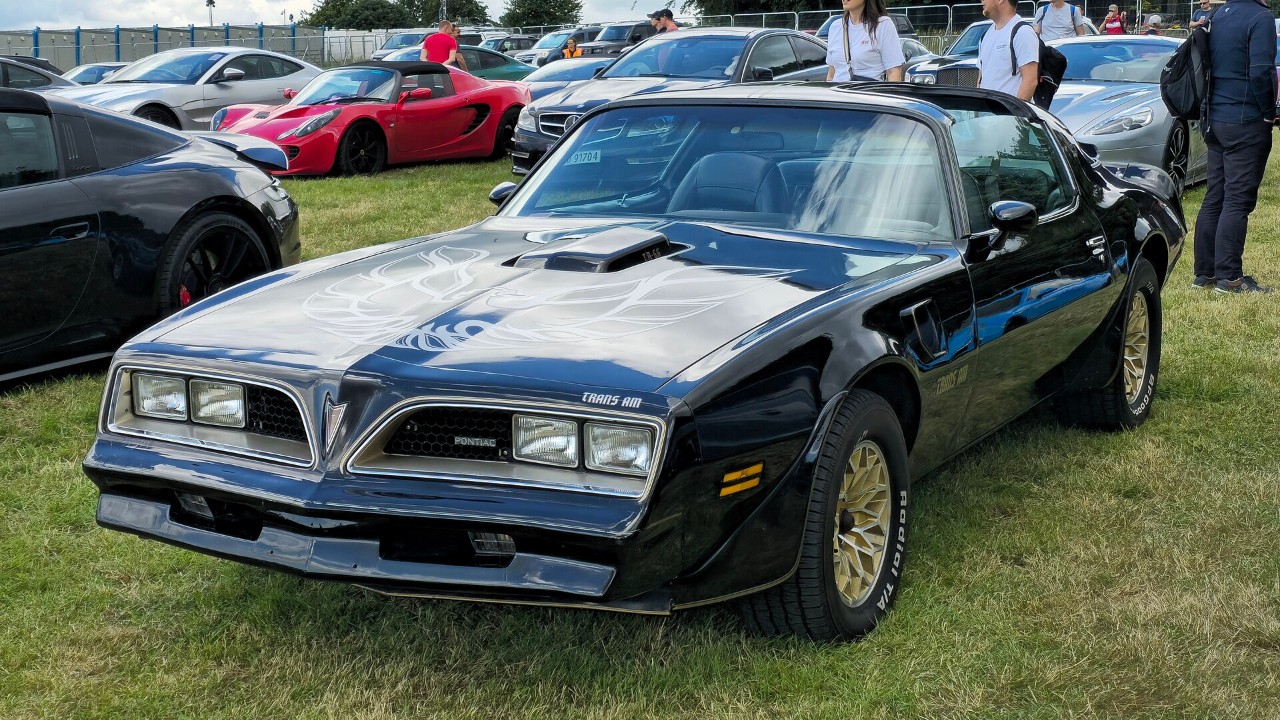
The car also borrowed from two other Pontiacs. It took the Trans Am’s shaker scoop and engine, and it shared its dashboard and console with the Grand Prix. That second link turned out to matter as much as the mold.
How Motortown built the Can Am
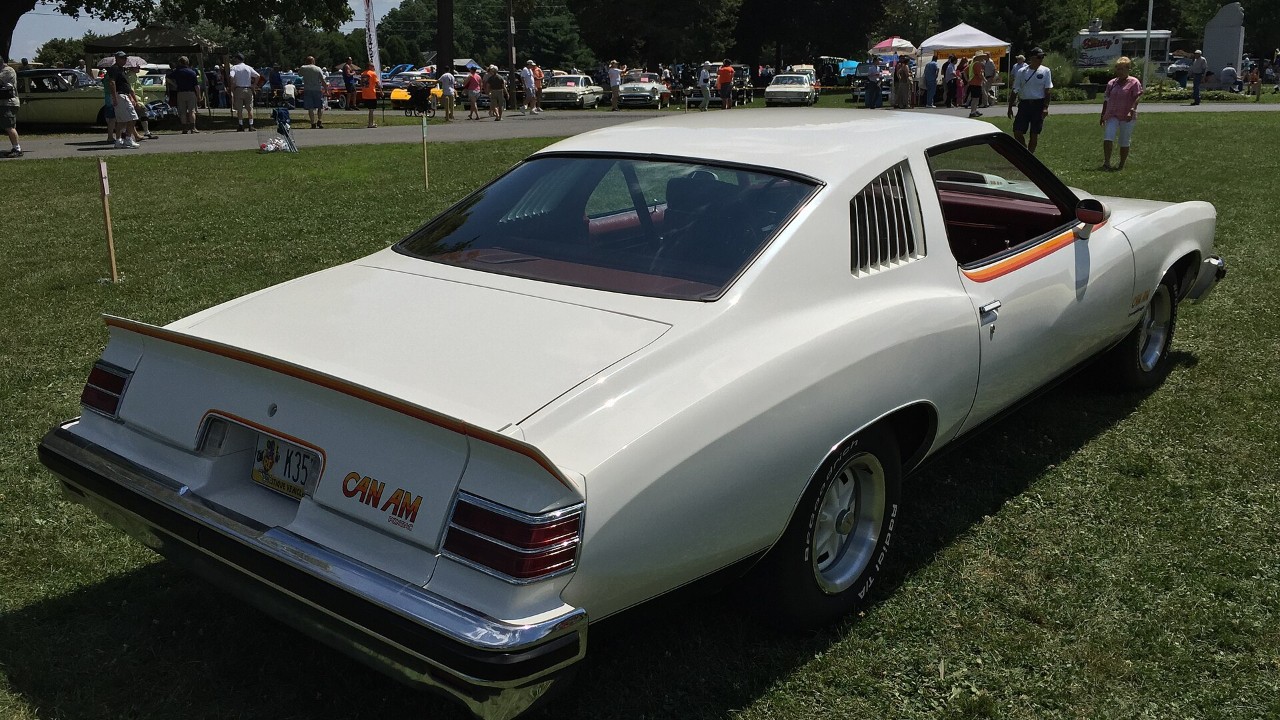
According to Mac’s Motor City Garage, the idea came from Jim Wangers, the marketing man behind Motortown. He first pitched a LeMans styled like a 1969 GTO Judge in Carousel Red, and management rejected it. Wangers then toned it down with help from Ben Harrison, borrowing the “All American” show-car theme in Cameo White.
The base cars left the Pontiac plant as Cameo White LeMans Sport Coupes. Each had a Grand Prix instrument panel and gauges, heavy-duty suspension, body-color sport mirrors and Cameo White Rally II wheels, Mac’s says. At Motortown, workers added a modified hood, a Trans Am shaker assembly, a three-piece fiberglass rear spoiler and a tri-color stripe kit.
Wikipedia’s Pontiac Can Am entry describes the graphics as orange, red and yellow, with blacked-out lower panels and window trim. It also says Pontiac introduced the car in January 1977 at the Detroit auto show, midway through the model year.
The engines under the shaker scoop
Most cars got the W72 400 from the Trans Am, labeled “T/A 6.6.” Hagerty rates it at 200 horsepower, and Mac’s gives the same 200 net hp. By comparison, Wikipedia notes that the base Pontiac 400 that year made 180 hp.
Cars for California and high-altitude areas got the Oldsmobile 403 instead, rated at 185 horsepower by both Hagerty and Wikipedia. According to the Can Am Registry, as cited by Wikipedia, 42 cars carry the Olds engine. Every car used an automatic, and Wikipedia says no four-speed manual cars were built.
The package was not cheap. Hagerty says the Can Am option cost $1,214 in 1977.
The day the Pontiac Can Am spoiler mold broke
Every car needed that three-piece rear spoiler, and Motortown made it from fiberglass on low-volume tooling. Then the tool failed. Hagerty puts it plainly: “Motortown’s tool for making the rear spoiler broke.” Wikipedia likewise says the mold for the fiberglass rear spoiler broke, and that this ended production at Motortown.
Street Muscle adds two details. It says the mold was damaged beyond repair and that the builder had no backup. It also reports that a replacement would have taken 90 days.
At its peak, Street Muscle says, Motortown was reportedly turning out 30 to 40 conversions a day. So a three-month wait would have stalled a shop that had been converting dozens of cars a day.
Why Pontiac cancelled instead of waiting
The mold stopped the line, but the sources agree that management made the final call. Hagerty says Pontiac chose to cancel the Can Am rather than ship cars without spoilers for dealers to finish. Street Muscle dates the cancellation to mid-June 1977.
The Grand Prix was part of the reason. Because both cars shared a dashboard and console, some Pontiac executives saw each Can Am as a lost Grand Prix sale, Wikipedia says. Hagerty adds that Grand Prix output was on track for a record year of 288,000 cars.
Demand was not the problem. Wikipedia says Pontiac planned 2,500 cars and received more than 5,000 orders. Mac’s, however, says General Manager Alex Mair approved an order for 5,000 cars, and that dealers reportedly ordered 10,000.
How many were built is still disputed
Nobody agrees on the final count. Hagerty calls 1,377 “the widely accepted number,” and Mac’s also gives 1,377. However, Mac’s notes that Wangers himself recalled 1,133. Street Muscle says production stopped after the 1,133rd car, and Wikipedia says the true number “has never been accurately determined,” with its own estimate at 1,133.
The leftover cars tell the rest of the story. After the cancellation, Street Muscle says, Pontiac told dealers to expect white LeMans Sport Coupes with Trans Am engines and Grand Prix interior upgrades.
Auction results give a sense of value. In its Can Am history, Hagerty reports that Russo & Steele sold a Can Am at its Scottsdale auction for $18,150 and Barrett-Jackson sold one in Scottsdale for $26,400. Hagerty also estimates that perhaps less than one quarter of Can Ams remain.
More from Fast Lane Only
- Unboxing the WWII Jeep in a Crate
- 15 rare Chevys collectors are quietly buying
- 10 underrated V8s still worth hunting down
- Police notice this before you even roll window down
This article was created with the help of AI and was reviewed and edited by Fast Lane Only editors before publication.