The 1968 Plymouth Satellite arrived in showrooms as the sensible middle child of Chrysler’s midsize lineup, yet it quietly packed the hardware and chassis to run with far louder muscle cars. On paper it was a family coupe or convertible, but in the right trim and with the right options, it delivered real performance without the cartoon graphics or insurance-baiting badges. I see it as one of those cars that let buyers have their weekday respectability and their weekend quarter-mile fun in the same garage bay.
That dual personality started with the body and continued through the engine bay, where a wide spread of V8s turned the Satellite into anything from a mild cruiser to a serious street machine. Today, as values for headline muscle soar, the 1968 Satellite’s understated image is finally starting to look like an asset rather than a compromise.
The clean-sheet look that hid a hot streak
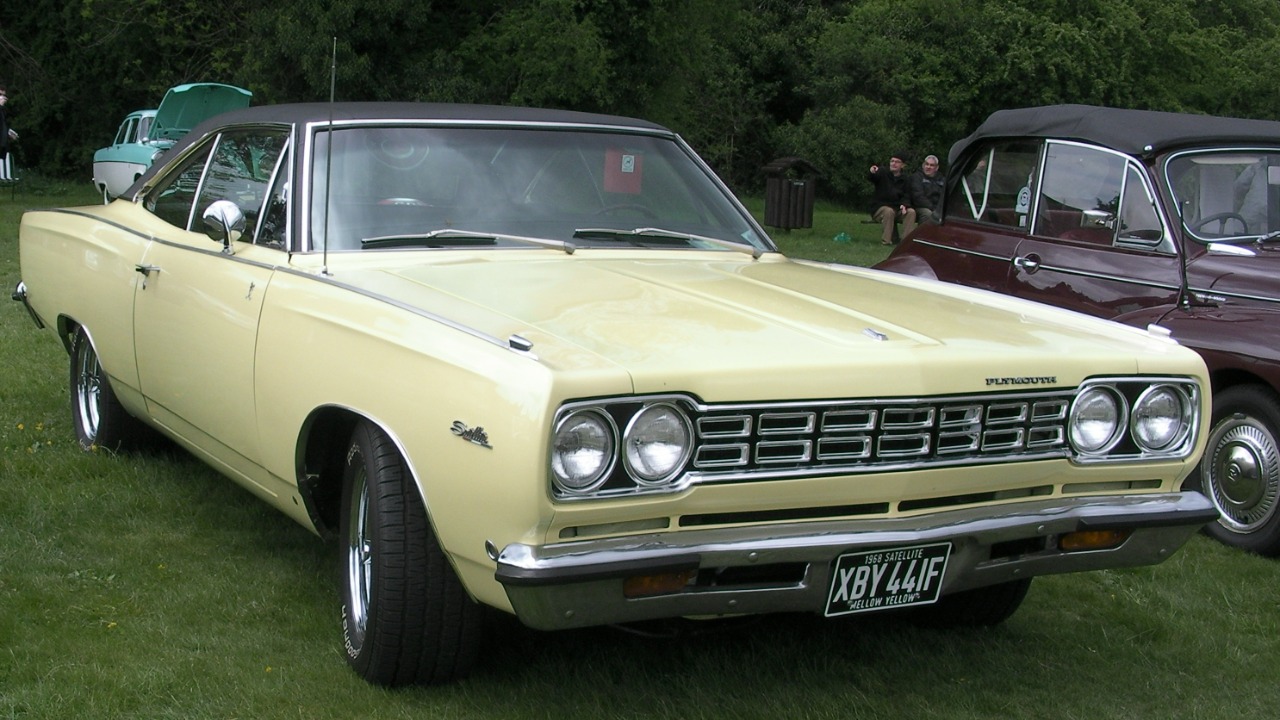
Plymouth gave the Satellite a fresh shape for 1968, trading earlier curves for a long, straight-edged profile that looked more businesslike than brash. The car’s sharp character lines and prominent grille gave it a modern, slightly aggressive face, but without the stripes and decals that shouted for attention on some rivals. Contemporary photos of a 1968 Plymouth Sport underline how those crisp lines and that bold front end made the car look more upscale than its price suggested. To my eye, it is a design that has aged into something quietly confident rather than dated.
Under that sheetmetal, Plymouth built the Satellite on the same basic midsize platform that would also host the Road Runner and GTX, which meant the proportions and stance were inherently muscular. The earliest 1968 cars were sold as 2‑door pillared coupes, with a B‑pillar giving the roofline a sturdy, almost formal look before hardtops and convertibles followed. A surviving example documented by a specialty dealer shows how a well-kept 1968 Plymouth Satellite still carries that balanced mix of straight lines and subtle curves. It is the kind of car that blends into traffic until you notice the stance and the rumble.
Engines that turned a family car into a sleeper
The real story, at least for anyone who cares about performance, started Under the hood. Plymouth officially listed a 273 cubic inch V8 as the base engine for the Satellite, a sensible choice for buyers who wanted economy and smoothness. Most customers, though, stepped up to larger V8s, and period material notes that many opted for Under the 318, 361, or 383 V8 options. That spread meant a buyer could tailor the car from mild to genuinely quick, all while keeping the same unassuming body.
Factory Specifications show how serious those choices could be. In Satellite trim, the 318 V8 carried bore and stroke figures of 3.91 by 3.31 inches and was rated at 230 horsepower, while the 383 could be ordered with outputs that climbed well beyond the base tune. The Specifications for these Engines list the Satellite’s 318, 3.91, 3.31, 230, and 383 figures right alongside the hotter GTX data, which underlines how much common hardware the “sensible” model shared with its flashier siblings. In practice, a Satellite with a 383 and a quiet exhaust could surprise plenty of drivers who dismissed it as a grocery getter.
Sharing DNA with the GTX and Road Runner
Part of what makes the 1968 Satellite so intriguing to me is how closely it shadowed the halo cars in Plymouth’s own showrooms. The Plymouth GTX, marketed as a more refined muscle car, came standard with a 440 cubic inch V8 and was explicitly sold on its Performance credentials. Period descriptions of the Plymouth GTX highlight that 440 as the centerpiece, but the underlying chassis and much of the running gear were shared with the Satellite. In other words, the cheaper car was not some stripped-out cousin, it was a close relative wearing a quieter suit.
The same story played out with The Road Runner, which used the Satellite body as its starting point and then added a budget performance formula that proved wildly successful. Contemporary analysis notes that The Road Runner offered enthusiasts a very tough street machine at a lower price point, and demand more than doubled what Plymouth had projected. That success depended on the basic Satellite package being strong enough to handle serious power and abuse, which tells me everything I need to know about how capable the quieter model really was.
From factory sleeper to modern hot rod canvas
Because the Satellite started life as a relatively affordable midsize, it has become a favorite canvas for builders who want muscle car performance without paying muscle car money. One well-documented street build centers on an owner named Robert, who wanted a car that could run hard yet idle smoothly in traffic. Engine builder Donhoff responded with a conservative COMP camshaft, using a 218/218-at-. 050 hydraulic roller profile that delivered both manners and speed. The resulting Robert build showed how a 1968 Satellite could run 12‑second quarter miles while still behaving like a normal street car, which fits perfectly with the model’s original dual-purpose character.
At the wilder end of the spectrum, some enthusiasts have taken rough survivors and turned them into full‑on drag machines. A video walkaround of an Abandoned 1968 Plymouth Satellite nicknamed The Ratty Satty documents a NEW 650 Horsepower 500 Big Block Stroker swap, transforming a tired shell into a brutally fast project. Watching that Abandoned Plymouth Satellite come back to life as The Ratty Satty, with that 650 and 500 Big Block Stroker combination, drives home how robust the basic platform is. When a car can handle everything from a mild 273 to a race‑ready stroker, it earns its performance credentials the hard way.
Values, variants, and why the Satellite still makes sense
For anyone shopping the classic market today, the Satellite’s low‑key image still pays dividends. Valuation data shows that Typically, you can expect to pay around $28,207 for a 1968 Plymouth Satellite in good condition with average spec, a figure that keeps it within reach for many enthusiasts. The same guide notes that the Typically Plymouth Satellite price ceiling over the last few years has remained well below the six‑figure territory that some muscle cars now occupy. By contrast, a 1968 Plymouth Road Runner in similar condition is pegged at around $51,675, with the highest sale in recent years reaching $264,000, according to the Typically, Plymouth Road data. That gap tells me the Satellite still offers a lot of car for the money.
Even within the Satellite family, there were interesting variants that blended style and speed. A French‑language Fiche technique for the 1968 plymouth sport satellite hardtop lists the convertible version with a production run of 1,771 units and a base price of 3,416 dollars, placing it in the same conversation as contemporary Ford Fairlane, Mercury Comet, Oldsmobile 442, and Pontiac GTO models. That Fiche technique snapshot shows how Plymouth positioned the Satellite as a credible alternative to the era’s big names, even if it rarely gets mentioned in the same breath today.
More from Fast Lane Only: