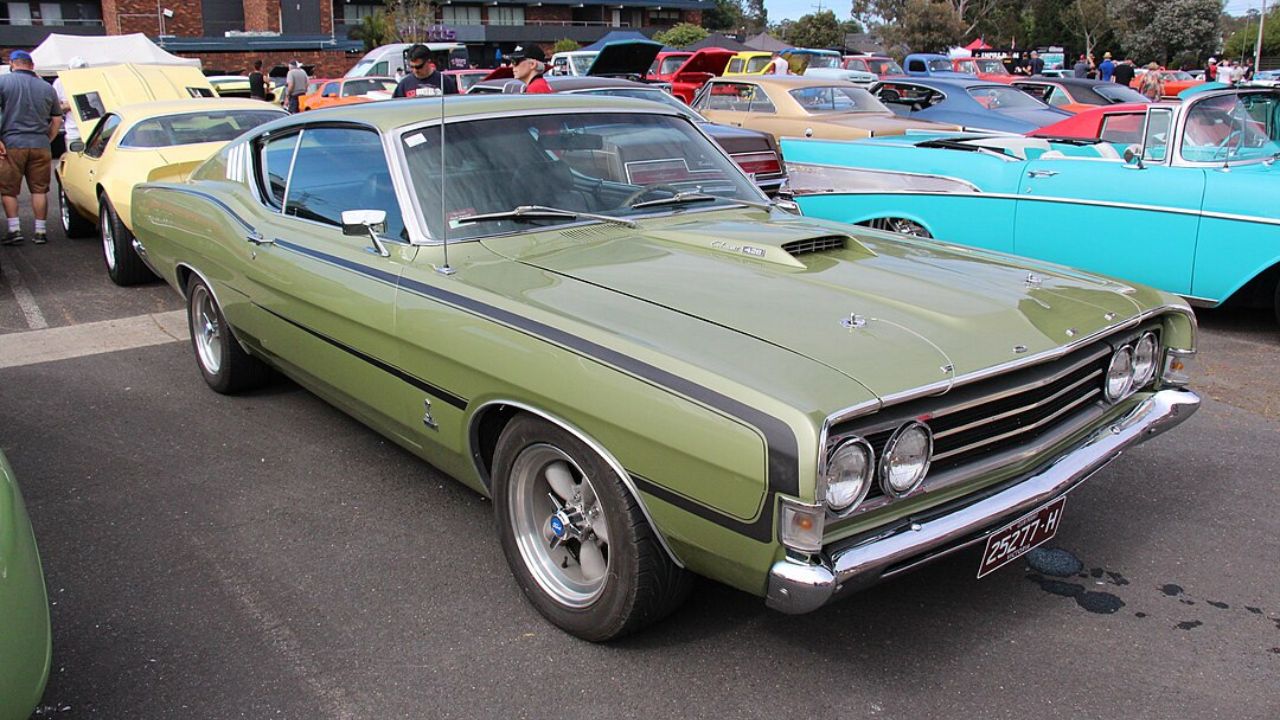
The 1969 Ford Cobra arrived during the peak of Detroit’s horsepower wars, when every manufacturer was chasing bigger engines and faster quarter-mile times. What set it apart was not just raw power, but how effectively it delivered big-block performance in a relatively accessible, road-ready package that felt less extreme than its numbers suggested.
A Performance Sedan Disguised as a Family Car
At first glance, the Cobra name might suggest a lightweight sports car, but the 1969 Ford Cobra was something very different. It was based on Ford’s full-size platform, giving it the space and comfort of a traditional sedan while hiding serious performance beneath its conservative exterior.
The Ford Cobra (1969) represented Ford’s strategy of bringing high-output V8 power into everyday usability. Instead of forcing buyers into stripped-down race-inspired machines, Ford offered a car that could serve as a daily driver while still delivering strong acceleration when needed.
This dual identity was central to its appeal. It looked understated compared to more aggressive muscle coupes, but its performance potential was unmistakable once the engine came to life.
Big-Block Power Without the Stripped-Down Experience
What made the 1969 Cobra stand out in the muscle car era was its ability to pair large-displacement V8 engines with a relatively comfortable driving experience. Buyers could access serious big-block power without sacrificing ride quality or usability.
Ford’s engineering approach focused on torque-rich engines that delivered strong low-end response. This meant the Cobra did not need to be pushed hard to feel fast. Instead, it offered immediate, confident acceleration that made it especially effective in real-world driving conditions.
Unlike more stripped-down performance cars of the time, the Cobra maintained insulation, comfort features, and a more refined cabin experience. This made it feel less like a weekend drag-strip special and more like a full-time performance cruiser.
A Balanced Chassis Built for Real Roads
The 1969 Cobra’s full-size platform gave it inherent stability that smaller muscle cars sometimes lacked. While it was not designed for sharp cornering or lightweight agility, it excelled in straight-line composure and highway cruising.
Suspension tuning prioritized comfort, but it was reinforced enough to handle the torque of big-block engines without feeling unstable. This balance made the Cobra especially appealing to buyers who wanted performance without the harshness often associated with muscle cars.
Steering was smooth and predictable, reinforcing the car’s role as a confident highway performer rather than an aggressive track-focused machine.
The Everyday Muscle Car Philosophy
The Cobra reflected a broader shift in Ford’s thinking during the late 1960s: performance did not need to be limited to stripped-down coupes or specialized trims. Instead, it could be integrated into more practical vehicles.
This philosophy helped the Cobra reach a different type of buyer. It appealed to drivers who wanted strong V8 performance but also needed space, comfort, and usability. In many ways, it blurred the line between muscle car and full-size family sedan.
That versatility became one of its defining strengths. It was not the most extreme car on the road, but it was one of the most usable ways to access big-block Ford performance.
A Subtle Presence in a Loud Era
The muscle car era is often remembered for its bold styling, aggressive graphics, and attention-grabbing designs. The Cobra took a more restrained approach. Its styling was clean and understated, especially compared to more flamboyant competitors.
This subtlety gave it an advantage in a different way. While it did not always attract immediate attention, it avoided the exaggerated visual cues that sometimes dated other performance cars. Instead, it projected quiet confidence.
That understated appearance contributed to its “sleeper” character. Drivers often underestimated it until the throttle was applied, at which point its big-block power became immediately obvious.
Comfort That Expanded Its Usability
One of the Cobra’s most important advantages was its comfort-oriented design. Unlike many performance-focused vehicles of the era, it was built to handle long-distance driving without fatigue.
The cabin offered space, insulation, and a smoother ride quality than lighter muscle cars. This made it appealing not just for performance enthusiasts, but also for buyers who needed a practical daily vehicle with extra power on tap.
That usability helped broaden its appeal beyond traditional muscle car buyers. It was a car you could realistically live with every day while still enjoying strong V8 performance when desired.
A Different Kind of Muscle Car Identity
While it may not have achieved the same fame as Ford’s most iconic performance models, the 1969 Cobra carved out a distinct identity. It was not about extreme aggression or stripped-down racing intent—it was about accessible, balanced performance.
In that sense, it represented a more mature interpretation of the muscle car concept. Instead of forcing compromise between comfort and power, it reduced the trade-off and allowed both to coexist more naturally.
This made it particularly appealing to buyers who wanted performance without the compromises that came with more focused muscle machines.
Collector Perspective and Modern Appreciation
Today, the 1969 Ford Cobra is appreciated for its unique position in Ford’s lineup rather than its headline performance figures. It represents a moment when manufacturers experimented with integrating muscle car power into more conventional full-size vehicles.
Collectors value its relative rarity and its role as a bridge between traditional sedans and more specialized performance models. Well-preserved examples are increasingly recognized as part of Ford’s broader performance evolution.
The Ford Cobra (1969) now stands as a reminder that big-block performance did not always require sacrifice. It showed that power, comfort, and everyday usability could exist in the same package—something that feels surprisingly modern in hindsight.
Why Its Legacy Still Resonates
The legacy of the 1969 Cobra lies in its balance. It delivered strong V8 performance without stripping away comfort or practicality, making it one of the more versatile interpretations of the muscle era.
In today’s automotive world, where performance sedans and powerful daily drivers are common, the Cobra’s formula feels ahead of its time. It anticipated a future where buyers would expect both speed and comfort in a single vehicle.
That forward-thinking approach is why it continues to earn respect. The 1969 Ford Cobra was not just a product of its era—it was a quiet preview of what performance cars would eventually become.
More from Fast Lane Only
- Unboxing the WWII Jeep in a Crate
- 15 rare Chevys collectors are quietly buying
- 10 underrated V8s still worth hunting down
- Police notice this before you even roll window down
*Research for this article included AI assistance, with all final content reviewed by human editors