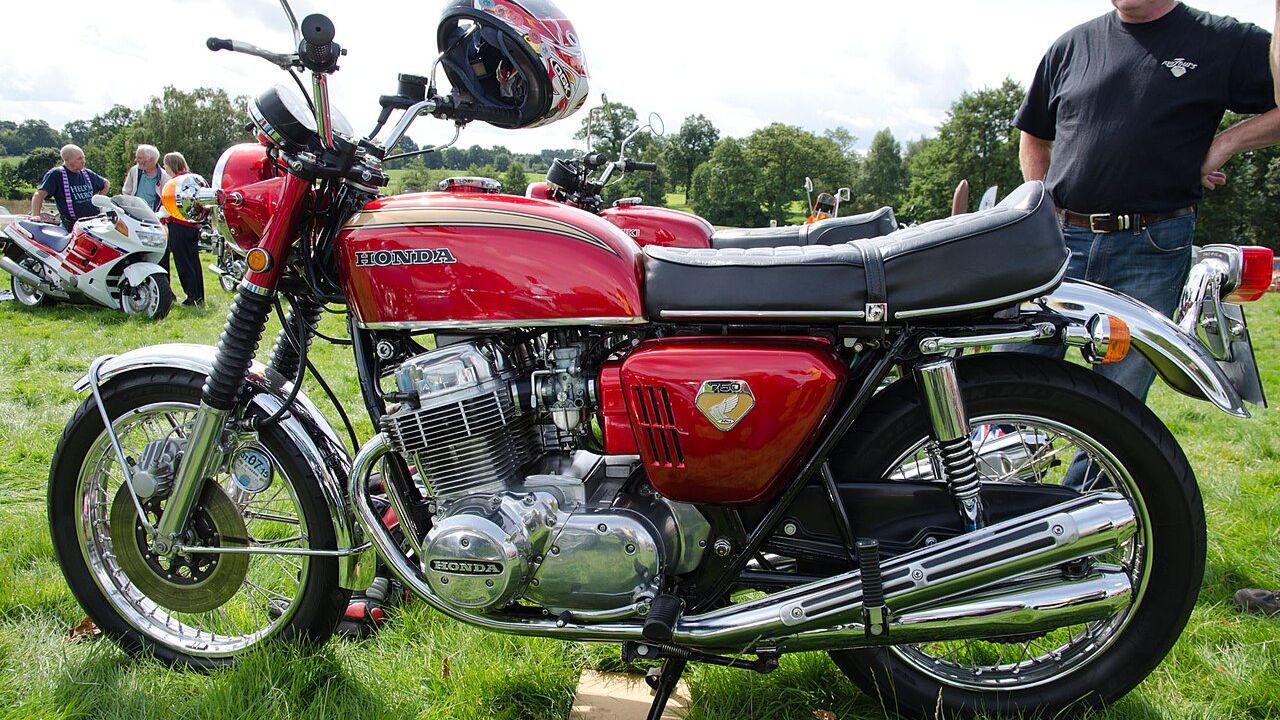
The 1969 Honda CB750 revolutionized motorcycling by introducing a blend of power, technology, and design that set new standards for performance. Widely recognized as the first superbike, the CB750 not only transformed Honda’s reputation but also redefined what riders expected from a motorcycle.
Historical Context
The motorcycle market in the 1960s was characterized by a mix of classic British bikes and emerging Japanese models. British manufacturers like Triumph and BSA dominated the scene, producing single and twin-cylinder motorcycles that were celebrated for their charm and character. However, as the decade progressed, Japanese manufacturers began to challenge this status quo, introducing bikes that offered better reliability and performance. The landscape was changing, and the stage was set for a major breakthrough.
Key competitors prior to the launch of the CB750 included models like the 650cc Triumph Bonneville and the BSA Lightning, both of which were known for their spirited performance. However, these bikes fell short in terms of technological innovation and refinement compared to what Honda was about to unleash. The cultural impact of motorcycles during the 1960s was significant, as they became symbols of freedom and rebellion, particularly among the youth. This burgeoning motorcycle culture laid the groundwork for the superbike concept, which would soon emerge with the launch of Honda’s game-changing model.
Design Innovations
The introduction of the SOHC inline-four engine marked a significant milestone in motorcycle design. This innovative engine configuration provided a perfect balance of power and smoothness, allowing for higher revs and better acceleration. The engine produced around 68 horsepower, a staggering figure for its time, which made it a formidable contender on both the road and the racetrack. Additionally, the CB750 was one of the first motorcycles to include an electric starter, a feature that added convenience and modernity, making it more accessible to a broader range of riders.
Honda’s aesthetic design elements also played a crucial role in the CB750’s appeal. The bike featured a distinctive, elongated silhouette, with a beautifully sculpted gas tank and chrome accents that exuded a sense of sophistication. The attention to detail in the CB750’s design set trends in the motorcycle industry, influencing future models and establishing a standard for aesthetic appeal that many manufacturers sought to replicate.
Performance Metrics
When examining the performance metrics of the 1969 Honda CB750, it becomes clear why it was dubbed the first superbike. With a top speed of approximately 125 mph, it outclassed many of its competitors, including the Triumph Bonneville, which struggled to reach 110 mph. The CB750’s torque curve was also impressive, offering excellent acceleration that allowed riders to easily navigate both urban and open road conditions. The combination of horsepower, torque, and weight resulted in a machine that could handle sharp corners and high-speed straights with remarkable ease.
Real-world testing and reviews from notable motorcycle publications of the time highlighted the bike’s superior handling and braking capabilities. Enthusiasts praised the CB750 for its stability at speed and its responsive handling, marking a significant step forward in motorcycle performance. The bike’s ability to deliver thrilling rides without compromising on safety made it an instant favorite among both casual riders and serious motorcyclists.
Technological Advancements
One of the standout features of the CB750 was its pioneering front disc brake system. This technology greatly improved stopping power compared to the drum brakes common on motorcycles of that era. The introduction of disc brakes not only enhanced safety but also allowed for more aggressive riding styles, as riders could confidently lean into corners knowing they had reliable braking performance at their disposal.
Additionally, Honda employed new materials and engineering techniques that set the CB750 apart from its predecessors. The use of lightweight alloys and advanced manufacturing processes enabled Honda to create a motorcycle that was both powerful and manageable. These innovations represented a significant leap in technology, making the CB750 a benchmark for future motorcycles to aspire to, as it established a new norm for performance and reliability.
Market Reception
The initial market reception of the Honda CB750 was nothing short of spectacular. In its first year, the bike sold approximately 7,000 units in the United States, a figure that quickly escalated as word spread about its performance and reliability. Within just a few years, Honda had captured a substantial share of the motorcycle market in both the U.S. and Europe, positioning itself as a dominant force in the industry. The CB750’s success not only solidified Honda’s reputation but also prompted other manufacturers to rethink their approach to motorcycle design and performance.
Rider testimonials and feedback from early adopters painted a picture of enthusiastic approval. Riders appreciated the CB750’s balance of power and comfort, making it suitable for both long-distance touring and spirited rides through twisty roads. The motorcycle’s role in establishing Honda as a dominant force cannot be overstated; it laid the groundwork for subsequent models and innovations that would continue to push the boundaries of motorcycle performance.
Legacy and Influence
The legacy of the Honda CB750 is evident in its lasting influence on the design of subsequent superbikes. Many manufacturers have drawn inspiration from its innovative features and performance metrics, resulting in a lineage of motorcycles that continue to elevate the standards of speed and safety. Bikes like the Kawasaki Z1 and Suzuki GS series owe a great deal to the pioneering design and engineering that the CB750 introduced.
Moreover, the CB750’s impact on motorcycle racing and performance standards cannot be overlooked. It served as a benchmark for competition, pushing manufacturers to innovate and improve their offerings. The motorcycle’s continued relevance today is reflected in the collector’s market, where pristine examples of the CB750 often fetch impressive sums at auctions, affirming its status as a cherished piece of motorcycle history.
Cultural Impact
The Honda CB750’s cultural impact extends beyond its engineering marvels. It has been featured in various films and television shows, solidifying its status as an icon of the motorcycle world. For instance, it made appearances in movies like “Easy Rider,” which celebrated the freedom of the open road and the biker lifestyle. Stories from famous riders and enthusiasts who championed the model have further contributed to its legendary status, with many recounting their experiences and the joy of owning this remarkable machine.
The motorcycle also played a pivotal role in shaping the biker subculture of the era. As more people sought the thrill of riding, the CB750 became a staple among both casual riders and serious enthusiasts, embodying the spirit of adventure and rebellion that defined the decade. Its blend of performance and style resonated with a generation, making it a symbol of freedom on two wheels.
Reflecting on the contributions of the 1969 Honda CB750 to motorcycle performance and design reveals a pivotal moment in the industry’s history. It not only set the stage for future innovations but also demonstrated how a single model could reshape the expectations of riders everywhere. As we continue to celebrate its legacy, the CB750 remains an enduring symbol of what makes motorcycling not just a mode of transportation, but a way of life.
More from Fast Lane Only