The 1969 Toyota Century did not shout about its status with chrome and excess. It settled into the background, confident that those who mattered already knew what it was. In an era of muscle cars and rising horsepower wars, this quiet Japanese flagship chose understatement, and that restraint is exactly what makes it fascinating today.
The quiet flagship that redefined Japanese luxury
When The Toyota Century arrived in the late 1960s, it was not aimed at the mass market. It was designed as Toyota’s domestic flagship, a car for executives, politicians, and business leaders who preferred privacy to spectacle. According to a brief history of the model, The Toyota Century was first introduced in 1967 as the top of the company’s passenger car range, built in relatively small numbers and sold almost exclusively in Japan.
The name itself signaled ambition. The Toyota Century, written in Japanese as トヨタ・センチュリー and in Hepburn as Toyota Senchurī, was conceived as a full-size luxury sedan that would sit above the Crown and other established models in the domestic hierarchy. It was not simply a larger Toyota. It was a distinct project, with its own engineering, its own production processes, and its own clientele, as outlined in reference material on The Toyota Century.
By 1969, the Century had already settled into its role. It was no longer a new curiosity, but a familiar presence in government motorcades and corporate parking garages. The car did not need to impress onlookers because its owners were often the type who preferred not to be recognized at all. The Century was their ideal accomplice.
Understated design, obsessive craftsmanship
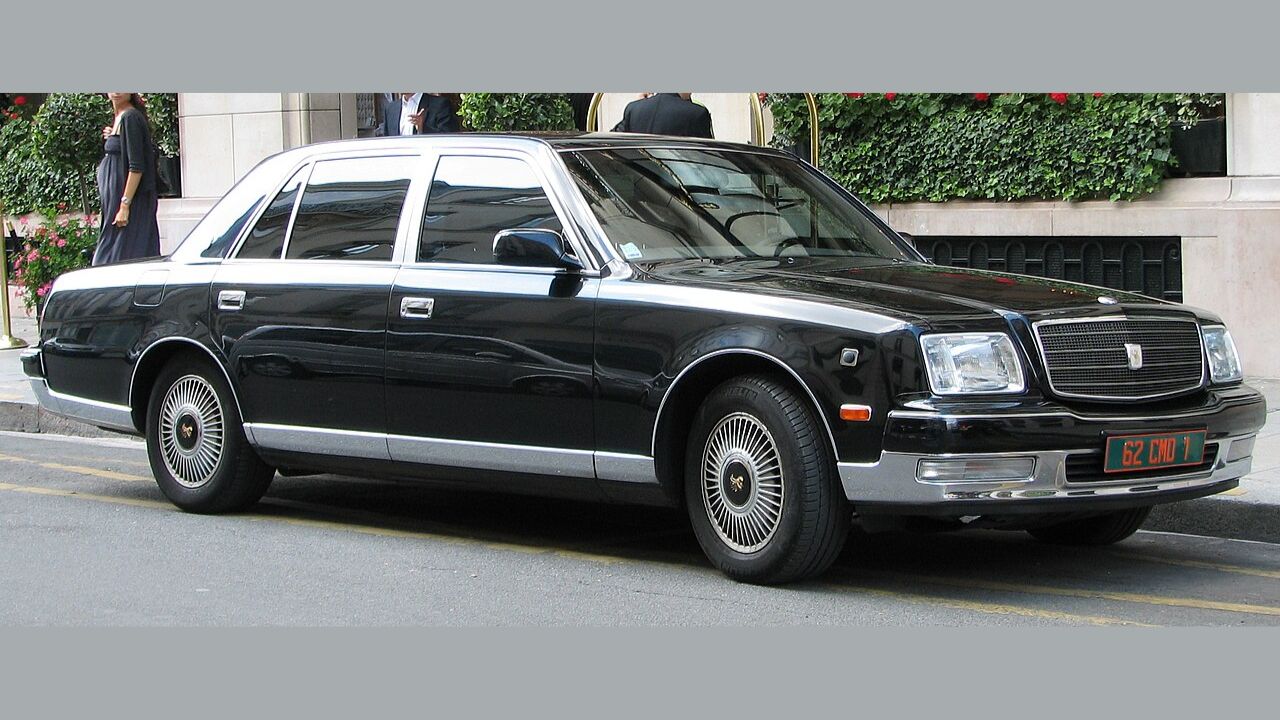
From the outside, a 1969 Century does not look like a car that cost its buyers a fortune. The lines are formal and upright, with a long hood and a boxy roofline that prioritizes rear headroom. Chrome is present but not extravagant. The grille is dignified rather than aggressive. A key visual feature is the strong character line that runs down both flanks, a crease that gives the body subtle tension without resorting to flamboyant surfacing. One detailed account of the model’s styling notes that this character line is created using a traditional panel-beating technique that requires a high degree of manual skill, reinforcing how the Century’s apparent simplicity hides complex craftsmanship.
The Century’s design philosophy has remained consistent across generations. Toyota has described the model as Japan’s only chauffeur-driven limousine and has highlighted the way its exterior avoids trends in favor of timeless form. In a corporate description of the third generation, the company explains that the Century is still treated as a handcrafted product, with bodywork and paint finished by specialists who spend far more time on each car than in a typical mass-production process. That same statement emphasizes how the car is positioned as a symbol of master craftsmanship in Japan, rather than as a flashy status symbol.
Inside, the 1969 Century embraced a similar restraint. Where European luxury sedans of the period leaned on glossy wood and leather, the Century favored thick wool cloth, soft touchpoints, and an atmosphere closer to a private lounge than a showroom. Later commentary on the model’s long-running V12 generation notes that most top-end Japanese market cars used high-quality wool instead of leather, a reflection of domestic preferences and a belief that wool was quieter, more comfortable, and better suited to long chauffeured journeys. One analysis of the Century’s V12 era even highlights the phrase No Leather to underline how unusual this choice looks from a Western perspective, yet how logical it is for the car’s intended use.
The result in the first generation was a cabin that felt more like a discreet executive office. Rear passengers enjoyed generous legroom, soft seating, and amenities that prioritized comfort over gadgetry. A later retrospective on the first-generation Century points to an Example of rear seat accommodations in a late model, noting that while the Century is about the same size as more widely known European sedans, its interior layout and details are tuned to the expectations of Japanese executives who valued quietness and decorum. That Example of the rear compartment underlines how little the core concept changed from the late 1960s onward.
Engineering for serenity, not spectacle
Under the hood, the first-generation Century also took a different path from its contemporaries. Toyota equipped the car with a 3,000 cc V8 OHV (3V) engine, an enhanced version of the unit used on the Crown Eight. Company history records describe how the engine was developed specifically to provide smooth, quiet power rather than headline-grabbing performance figures. That same record lists the displacement as exactly 3,000cc and notes the connection to the OHV Crown Eight, reinforcing how the Century built on existing engineering while raising refinement.
The choice of a relatively modest V8 for such a prestigious car fits the broader pattern. The Century was never about acceleration figures. It was about silence, smoothness, and reliability. Later in the model’s life, Toyota would introduce a V12, and one enthusiast review of that generation describes the car as Japan’s Ultimate Luxury V12 Sedan and celebrates its character among large sedans, particularly classics from the 80 and 90s. The presenter in that review, which appears on a channel that often covers big executive cars, makes clear that the Century’s V12 powertrain was engineered for near-silent operation rather than drama, a point that comes through strongly in the Toyota Century Review.
Even earlier, in the 1969 car, the engineering brief followed the same template. The V8 was tuned so that occupants would feel as little of its work as possible. Sound insulation was extensive. The suspension was soft but controlled, designed to isolate the rear compartment from rough roads. Brakes and steering were calibrated for smoothness rather than sharp response. For a chauffeur, the Century was a tool. For the person in the back seat, it was a moving sanctuary.
Later sources on the Century’s evolution describe how the model became part of a Gentleman’s Agreement among Japanese manufacturers that limited advertised power to 276 horsepower, even when real output could be higher. That agreement, mentioned in a history of the Century’s role as a gentle luxury giant, illustrates how the car’s public image remained conservative even as its mechanical specification became more ambitious. The reference to 276 horsepower in that context shows how the brand preferred understatement in official figures, a philosophy that can be traced back to the original V8 car of 1969.
Built for Japan, shaped by Japan
The Century is deeply tied to its home market. Toyota has repeatedly framed the model as a uniquely Japanese expression of luxury, distinct from European or American interpretations. In a corporate briefing connected to the Japan Mobility Show, the company drew a parallel between the Century and cultural exports such as manga and animation, describing how Today, Japan is known worldwide for these creative industries and how Likewise, the Century represents a domestic product that quietly carries national identity into the automotive world. That positioning is explicit in Toyota’s Japan Mobility Show remarks, which link the car to broader themes of craftsmanship and cultural pride.
The first-generation Century, including the 1969 model year, was sold almost entirely within Japan. The car’s right-hand-drive layout, its dimensions, and even its interior materials were tailored to Japanese roads, cities, and tastes. The wool upholstery and subdued color palette suited executives who wanted comfort without ostentation. The exterior avoided excessive width so that the car could navigate narrow streets and older urban districts while still offering a generous rear cabin.
Language and branding also reflected this domestic focus. The Toyota Century name was presented in Japanese script and Hepburn transliteration, reinforcing that this was a car for Japanese buyers first. Reference material on the model lists the Japanese spelling and the Hepburn form Toyota Senchurī, underlining how the car’s identity is anchored in its native Japanese context.
Even Toyota’s own corporate histories treat the Century separately from export-oriented nameplates. The vehicle lineage archives, compiled as part of 75 Years of TOYOTA, list the Century among high-prestige domestic models and connect it to the broader narrative of Years of TOYOTA Vehicle Lineage. A page that reproduces the original sales catalog for the first-generation car, discovered through those archives, shows how the company presented the model in period, with an emphasis on dignity, comfort, and continuity rather than novelty. That document, accessible through the Years of TOYOTA collection, reinforces the sense that the Century was built to serve a specific social role within Japan.
A car that refused to age on schedule
One of the most striking aspects of the Century story is how slowly it changed. The first generation, which includes the 1969 car, stayed in production for decades with only modest updates. Later retrospectives describe the model running from 1967 to 2013 in its original basic form, with visual changes kept minimal so that the car would remain familiar to its core clientele. A detailed blog on the model’s diplomatic role notes that While the Century is about the same size as more widely known luxury sedans, it aged at a different pace, with Toyota choosing to refine rather than reinvent the shape over time. That while the Century perspective helps explain why a 1969 car still looks recognizably similar to later examples.
Inside, the story was similar. Features were added gradually, but the overall layout and philosophy stayed constant. Rear passengers continued to enjoy priority in space and amenities. Materials remained focused on comfort and acoustic performance. Toyota did not chase trends in dashboard design or gadgetry. Instead, the company treated the Century as a long-term product, one that should feel familiar to long-serving executives and officials even as technology advanced around it.
That conservatism has carried into later generations. When Toyota introduced a full model change for the third-generation Century, the company emphasized that it remained Japan’s only chauffeur-driven limousine and that the new car preserved the core values of its predecessors. The official description of that third generation highlights how the exterior proportions, the focus on the rear seat, and the handcrafted production methods all carry forward a tradition rather than break with it. The Century name is treated as a constant thread from the 1960s to the present.
Enthusiasts have responded to this slow evolution with a mix of admiration and surprise. One commentator, reflecting on the first-generation car, remarked that Some cars are designed to be noticed and Others are designed to never ask for attention, placing The Toyota Century firmly in the second category. That observation, shared in a short video clip that celebrates the model’s restraint, captures why the 1969 car still feels relevant. The quote about some cars speaks to a design philosophy that has aged better than many louder contemporaries.
The long shadow of the V12 and modern reinterpretations
Although the 1969 Century relied on its 3,000 cc V8, later generations would give the model a more exotic mechanical calling card. From 1997 to 2017, the second-generation Century was powered by a V12 engine known as the IGZ-FE, a configuration that remained unique within Toyota’s lineup. A social media post that introduces the current Century SUV concept describes how from 1997 to 2017, the sedan quietly ruled the streets with a V12 under the hood, and emphasizes that But not just any V12, Toyota engineered the IGZ-FE for near-silent operation and smoothness. That description, shared by a regional motoring outlet, highlights how the IGZ engine became part of the car’s legend.
The V12 era has attracted particular attention from enthusiasts outside Japan. One video that pits the Century against other large Toyotas describes the car as a “bloody big” presence on the road and spends time on the contrast between its quiet demeanor and its substantial mechanical specification. Another clip, often referenced in discussions of Japanese luxury sedans, returns to the theme of the Century as a secret flagship, a car that hides its engineering sophistication behind a conservative body. The Battle of the Century video, for instance, brings this contrast into focus.
Yet even with the V12, the core attitude did not change. The car still avoided flashy styling. It still prioritized wool over leather. It still placed the rear passenger at the center of the experience. The 1969 car set that template, and later mechanical upgrades simply filled in more power and refinement within the same quiet silhouette.
Recent corporate presentations have extended the Century idea into new formats, including an SUV interpretation that aims to preserve the chauffeur-driven concept while responding to changing tastes. In those presentations, Toyota continues to link the model to Japanese cultural exports and to describe it as a symbol of national craftsmanship. The mention of manga and animation in the Japan Mobility Show briefing is not casual. It positions the Century alongside other icons that represent Japan abroad, even if the car itself remains a rare sight outside its home market.
Why the 1969 Century resonates now
Viewed from 2026, the 1969 Toyota Century feels strangely current. Modern luxury brands are rediscovering the value of restraint, with cleaner design, quieter cabins, and a renewed focus on comfort. Electric vehicles have made silence a new benchmark. Yet the Century was already chasing that ideal more than half a century ago, with a 3,000 cc V8 OHV engine, thick wool upholstery, and a body designed to slip through traffic without drawing stares.
The car’s philosophy also aligns with a broader shift in how status is expressed. In many circles, conspicuous consumption has given way to more subtle signals. The Century anticipated that change. Its owners did not need strangers to recognize their car. They needed their driver to arrive on time, their ride to be quiet, and their surroundings to feel calm. The 1969 model delivered that without fuss.
The way the Century has been documented across languages and platforms reinforces its unusual position. Multiple language editions of Wikipedia, including entries in German, Greek, and Persian, all trace the same story of a domestic flagship that stayed largely in the shadows internationally. Donation pages linked from those entries show how dedicated communities help maintain the historical record of cars like this, even when they were never sold in large numbers outside Japan. The presence of the Toyota Century entry in several languages underlines how the car’s reputation has grown quietly, much like the car itself.
More from Fast Lane Only