The muscle car era is often remembered as a battle of numbers.
Horsepower figures climbed higher every year. Engine displacement became a point of pride. Advertisements highlighted quarter-mile times, top speeds, and increasingly massive V8 engines. By the late 1960s, many enthusiasts judged performance cars largely by what was printed on the air cleaner lid or listed in a brochure.
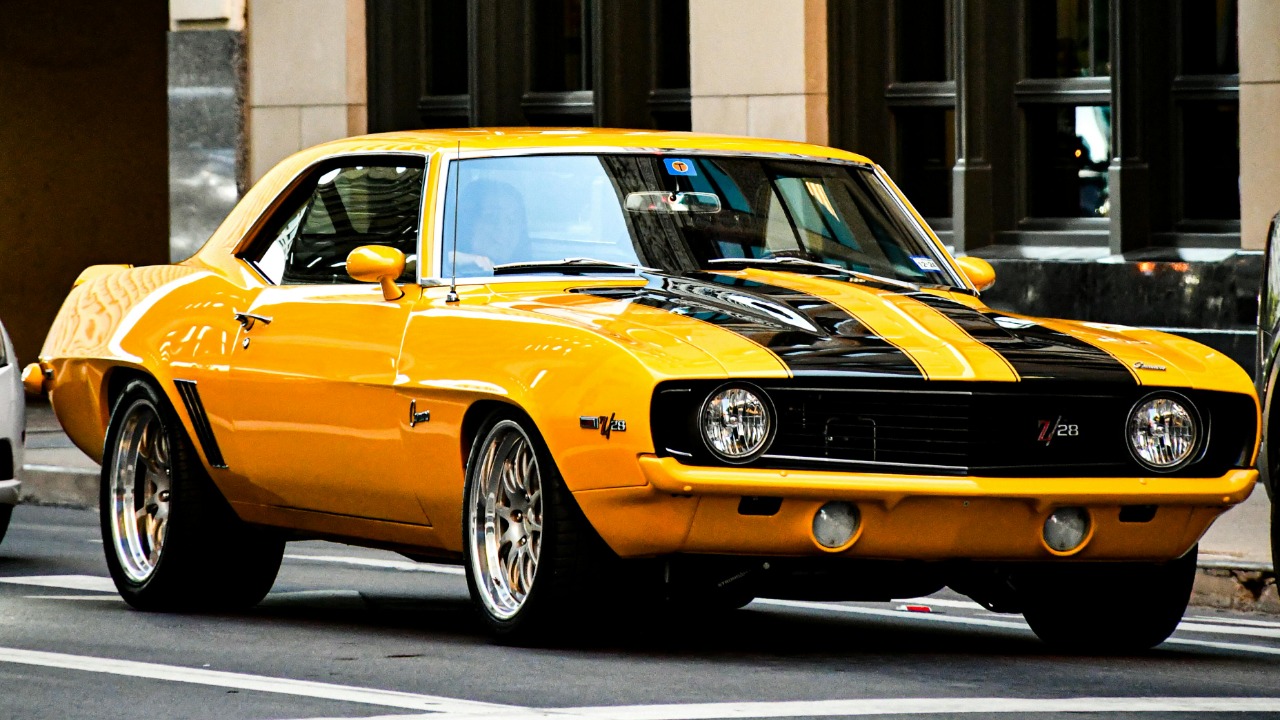
In that environment, the 1969 Chevrolet Camaro Z/28 seemed almost unusual.
While competitors proudly advertised engines displacing 396, 427, 428, and even 440 cubic inches, the Z/28 carried a much smaller 302-cubic-inch V8. Its officially advertised horsepower rating of 290 looked modest compared to some of the headline-grabbing figures appearing elsewhere in Detroit.
On paper, it didn’t dominate the horsepower war.
In reality, it became one of the most respected performance cars of the era.
The Z/28 earned its reputation through engineering, balance, racing success, and driving capability rather than sheer horsepower numbers. It represented a different philosophy—one that emphasized how a car performed as a complete package instead of focusing solely on engine output.
More than fifty years later, that approach is one of the reasons the 1969 Z/28 remains so important.
Its legacy extends far beyond a horsepower rating.
The Z/28 Was Created for a Specific Purpose
Unlike many muscle cars, the Z/28 wasn’t originally designed simply to attract street-performance buyers.
Its roots were tied directly to racing.
During the late 1960s, the Sports Car Club of America operated the popular Trans-Am racing series. The rules limited engine displacement to 305 cubic inches, creating a competitive environment focused on handling, durability, and driver skill rather than overwhelming engine size.
Chevrolet wanted to compete.
To qualify, the company needed to produce a street version of its race-oriented Camaro.
The result became the Z/28 package.
From the beginning, its priorities differed from those of many traditional muscle cars.
The 302 V8 Was Built for Racing
At the heart of the Z/28 sat one of the most fascinating engines of the muscle car era.
Chevrolet engineers created the 302-cubic-inch V8 by combining components from different engines already in the company’s inventory.
The resulting powerplant fit neatly within Trans-Am displacement limits while delivering remarkable performance characteristics.
Unlike many larger V8s that relied primarily on low-end torque, the 302 thrived at high engine speeds.
It loved to rev.
The engine’s personality reflected its racing origins. Drivers had to work it harder than some big-block competitors, but the reward was exceptional responsiveness and impressive top-end power.
The experience felt different.
And that difference mattered.
The Official Horsepower Rating Didn’t Tell the Whole Story
One of the most famous aspects of the Z/28 involves its advertised horsepower figure.
Chevrolet listed the engine at 290 horsepower.
Many enthusiasts quickly suspected the number was conservative.
Various factors influenced horsepower ratings during the era, including insurance concerns, racing classifications, and marketing strategies.
While opinions vary regarding the engine’s true output, most historians agree the 302 produced significantly more performance than its official rating suggested.
Road tests consistently demonstrated impressive acceleration and speed.
The car performed far better than many buyers expected from a supposedly 290-horsepower engine.
This disconnect between numbers and reality helped establish the Z/28’s reputation.
Handling Was Just as Important as Speed
Perhaps the biggest reason the Z/28 became more important than horsepower numbers is that Chevrolet focused on much more than straight-line acceleration.
The car received suspension upgrades specifically designed to improve handling.
Heavy-duty springs, performance shocks, and larger anti-roll bars enhanced cornering capability.
The result was a Camaro that felt composed and responsive on winding roads.
Many muscle cars excelled primarily in straight lines.
The Z/28 aimed for something broader.
It wanted to be a complete performance machine.
That goal aligned perfectly with its racing mission.
Trans-Am Success Changed Everything
The Z/28’s reputation received a tremendous boost from racing.
Chevrolet’s involvement in Trans-Am competition demonstrated the effectiveness of the car’s engineering philosophy.
Most notably, Mark Donohue and the Roger Penske Racing operation achieved significant success with Camaro-based race cars.
Victories on the track validated the Z/28’s design.
The car wasn’t merely fast on paper.
It could win races.
That credibility resonated deeply with enthusiasts.
Racing success often influences public perception, and the Z/28 benefited enormously from its connection to Trans-Am competition.
The 1969 Styling Became Iconic
The 1969 model year also brought one of the most celebrated Camaro designs ever produced.
Although the basic first-generation Camaro platform remained, Chevrolet introduced substantial styling revisions.
The body looked lower, wider, and more aggressive.
Distinctive grille treatments, sharper lines, and performance-oriented details gave the Z/28 a purposeful appearance.
Optional racing stripes enhanced the visual impact even further.
The styling perfectly matched the car’s character.
It looked athletic rather than merely powerful.
That distinction reflected the Z/28’s broader performance philosophy.
Drivers Appreciated the Complete Package
Enthusiasts quickly discovered that the Z/28 offered a different type of driving experience.
The car rewarded involvement.
Drivers who enjoyed shifting gears, managing engine speed, and exploring handling limits often preferred the Z/28 to some larger-engine alternatives.
The car felt alive.
Its responsiveness created a connection between driver and machine that many competitors struggled to match.
This characteristic helped establish a loyal following.
Owners appreciated that the Z/28 offered more than raw acceleration.
It offered engagement.
That quality remains highly valued today.
It Helped Define the Pony Car Segment
The Z/28 also played an important role in shaping perceptions of the pony car category.
Cars such as the Ford Mustang and Camaro often occupied a space between traditional sports cars and muscle cars.
The Z/28 leaned heavily toward the sports-car side of that equation.
Its emphasis on balance, handling, and racing credibility broadened expectations for what American performance cars could be.
The car proved that excitement wasn’t limited to engine size.
Engineering mattered.
Chassis tuning mattered.
Driver involvement mattered.
These lessons would influence future generations of performance vehicles.
The Big-Block Era Was Already Changing
Ironically, the Z/28’s philosophy became increasingly relevant as the automotive industry evolved.
The late 1960s represented the peak of the horsepower race, but changes were already underway.
Insurance rates were rising.
Emissions regulations were becoming stricter.
The era of unlimited displacement and constantly increasing horsepower would not last forever.
Cars emphasizing balance and engineering often adapted more effectively to changing conditions.
The Z/28’s approach anticipated many future performance trends.
It looked beyond simple horsepower figures.
Collectors Value More Than the Numbers
Today, the 1969 Z/28 ranks among the most sought-after American performance cars.
Collectors certainly appreciate its rarity, styling, and racing heritage.
Yet much of the car’s enduring appeal stems from qualities that cannot be summarized by a horsepower number.
The Z/28 represents a philosophy.
It symbolizes a belief that great performance results from the integration of multiple systems rather than one specification.
That idea remains powerful.
Modern enthusiasts continue celebrating the car because of how it drives, not merely what it produced on a dyno sheet.
The Camaro That Changed the Conversation
Looking back, the 1969 Camaro Z/28 succeeded because it challenged prevailing assumptions.
Many people believed performance could be measured primarily through horsepower and displacement.
Chevrolet offered a different perspective.
The company built a car that emphasized handling, racing capability, driver involvement, and engineering balance.
The result became one of the most respected performance cars of its generation.
More Than a Horsepower Figure
The 1969 Chevrolet Camaro Z/28 became more important than horsepower numbers because it demonstrated that great performance involves far more than engine output alone.
Its high-revving 302 V8, race-inspired suspension, Trans-Am success, and engaging driving experience created a package that appealed to enthusiasts on a deeper level.
While other cars competed for the biggest horsepower ratings, the Z/28 focused on becoming the best all-around performer it could be.
More than fifty years later, that decision continues to define its legacy.
The car didn’t win its place in history because of a number printed in a brochure.
It earned it on the road, on the racetrack, and in the minds of generations of enthusiasts who discovered that true performance is about much more than horsepower alone.
More from Fast Lane Only