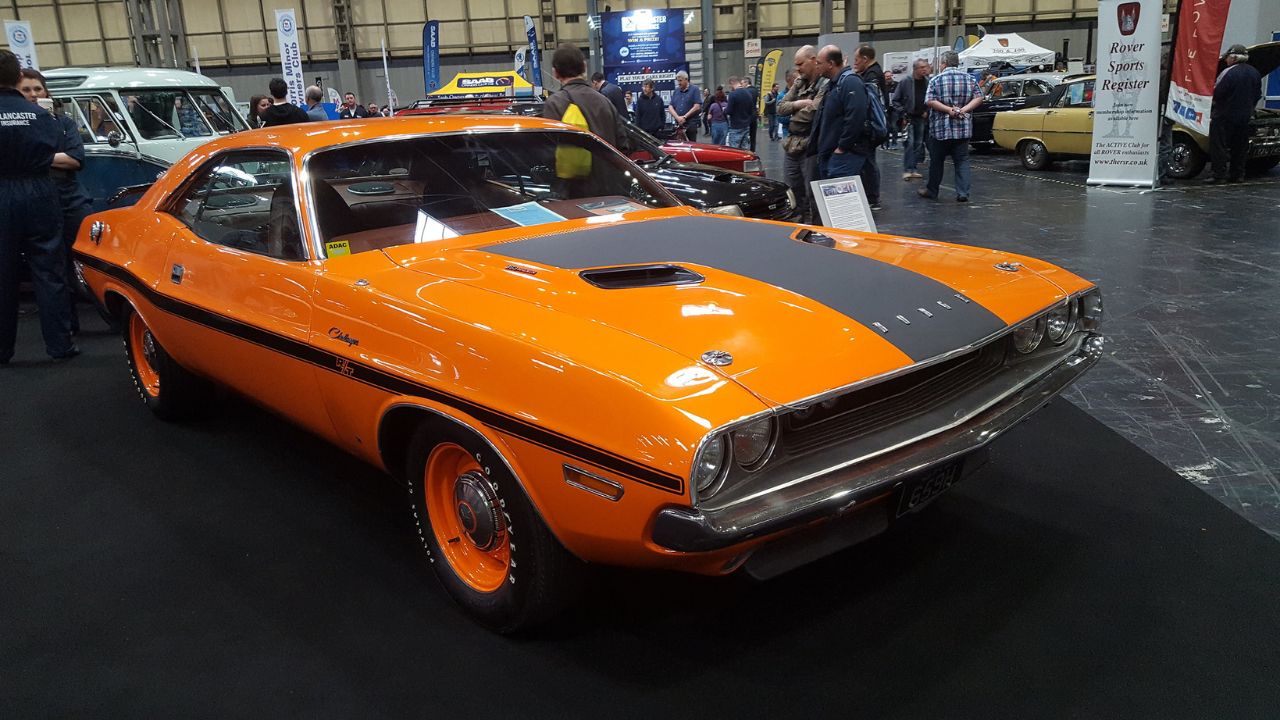
The 1970 Dodge Challenger R/T stands as an iconic figure in American muscle car history, not only for its sleek design but also for the impressive array of engine options available to buyers. While many enthusiasts are aware of the standard offerings, the full spectrum of choices reveals a depth of performance potential that many drivers may not have fully appreciated.
Overview of the 1970 Dodge Challenger R/T
Introduced in 1970, the Dodge Challenger quickly established itself as a formidable competitor in the muscle car market. Built on Chrysler’s E-body platform, the Challenger was designed to rival other heavyweights like the Ford Mustang and Chevrolet Camaro. Its aggressive styling, complete with a long hood and short rear deck, captured the spirit of the era, appealing to a generation of drivers eager for speed and style.
The “R/T” designation, standing for “Road/Track,” signified a performance-oriented trim that promised not only power but also an engaging driving experience. During the golden age of muscle cars, the R/T badge became synonymous with high-performance variants, and the 1970 Challenger R/T was no exception. With its bold stance and a range of engine options, it was a car that could be personalized to fit the needs of any driver.
Engine Options: A Closer Look
The 1970 Dodge Challenger R/T offered an impressive lineup of engine choices, making it one of the most versatile muscle cars of its time. Buyers could choose between several powerful V8 engines, each tailored to different performance needs. The base engine was the 383 cubic inch V8, but the lineup also included the formidable 440 Six-Pack and the legendary 426 Hemi, among others.
Each engine came with specific specifications that defined its performance capabilities. For instance, the 383 produced around 335 horsepower, while the 440 Six-Pack boasted an astonishing 390 horsepower. The Hemi engine, with its 426 cubic inches, could unleash a staggering 425 horsepower. This variety allowed drivers to select an engine that best suited their performance desires and driving style, highlighting Dodge’s commitment to catering to the diverse preferences of muscle car enthusiasts.
Standard Engine: The 383 Magnum
The standard engine for the 1970 Challenger R/T was the 383 Magnum V8, a powerful choice that defined the muscle car experience. This engine was renowned for its robust performance and reliability. With a displacement of 383 cubic inches, it generated about 335 horsepower and 425 lb-ft of torque, providing ample acceleration and a thrilling driving experience.
Historically, the 383 engine played a pivotal role in the muscle car landscape of the late 1960s and early 1970s. It was a popular choice among muscle car aficionados due to its balance of power and drivability. When compared to other standard engines of the time, such as the Ford 351 Windsor and Chevrolet 350, the 383 stood out for its superior torque delivery, making it ideal for both street driving and spirited racing.
Upgraded Power: The 440 Six-Pack
For those seeking even more power, the 440 Six-Pack engine was a game changer. This engine featured three two-barrel carburetors, a setup that enhanced airflow and significantly increased performance. The 440 Six-Pack produced an impressive 390 horsepower and 480 lb-ft of torque, making it a favorite among enthusiasts looking for a thrilling driving experience.
The driving experience with the 440 Six-Pack was exhilarating; the engine’s quick throttle response and high-end power made it suitable for both street and strip. This engine was not just about raw power; it also offered a combination of performance and drivability that appealed to a wide range of drivers. The 440’s place in the hierarchy of engine options solidified its reputation as a top-tier choice for serious muscle car enthusiasts.
The Legendary Hemi: 426 Hemi Options
The 426 Hemi is perhaps the most revered engine in the history of American muscle cars. Known for its distinctive hemispherical combustion chambers, this engine was designed for maximum power and efficiency. In the Challenger R/T, it was available as an option, producing 425 horsepower and a staggering 490 lb-ft of torque. The impact of the Hemi was profound, not only in terms of street performance but also within the realm of racing.
The Hemi engine’s reputation was further solidified through its success on the racetrack, where it dominated events thanks to its impressive power and reliability. Myths surrounding the availability of the Hemi in the Challenger R/T abound, with some believing it was a rare option. In reality, while it was indeed a more costly choice, many enthusiasts opted for this legendary engine, making it a significant part of the Challenger’s legacy.
Less Common Choices: The 318 and 340 Engines
While the 383, 440, and Hemi engines often steal the spotlight, the 318 and 340 engines played crucial roles in the Challenger lineup. The 318 V8, with its 318 cubic inches, was a more economical option, producing around 230 horsepower. Despite being the least powerful engine in the lineup, it offered a smooth ride and respectable performance, making it appealing for everyday drivers.
The 340 engine, on the other hand, was a more performance-oriented choice. With a displacement of 340 cubic inches, it produced approximately 275 horsepower. This engine was often favored by enthusiasts seeking a balance between power and drivability. Despite their lower power outputs compared to the more famous options, the 318 and 340 engines have garnered a dedicated following among collectors and enthusiasts who appreciate their unique characteristics and contributions to the Challenger’s legacy.
Performance Packages and Enhancements
To complement the diverse engine options, Dodge offered several performance packages that enhanced the Challenger R/T’s capabilities. These packages included features such as heavy-duty suspension systems, upgraded brakes, and performance-oriented rear axle ratios. Such enhancements allowed drivers to tailor their vehicles for specific driving conditions, whether it be for daily commuting or weekend racing.
Transmission choices also played a significant role in the driving dynamics of the Challenger R/T. Buyers could select between a three-speed automatic and a four-speed manual transmission, each offering a different driving experience. The manual transmission, in particular, was favored by performance enthusiasts who sought a more engaging connection with the car. Optional features, such as performance tires and upgraded exhaust systems, further enhanced the driving experience, solidifying the Challenger R/T’s status as a versatile muscle car.
Comparative Analysis: Challenger R/T vs. Competitors
When comparing the Challenger R/T’s engine options to those offered by contemporaries like the Ford Mustang and Chevrolet Camaro, it becomes clear that Dodge provided an impressive array of choices. The Mustang, for example, offered engines ranging from a 302 V8 to the powerful 429 Cobra Jet, while the Camaro featured the iconic 396 big block. However, the Challenger’s combination of horsepower and torque across its engine lineup often gave it an edge in straight-line performance.
Market positioning during the 1970s also played a role in shaping consumer preferences. While some buyers gravitated towards the Mustang for its sporty image, others were drawn to the raw power and aggressive styling of the Challenger. The legacy of engine options available in the Challenger R/T has contributed to a lasting brand loyalty among muscle car fans, with many still holding a deep appreciation for the performance and versatility of this iconic vehicle.
The Legacy of the 1970 Challenger R/T
The diverse engine lineup of the 1970 Challenger R/T has undoubtedly contributed to its cult status among car enthusiasts. Its unique combination of power, performance, and style has made it a sought-after classic in vintage car shows and racing events. Today, the Challenger remains a symbol of the muscle car era, with many collectors and enthusiasts celebrating its rich history and exceptional performance.
Furthermore, the influence of the 1970 Challenger R/T’s engine options can still be felt in modern muscle car design. Manufacturers continue to draw inspiration from the raw power and performance capabilities of classic muscle cars, striving to deliver vehicles that honor their heritage while incorporating contemporary technology. The Challenger R/T’s legacy lives on, ensuring that it will remain a significant part of automotive history for generations to come.
More from Fast Lane Only